
You’re probably in one of two places right now. You’ve got a home espresso machine on the counter and a bag of coffee that never quite tastes as good as it did in the café, or you’re buying for a business and staring at a long list of blends, origins, roast names and price points that all claim to be ideal. That’s where you might start when looking for the best coffee beans for espresso.
In the UK, the choice is a bit more complicated than generic coffee advice suggests. Water hardness changes how a coffee extracts. Bean freshness affects crema and shot speed. Supply stability matters if you run a café, office or hotel and need the same result every day. If you’re still working out the difference between commodity and specialty coffee, it helps to start there before worrying about roast labels.
Table of Contents
- Your Guide to Choosing the Perfect Espresso Beans
- What Really Makes a Bean an Espresso Bean
- How Roast Profile Shapes Your Espresso Shot
- Choosing Between Single Origin and Blends
- Our Top Espresso Bean Picks
- How We Tested These Beans
- The Best Coffee Beans for Your Specific Needs
- Practical Tips for a Perfect Espresso Extraction
- Your Next Steps to Better Espresso at Home or Work
Your Guide to Choosing the Perfect Espresso Beans
The first useful shift is this. The best coffee beans for espresso aren’t one fixed bean or one fixed roast. They’re the beans that suit your machine, your water, your drink style and the level of consistency you need.
A home user pulling two flat whites every morning doesn’t need the same coffee as a busy café serving milk drinks all day. An office bean-to-cup machine needs forgiving coffees that stay stable. A restaurant may want a blend that tastes balanced with little intervention. The wrong bean can still be high quality, but wrong for your setup.
Three things matter most at the buying stage:
- Roast profile: This affects sweetness, acidity, body and how easy the coffee is to extract.
- Bean composition: Single origin coffees can be expressive. Blends are often steadier and easier to use.
- Practical fit: Freshness, supply continuity, bag size and how the coffee behaves in your local water all matter.
The label on the bag matters less than what happens in the cup.
UK buyers also need to think about water more than many overseas guides admit. Hard water can flatten acidity, emphasise bitterness and make one espresso blend taste completely different from region to region. Much of England and Wales sits in a hard or very hard water area, which is why filtration and bean choice should be discussed together rather than separately.
If you want a simple starting point, begin with a medium or medium-dark espresso blend, buy fresh, and match the coffee to how you drink it. Straight shots, flat whites, bean-to-cup convenience and café service all ask for slightly different things.
What Really Makes a Bean an Espresso Bean
Most confusion starts with the phrase “espresso bean”. It sounds like a category. It isn’t.
Espresso is a method, not a bean type
Espresso is a brewing method. It uses finely ground coffee, pressure and a short contact time to produce a concentrated drink. That means almost any coffee can be used for espresso, but not every coffee is easy to use well as espresso.

A lot of bags marked “espresso roast” are roasted to behave more predictably under pressure. That usually means more body, lower perceived acidity, better crema and a flavour profile that still reads clearly once milk is added. If you’re browsing dedicated coffee and espresso beans, that’s the lens to use.
What works under pressure
Espresso exposes coffee fast. There isn’t much room to hide defects, poor roasting or awkward solubility. Beans that suit espresso usually share a few practical traits:
- They extract evenly: If a coffee is too dense or too lightly developed for the grinder and machine, shots can run sour and thin.
- They carry body well: Espresso needs texture, not just flavour notes on a tasting card.
- They stay readable in milk: Chocolate, nut, caramel and rounded fruit usually survive better than delicate floral notes.
- They produce stable crema: Freshness and roast profile both play a part here.
The UK market has moved strongly in this direction. Specialty and whole-bean coffee have taken a steadily larger share of what UK households buy, and buyers have shown they will pay more for better coffee. They still need it to work reliably, though, which is where blends earn their place.
Practical rule: Don’t buy coffee just because the bag says espresso. Buy coffee that extracts cleanly, tastes balanced and suits the drinks you serve most.
How Roast Profile Shapes Your Espresso Shot
Roast profile decides more than colour. It changes solubility, sweetness, crema behaviour and how forgiving the coffee is when your grinder, water or machine isn’t perfect.
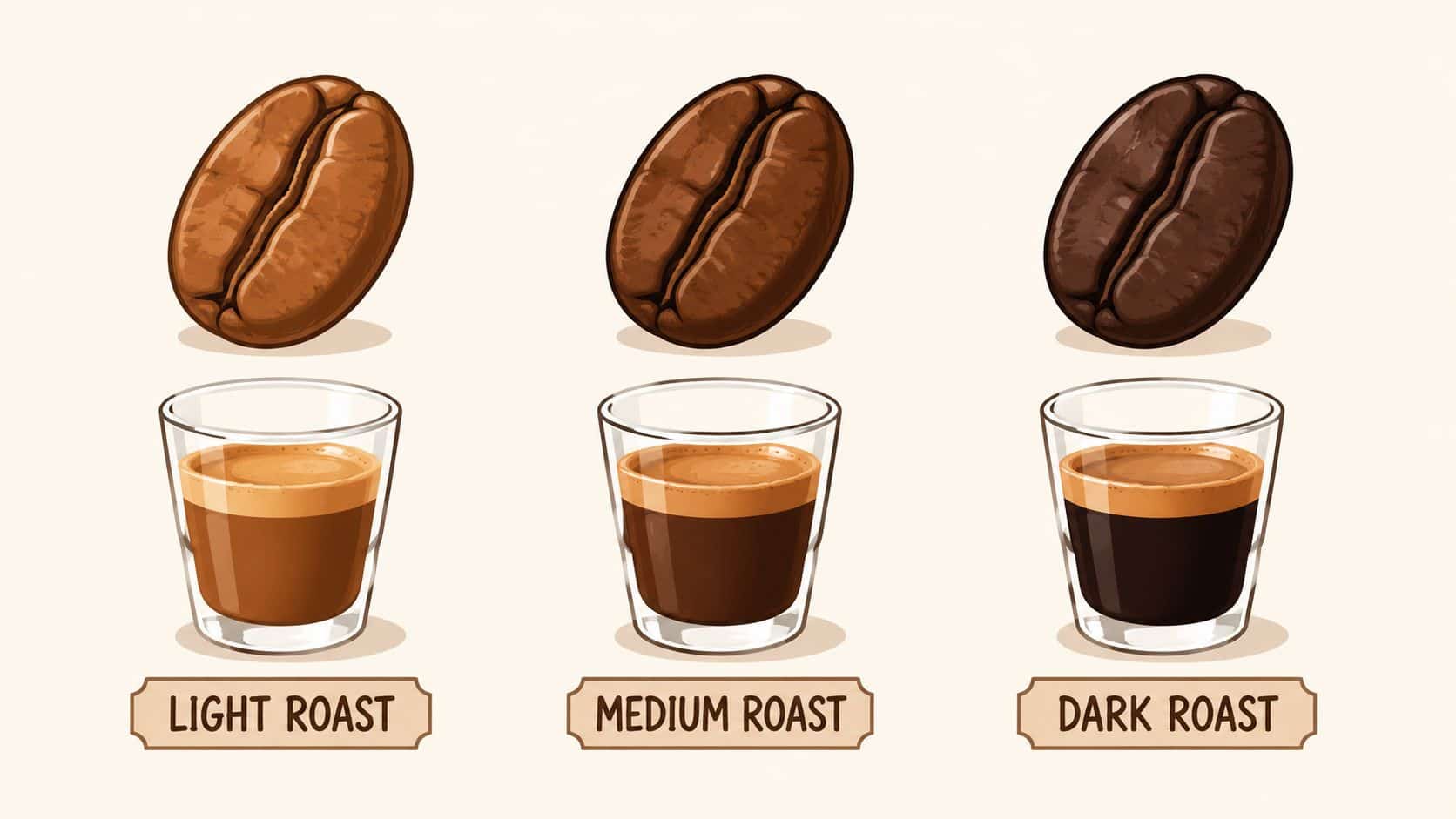
If you want a deeper look at roast behaviour before buying, this guide on light roast vs dark roast coffee is useful background.
Light roast
Light roast espresso can be excellent, but it’s demanding. It tends to show more origin character, sharper acidity and less roast-driven sweetness. In the right setup, that can mean lively, complex shots. In the wrong setup, it often means sourness, uneven extraction and frustration.
For straight espresso drinkers with precise grinders and good temperature control, light roasts can be rewarding. For busy cafés and bean-to-cup machines, they’re often more trouble than they’re worth.
Medium roast
Medium roast is where a lot of espresso starts to make sense. It usually gives enough development for sweetness and body while keeping some origin character alive. Think of it as the middle lane. It’s less sharp than light roast and less roast-dominant than dark roast.
In practical service, medium roast works because it can do two jobs at once. It tastes balanced as espresso and still cuts through milk without turning ashy or flat.
Dark roast
Dark roast extracts more easily and often gives a fuller, heavier shot. It can produce strong crema and lower perceived acidity, which is why darker profiles remain popular with drinkers who want a classic Italian-style cup.
But there’s a limit. Push too far and the coffee starts tasting of roast more than origin. Burnt bitterness, smoke and hollow finish are common signs the roast has gone past useful development.
A good rule is to separate dark enough for body from too dark for flavour.
The UK trade has largely made that choice already. Medium and medium-dark blends dominate commercial espresso in independent cafés, hotels and offices, because they give a balance of sweetness and body that holds up in milk and forgives small changes in grind and dose.
That lines up with what performs well in everyday service. Medium-dark coffee is forgiving. It handles milk well. It usually works across a wider range of grinders and machines. It also tends to behave better in hard-water areas, where brighter coffees can lose definition and turn edgy.
Choosing Between Single Origin and Blends
Single origin and blend isn’t a quality ranking. It’s a use-case decision.
When single origin makes sense
Single origin espresso gives you a more specific flavour story. One farm, one region or one producing area can bring a distinct profile that stands apart from a house blend. For home baristas who enjoy changing coffees and tweaking recipes, that can be half the fun.
Single origin also makes sense when espresso is the drink itself, not just the base for milk. If you mostly drink straight shots or long blacks, a clean and expressive origin can be a good fit. The trade-off is that these coffees often need more careful dialling in, and they can swing noticeably as they age.
If you want to explore that side of the market, browsing single origin coffee beans is a sensible place to start. Our single origin range typically includes washed Colombian and Ethiopian lots, priced from around £7.50 to £9 per 250g depending on origin and season, with tasting notes running from red berry and citrus through to stone fruit and floral tea.
Why blends usually win in commercial espresso
Blends do the less glamorous job. They deliver balance, repeatability and broad appeal. That matters more than novelty in most cafés, offices and hospitality settings.
A good blend is built to solve practical problems. One component brings body. Another adds sweetness. Another lifts the cup enough to stop it tasting dull. The result is a coffee that behaves more predictably from one delivery to the next and stands up well in milk.
Most commercial espresso blends lean on washed Brazilian or Central American beans for body and sweetness, with a smaller proportion of a more characterful naturally processed coffee for aroma. That combination is popular with UK baristas because it stays stable across a busy day and works with different milks, including plant-based options.
That structure makes sense in the cup. The South or Central American base usually gives body and chocolate-led sweetness. The smaller natural component can add depth or fruit without taking over.
For many businesses, a blend such as Summit Grande Crema is the more pragmatic choice because it’s designed around consistency rather than novelty. It’s a medium roast Arabica-Robusta blend with tasting notes of milk chocolate, roasted nuts and a light caramel sweetness, and it’s sold in 500g bags at around £8 to £9.
If most of your drinks contain milk, a stable blend usually outperforms a fascinating single origin.
Here’s the simple comparison:
- Single origin suits people who want character, variety and a coffee that changes with season and origin.
- Blends suit sites that need reliable flavour, easier dial-in and broader customer acceptance.
- Commercial buyers should prioritise repeatability over romance. A coffee that tastes slightly less exciting but behaves every day is often the better business decision.
Our Top Espresso Bean Picks
Once you understand roast profile and blend structure, it helps to see how that plays out across named beans. Here’s how the range breaks down by use case, with roast level, tasting notes and approximate price so you can compare like for like.
Prices are approximate and vary by pack size, delivery frequency and business account terms. Speak to the Allied Drinks Systems team for current pricing on bulk or contract orders.
How We Tested These Beans
These picks aren’t based on tasting notes alone. Each bean was assessed against the practical factors that matter most for UK espresso, both at home and in commercial service.
- Extraction in hard water: Each coffee was pulled with standard UK mains water to see how it held up against scale and mineral content, since much of England and Wales sits in a hard or very hard water area.
- Crema stability: We checked how long crema held after the pour and how consistent it stayed across several days from the same bag.
- Milk performance: Since most UK espresso drinks are milk-based, each bean was also tested in a flat white and a latte to see whether the flavour stayed readable under milk.
- Supply consistency: For commercial picks, we factored in how reliably the bean is available in bulk and whether the flavour stays stable delivery to delivery.
This is the same lens we’d apply if you asked us to match beans to your own machine and water setup, so the picks above reflect real service conditions rather than a single good cup on a good day.
The Best Coffee Beans for Your Specific Needs
Buying well gets easier once you stop asking for one universal answer. Different users need different things from espresso.

Independent cafés
For an independent café, the right espresso bean needs to do several jobs at once. It has to taste good as a standalone shot, cut through milk, stay predictable across service and remain commercially sensible to buy in volume.
That usually points to a medium or medium-dark blend with strong body, dependable sweetness and low drama on the grinder. Seasonal rotation can be exciting, but your main espresso should be easy for every staff member to use, not just the strongest barista on shift.
A practical option for sites that want a straightforward profile in larger quantities is Summit 100% Arabica 500g Coffee Beans Bulk Buy, a medium roast with soft cocoa and mild nuttiness, priced at around £7 to £8 per 500g.
Offices and workplaces
Office coffee has different priorities. The drinker often wants comfort, not complexity. The machine may be bean-to-cup, and the staff using it may not adjust grind or dose through the day.
That means the coffee needs to be forgiving. Avoid very light roasts and highly acidic single origins. They can taste sharp, thin or inconsistent in automated systems, especially if cleaning routines aren’t perfect. Medium to medium-dark blends generally give a more stable cup and stay pleasant in milk-based drinks.
Supply continuity matters here too. For offices, the best bean is often the one that keeps delivering a familiar result without constant intervention.
Home baristas
Home users have more room to experiment. If you enjoy testing recipes and comparing flavours, you can try both blends and single origins and see what your setup handles well.
Still, a lot of home espresso problems come from choosing coffee that’s harder to extract than the machine and grinder can manage. If your shots are sour, fast or hollow, don’t assume your technique is terrible. The coffee may be a poor match.
A good progression looks like this:
- Start with a medium roast blend and get consistent.
- Learn how dose, yield and grind change flavour.
- Move into lighter or more distinctive coffees once your process is stable.
The UK also adds a local complication. Water hardness can push a coffee in either direction. In hard-water areas, some bright coffees become dull and bitter at the same time. A more developed roast often behaves better unless you’ve got proper filtration in place.
A final business note. Supply chain pressure has become part of bean choice. Green coffee prices have risen sharply in recent years, driven by climate-related yield declines in key origins such as Brazil and Colombia. For cafés and hospitality buyers, that makes stable blends and sensible pack formats more important than ever.
Practical Tips for a Perfect Espresso Extraction
Good beans still need good handling. Most espresso problems show up after purchase, not before.
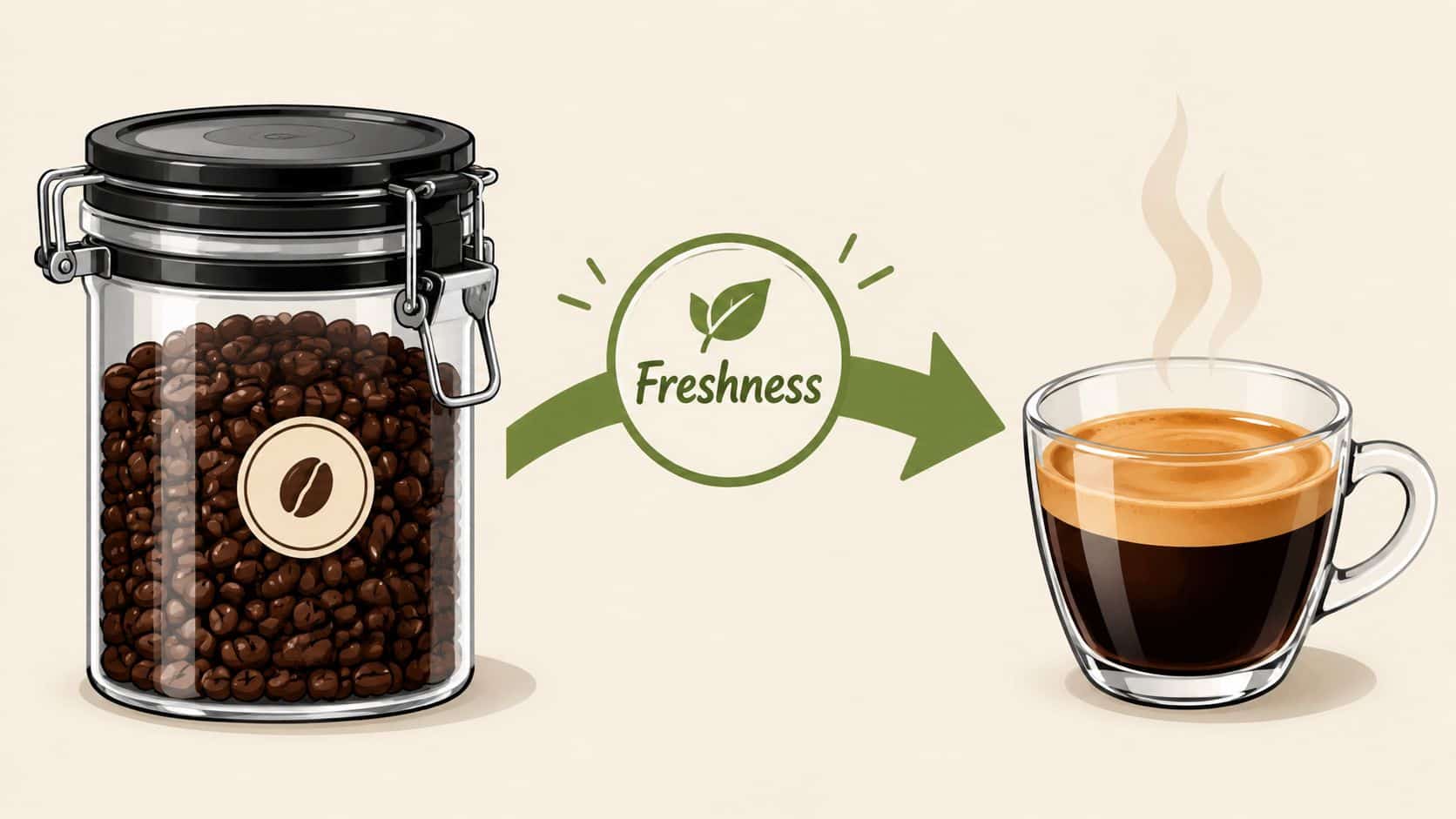
Freshness and storage
Fresh coffee matters, but “fresh” doesn’t mean roasted yesterday. Espresso usually performs best once the beans have settled a little after roasting. As a working rule, use espresso beans within a few weeks of the roast date for the best crema and clarity; well beyond that, sweetness and body start to fall away.
That gives you a practical window.
- Buy by roast date: If the bag only shows a best-before, be cautious.
- Store sealed and cool: Keep beans away from heat, light and moisture.
- Open one bag at a time: Especially in cafés and offices. Too many open bags create inconsistency and waste.
Coffee doesn’t go bad all at once. It gets flatter, drier and less expressive day by day.
Grind and shot setup
Espresso depends on grind quality more than most buyers realise. If the grinder produces uneven particles, one part of the puck over-extracts while another under-extracts. You taste both faults at once.
A proper burr grinder matters. So does adjusting it as the coffee ages and as humidity changes. If you need a practical walkthrough, this guide on how to dial in espresso is worth keeping nearby when you change beans.
For typical UK café settings, industry guides recommend a brew ratio of about 1:1.5 to 1:2 with shot times generally between 25 and 35 seconds. That’s a strong starting point, not a law.
Use it like this:
- Set your dose and keep it consistent.
- Aim for the target yield in the cup.
- Watch shot time and taste the result.
- Adjust grind first before changing everything else.
If the shot runs fast and tastes sour, grind finer. If it crawls and tastes bitter, grind coarser.
A short visual guide can help if you’re training staff or refining your own routine:
One more UK-specific point matters here. Water changes extraction. Around hard-water areas, coffee can taste harsher and scale can affect grinder and machine performance over time. That’s one reason many sites get better results from medium to medium-dark blends. They tend to stay rounder and more forgiving when local water isn’t ideal.
Your Next Steps to Better Espresso at Home or Work
The best coffee beans for espresso are rarely the most expensive or the most talked about. They’re the ones that suit your machine, your water, your drinks menu and the level of consistency you need day after day.
For most UK buyers, that means starting practical. Choose a medium or medium-dark coffee if you want dependable sweetness, body and easier extraction. Use blends when consistency matters more than novelty. Buy fresh. Store properly. Then dial the coffee in with care instead of changing three variables at once.
If you’re serving a mixed drinks menu, think beyond flavour notes on the bag. Think about milk performance, filtration, supply continuity and waste. If you’re brewing at home, keep the setup simple until you can repeat a good shot on purpose.
The right coffee should make service easier, not harder. If your current beans are forcing constant grind changes, disappearing in milk or tasting different every week, that’s usually a buying problem before it’s a barista problem.
If you want a sensible place to start, browse the range of espresso coffee beans at Allied Drinks Systems or speak to the team about matching beans to your machine, water setup and service style.
Best Coffee Beans for Espresso: FAQs
Which coffee beans are used for espresso?
Any coffee bean can be used for espresso, espresso is a brewing method, not a variety. In practice most espresso is made from Arabica, or an Arabica and Robusta blend. Adding 10 to 20 per cent Robusta is a common commercial choice because it thickens the crema and adds body that stands up in milk, which is why so many Italian-style blends include it. Our Summit Grande Crema is a balanced Arabica-Robusta blend built for exactly that job.
What beans do Italians use for espresso?
Traditional Italian espresso leans on medium to dark roasted blends with a meaningful Robusta component, which produces the heavy crema and low acidity of a classic Italian bar shot. Northern Italian roasts tend to be lighter and sweeter, southern roasts darker and more intense. If you want the recognised Italian profile without building your own blend, Lavazza Super Crema is the most widely used example in UK cafés.
What are the best espresso beans in the UK?
There is no single answer, because the right bean depends on your machine, your water and whether your drinks are mostly milk-based. For UK commercial sites a medium or medium-dark blend is almost always the safer choice: it extracts more forgivingly in hard water, and it stays readable under milk. Start with a house blend such as Summit Grande Crema, get consistent, then experiment.
What are the top 5 coffee beans?
Ranked by what UK cafés and offices actually reorder rather than by tasting notes, five cover most of the market: a house Arabica-Robusta espresso blend, a recognised Italian blend such as Lavazza, a 100% Arabica for sites wanting a softer cup, a single origin for straight shots, and a Swiss Water decaf. You can see all of these in our coffee beans range.
Related guides

