
Coffee supplier reliability is defined as the consistent ability of a supplier to deliver high-quality coffee on time, maintain full traceability, and support your business when things go wrong. For cafes and small businesses, a weak supplier does not just affect your cup quality. It affects your reputation, your daily operations, and your customers’ trust. The industry term for evaluating this is supplier performance assessment, and it covers quality benchmarks, logistics capability, and compliance standards. Getting it right from the start saves you from costly disruptions down the line.
What does coffee supplier reliability actually mean?
Supplier reliability in coffee is measured across three pillars: product quality, delivery dependability, and proactive partnership. A supplier who scores well on all three protects your business from stockouts, inconsistent brews, and compliance failures. One who excels at only one pillar creates hidden risk.
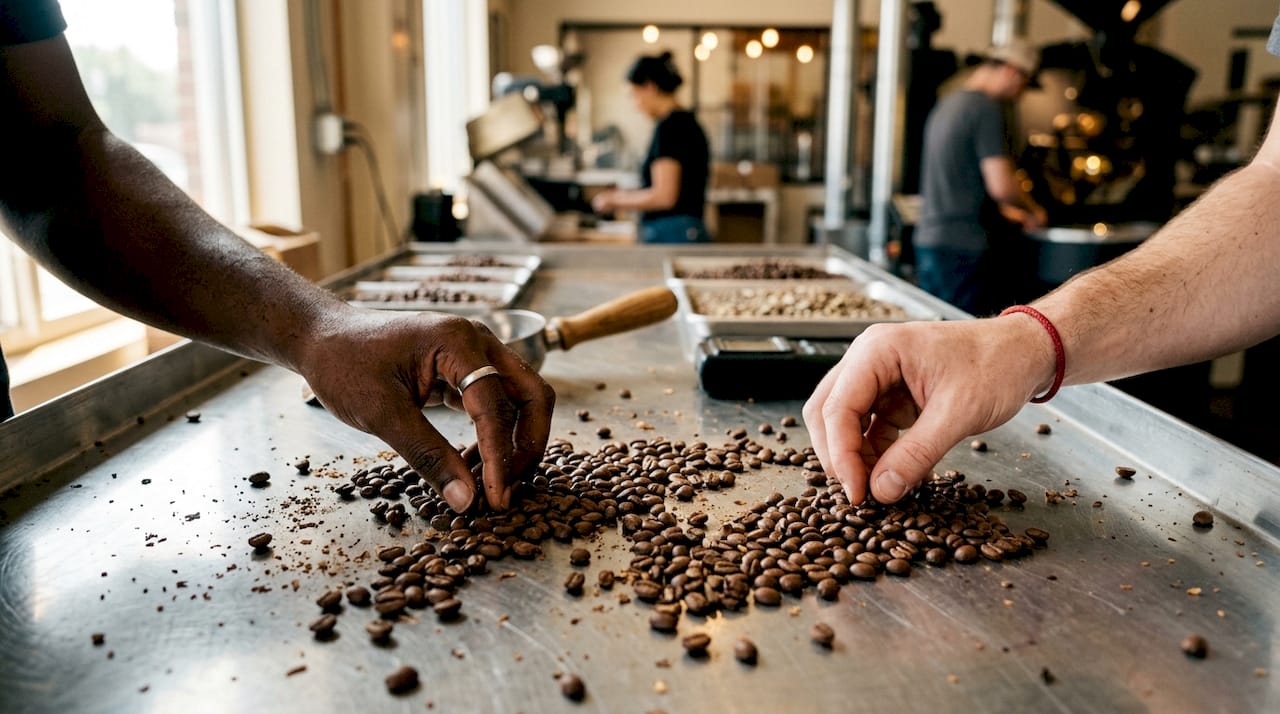
The Specialty Coffee Association (SCA) sets the most widely used quality benchmark in the industry. Specialty coffee requires a minimum cupping score of 80 points on the SCA scale, with moisture content maintained between 10–12% and no more than 5 full defects per 350g sample. These numbers give you a concrete pass/fail standard rather than a vague sense of “good coffee.”
Traceability is the third pillar that most cafes overlook. Under the EU Due Diligence Regulation (EUDR) 2023/1115, traceability must reach individual farmer plots, not just village-level aggregation. That legal requirement also happens to be a strong indicator of a supplier who takes quality control seriously at every stage of the chain.
Key indicators of a reliable coffee supplier
Reliable suppliers show their quality through infrastructure, documentation, and process, not just promises. Before you commit to any supplier, check for the following benchmarks.
Processing and sorting capability
A reliable coffee supplier should complete wet mill processing within 12 hours of harvest and use automated sorting equipment. Automated optical sorting can reduce defects by up to 60%. That level of infrastructure signals a supplier who controls quality at the source, not one who hopes for the best.
Documentation and certification
Ask for export certifications, chain-of-custody records, and traceability documents that link each batch to specific farmer plots. A supplier who cannot produce these quickly is either disorganised or sourcing without proper oversight. Neither is acceptable for a business that depends on consistent supply.
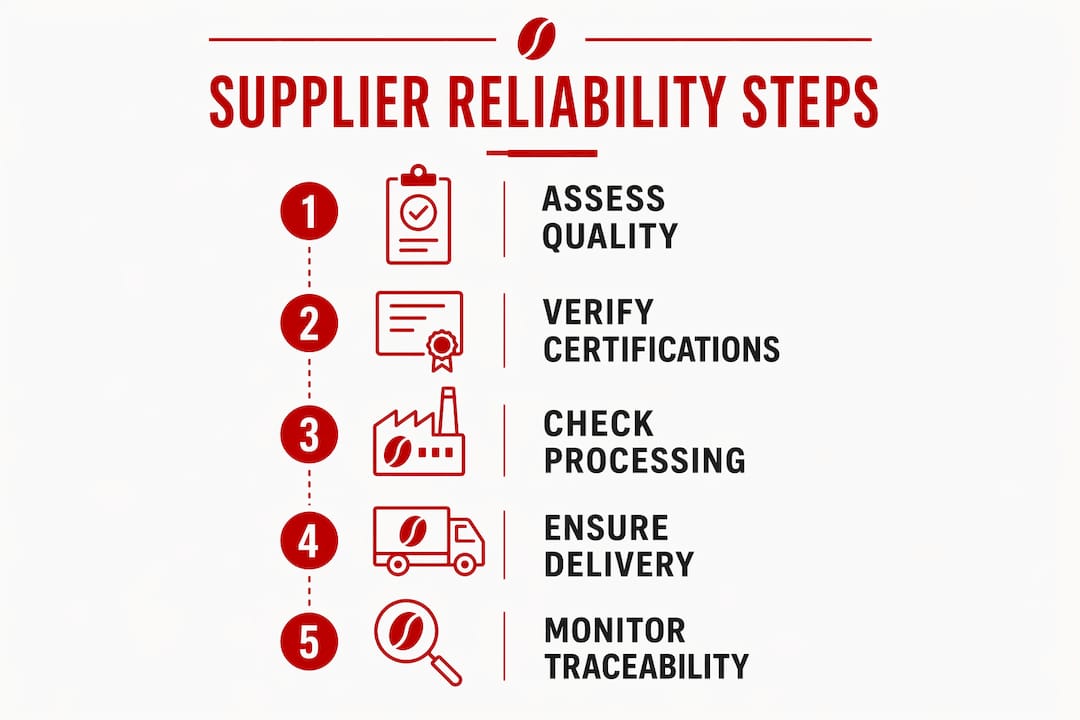
Here is a summary of the key reliability indicators to check during your coffee supplier evaluation:
| Indicator | Standard to meet |
|---|---|
| SCA cupping score | Minimum 80 points |
| Moisture content | 10–12% verified by calibrated meter |
| Defect count | Maximum 5 full defects per 350g sample |
| Processing speed | Wet mill within 12 hours of harvest |
| Sorting equipment | Automated optical sorting present |
| Traceability | To individual farmer plot level |
| Documentation | Export certifications and chain-of-custody records |
Pro Tip: Request samples from at least three separate batches before making a decision. Single samples, often called “golden samples,” are curated to impress. Multiple batch sampling from different weeks is the only way to verify true consistency.
How does the coffee supplier vetting process work?
A structured coffee supplier vetting process typically takes around 30 days to complete, moving from a shortlist of 8–10 candidates down to a final selection through cupping trials and document verification. That timeline is not arbitrary. It reflects the minimum time needed to test multiple batches, review compliance paperwork, and assess logistics capability properly.
A practical vetting sequence looks like this:
- Initial research. Identify 8–10 candidates through trade directories, industry events, or referrals. Check their certifications and public traceability claims before making contact.
- Sample request. Ask for samples from at least three independent batches, not a single showcase sample. Cup each one against SCA criteria.
- Documentation audit. Request export certifications, moisture content test results, and traceability records to farmer plot level. Verify these against EUDR 2023/1115 requirements.
- Supply chain walk-through. Ask for a virtual or in-person tour of their processing facility. Confirm wet mill capability and sorting equipment.
- Pilot contract. A 500kg trial order is the recommended starting volume. This tests roast profile development and delivery reliability without many financial exposure.
- Final evaluation. Score each candidate against your quality, logistics, and compliance benchmarks. Select the supplier who meets all three, not just the one with the best-tasting sample.
A common vetting mistake is ignoring logistics capability during the quality phase. A supplier who produces excellent coffee but cannot guarantee delivery windows creates as much operational risk as a poor-quality one.
Pro Tip: Ask every shortlisted supplier directly: “What is your contingency plan if your primary origin has a poor harvest?” A supplier who answers confidently with a documented plan is far more trustworthy than one who improvises.
How does delivery reliability affect your business day to day?
Delivery reliability affects day-to-day business stability more than a supplier’s passion for coffee alone. A late delivery does not just mean an empty hopper. It means cancelled orders, frustrated customers, and staff standing idle during your busiest hours.
The operational risks that reliable suppliers remove include:
- Stockouts during peak trading periods
- Inconsistent grind and brew results from substituted beans
- Wasted staff time spent chasing orders or sourcing emergency stock
- Reputational damage from serving a noticeably different coffee
- Cash flow disruption from emergency premium purchases
The distinction between in-house roasters and third-party distributors matters here. An in-house roaster controls the full chain from green bean to dispatch, which means fewer handoff points where delays occur. A third-party distributor may offer wider variety but adds a logistics layer that can slow response times during supply disruptions.
Reliable suppliers proactively alert buyers to supply risks rather than waiting for problems to escalate. That proactive communication is what separates a genuine supply partner from a transactional vendor.
Pro Tip: Agree on a communication protocol with your supplier before your first order. Specify response time expectations for routine queries (within 24 hours) and urgent issues (within 4 hours). A supplier who agrees to this and sticks to it is demonstrating reliability before the first bag arrives.
Traceability and compliance: why transparent sourcing protects your brand
Traceability is no longer optional for businesses that import or purchase coffee with an international supply chain. The EUDR 2023/1115 requires suppliers to provide documentation that traces coffee to individual farmer plots. Village-level aggregation no longer meets the legal standard. Businesses that cannot demonstrate compliance face import restrictions and reputational risk.
The practical challenge is that many coffee-growing regions rely on smallholder farmers. Volume reconciliation across hundreds of small plots is complex. One critical calculation to understand is the cherry-to-green-bean weight ratio. Accounting for a 5:1 weight loss from cherry to green bean is standard in accurate supply chain tracking. A supplier who cannot reconcile these volumes accurately is likely to have gaps in their traceability records.
| Traceability standard | What good looks like | Common shortcoming |
|---|---|---|
| Farm-level documentation | GPS coordinates and farmer ID per plot | Village-level aggregation only |
| Volume reconciliation | 5:1 cherry-to-green-bean ratio accounted for | Unexplained volume discrepancies |
| Chain-of-custody records | Documented at every processing stage | Records begin only at export |
| Export certification | Current and verified by third party | Self-certified or expired |
| EUDR compliance | Full plot-level traceability documented | Partial compliance claimed |
Transparent sourcing also builds customer trust. Cafes that can tell the story of where their coffee comes from, down to the farm, create a stronger brand narrative than those who cannot.
Pro Tip: Request full traceability evidence before signing any contract, and schedule an annual re-verification. Supply chains change. A supplier who was compliant last year may have switched sourcing without informing you.
Practical tips for maintaining a reliable coffee supply chain
Choosing a reliable supplier is the first step. Maintaining that reliability over time requires active management on your side too.
- Set minimum order quantities that match your actual consumption. Ordering too infrequently creates gaps; ordering too much ties up cash and risks freshness.
- Cup your coffee against SCA benchmarks at least once per quarter. Consistency over time is the real test of supplier quality.
- Maintain a backup supplier relationship, even if you do not use them regularly. A second vetted supplier means you have a Plan B when your primary source faces disruption.
- Conduct a brief supplier audit every 12 months. Review delivery performance, documentation currency, and any changes to their processing infrastructure.
- Keep records of every batch received, including cupping scores and delivery dates. This data makes it easy to spot gradual quality drift before it becomes a customer complaint.
Ads-coffee-supplies has operated as a trusted UK coffee supplier since 1993, with a focus on SCA quality standards and consistent supply for cafes and small businesses. Working with a supplier who already meets these benchmarks reduces the burden of ongoing verification.
Pro Tip: Do not wait for a problem to review your supplier relationship. Schedule a brief quarterly check-in call to discuss upcoming harvests, any changes to their supply chain, and your evolving volume needs. Suppliers who welcome these conversations are the ones worth keeping.
Key takeaways
Reliable coffee sourcing requires verified quality benchmarks, documented traceability, and dependable logistics working together, not just a good-tasting sample.
| Point | Details |
|---|---|
| Use SCA benchmarks | Require a minimum cupping score of 80 and moisture content of 10–12% for every batch. |
| Vet with multiple batches | Test samples from at least three independent batches to verify true consistency. |
| Check traceability to plot level | EUDR 2023/1115 requires farm-level documentation, not village-level aggregation. |
| Run a 500kg pilot order | A trial order tests delivery reliability and roast consistency before full commitment. |
| Maintain a backup supplier | A second vetted supplier protects your business when your primary source faces disruption. |
What I have learned about choosing coffee suppliers
The single biggest mistake I see cafes make is treating the supplier selection process as a one-time quality check. They cup a beautiful sample, sign a contract, and assume the relationship will maintain itself. It rarely does.
What actually predicts long-term reliability is infrastructure, not intention. A supplier with wet mill processing on-site, optical sorting equipment, and documented traceability will consistently outperform one who relies on third-party processing and verbal assurances. You can assess this in a single facility visit or a thorough documentation audit. Most buyers never ask for it.
The second thing I have noticed is that communication style reveals reliability before the first delivery arrives. A supplier who responds to your vetting questions with detailed, specific answers is demonstrating the same care they apply to their supply chain. A supplier who is vague, slow, or defensive during the sales process will be worse once you are a paying customer.
Gradual scale-up is also underrated. Starting with a 500kg pilot order feels cautious, but it gives you real data on delivery timing, batch consistency, and how the supplier handles a minor issue. That data is worth far more than any promise made during a sales call.
The suppliers worth keeping are the ones who tell you about a problem before you notice it yourself. That proactive honesty is rare, and when you find it, hold onto it.
— Harvey
Reliable coffee sourcing with Ads-coffee-supplies
For cafes and small businesses that want consistent quality without the guesswork of unverified suppliers, Ads-coffee-supplies offers a trusted starting point.
Ads-coffee-supplies has supplied UK cafes and businesses with quality coffee and beverage solutions since 1993. The range covers everything from coffee beans and espresso supplies to equipment and spare parts, all backed by free next working day delivery on orders over £69. The family-run approach means you get direct, responsive customer service rather than an automated ticketing system. If you are ready to work with a supplier who takes quality and delivery seriously, Ads-coffee-supplies is worth your first call.
FAQ
What is coffee supplier reliability?
Coffee supplier reliability is the consistent ability of a supplier to deliver quality coffee on time, maintain full traceability, and support your business proactively. It covers product quality, logistics performance, and compliance with standards such as EUDR 2023/1115.
What cupping score should a reliable coffee supplier meet?
A reliable supplier should meet the SCA minimum cupping score of 80 points, with moisture content between 10–12% and no more than 5 full defects per 350g sample.
How long does the coffee supplier vetting process take?
A structured vetting process takes approximately 30 days, moving from an initial shortlist of 8–10 candidates to a final selection through cupping trials, documentation audits, and a pilot order.
What is a safe trial order volume for a new coffee supplier?
A 500kg trial order is the recommended starting volume. It tests roast profile development and delivery reliability without exposing your business to excessive financial risk.
What traceability does EUDR 2023/1115 require from coffee suppliers?
EUDR 2023/1115 requires traceability to individual farmer plots, with documented chain-of-custody records at every processing stage. Village-level aggregation no longer meets the legal standard.

