
Anyone weighing up why coffee and bagels keep selling side by side on the British high street is really asking a question about margins, workflow and repeat trade. Independent operators want a menu that performs during a Saturday morning rush without demanding a full kitchen brigade, and that’s precisely where this pairing earns its keep. The spill the beans coffee and bagel format has become a useful shorthand for that kind of café, one built around proper coffee and a chewy, versatile bagel rather than an overstretched menu trying to please everyone.
This piece looks at why the pairing works, how to build a coffee programme that holds its quality through service, and what a balanced bagel menu actually needs. It also covers how the model adapts across independent cafés, offices, hospitality catering and home brewing setups, since each has different pressures. Allied Drinks Systems, a family-run coffee equipment and supply business trading since 1993, informs some of the practical equipment guidance throughout, drawn from years of fitting machines to real service volume.
Read on for the detail behind each part of the pairing, starting with why it works so well in the first place.
Key Takeaways
- The coffee and bagel pairing works because of textural contrast, flavour balance and portability, which suits busy, habitual customers.
- Independent cafés favour this format because it keeps preparation simple while protecting margins and encouraging repeat visits.
- Coffee quality depends on bean freshness, roast selection, consistent grinding and equipment that holds temperature and pressure reliably.
- The same principles scale differently across offices, hospitality catering and home brewing, but consistency remains the common thread.
- A dependable equipment and supply partner reduces downtime and simplifies procurement for any business running this format at scale.
Jump to section
- Why Does the Coffee and Bagel Pairing Work So Well?
- What Makes Independent Coffee Shops Choose This Format?
- How Do You Build a Quality Coffee Programme?
- What Makes a Strong Bagel Menu?
- How Does This Model Work Across Different Business Settings?
- What Operational Factors Should Businesses Consider?
- The Bottom Line
- Frequently Asked Questions
- What Roast Level Works Best For Pairing With Bagels?
- How Often Should A Café Rotate Its Bagel And Coffee Menu?
- Is Bean-to-Cup Or Espresso Equipment Better For A Small Café?
- How Can Offices Maintain Consistent Coffee Quality Without A Barista On-Site?
- What’s The Biggest Cost Driver In Running A Coffee-And-Bagel Offering?
- How Does Water Quality Affect Coffee Machine Performance?
Why Does the Coffee and Bagel Pairing Work So Well?

Coffee and bagels work together because they balance each other on texture and flavour while suiting the pace of modern café trade. The dense, chewy bite of a bagel offsets coffee’s bitterness and acidity, and toppings like cream cheese or butter add a richness that plays well against both milky and black coffee styles. This isn’t a coincidental pairing; it mirrors how bread and coffee have paired across café cultures for generations, just with a sturdier, more portable format.
Portability matters just as much as flavour here. Bagels hold their shape and texture far better than delicate pastries, which makes them practical for commuters eating on the move and for baristas who need a food item that won’t slow down a queue. Combined with a flexible topping range that spans sweet to savoury, this versatility lets a café serve breakfast, brunch and lunch trade from the same short prep line.
What Makes Independent Coffee Shops Choose This Format?
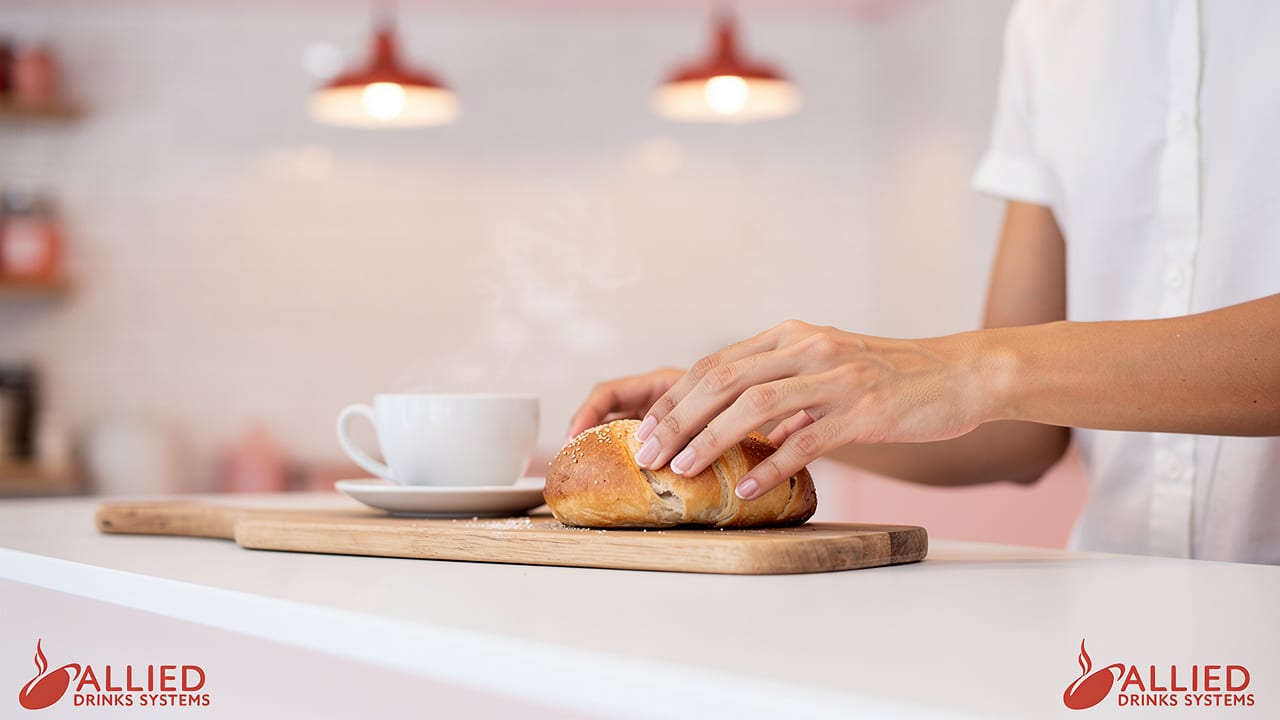
Independent coffee shop owners choose the coffee and bagel format because it keeps operations lean without making the menu feel thin to customers. Bagels need far less kitchen infrastructure than a full hot breakfast menu, yet they feel substantial enough to satisfy a hungry commuter, which lets a small team run service smoothly during the morning peak. Sourced well, bagels also cost relatively little per unit, and paired with coffee’s own healthy margin once equipment and beans are accounted for, the combination supports a genuinely profitable core menu.
Beyond the numbers, this format gives independent operators a clear identity in a market where chain coffee shops dominate visibility. A focused offering, built around a distinctive name and a tight, well-executed menu, is easier to market and easier for customers to remember than a sprawling list of options. That clarity, paired with coffee’s habitual nature as a purchase, tends to build the kind of loyal local following independent cafés rely on to survive quieter trading periods.
How Do You Build a Quality Coffee Programme?
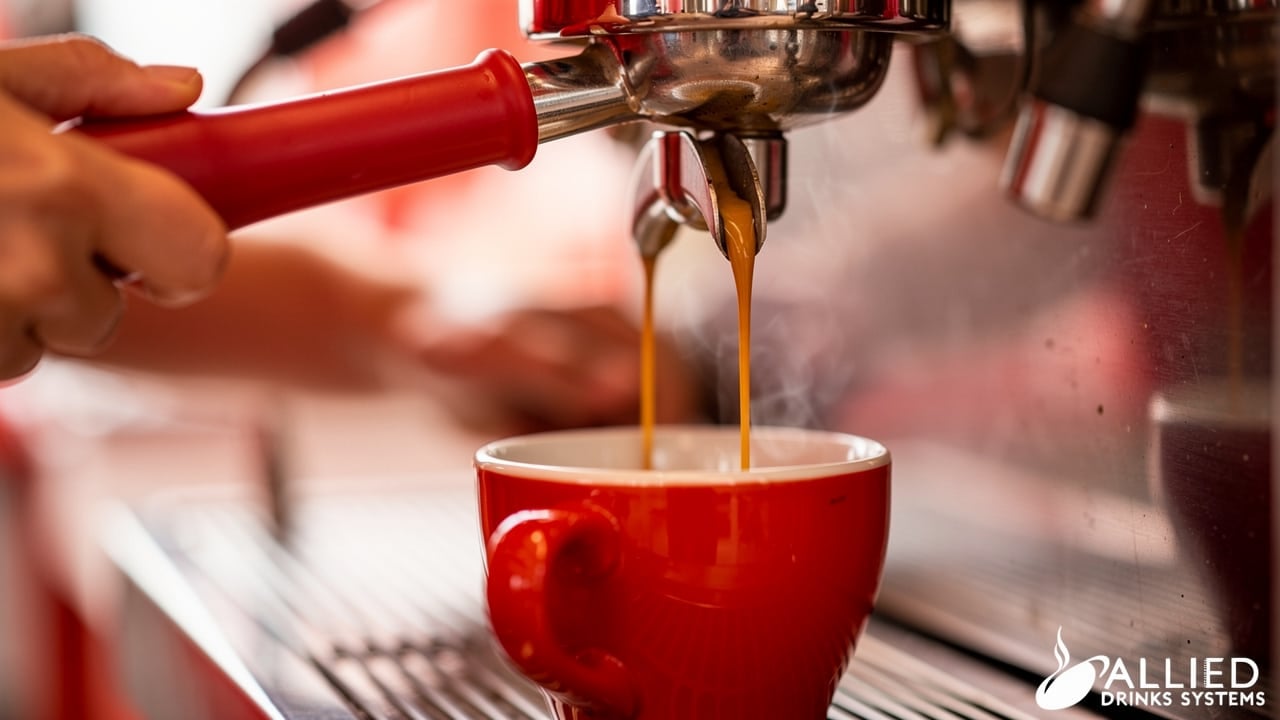
Building a quality coffee programme starts with sourcing beans that suit your customer base and keeping them fresh enough to taste their best. Roast level shapes the whole experience:
- Light roasts preserve brighter, more nuanced origin characteristics.
- Medium roasts balance acidity and body for broad appeal.
- Dark roasts deliver the bolder, heavier profile that traditional coffee drinkers often prefer.
Freshness matters more than most operators expect, since beans start losing character within weeks of roasting, a decline confirmed by accelerated shelf-life testing on specialty coffee, which is why working with a supplier who can guarantee regular delivery schedules protects against stale stock sitting on a shelf. Grinding consistency is just as important as the beans themselves; a burr grinder produces uniform particle size, while a blade grinder creates uneven grounds that lead to patchy extraction, either weak and sour or bitter and over-extracted. Extraction quality then depends on equipment holding steady temperature and pressure shot after shot, a relationship explored in research on adaptive roaster control systems, because a machine that drifts under pressure during a busy morning will produce inconsistent drinks no matter how good the beans are. Water quality sits underneath all of this, often overlooked, yet poor filtration both affects taste and causes limescale that shortens equipment life.
Choosing the Right Equipment for Your Volume
Matching equipment to your actual service volume matters more than chasing the most advanced machine on the market. A staffed barista bar with steady footfall usually justifies a traditional espresso machine offering manual control over every shot, while a smaller team or an office setting often gets more consistent results from a bean-to-cup system that automates the process. Water filtration protects whichever machine you choose, and this is one area where Allied Drinks Systems’ packages, combining machines, accessories, beans and technical support with flexible leasing options, help start-ups manage cash flow without a large upfront outlay.
What Makes a Strong Bagel Menu?

A strong bagel menu starts with the product itself, since traditional bagels are boiled before baking, giving them the dense, chewy texture and shiny crust that separates them from ordinary bread rolls. Most cafés build their core range around a handful of dependable varieties:
- Plain
- Sesame and poppy seed
- Everything
- Cinnamon raisin
- Wholemeal or multigrain
Together these cover savoury, bold and health-conscious preferences without overcomplicating the kitchen. Keeping the range to three or four core varieties, rather than a dozen, tends to serve both stock control and customer decision-making better.
Toppings and fillings are where the menu earns its margin and its variety. Classic cream cheese remains the fastest, most universally popular option, while smoked salmon and cream cheese commands a premium price point for customers wanting a treat. Bacon, egg and cheese suits heartier brunch trade, avocado toppings serve health-conscious and plant-based customers, and simple jam or nut butter options give a lighter, cheaper alternative that keeps the menu accessible across budgets.
How Does This Model Work Across Different Business Settings?
The coffee and bagel format holds up across very different business settings because its core strengths, speed, consistency and versatility, translate wherever they’re applied.
| Setting | What Matters Most | Typical Equipment |
|---|---|---|
| Independent cafés | Focused menu, seasonal rotation | Espresso machine or bean-to-cup |
| Hospitality and catering | Portability, holding well over time | Batch brew urns or bean-to-cup |
| Home brewing | Matching roast to brew method | Pour-over, AeroPress, home espresso |
| Offices | Speed and low maintenance | Bean-to-cup or vending formats |
Independent cafés get the most out of it by keeping the menu focused rather than trying to out-variety the chains, rotating a handful of well-executed options seasonally instead of stretching kitchen capacity. Hospitality and catering businesses lean on bagels’ ability to travel and hold well compared with delicate pastries, making them practical for buffet service, conference catering and grab-and-go setups, paired with batch brew urns or bean-to-cup machines depending on guest numbers. Home baristas and coffee enthusiasts increasingly recreate this pairing themselves, experimenting with roast profiles, brewing methods such as pour-over or AeroPress, and matching a lighter, fruitier filter coffee with a seeded bagel versus a bolder espresso alongside a richer, savoury topping.
Bringing It Into the Workplace

Office managers increasingly recognise that quality coffee links directly to staff satisfaction, and a coffee and bagel offering brought in-house needs speed, consistency and equipment that doesn’t demand a barista on-site. Allied Drinks Systems supports this through office and workplace options spanning single-origin coffees, plant-based milks, decaffeinated blends and vending formats like the SnackBreak Mini, letting facilities teams provide a café-standard break without building full catering infrastructure.
What Operational Factors Should Businesses Consider?
Reliable supply chains and machine servicing determine whether this format runs smoothly or falls apart during a busy trading period. Beans and bagels going out of stock, or a machine breaking down without a fast repair route, cost far more in lost trade than most businesses budget for, which is why scheduled maintenance and staff training on equipment use both pay for themselves over time. Portion control on toppings, bulk purchasing agreements on beans and bagels, and energy-efficient machines all help manage cost without customers noticing any drop in quality.
For many venues, the bigger challenge is simply juggling multiple suppliers for machines, consumables, spare parts and technical support. The company consolidates these into one point of contact, covering equipment, beans, disposables and servicing, which reduces the administrative friction that busy cafés, offices and catering businesses would otherwise absorb on top of daily service pressure.
The Bottom Line
Across every setting covered here, from an independent café to an office break-out area, the same principles decide whether a coffee and bagel offering succeeds. Quality ingredients, consistent equipment and a menu that fits your actual operational capacity matter far more than chasing variety for its own sake. The spill the beans coffee and bagel approach works because it keeps these fundamentals simple and repeatable rather than complicated.
Consistency, not variety, is what keeps customers coming back to a small café menu.
If you’re weighing up equipment, sourcing or servicing for your own coffee and bagel offering, partnering with an established supplier such as Allied Drinks Systems, including free next-day delivery on orders over £69 and in-house engineers for installation and servicing, takes much of that operational risk off your plate.
Frequently Asked Questions
What Roast Level Works Best For Pairing With Bagels?
Medium roasts tend to work best as an all-round pairing, balancing acidity and body across most bagel varieties. Lighter roasts suit seeded or wholemeal bagels where you want the coffee’s brighter notes to come through, while darker roasts pair better with richer, savoury-topped bagels like bacon and cheese.
How Often Should A Café Rotate Its Bagel And Coffee Menu?
Seasonal rotation, roughly four times a year, tends to work best for most independent cafés. This keeps a small core range of reliable, always-available items while introducing limited specials that create interest without overstretching kitchen capacity or stock management.
Is Bean-to-Cup Or Espresso Equipment Better For A Small Café?
It depends on staffing. Bean-to-cup machines suit smaller teams or non-specialist staff who need consistent results without training, while espresso machines suit venues with a dedicated barista who wants more manual control over shot quality.
How Can Offices Maintain Consistent Coffee Quality Without A Barista On-Site?
Low-maintenance bean-to-cup machines are the most practical route, since they automate grinding and extraction to a consistent standard. Pairing this with brief staff training and a scheduled servicing agreement from a supplier keeps quality steady without needing dedicated barista skills.
What’s The Biggest Cost Driver In Running A Coffee-And-Bagel Offering?
Topping and filling portions, particularly premium items like smoked salmon, tend to drive cost more than the bagels or coffee themselves. Bulk purchasing agreements and disciplined portion control are the two levers that make the biggest difference to margin.
How Does Water Quality Affect Coffee Machine Performance?
Poor water quality affects both taste and equipment longevity, since minerals build up as limescale inside boilers and pipework. A proper filtration system protects the machine from this build-up while also improving the consistency and taste of every cup served.

