
Most homemade attempts at a hot chocolate recipe end up watery and bland, or so sweet they’re sickly, nothing like the thick, glossy cup served across the counter at a decent café. The usual culprits are low-cocoa powder, milk heated the wrong way, and no real technique for binding the two together into something silky. A proper hot chocolate recipe can start from quality cocoa powder, a good hot chocolate powder or melted chocolate: powder for speed and consistency, melted chocolate (ideally couverture, with extra cocoa butter) when richness matters more than how fast the drink appears. This guide from ADS Coffee Supplies, a family-run supplier of coffee and hot chocolate equipment since 1993, walks through ingredient selection, a full stovetop method, flavour variations with marshmallows and spices, and how businesses can scale the same quality up using dedicated machines. Read on to find the approach that suits your kitchen counter or your café service.
Key Takeaways
- The quality of your cocoa or chocolate, along with the fat content of your milk, is what separates a rich cup from a thin one.
- Getting milk to 65-70°C, and never letting it boil, is the single biggest factor in achieving a silky texture.
- Mixing cocoa powder into a paste before adding hot milk stops lumps forming.
- Businesses handling higher volumes should weigh manual preparation against a dedicated hot chocolate machine for consistency.
Jump to section
- What Makes Hot Chocolate Rich and Café-Style?
- How Do You Make Hot Chocolate With Cocoa Powder?
- Which Milk and Ingredients Give the Best Results?
- How Do You Make the Best Hot Chocolate With Marshmallows and Toppings?
- How Can Businesses Scale Up Hot Chocolate Service?
- The Takeaway
- Frequently Asked Questions
- What Is The Difference Between Hot Chocolate And Hot Cocoa?
- How Much Cocoa Powder Should I Use Per Cup?
- Can I Make Hot Chocolate Without A Hob, Using A Microwave?
- Why Does My Hot Chocolate Taste Burnt Or Scalded?
- Is Hot Chocolate From A Machine As Good As Homemade?
- How Long Can Prepared Hot Chocolate Be Kept Before Serving?
What Makes Hot Chocolate Rich and Café-Style?
Café-style hot chocolate gets its body from melted chocolate or high-cocoa powder combined with properly heated milk, not from a cheap instant mix stirred into hot water. This matters more than ever now that sharply reduced harvests in Ghana and Côte d’Ivoire have pushed cocoa prices to record highs, making the choice between cocoa powder and real chocolate more of a budget decision than it used to be. Drinking chocolate powders with a higher cocoa content close that gap considerably, delivering a deeper, less sugary result closer to what you’d get from melted chocolate. A café-style cup also depends on temperature discipline: milk heated to around 65-70°C develops the steam and microfoam that give the drink its characteristic weight on the tongue, while anything much hotter scalds the proteins and flattens the flavour. Balanced sweetness matters too, since the goal is chocolate flavour supported by sugar, not sugar flavour with a hint of cocoa.
Choosing Between Cocoa Powder and Melted Chocolate
Cocoa powder suits anyone who needs speed, consistency and a straightforward clean-up, since it dissolves predictably and keeps well in a cupboard for months without special storage. Melted chocolate, particularly couverture, which contains more cocoa butter than standard chocolate, takes a little longer to prepare but rewards that effort with noticeably richer texture and deeper flavour, though it’s also the pricier option to stock while cocoa costs stay high. If you’re using a ready-sweetened hot chocolate powder rather than plain cocoa, leave out the extra sugar in the method below and follow the dose on the pack.
- Choose powder when you need throughput, whether that’s a busy morning at home or serving several people quickly.
- Choose melted chocolate when richness matters more than speed, such as a weekend treat or a smaller batch where the extra few minutes won’t slow anyone down.
How Do You Make Hot Chocolate With Cocoa Powder?
The best hot chocolate recipe using cocoa powder starts with a paste rather than tipping powder straight into hot milk, and it uses roughly 15-20g of cocoa powder per 240ml of milk alongside 15-20g of sugar to taste. Combine the cocoa powder and sugar in your cup first, then stir in a small splash of cold milk, around 30ml, until it forms a smooth, lump-free paste with no dry pockets remaining. Heat the rest of your milk gently in a pan, watching for the first wisps of steam rather than a rolling boil, which signals you’ve reached that 65-70°C sweet spot where chocolate flavour develops without scorching. Pour the hot milk into the paste gradually, stirring as you go, then switch to a steady whisk for two to three minutes until the surface turns glossy and slightly frothy. A quarter teaspoon of vanilla extract and a genuine pinch of salt, added right at the end, round out the sweetness and make the cocoa taste noticeably deeper without anyone being able to pinpoint why.
Step-by-Step Stovetop Method
Following the stages in order keeps the texture predictable every time you make this hot chocolate recipe, since each step solves a specific problem that trips people up when they rush.
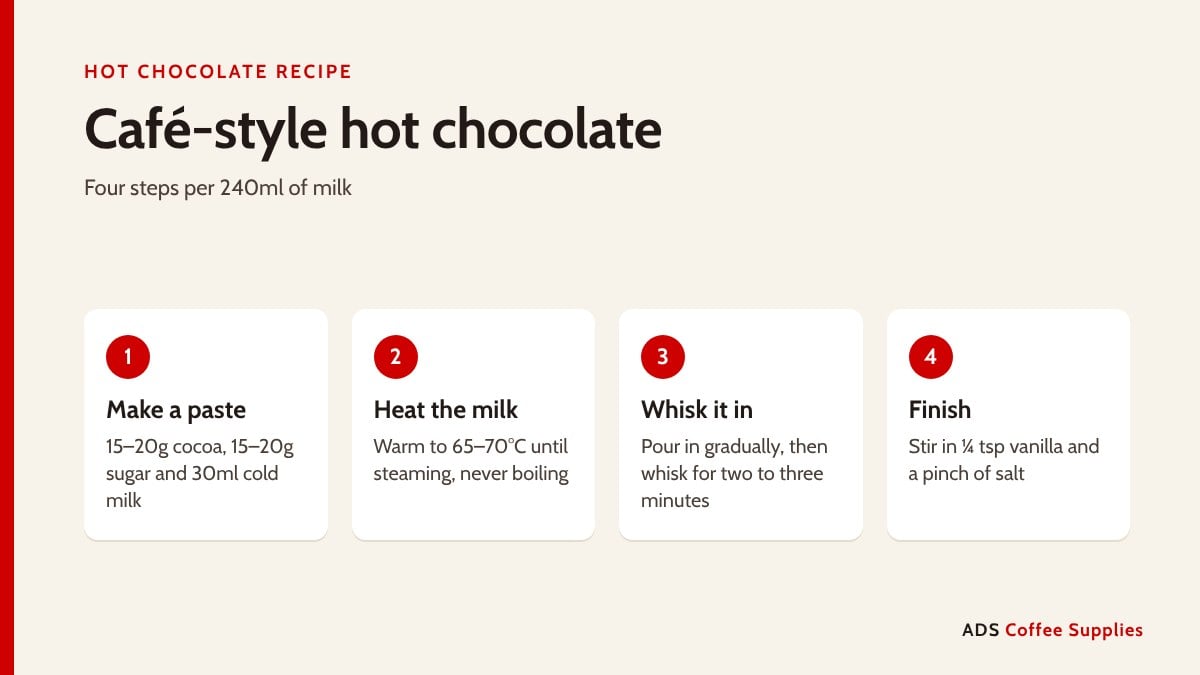
- Whisk cocoa powder, sugar and a splash of cold milk into a smooth paste before any heat is involved.
- Warm the remaining milk slowly until steam appears, never allowing it to boil.
- Pour the hot milk into the paste and whisk for two to three minutes to build a silky microfoam.
- Stir in vanilla extract and a pinch of salt just before serving.
Common Mistakes That Ruin Texture
Most disappointing homemade hot chocolate comes down to three repeatable errors rather than bad ingredients, and each one is simple to fix once you know what to watch for. Scorched milk, from letting the pan climb past 75°C, introduces a burnt, slightly bitter note that no amount of sugar can mask.
Skipping the paste stage leaves gritty cocoa lumps suspended in the finished drink, which feels unpleasant even when the flavour underneath is fine. Insufficient whisking is the quieter failure, since it leaves the drink thin and flat rather than aerated, so don’t stop at the first sign of dissolving.
Which Milk and Ingredients Give the Best Results?
Whole milk produces the richest hot chocolate because its higher fat content (around 3.5%) carries cocoa flavour and builds body that lower-fat milks simply can’t replicate on their own. Semi-skimmed milk still works well and keeps things lighter without tasting thin, while skimmed milk tends to leave the finished drink watery regardless of how much chocolate you add. Sweetener choice shifts the character of the cup too: granulated or caster sugar gives clean sweetness, brown sugar adds a faint caramel note, and honey brings floral depth if stirred in once the drink has cooled slightly so it doesn’t lose its aroma to heat.
| Milk Type | Richness | Froth Quality | Best For |
|---|---|---|---|
| Whole milk | High | Very good | Classic, indulgent cups |
| Semi-skimmed | Medium | Good | Lighter everyday drinking |
| Oat milk (barista) | High | Excellent | Dairy-free with full body |
| Full-fat soy milk | Medium-high | Good | Protein-rich, vegan option |
| Almond milk | Low-medium | Fair | Lighter, nutty variations |
| Coconut milk | High | Good | Tropical, dessert-style cups |
Best Milk Alternatives for Dairy-Free Hot Chocolate
Barista-edition oat milk has become the standard choice for dairy-free hot chocolate because it froths comparably to whole milk and carries a natural sweetness that complements cocoa rather than competing with it. Full-fat soy milk is the next best option, offering decent protein content and a satisfying mouthfeel, though some drinkers notice a faint background flavour.
Whichever plant milk you choose, keep it well below boiling point, since most alternatives split or curdle far more readily than dairy milk once overheated. Heating gently and whisking consistently avoids this almost entirely.
How Do You Make the Best Hot Chocolate With Marshmallows and Toppings?
The best hot chocolate with marshmallows adds them after whisking, once the drink is hot but not so scalding that the marshmallows dissolve into nothing before anyone takes a sip. A handful of around 15-20g per serving gives enough presence to melt slightly on top without overwhelming the cup, and toasting them briefly under a grill beforehand adds a caramelised edge that plain marshmallows can’t match. Whipped cream, ideally made from double cream with a touch of vanilla and sugar rather than a canned version, melts into the drink for added richness rather than just sitting on top as decoration. Chocolate shavings, made by running a vegetable peeler along a block of chocolate, add visual appeal and a slightly different texture with each spoonful, while a shake of chocolate sprinkles or a drizzle of chocolate or caramel topping sauce finishes the presentation in seconds.
Flavour Variations Worth Trying
Once the base hot chocolate recipe is solid, small additions turn it into something closer to a signature drink rather than a standard cup.
- Mexican-style hot chocolate adds a quarter teaspoon of cinnamon and a pinch of chilli powder or cayenne, giving warmth that builds slowly rather than arriving all at once.
- Orange hot chocolate works best when citrus, whether zest or a drop of extract, goes in after heating, since the acidity can cause milk to split if added too early.
- A café mocha is as simple as pulling a single or double espresso shot straight into the finished drink, adding depth that chocolate alone doesn’t quite reach.
How Can Businesses Scale Up Hot Chocolate Service?
Manual preparation works fine for a handful of cups, but once a café, office or events team is serving dozens of drinks an hour, hand-whisking every single one becomes impractical and inconsistent between staff members. The tipping point usually arrives when speed and uniformity matter more than the extra control that stovetop methods offer, which is exactly where dedicated machines earn their keep. We supply a range built around this problem, from countertop hot chocolate machines to vending-grade powders, each designed to standardise dosing and temperature so the fiftieth cup tastes the same as the first. For businesses juggling coffee, tea and hot chocolate demand simultaneously, having equipment that handles consistency automatically frees staff to focus on service speed and customer experience rather than repeated manual mixing.
Matching a Machine to Your Volume and Setting
Choosing the right unit comes down to expected volume and the setting it needs to fit into, whether that’s a small office kitchen or a busy café counter during peak hours.
- Our own ADS Choc Hot Chocolate Machine, available on enquiry, suits cafés and office kitchens that want a dedicated hot chocolate dispenser.
- The Cadbury Solo Hot Chocolate Machine produces up to 240 cups per hour from a slim 16.5cm-wide footprint, with a separate hot water button, making it a strong fit for cafés, kiosks and offices needing speed without sacrificing counter space.
- The Cadbury Trio Hot Chocolate Machine serves classic, white and vegan hot chocolate from three canisters in one unit, useful for venues wanting variety without installing three separate machines.
- Vending-grade powders, including vegan options and Summit Vending White Hot Chocolate Powder, are made to dissolve consistently in unattended vending machines.
Keeping Quality Consistent at Service Pace
Equipment alone doesn’t guarantee a good cup, since standardised dosing and temperature control only pay off when staff understand how to use them properly during a rush. Training removes the variability that comes from different team members eyeballing quantities or rushing the mixing cycle under pressure, and choosing the right powder matters just as much; our guide to hot chocolate drinking powder explains the options.
We back our machine range with technical support and training, and our own engineers install and service machines nationwide across the UK, helping teams get consistent results without relying on guesswork once the equipment is installed.
The Takeaway
Getting a hot chocolate recipe right at home comes down to technique as much as ingredients, since the same quality cocoa powder or melted chocolate can produce wildly different results depending on temperature control and whether you bother making a paste first. Whisking matters more than most people assume, and the small additions, whether marshmallows, cinnamon or a shot of espresso, are what turn a competent cup into one worth repeating.
For businesses, the decision usually comes down to volume rather than taste preference, since manual methods lose consistency fast once demand climbs past a handful of cups per hour. If that’s where you’re at, explore our hot chocolate machine range or call 0800 442299 for advice suited to your setting.
Frequently Asked Questions
What Is The Difference Between Hot Chocolate And Hot Cocoa?
Hot chocolate uses melted chocolate, which contains natural cocoa butter, while hot cocoa relies on cocoa powder mixed with sugar and milk. The cocoa butter in melted chocolate gives hot chocolate a noticeably richer, silkier texture, whereas cocoa powder versions tend to taste lighter and less dense.
How Much Cocoa Powder Should I Use Per Cup?
A standard ratio is 15-20g of cocoa powder per 240ml of milk, adjusted to taste with a similar quantity of sugar. For a thicker, more intense drink, increase the cocoa powder slightly while keeping the milk quantity the same.
Can I Make Hot Chocolate Without A Hob, Using A Microwave?
Yes, heat milk and chocolate together in 30-second intervals, stirring between each one to prevent overheating or scorching. This method works well for single servings and gives reasonable control without needing a stovetop at all.
Why Does My Hot Chocolate Taste Burnt Or Scalded?
Milk heated above 75°C develops a scorched, slightly bitter flavour that no amount of chocolate or sugar can fully disguise. Watch for gentle steam rising off the surface, which signals the ideal 65-70°C range, rather than waiting for bubbles or a boil.
Is Hot Chocolate From A Machine As Good As Homemade?
Machines standardise temperature and mixing, which gives highly consistent results across large volumes that manual methods struggle to match during busy periods. Homemade methods still offer more control for small batches, but they don’t scale efficiently once demand increases significantly.
How Long Can Prepared Hot Chocolate Be Kept Before Serving?
It’s at its best served straight away. If you need to hold it for service, keep it at 63°C or above, the UK hot-holding minimum, in an insulated container, and make smaller batches through the day rather than one large one. If it starts to separate, a thorough whisk usually restores the texture.

