
Your grinder may be decent. Your brewer might be perfectly capable. You may even be measuring carefully. But if your coffee still tastes flat, harsh or just a bit forgettable, the issue is often the bean itself.
That’s why choosing the best coffee beans for home brewing makes such a big difference. Better beans don’t mean fussier coffee. They mean clearer flavour, better balance and a cup that rewards the effort you’re already putting in.
Good home coffee gets easier once you know what to buy. A few details on the bag matter more than clever branding, and your brew method should guide your choice far more than trendy tasting notes. If you want a practical starting point, this guide to coffee beans for home baristas is useful background before you start narrowing down specific beans.
How I put this guide together: The recommendations here come from years running coffee supply for independent cafes, offices and home baristas across the UK, tasting beans across every major brew method rather than just one. Every brewing method verdict below is based on side-by-side cupping using the same beans and the same water, changing only the brew method and grind, and every bean recommendation is checked against the roast dates, origin data and processing notes printed on the bag rather than marketing copy.
What Is the Best Way to Make Coffee at Home
Before you even think about which beans to buy, it helps to settle the bigger question: which brewing method actually gives you the best cup at home. I’ve made coffee on all six of the common methods enough times to have a firm view, and the honest answer is that no single method wins for everyone. But for most home brewers, one does come out on top.
The Verdict for Most Home Brewers
Pour-over (V60 style) is the best all-round method for most people making coffee at home. It gives you the clearest, cleanest cup, it costs very little to set up, and it forces good habits (fresh beans, correct grind, decent water) that make every other part of your routine better. If you want one method to learn well, this is it.
That said, the right method still depends on your morning, your taste and how much fuss you want. Here’s how the six main methods compare against each other.
Drip Coffee Maker
Best for households making several cups at once with minimal hands-on effort. A drip machine is the easiest method to live with day to day. The trade-off is flavour: batch drip rarely matches the clarity of pour-over or the body of a French press, because water contact time and temperature are harder to control.
French Press
Best for full body and a forgiving brew process. Immersion brewing is nearly impossible to get badly wrong, and it suits medium and medium-dark roasts particularly well. It loses out to pour-over on clarity, since the metal filter lets fine particles (and some oils) through into the cup.
Pour-Over (V60)
Best for flavour clarity and control. This is my overall winner for home brewing. It rewards light and medium roasts, exposes any flaws in the bean quickly, and once you’ve learned the pour technique, it’s genuinely quick to make. The only downside is a short learning curve in the first week or two.
AeroPress
Best for flexibility and travel. It handles a wide range of roast styles well and cleans up in seconds. It doesn’t quite reach the clarity of a V60 or the body of a French press, but as an all-rounder that works in a small kitchen or a suitcase, it’s hard to beat.
Moka Pot
Best for a strong, espresso-like cup without owning an espresso machine. Moka pots suit medium-dark, low-acidity beans and reward a bit of practice with heat control. Very light roasts tend to taste harsh here, which limits its versatility compared with pour-over or AeroPress.
Espresso Machine
Best for milk-based drinks and concentrated, syrupy coffee. Espresso asks the most of your bean, your grinder and your technique, and it’s the least forgiving method on this list. When it works, nothing else matches it for cappuccinos and flat whites, but the setup cost and learning curve are the highest here.
See the Methods in Action
Reading about pour-over and French press technique only gets you so far. Watching the pour rate, the bloom and the timing side by side makes the differences much easier to copy at home.
[Video walkthrough: pour-over and French press brewing side by side]
Once you’ve settled on a method, or you already have a favourite, the next question is which beans actually suit it. That’s where the rest of this guide comes in.
Your Journey to Better Coffee Starts with the Bean
Most home brewers reach the same point. You buy a better machine, upgrade your grinder or switch from supermarket coffee to something that looks more premium, yet the cup still doesn’t taste as good as it should.

The fix usually isn’t more gear. It’s buying beans that suit the way you brew and the flavours you enjoy. That sounds obvious, but plenty of people still choose coffee by packaging, strength numbers or whatever a café happened to serve them last week.
The best coffee beans for home brewing should do three jobs well:
Match your brew method so extraction is easier and more forgiving
Suit your taste whether you prefer chocolatey, nutty, fruity or floral cups
Arrive fresh enough to give you aroma, sweetness and clarity in the mug
Practical rule: If you improve only one part of your setup, improve the beans first.
This isn’t about making coffee complicated. It’s about removing guesswork. Once you understand what roast level, origin, freshness and format mean in the cup, buying coffee gets simpler. You stop chasing random recommendations and start choosing with purpose.
That matters whether you brew with a V60 before work, use a Moka pot at weekends, or make flat whites on a home espresso machine. Different brewers highlight different qualities. A bean that sings in filter can taste awkward in espresso. A rich blend that works brilliantly in milk may feel heavy in a pour-over.
What makes a bean worth buying
Look for coffee that gives you enough information to make a sensible choice. A good bag should tell you where the coffee is from, how dark it’s roasted and when it was roasted. Those details tell you far more than vague claims like “smooth” or “intense”.
The rest of this guide focuses on what works in real kitchens. Not lab conditions. Not café theatre. Just practical choices that help you brew better coffee more consistently at home.
Decoding the Bag What to Look for in a Coffee Bean
A coffee bag should help you buy well, not make you feel as if you need a glossary. Once you know the few details that matter, the label becomes much easier to read.
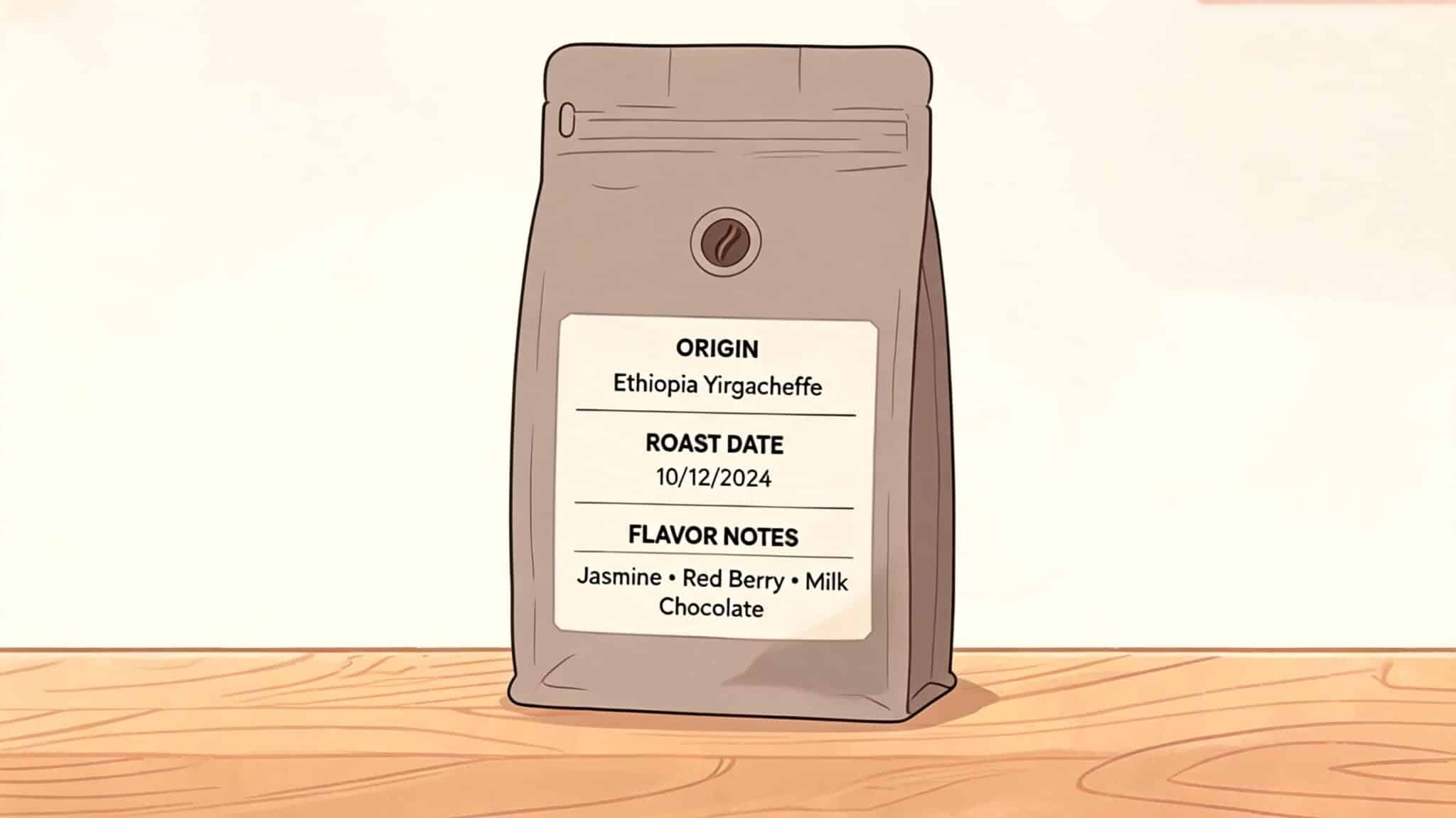
If you want a deeper look at how labels relate to taste, this guide to roast levels and flavour notes is a useful companion.
Start with species and quality
The first distinction is arabica vs robusta. According to Consumer Reports’ coffee buying guide, arabica makes up 60 to 70% of global production and is known for more complex flavour, while UK coffee shop customers are willing to pay 15 to 25% more for single-origin arabica offerings because they value quality and nuance over a stronger caffeine hit (Consumer Reports coffee buying guide).
For home brewing, that matters because arabica is usually the safer bet when you want sweetness, acidity and clearer flavour separation. Robusta has its place, especially in some espresso blends, but if you’re trying to improve cup quality at home, arabica-led coffees are where most keen brewers should start.
Roast level changes the style of the cup
Think of roast like toasting bread. The same slice behaves differently depending on how far you take it.
Light roasts keep more of the bean’s original character. You’ll often taste more fruit, florals or citrus.
Medium roasts tend to balance origin character with body and sweetness. They’re often the easiest all-rounders at home.
Dark roasts push further into roast flavour. Expect more bitterness, smoke, cocoa and a heavier finish.
None is automatically best. The right roast depends on your brewer and what you enjoy drinking.
Origin and blend both have a place
A single origin coffee comes from one country, region or farm lot. These coffees often show more distinct character. That’s where you might notice berry notes from Ethiopia or a cleaner citrus profile in another lot.
A blend combines coffees to create consistency and balance. At home, blends are often easier to work with, especially for espresso and milk drinks. They can be more forgiving when your grinder setting isn’t perfect.
After you’ve got the basics, it helps to see the ideas in action:
Don’t ignore processing and roast date
Processing affects flavour more than many home brewers realise.
Washed coffees often taste cleaner and more structured
Natural coffees can feel fruitier and more intense
Honey-processed coffees often sit somewhere between the two
A good coffee bag should answer simple buying questions quickly. What is it, where is it from, how is it roasted, and when was it roasted?
If the label hides those basics, move on. You’re not being fussy. You’re trying to buy coffee with enough transparency to brew well.
Do You Need a Specific Machine for These Beans?
Bean choice matters most, but the machine you brew with decides how much of that choice you actually taste. You don’t need to buy new gear every time you try a new bag, but knowing which equipment categories suit which beans saves a lot of frustration.
If you brew espresso, an integrated grinder espresso machine (in the style of the Breville Barista Express or Barista Pro) keeps grind size fresh and consistent right up to the shot, which matters more with medium and dark roasts that need even extraction. If you prefer a manual, hands-on approach, a lever machine such as the Flair 58 rewards well-developed, medium-roast beans and gives you more control over pressure and timing than an automatic machine.
For filter drinkers, a pour-over device (think Fellow Aiden or a simple V60 dripper) is the better match for light and medium-light roasts, since it highlights the clarity and brightness those beans are chosen for. Whatever route you take, the machine only does its job properly once the grind size matches both the bean and the brew method, which is why a dedicated burr grinder tends to matter more than the brewer itself.
In short, buy beans first, then choose the machine and grinder that let those beans perform as intended. If you already own a machine, the pairing table below helps you pick beans that suit it, and if you’re still choosing hardware, treat that as a separate decision informed by the beans you enjoy most.
The Perfect Pairing Matching Beans to Your Brew Method
The best coffee beans for home brewing depend heavily on how you brew. A bean that tastes lively and elegant in a V60 can turn sharp in espresso. A deep, rich espresso blend can feel muddy in a cafetière.
That’s why brew method should lead the decision.
Brew method and bean pairing guide

If you’re comparing options across styles, browsing a broader range of coffee and espresso beans makes it easier to spot which coffees are aimed at filter drinkers and which are designed for richer extraction. For a look at the equipment side of that same decision, this guide to choosing a grinder and matching grind settings to your brewer covers the machines that make these beans perform at their best.
French press and cafetière
French press suits coffees with body. Medium or medium-dark roasts usually do well here because immersion brewing pulls out plenty of texture and sweetness. A delicate light roast can work, but it often tastes muddled unless your grind is very even.
Choose beans with notes like chocolate, nuts, caramel or dried fruit if you want a reliable result. Grind coarse enough to keep the cup from turning sludgy or overly bitter.
Pour-over and V60
Pour-over rewards beans with clarity. With this method, lighter roasts and expressive single origins tend to shine. If you enjoy brightness, floral notes or clean fruit character, this method is often the best place to explore them.
It also exposes flaws quickly. Stale coffee, poor grind consistency and over-dark roasts become obvious in the cup.
For filter brewing, choose a bean with something to say. The brewer won’t hide it.
AeroPress and Moka pot
AeroPress is the flexible one. It can handle a broad range of roast styles, and that makes it ideal for people still working out what they like. Medium roasts usually give the easiest balance of sweetness, body and acidity.
Moka pots need more care. They tend to suit medium-dark coffees with low-to-moderate acidity. Very light roasts can taste harsh and underdeveloped because the brew style favours intensity over delicacy.
Espresso and milk drinks
Espresso asks the most of the bean. You want sweetness, solubility and a flavour profile that stays balanced under pressure. That’s why many home users get better results with medium or darker roasts, especially when milk is involved.
Rich, chocolate-forward coffees often work best in cappuccinos and flat whites. That’s also why many home baristas gravitate towards classic espresso blends rather than very light single origins.
Freshness matters more than people expect
According to Outin, the sweet spot for freshness is between two days and four weeks after roast, and after 30 days oxidation speeds up and aromatic compounds fade, which is why the roast date is the most useful technical detail on the bag (Outin guide to choosing coffee beans).
That single detail affects every brew method above. If the bean is stale, the rest of your setup has to work harder just to produce an acceptable cup.
Choosing Your Format Whole Bean vs Pre-Ground
Pre-ground coffee is convenient. If your morning routine is rushed, that convenience is real. You open the bag, scoop, brew and move on.
But convenience comes at a cost. Once coffee is ground, far more of its surface is exposed to oxygen. The flavour drops away faster, and what’s left in the cup is usually flatter, duller and less precise.
Why whole bean usually wins
Whole beans give you two advantages that matter every day.
Better freshness: The coffee holds onto aroma and flavour longer.
Better control: You can match the grind to your brewer instead of forcing one grind size to do every job.
That second point matters more than many people realise. French press, AeroPress, espresso and pour-over all need different grind sizes. A pre-ground bag that’s acceptable in one brewer can be frustrating in another.
When pre-ground still makes sense
Pre-ground isn’t automatically a bad buy. It can be sensible if:
You brew one method only and buy from a supplier that grinds specifically for it
You use coffee quickly so the bag doesn’t sit open for too long
You’re testing a coffee before deciding whether to invest further
Even then, you’re giving up some of the flavour potential.
Buy pre-ground for ease. Buy whole bean for quality.
A grinder is the upgrade that changes the cup
If you’re serious about finding the best coffee beans for home brewing, a burr grinder is the next sensible step. It gives you repeatability. That means you can make small grind changes when a coffee tastes sour, bitter or hollow instead of assuming the bean is the problem.
For practical help with grind settings and brewer-specific adjustments, this guide on how to grind your coffee beans is worth keeping handy. If you decide to upgrade equipment, grinders such as Eureka models are popular because they offer the level of control home baristas need without making the workflow awkward.
Exploring Speciality Options Decaf and Sustainable Beans
A lot of buying guides ignore two areas that matter to plenty of UK home brewers. One is good decaf. The other is sustainable coffee that still tastes excellent.
Both deserve more attention.
Decaf has improved massively
Decaf still gets judged by bad examples from years ago. That’s outdated. Modern decaf can be sweet, balanced and enjoyable enough to drink on merit, not just as a compromise.
According to Consumer Reports, the UK home decaf segment saw 28% sales growth in 2025, and high-quality methods such as the Swiss Water Process can retain up to 95% of the original flavour profile (Consumer Reports guide to finding good coffee at home).
If you’re buying decaf for home use, check three things:
Decaffeination method: Swiss Water is widely respected for flavour retention.
Roast style: Slightly darker decaf often performs more reliably in drip and immersion brewing.
Intended use: Some decafs are built for espresso, others for filter.
Lavazza Dek and Birchall decaf wholebeans are the kind of options many UK buyers look for because they fit easily into everyday home setups without needing specialist treatment.
Sustainable coffee is no longer a niche concern
Many people want better coffee and better sourcing, not one or the other. That’s becoming standard behaviour rather than a specialist interest.
What should you look for on the bag?
Certifications and sourcing cues
A few markers help:
Rainforest Alliance or Fairtrade: Useful starting points for buyers who want recognised standards
Organic certification: Often relevant if environmental practice matters to you
Clear origin details: Transparency usually signals a more considered supply chain
Roaster information: UK roasters that communicate openly about sourcing are easier to trust
Quality and ethics can sit in the same cup
The old assumption was that ethical coffee was worthy but unexciting. That isn’t a helpful way to buy now. Plenty of sustainable coffees are also expressive, fresh and well roasted.
Choose with the same discipline you’d use for any other bean. Check freshness, roast style and brew suitability first. Then use certifications and sourcing transparency to narrow the field.
Smart Shopping How to Buy and Store Coffee for Peak Flavour
Buying good coffee is only half the job. Storing it badly can waste the money just as quickly.
The easiest mistake is buying on impulse, then leaving the bag in a warm kitchen for too long. Coffee doesn’t need pampering, but it does need a bit of protection.
How to buy more intelligently
When you shop online or in store, keep the checklist simple.
Check the roast date: A “best before” date doesn’t tell you enough.
Buy for your actual brew method: Don’t assume every premium coffee will suit every brewer.
Start smaller when trying something new: A modest bag is easier to finish while it’s tasting its best.
Look for clear product information: Origin, roast style and tasting notes should be easy to find.
For readers who want a fuller home routine, this article on how to store coffee beans covers the practical basics.
Store beans simply and well
You don’t need gadgets to store coffee properly. You need the right conditions.
Keep beans in:
An airtight container
An opaque container or a dark cupboard
A cool, stable spot away from heat
Avoid storing coffee next to the oven, on a sunny windowsill or in a container you open constantly just to admire it. Light, heat and air all speed up flavour loss.
Sustainability can influence where you buy
A 2025 British Coffee Association survey found that 68% of UK coffee drinkers prioritise eco-friendly options, and sourcing from UK roasters using sustainable practices can cut carbon footprint by up to 40% per kg compared with standard global imports (British Coffee Association survey reference).
That gives environmentally minded home brewers another useful buying filter. If you can choose between two coffees that both suit your taste and setup, the one with clearer sustainable credentials may be the better all-round choice.
Buy only what you’ll enjoy while it still tastes lively. Coffee isn’t a pantry staple to stockpile.
What doesn’t work well
Freezing coffee gets talked about a lot. In most home settings, it creates more handling issues than benefits, especially when bags are opened and closed repeatedly. Daily-use beans are better kept in an airtight container in a cool cupboard and used promptly.
The goal isn’t perfection. It’s protecting flavour long enough for the last few brews to still be worth making.
Troubleshooting Common Brewing Issues
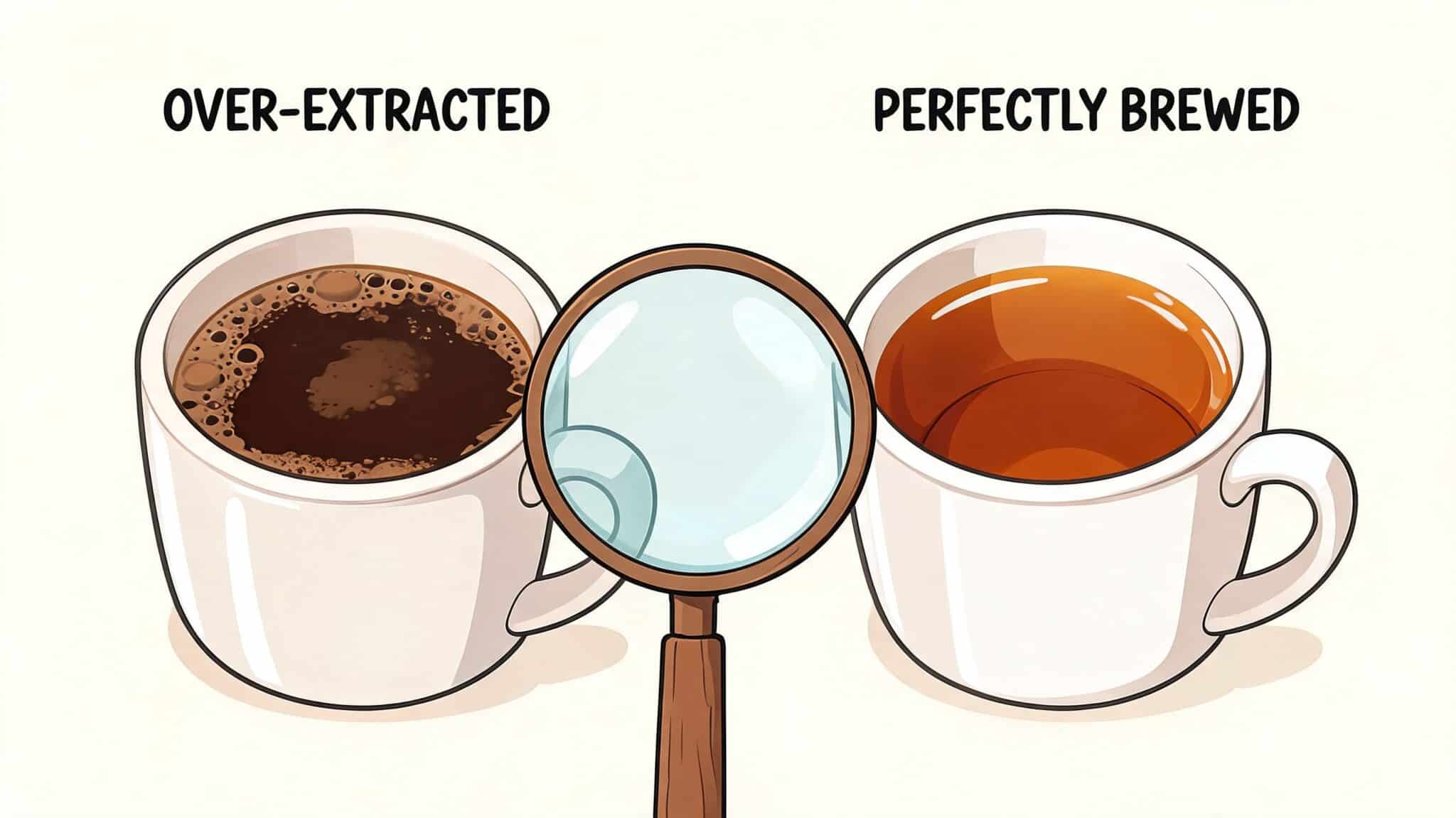
Even with better beans, some cups will miss the mark. The useful part is learning what the taste is telling you. Most home brewing problems point back to a short list of causes: roast choice, grind size, freshness or brewer-bean mismatch.
If your coffee tastes bitter
Bitter coffee often comes from one of three places.
Grind is too fine: Water is extracting too aggressively.
Roast is too dark for the method: This shows up a lot in pour-over.
Beans are past their best: Old coffee can taste woody and harsh.
If you’re brewing a dark roast in a filter brewer, try switching to a medium roast before changing everything else. If you’re on espresso, coarsen the grind slightly and taste again.
If your coffee tastes sour
Sourness usually means the brew is under-extracted, but bean choice can also play a role.
A very light roast in a Moka pot or entry-level espresso setup can be hard work. You may grind finer and still struggle to get sweetness. In that case, a more developed roast is often the better answer.
A good example of a coffee style many home brewers enjoy is Ethiopian single origin. Balance Coffee’s 2026 testing identified Yirgacheffe Organic as a top-performing bean for home brewing, and Ethiopian single-origin coffees have seen a 40% rise in UK market share over the past five years, showing strong interest in distinctive African flavour profiles (Balance Coffee best coffee beans testing).
That sort of coffee can be wonderful in pour-over. In the wrong setup, though, it may read as sharp rather than vibrant.
If your coffee tastes weak or empty
Weak coffee isn’t always caused by using too little coffee. Sometimes the bean and method aren’t helping each other.
Consider these possibilities:
The grind is too coarse for the brewer
The roast is too light for the style of cup you want
The bean has low solubility for your setup, especially in Moka pot or espresso
The coffee is stale, so aroma and body have faded
A quick taste diagnosis
If a coffee keeps fighting your brewer, change the bean before blaming yourself.
That’s often the missing piece. Home brewers sometimes keep adjusting technique when the coffee itself is the poor match. Once bean choice, freshness and brew method line up, most of the small fixes become much more effective.
If you’re ready to improve your daily cup, Allied Drinks Systems offers coffee beans, grinders, brewing equipment and practical advice for home baristas across the UK. Whether you’re choosing your first whole bean coffee, exploring decaf, or matching beans to espresso or filter brewing, it’s a reliable place to build a setup that works.

