
Getting a caramel macchiato right at home trips up plenty of keen coffee drinkers, mostly because the drink is layered rather than stirred together like a latte. Get the pour order wrong, scald the milk, or use the wrong caramel product, and the result tastes like a sweet coffee rather than the balanced, café-style drink the name promises. A caramel macchiato, at its simplest, is espresso marked with steamed milk and caramel, built in distinct layers of caramel sauce, milk, espresso and foam, then finished with a caramel drizzle on top.
This guide walks through exactly how to build a caramel macchiato recipe step by step, covering the right caramel syrup and caramel topping sauce for hot drinks, the difference between a caramel macchiato and a latte, and how to adapt the method for an iced caramel macchiato. We’ll also cover the equipment behind consistent results, since we’ve spent over three decades supplying the espresso machines, milk jugs and syrups that make café-quality drinks repeatable at home. Read on for the full method, common mistakes to dodge, and troubleshooting advice for keeping your setup running cleanly.
Key Takeaways
- A caramel macchiato is built in layers (caramel, milk, espresso, foam, caramel drizzle) rather than stirred together like a latte.
- Milk should be steamed to roughly 60 to 65 degrees Celsius with 5 to 10mm of microfoam for authentic texture.
- The iced version swaps steamed milk for cold milk and ice, with espresso poured over the top last.
- Consistent results at home depend on three things: a reliable espresso machine with a steam wand, a good milk jug, and quality caramel syrup or sauce.
Jump to section
- What Is a Caramel Macchiato?
- What You’ll Need to Make a Caramel Macchiato at Home
- How to Make a Caramel Macchiato: Step-by-Step Recipe
- How to Make an Iced Caramel Macchiato
- Choosing the Right Caramel Drizzle and Milk
- Troubleshooting and Maintenance for Consistent Results
- The Takeaway
- Frequently Asked Questions
- How Many Calories Are in a Homemade Caramel Macchiato?
- Can I Make a Caramel Macchiato Without an Espresso Machine?
- What’s the Best Milk for a Caramel Macchiato?
- How Much Caffeine Does a Caramel Macchiato Contain?
- Can I Use Caramel Syrup Instead of Caramel Sauce?
- How Do I Stop My Caramel From Sinking or Separating in an Iced Macchiato?
What Is a Caramel Macchiato?
A caramel macchiato is a layered espresso drink built from espresso, steamed milk, caramel and a cap of milk foam, finished with a caramel drizzle rather than stirred through like a latte. The name comes from the Italian word macchiato, meaning marked or stained, which originally described a traditional macchiato: espresso marked with a touch of milk foam, rather than today’s fuller, caramel-sweetened version popularised by major coffee chains from the 1990s onward. That shift turned a simple Italian flourish into a standalone menu item recognised across UK coffee shops, offices and home kitchens alike. Unlike a cappuccino or flat white, the caramel macchiato relies on caramel sauce at the base and caramel drizzle on top, creating pockets of concentrated sweetness that separate it from a simple caramel-flavoured latte.
Caramel Macchiato vs Latte: What’s the Difference?
A caramel macchiato differs from a latte mainly in preparation order, not just the caramel flavouring. A latte combines a shot of espresso with steamed milk poured in together, creating a uniform, milk-forward flavour throughout the cup. A caramel macchiato instead keeps the components layered, with the espresso poured on top so it “marks” the milk, which means the coffee hits first and the caramel appears as distinct sweet notes rather than blended evenly.
Sweetness and perceived strength also diverge between the two drinks. A latte’s flavour depends entirely on added syrups, so sweetness is adjustable and often lighter unless flavoured, while a caramel macchiato’s built-in caramel base and drizzle give it a consistently sweeter profile by default. Caffeine content is broadly similar when the same number of espresso shots is used, though the espresso sitting on top makes the first sips taste noticeably stronger.
| Feature | Caramel Macchiato | Latte |
|---|---|---|
| Milk style | Layered, espresso poured on top | Mixed, espresso poured first |
| Preparation order | Caramel, milk, espresso, foam | Espresso and milk combined |
| Sweetness | Built-in caramel base and drizzle | Depends on added syrup |
| Coffee strength | Stronger first sips | Milder, milk-forward |
What You’ll Need to Make a Caramel Macchiato at Home
Making a café-style caramel macchiato at home starts with sourcing the right ingredients and matching equipment, since shortcuts here show up immediately in the finished cup. You need freshly roasted espresso coffee beans or good quality ground coffee, whole milk or a plant-based alternative that froths well, a caramel sauce for the base and topping, and ideally a thinner caramel syrup for mixing or iced drinks. On the equipment side, a reliable espresso machine with a steam wand, a stainless steel milk frothing jug and a simple thermometer are the essentials that keep results repeatable.
- Espresso beans or ground coffee, ideally roasted within the past few weeks so the shot doesn’t taste flat or stale. A medium to medium-dark roast tends to carry caramel notes well without turning bitter under the sweetness.
- Whole milk or a plant-based alternative such as oat milk, chosen for how it behaves under steam rather than its price tag alone. Oat milk in particular froths into a dense, stable foam that holds up well against the caramel drizzle on top.
- Caramel sauce formulated specifically for hot drinks, used as the base layer and the finishing drizzle across the foam. A thinner caramel syrup is worth keeping too, since it mixes more evenly into milk for iced versions.
- A reliable espresso machine capable of pulling a consistent double shot, with a steam wand or a separate milk frother suited to your volume. A milk jug and a simple thermometer round out the kit needed for repeatable results.
Choosing the Right Machine and Frother
Matching your machine and milk set-up to your skill level and the number of drinks you’ll make daily prevents overspending or frustration. A home espresso machine with a steam wand gives enthusiasts full control over extraction and milk texture once they’ve learned tamping and timing, while fully automatic bean-to-cup machines, more common in offices, remove most of the variability that trips up beginners.
Your milk set-up matters just as much as the machine itself. Standalone automatic frothers suit hands-off convenience with minimal practice, while a steam wand gives more control over microfoam texture once you’ve built the technique. If you’re weighing up machines, our team can help you match equipment to home volume rather than commercial-scale output.
How to Make a Caramel Macchiato: Step-by-Step Recipe
Making a caramel macchiato at home follows a fixed order (caramel base, steamed milk, espresso, foam, then a caramel drizzle on top) rather than mixing everything together. Each layer needs specific quantities and timings to hit the balance found in a decent coffee shop, and skipping steps or rushing the pour is usually where homemade attempts fall short. The method below covers the full build from warming the cup through to the finishing drizzle, followed by the mistakes most likely to undo your work.
Step-By-Step Method
Follow this order every time for a consistent caramel macchiato recipe that mirrors café results.
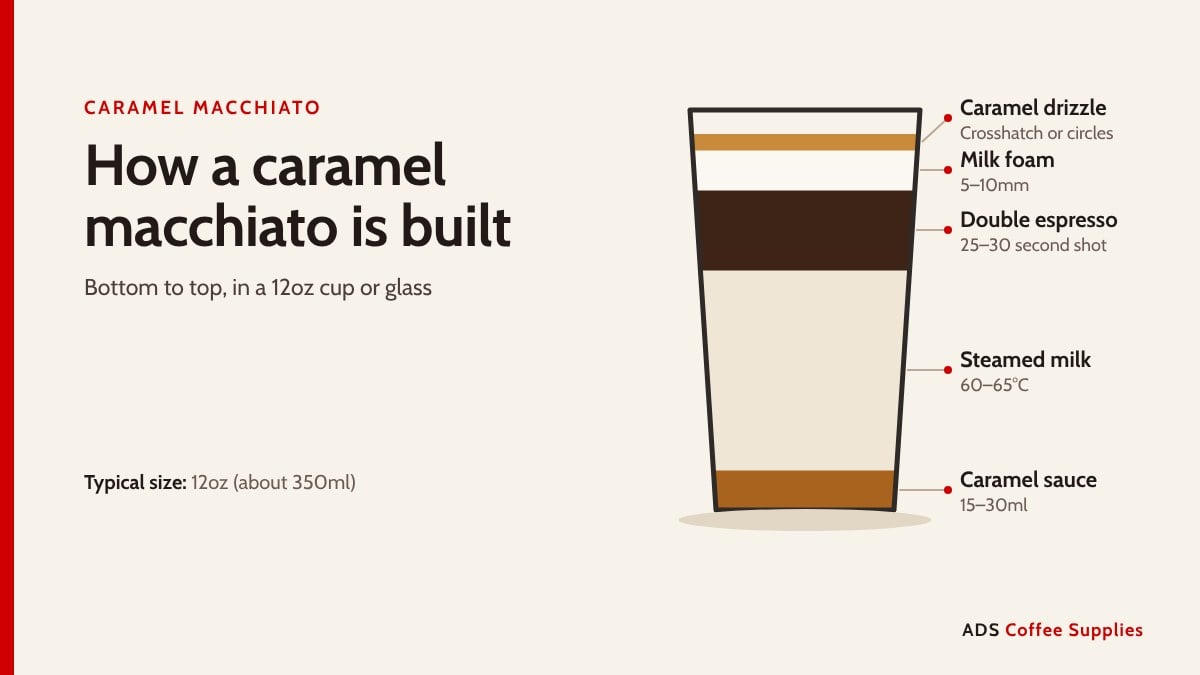
- Warm a 12oz (about 350ml) cup or heatproof glass with hot water, then tip it out, since starting with a cold cup pulls heat from the espresso and milk too quickly.
- Spoon 15 to 30ml of caramel sauce into the base of the cup, enough to coat the bottom without pooling excessively.
- Steam your milk to between 60 and 65 degrees Celsius, aiming for roughly 5 to 10mm of fine, glossy microfoam on top.
- Pull a double espresso shot, extracting for around 25 to 30 seconds, and use it straight away so it doesn’t sit and lose its aroma.
- Pour the steamed milk over the caramel base first, letting the heat and motion dissolve some of the sauce through the cup.
- Add the espresso, then top with the reserved foam layer, leaving roughly a centimetre of space below the rim.
- Finish with a caramel drizzle in a crosshatch or circular pattern across the foam for the classic caramel macchiato presentation.
Tip: Keep the pour steady and slow when adding the espresso. A fast pour disturbs the milk layer underneath and muddies the distinct bands that make the drink recognisable.
Common Mistakes to Avoid
Scalding the milk above 70 degrees Celsius is the most common fault, since it destroys the natural sweetness and collapses the microfoam structure that gives the drink its texture. Many home attempts also use a cold, dessert-style caramel sauce rather than one formulated for hot drinks, which causes pooling at the bottom or uneven distribution through the cup instead of a smooth caramel pull-through.
Letting the espresso sit for long before combining it with milk is another frequent error, as the shot quickly loses its crema and aroma and tastes flatter. Rushing the pour order, adding caramel after the milk instead of before, also flattens the layered presentation that makes a caramel macchiato recognisable in the first place.
How to Make an Iced Caramel Macchiato
An iced caramel macchiato swaps steamed milk for cold milk and ice, with espresso poured over the top last to create the classic striped layer effect. As the espresso sinks through the glass, it creates visible bands rather than blending immediately into the milk below. Start by stirring a thinner caramel syrup, rather than a thick sauce, into cold milk at the base of the glass, since syrup disperses evenly without separating once ice is added. Fill the glass with ice, pour in the caramel milk, then pour a freshly pulled double espresso shot slowly over the back of a spoon so it settles on top rather than mixing straight through.
Tips for the Best Iced Version
Use liquid caramel syrup rather than sauce for iced drinks, since sauce thickens and clumps in cold milk instead of dispersing smoothly. Pre-chill the glass in the freezer for a few minutes before building the drink, and pull the espresso slightly ahead of time so it has cooled a touch before it meets the ice. This keeps dilution to a minimum and preserves the iced caramel macchiato’s intended flavour balance.
Choosing the Right Caramel Drizzle and Milk
Caramel syrup and caramel sauce serve different jobs in a caramel macchiato, and mixing them up is a common reason homemade versions taste off. Syrup is thinner and mixes evenly into milk, making it the better choice for iced drinks or for sweetening the drink’s body without visible layering. Sauce is thicker and holds its shape, which makes it the right pick for the base layer and the finishing caramel drizzle where a defined pattern matters more than dissolved sweetness. Milk choice changes the result too: whole milk gives classic sweetness and the most stable microfoam, while oat milk is widely considered the strongest plant-based alternative for both froth quality and natural sweetness.
Why Ingredient Quality Matters
Caramel sauces made for hot drinks are designed to stay smooth and consistent once heat is added, unlike standard dessert caramel, which can separate or turn grainy. We stock IBC Simply caramel syrup and caramel topping sauce, built for exactly this kind of café use rather than supermarket substitutes designed for desserts or baking.
Troubleshooting and Maintenance for Consistent Results
Milk residue, often called milkstone, builds up inside steam wands over time and blocks the small holes responsible for fine microfoam, leaving froth thin or inconsistent. This buildup also affects flavour, since trapped milk fats turn rancid and taint every drink steamed afterwards, not just the caramel macchiato you’re making that day. Purging the wand after every steaming session, followed by a wipe-down with a damp cloth, prevents most of this buildup before it hardens.
A weekly soak using a specialist milk-system cleaner clears deeper residue that daily wiping misses, and descaling as your machine’s manufacturer recommends (or fitting a water filter) protects the wider machine from mineral scale. The following table sums up a simple maintenance schedule worth sticking to:
| Task | Frequency | Purpose |
|---|---|---|
| Purge and wipe steam wand | After every use | Stops milk residue hardening |
| Soak with milk-system cleaner | Weekly | Clears deeper milkstone buildup |
| Descale machine | As the manufacturer recommends | Protects against mineral scale |
We stock barista accessories and Urnex and Puly milk-system cleaners for exactly this kind of upkeep, our own engineers service machines nationwide across the UK, and the sales team is reachable on 0800 442299 for equipment advice if something isn’t performing as it should.
The Takeaway
A café-quality caramel macchiato at home comes down to three controllable factors: good espresso, properly steamed milk, and a caramel product built for heat rather than dessert use. Master the layered build (caramel base, milk, espresso, foam, drizzle) and the rest is largely a matter of repetition and dialling in your own machine’s timing. Once the base method feels reliable, branching into iced versions or alternative milks such as oat or almond becomes straightforward rather than difficult.
For anyone assembling or upgrading a home or workplace setup, we supply the espresso machines, milk jugs, caramel syrups and sauces covered throughout this guide, alongside the accessories that keep results consistent over time. Browse the current range online or call the team on 0800 442299 for equipment advice suited to your needs before you buy.
Frequently Asked Questions
How Many Calories Are in a Homemade Caramel Macchiato?
It depends mostly on your milk and how much caramel you use. Whole milk and a generous base of sauce plus a heavy drizzle make it the most calorific version, while semi-skimmed or oat milk and a lighter hand with the caramel bring the figure down. Check the nutrition labels on your milk, syrup and sauce for exact numbers.
Can I Make a Caramel Macchiato Without an Espresso Machine?
Yes, a moka pot or a strong instant coffee can stand in for a proper espresso shot, giving a reasonable approximation of the drink’s intensity. The result won’t quite match an espresso machine for crema and flavour, but it’s a workable substitute for occasional home use.
What’s the Best Milk for a Caramel Macchiato?
Whole milk remains the classic choice, giving natural sweetness and the most stable microfoam for a proper caramel macchiato. Among plant-based options, oat milk performs best, frothing into a dense, stable foam that holds up well against the caramel layers.
How Much Caffeine Does a Caramel Macchiato Contain?
A standard caramel macchiato made with a double espresso shot contains roughly 75 to 150 milligrams of caffeine, depending on bean type and shot size. Using a single shot instead of a double naturally brings that figure down.
Can I Use Caramel Syrup Instead of Caramel Sauce?
You can, though the result differs: syrup mixes evenly into milk for consistent sweetness throughout, while sauce stays layered and works better for the base and the finishing drizzle. Many home baristas keep both on hand for different styles of drink.
How Do I Stop My Caramel From Sinking or Separating in an Iced Macchiato?
Use a thin caramel syrup rather than a thick sauce in cold drinks, since sauce doesn’t disperse well once ice is involved. Stir the syrup into the cold milk before adding ice, rather than after, for even sweetness throughout the glass.

