You're standing in a catering supplier's warehouse, looking at rows of filter papers that appear almost identical. One packet promises a clean cup, another says it's biodegradable, and a third claims to fit several brewers. Your machine is due to run shortly, so the key question isn't which packet looks most convincing. It's whether the paper will sit correctly, drain at the right speed and survive the workload.
Filter paper for coffee machines is an operational component, not just a disposable accessory. Its material, geometry, grammage and permeability affect clarity, brew time, equipment compatibility and waste handling. The wrong paper can leave grounds in a jug, slow service or create inconsistent extraction even when the coffee, water and recipe haven't changed.
This guide applies the same practical thinking to commercial batch brewers, office machines, pour-over equipment and home filter coffee. It's useful alongside this explanation of coffee machine accessories and a useful reference point is this Chef Inox filter papers 50 pack, which illustrates why pack description and intended equipment matter before you order.
Table of Contents
- Why Choosing the Right Filter Paper Matters
- What Filter Paper Does and How It Works
- Materials, Bleaching and Grammage Explained
- Shapes, Sizes and the Right Fit for Your Machine
- Flow Rate, Permeability and Extraction
- Matching Filter Paper to Venue Volume and Equipment
- Sustainability, Composting and UK Disposal
- Frequently Asked Questions About Filter Paper
Why Choosing the Right Filter Paper Matters
A buyer can choose a packet that looks suitable and still create problems at the machine. Paper made for a V60-style dripper may fold, collapse or leave the coffee bed unsupported in a large batch brewer. A heavy commercial sheet can restrict flow in a small manual brewer, giving a slow, flat cup instead of the clarity expected from the recipe.
Filter paper is part of the brewing system. It sits between the equipment and the drink, shaping how water reaches the grounds, how much sediment reaches the server and how consistently the brew drains. Changing the paper can alter extraction even when the grind, dose and water remain unchanged. For a practical explanation of equipment components, see this guide to coffee machine accessories.
Practical rule: Treat filter paper as part of the brewing recipe, not as a neutral liner.
Three checks usually decide whether a paper is suitable:
- Material: Bleached and unbleached papers may create different flavour impressions and have different disposal considerations.
- Geometry: Cone, flat-bottom basket and batch-brew papers are made for different baskets, drippers and machine designs.
- Flow rate: Fibre structure and grammage create resistance. That resistance changes contact time, drawdown and the finished cup.
Fit comes first. A paper that leaves a gap around the rim can allow water to bypass the coffee bed. One that drains too slowly may keep water above the grounds, delay the next brew and make service timing harder to predict. The Chef Inox filter papers 50 pack also shows why pack descriptions and intended equipment should be checked before ordering.
The operational cost is broader than taste. In a busy café or office, inconsistent papers can affect repeatability, cleaning and stock control. A mobile caterer may need reliable drainage during repeated service, while a home user may prioritise cup clarity and easy disposal.
Choose the paper geometry that matches the machine, then assess grammage and permeability against the coffee and expected volume. That sequence is safer than selecting by colour, brand name or a vague “universal fit” label.
What Filter Paper Does and How It Works
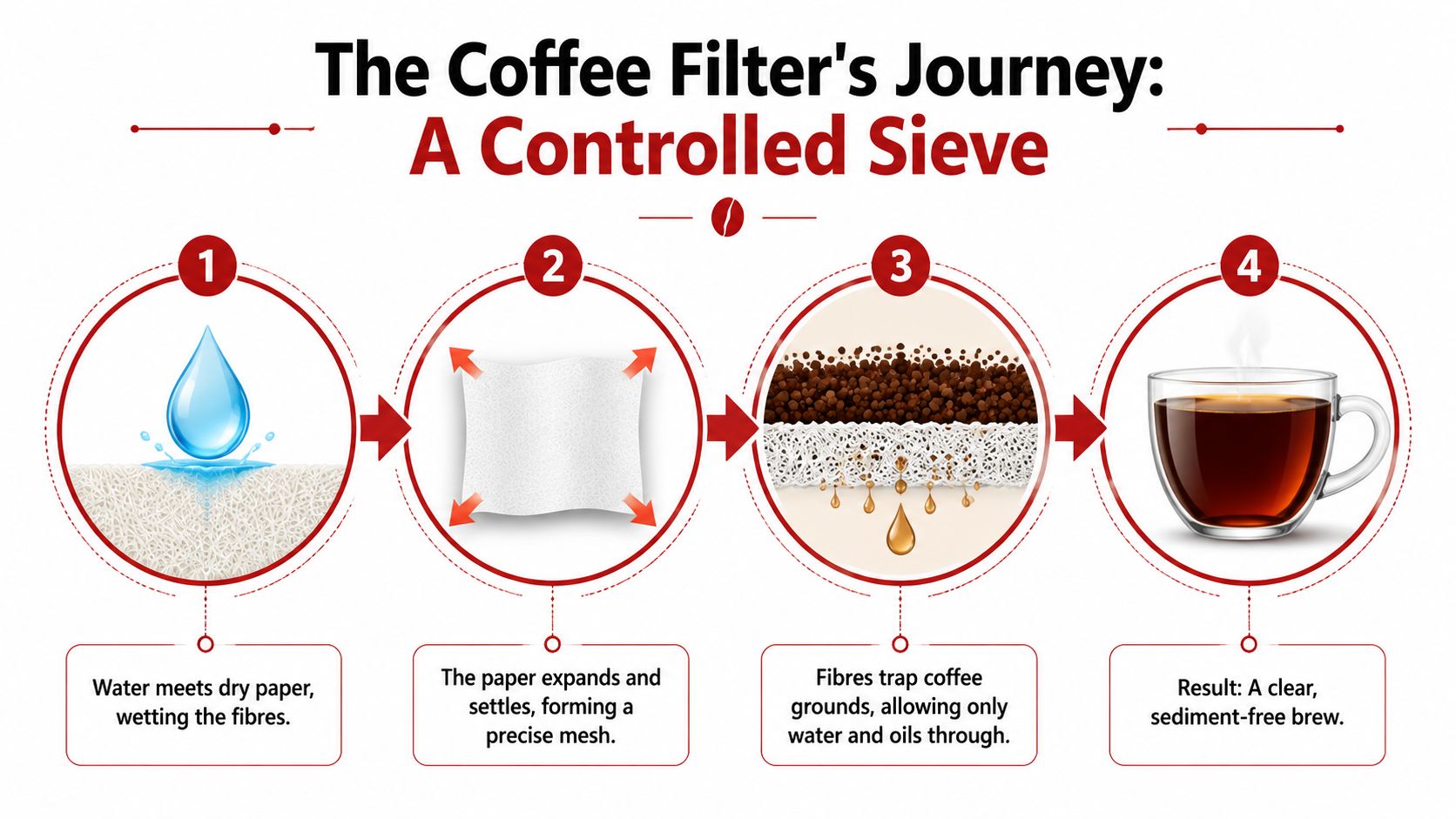
A filter paper functions as a controlled sieve, holding grounds while regulating water passage. Water first wets the fibres, then moves through the coffee bed and paper, either by gravity or with pump assistance. The paper therefore affects both the clarity of the drink and the time required for brewing.
Four processes happen together:
- The paper wets and settles. Dry fibres absorb water and conform to the basket or dripper. Correct sizing helps the sheet sit against the walls instead of lifting or folding.
- The coffee bed forms. Grounds spread across the paper and add their own resistance. The bed and sheet operate as one filtering system.
- Fine particles are retained. The fibre network holds back grounds and some fine sediment, producing a cleaner cup.
- Flow is regulated. Fibre density, thickness and shape influence how quickly water leaves the brewer.
Paper also retains some coffee oil and lipid material. That helps explain the familiar contrast between a clear filter brew and the fuller body produced by a metal filter. A plain-language guide to filter coffee can help when comparing this method with other brewing formats.
The fibres inside the sheet
Most coffee papers are cellulose-based. Wood pulp remains common because it is available, formable and suitable for consistent sheet production. Bamboo and abaca, also called Manila hemp, appear in specialist products, while some newer papers combine plant fibres to change strength, texture or drainage.
The fibre source only gives part of the picture. Fibre length, pressing, manufacturing and surface treatment all affect performance once the sheet is wet. Short fibres may require extra strength treatment. A denser sheet can remain more stable, but may slow the flow.
Grammage in everyday terms
Grammage is the paper's weight per square metre, expressed as g/m². It indicates likely sheet density and strength, but it does not fully specify performance. Two papers with similar grammage can drain differently because their fibre structure and manufacturing methods differ.
At the machine, check three outcomes: whether the paper keeps its shape, whether water pools above the coffee bed and whether the finished brew contains more sediment than usual. Those observations provide a more useful performance check than packet colour alone.
Materials, Bleaching and Grammage Explained
Bleached and unbleached papers aren't automatically better or worse. They're different tools, and the right option depends on the cup profile, machine workload and disposal route.
Bleached paper is white because the pulp has undergone a whitening process. UK products may use chlorine-free or oxygen-based processing, and many operators choose bleached sheets because they want a neutral paper character and a clean-looking presentation. Unbleached paper keeps a pale brown colour and may contribute a faint papery note if it hasn't been rinsed or pre-wet effectively.
Unbleached products are often marketed as the more sustainable choice, but colour alone doesn't prove what will happen after brewing. Certification, wet-strength treatment, packaging and the local waste system all matter.
Comparing paper weight and performance
Grammage affects durability and hydraulic resistance. Lighter papers can drain quickly and suit manual brewing, while heavier commercial papers offer greater support for larger coffee beds and repeated batch service. The ranges below are practical working categories, not universal rules.
| Material | Typical Grammage (g/m²) | Best For | Impact on Cup |
|---|---|---|---|
| Bleached wood pulp | 50 to 60 | Hand pour and lighter manual brews | Clean profile, faster drainage and less paper character |
| Unbleached wood pulp or plant-fibre paper | 50 to 60 | Home users and manual brewers who prioritise lower processing appearance | May add a mild paper note and can vary in flow |
| Commercial bleached paper | 70 to 90 | Batch brewers and office machines | Greater strength, steadier bed support and potentially slower drawdown |
| Reinforced commercial sheet | Heavier than standard manual paper | High-volume machines and larger brew baskets | Stronger wet stability, with greater resistance if the paper is very dense |
A thin, fast paper can make the same beans taste brighter and lighter because water moves through the bed quickly. A thicker, slower paper can increase contact time, round the body and soften acidity, although the grinder setting may need adjustment to avoid over-extraction.
Don't confuse paper weight with flow grade
Manufacturers may describe papers as fast, medium or slow. These labels refer to permeability and drainage, not just grammage. Fibre arrangement and treatment can make a relatively light paper drain more slowly than expected, so use the product specification and machine guidance together.
Rinse or pre-wet the paper when the brewing method allows it. This can reduce paper character and helps the sheet settle into the basket, but it won't correct a paper that's the wrong shape or size.
Shapes, Sizes and the Right Fit for Your Machine
Filter geometry is the first compatibility check. A cone paper and a flat-bottom basket paper aren't interchangeable because they support different coffee-bed shapes and water paths.
Commercial pour-and-serve machines commonly use flat basket papers. For UK 3-pint machines, suppliers commonly specify 250 mm by 85 mm at the base, and that dimensional fit is treated as a primary requirement rather than a flavour preference. UK market guidance on 3-pint filter papers identifies this format as a common fit across commercial machines.
Batch brewers use larger papers selected by brew volume and basket design. UK guidance describes common sizes through top-circle and bottom-circle measurements, including 241 mm/89 mm, 349 mm/108 mm and 464 mm/191 mm, depending on machine capacity. This batch-brew filter paper guide shows why capacity and geometry should be checked together.
| Filter Shape | Typical Dimensions | Common Machine / Brewer | Key Fit Point |
|---|---|---|---|
| Flat-bottom basket | Around 90 to 100 mm base for smaller baskets | Commercial batch and office brewers | The base must sit flat without large gaps |
| Commercial 3-pint basket | 250 mm by 85 mm base | Bravilor, Buffalo and Marco-style brewers | Confirm the machine's basket dimensions before ordering |
| V-shaped cone | Size 01, 02 or 04 formats | Hario V60-style drippers and similar pour-over kits | Match the cone number to the dripper size |
| Large batch-brew cone or basket | Common top and bottom diameter combinations vary by capacity | Office, pub, restaurant and hotel brewers | Match the paper to both machine volume and collar shape |
| Pod or disc format | Model-specific | Single-serve and specialist brewers | Use the manufacturer's specified disc or pod format |
Why universal fit can fail
“Universal” often means that a paper can be made to work across several related baskets. It doesn't mean that every basket will support it properly. A paper that's too narrow may leave channels at the side, while an oversized sheet can fold over the collar and collapse into the coffee bed.
For a commercial brewer, measure the basket's top opening, base and usable depth. For a cone brewer, identify the manufacturer's size format and check the paper's seam, height and rim. Don't rely on the machine brand alone, because the same brand can sell equipment with different baskets.
If the paper won't seat without folding, forcing it into place won't improve the result. It can restrict the outlet, create uneven wetting or allow bypass flow. For venues using a filter jug or pour-and-serve setup, a compatible coffee jug with filter can also help you confirm the intended basket relationship before you commit to a bulk order.
Flow Rate, Permeability and Extraction
A brewer can begin stalling immediately after a paper change, even though the grinder and coffee have stayed the same. Paper controls how quickly water leaves the bed through its weight, fibre structure and permeability. Grind size and fines also add resistance, so the final flow reflects both the coffee and the sheet.
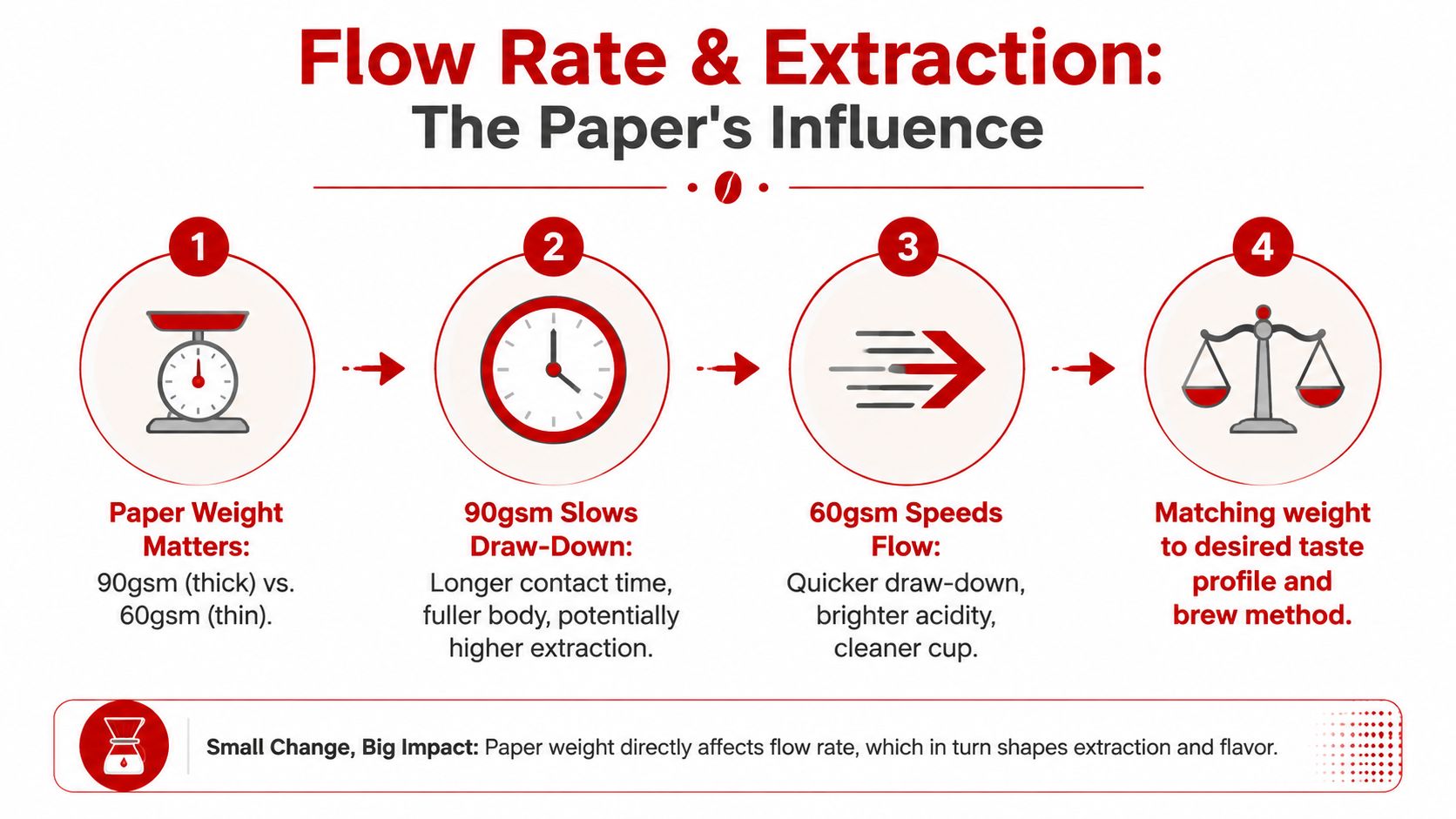
A thicker paper, such as a 90 g/m² sheet, contains more material and may slow drawdown. The longer contact time can produce fuller body and higher extraction, yet a delicate coffee may taste muted or overworked if the grind and dose remain unchanged. A lighter 60 g/m² paper may drain faster, retain less sediment and give a brighter, cleaner impression.
The trade-off buyers need to manage
A buyer is balancing four practical outcomes:
- Clarity: Tighter papers retain more fine material and can produce a cleaner cup.
- Speed: More permeable papers drain quickly, which can support faster service.
- Body: Slower papers may leave the drink feeling rounder, while faster papers can feel lighter.
- Consistency: A sheet that holds its shape helps the coffee bed stay stable from one batch to the next.
Higher-permeability papers generally draw down faster and retain fewer fines. Tighter papers can improve clarity, but may slow the brew. Choose permeability alongside grind distribution and batch size, rather than treating grammage as a complete specification.
Diagnose the paper before changing the grind
Suppose a 1.5-litre brewer stalls after a replacement paper is installed. Grinding coarser may appear to help, but first check whether the new sheet is denser, smaller or sitting incorrectly. A folded outlet or restricted basket can create uneven wetting and bypass flow, so changing the grind only masks the underlying problem.
Use this sequence:
- Confirm the paper's shape and dimensions.
- Check that it sits fully against the basket.
- Compare its flow description with the previous product.
- Adjust grind or dose only after those checks.
Paper permeability is one operational setting among several. Water quality also affects the brewing equipment, so a suitable coffee machine water filter belongs in the wider maintenance plan. It cannot correct an unsuitable paper, but it can help keep the machine's water path predictable.
A choking coffee bed is not always a grinder problem. Check the paper's fit and permeability first.
Matching Filter Paper to Venue Volume and Equipment
The correct specification starts with the machine, then moves to workload. A paper that works for a small office brewer may not have the wet strength or capacity required by a café's batch system.
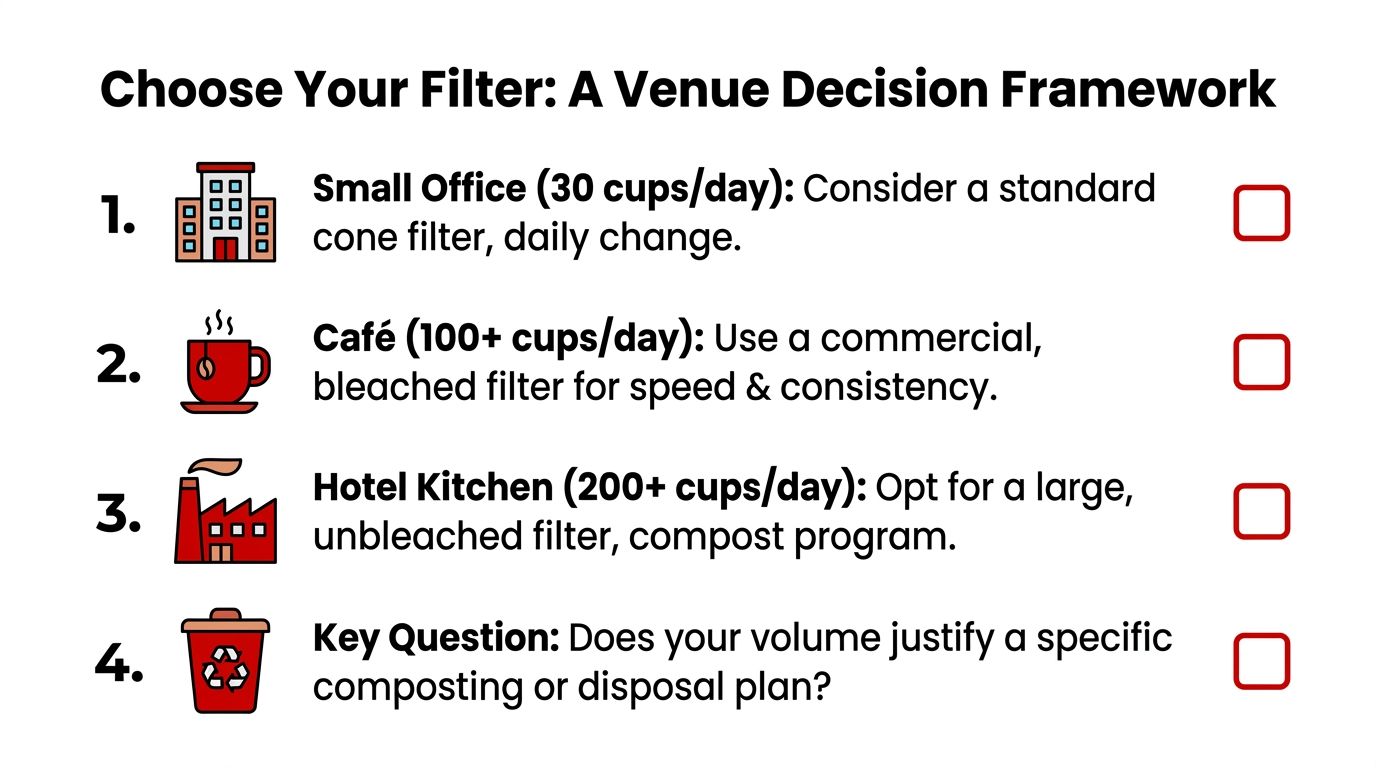
A small office machine producing around 30 cups a day may use a standard basket or cone format, but the exact paper still depends on the brewer. A Marco-style or similar machine may require a commercial flat-bottom basket, while a domestic machine may use size 4 papers. UK guidance on commercial and home filter compatibility makes the important distinction that home and commercial papers often use different geometries.
A café serving 500 cups a day through a large batch brewer needs a paper that can support a substantial wet coffee bed without tearing or blowing out. That may mean a reinforced sheet or wider format, but the machine specification remains decisive. Don't select a larger paper just because the venue is busy.
A practical purchasing framework
For offices, prioritise easy loading, reliable fit and sensible storage. If the machine runs a modest number of brews, a consistent standard paper may matter more than experimenting with multiple flow grades.
For cafés, prioritise speed, repeatability and wet strength. A commercial bleached paper can provide a neutral presentation and predictable handling, but only if its dimensions match the batch basket.
For hotels, pubs and caterers, connect paper choice to the largest planned batch. The paper must remain stable when staff are working quickly, the brewer is full and the server needs to be moved straight to service.
Keep separate specifications if the venue has both batch brew and a manual pour-over bar. A size 4 or V60-compatible paper shouldn't be substituted for a commercial basket sheet just to simplify purchasing.
Before reordering, check:
- Machine model: Record the exact brewer, not just the manufacturer.
- Basket measurements: Confirm top, base and depth.
- Brew volume: Match the paper to the normal batch, not an occasional small brew.
- Paper behaviour: Note drawdown speed, tearing, bypass and sediment.
- Stock level: Keep enough for normal service and supplier lead times.
- Waste route: Confirm whether used papers and grounds can enter the venue's food-waste system.
A short training note beside the machine can prevent ordering errors. Include the paper dimensions, product description and a photograph of the correctly seated paper so temporary staff don't substitute a visually similar pack.
Sustainability, Composting and UK Disposal
“Biodegradable” isn't the same as recyclable, and it doesn't automatically tell you whether a council or composting service will accept a used filter. The paper may contain coffee grounds, wet-strength treatments or other materials that affect the disposal route.
UK local-authority guidance commonly treats paper coffee filters as food waste. Somerset Council lists tea bags and coffee grounds, including coffee filter paper, in food-waste collections, while Trafford Council includes coffee grounds and filter paper among compostable materials. Somerset's food-waste guidance demonstrates the type of municipal acceptance available in the UK, but local rules still take priority.
Check the claim, not just the colour
Supplier descriptions may mention unbleached pulp, dioxin-free processing, biodegradability or compostability. Those terms describe different things:
- Unbleached: The paper hasn't been whitened to the same appearance as bleached paper.
- Biodegradable: The material can break down under suitable conditions, but the claim may not specify where or how.
- Compostable: The product is intended to break down in a defined composting environment.
- Certified compostable: A recognised certification gives the claim a clearer test framework.
UK-sold products demonstrate that stronger specifications are available. Some compostable filters are described as FSC-certified, totally chlorine free and certified for home, municipal or industrial composting, as shown in this UK compostable coffee filter product specification.
The disposal route still depends on the filter's certification and the receiving service. Don't place a generic “eco” paper in a food-waste caddy without checking the product information and your local authority's instructions. Bulk packs may also reduce packaging compared with individually wrapped sheets, particularly where a venue uses filters continuously.
Disposal check: Match the paper's certification to the waste service. Don't infer compostability from an unbleached brown colour.
Reusable metal and cloth filters can reduce single-use paper, but they require washing, water, detergent and staff time. The sensible comparison is the complete routine, not just the material used during brewing. For venues reviewing cups, lids and other consumables at the same time, the sustainable coffee packaging range can help keep disposal decisions aligned across the service.
Frequently Asked Questions About Filter Paper
Does bleached paper leave a taste?
Quality bleached paper is designed to provide a neutral cup profile, but preparation and paper quality still matter. Rinsing the paper before brewing can reduce any papery character.
How often should a commercial basket filter be changed?
Use a fresh paper for each brew. Reusing a wet commercial sheet can weaken it, affect drainage and leave old coffee flavours in the next batch.
Can cone filters be reused?
They can sometimes be rinsed for another brew, but reuse changes hygiene, strength and flavour control. For repeatable results, use a new cone paper each time.
Are supermarket papers as good as specialist filters?
Some supermarket papers fit well and brew perfectly adequately. Specialist papers usually provide clearer information about dimensions, material and intended brewer, which matters when you need predictable commercial performance.
What if a universal-fit paper won't seat properly?
Stop and check the basket dimensions. Gaps, folded seams and collapsed walls indicate a geometry problem, not a grind problem. Order by shape and measurements rather than the brand name alone.
How should filter paper be stored?
Keep it dry, sealed and away from steam, splashes and strong odours. Moisture can soften the paper and affect how it sits in the basket.
Which compostability claims matter?
Look for a recognised certification and confirm that the relevant local food-waste or composting service accepts that product. “Biodegradable” on its own doesn't guarantee acceptance.
The final decision is practical: filter paper for coffee machines must match geometry, venue volume and extraction goals. Bleached versus unbleached matters, but fit and flow usually decide whether the machine performs reliably.
Allied Drinks Systems supplies filter coffee equipment, machine accessories, filter papers and related beverage consumables for UK cafés, offices, hospitality venues and home users. Visit Allied Drinks Systems to compare compatible coffee equipment and accessories, then check your brewer's basket dimensions before placing an order.