
Most people drop a tea bag into a mug without giving it a second thought, yet the material inside that little sachet shapes everything from flavour to food safety. A tea bag is not one standard product. It can be made from paper, nylon, PET, PLA or cornstarch mesh, each with different brewing performance and a very different story once it lands in the bin.
That variation matters more than it first appears, whether you’re stocking a staff kitchen, running a café counter or simply making your own cuppa at home. This guide works through what a tea bag is actually made from, why bag shape affects the strength and clarity of your brew, and what “compostable” really means once a bag leaves your hands. I also cover brewing technique and practical buying advice for offices and hospitality venues, drawing on my experience at Allied Drinks Systems helping businesses stock their hot drinks offering.
By the end, you’ll know exactly what to look for on a tea bag’s packaging and why it matters for your cup, your customers and your waste bin.
Key Takeaways
Paper tea bags often contain a hidden polypropylene heat-seal, so a “paper” label doesn’t automatically mean home compostable.
Pyramid bags suit whole-leaf and herbal blends, while flat paper bags are better matched to finely cut tea.
“Compostable” usually refers to industrial composting facilities, not a typical back-garden compost heap.
Metal staples create a genuine safety and disposal hazard that more manufacturers are now designing out.
Workplace tea buying should balance everyday quality, cost per cup and sustainability claims that actually stand up to scrutiny.
Jump to section
- What Is a Tea Bag Made Of?
- Is a “Compostable” Tea Bag Actually Compostable?
- Flat or Pyramid: Which Tea Bag Shape Should I Choose?
- How Do I Get the Best Brew From a Tea Bag?
- Choosing Tea Bags for the Workplace or Hospitality Venue
- The Takeaway
- Frequently Asked Questions
- Can I put used tea bags in my home compost bin?
- Why do some tea bags taste different even with the same tea inside?
- Are plastic tea bags safe to use in boiling water?
- How many tea bags does an office typically need per month?
- What’s the difference between biodegradable and compostable tea bags?
- Do pyramid tea bags cost more than flat tea bags?
What Is a Tea Bag Made Of?
A tea bag is built from a permeable mesh material that holds the leaves in place while letting hot water pass through to extract flavour. The two broad families are plant fibre materials, such as paper, abaca and cellulose, and synthetic or plant-based plastics, such as nylon, PET, PLA and cornstarch mesh. Paper and cellulose bags are economical and lightweight, which is why they remain the standard for everyday flat tea bags filled with finely cut leaf. Synthetic and plant-based mesh, by contrast, tends to show up in pyramid-shaped bags because it’s strong enough to hold its shape and transparent enough to let drinkers see the leaves inside. What catches many buyers out is that a bag marketed simply as “paper” frequently contains a small amount of polypropylene used to heat-seal the seams, which means it may not break down in a home compost bin despite looking entirely fibre-based.
Paper Versus Synthetic Mesh: Which Material Suits Which Tea?
Paper and cellulose bags do their best work with finely cut black tea, where the small leaf particles don’t need much room to expand before releasing their flavour. Nylon, PET, PLA and cornstarch mesh, on the other hand, earn their keep in pyramid bags holding whole leaves, chamomile flowers, lemongrass or chunky fruit pieces that need space and good water circulation to brew evenly.
In terms of actual brewing performance, there’s not a huge gap between these materials. Nylon, PET and the plant-based PLA and cornstarch alternatives all hold up well in boiling water and produce a comparable cup. The real difference between them shows up after the bag is used, when disposal method and genuine biodegradability become the deciding factor rather than how the tea tastes.
Is a “Compostable” Tea Bag Actually Compostable?
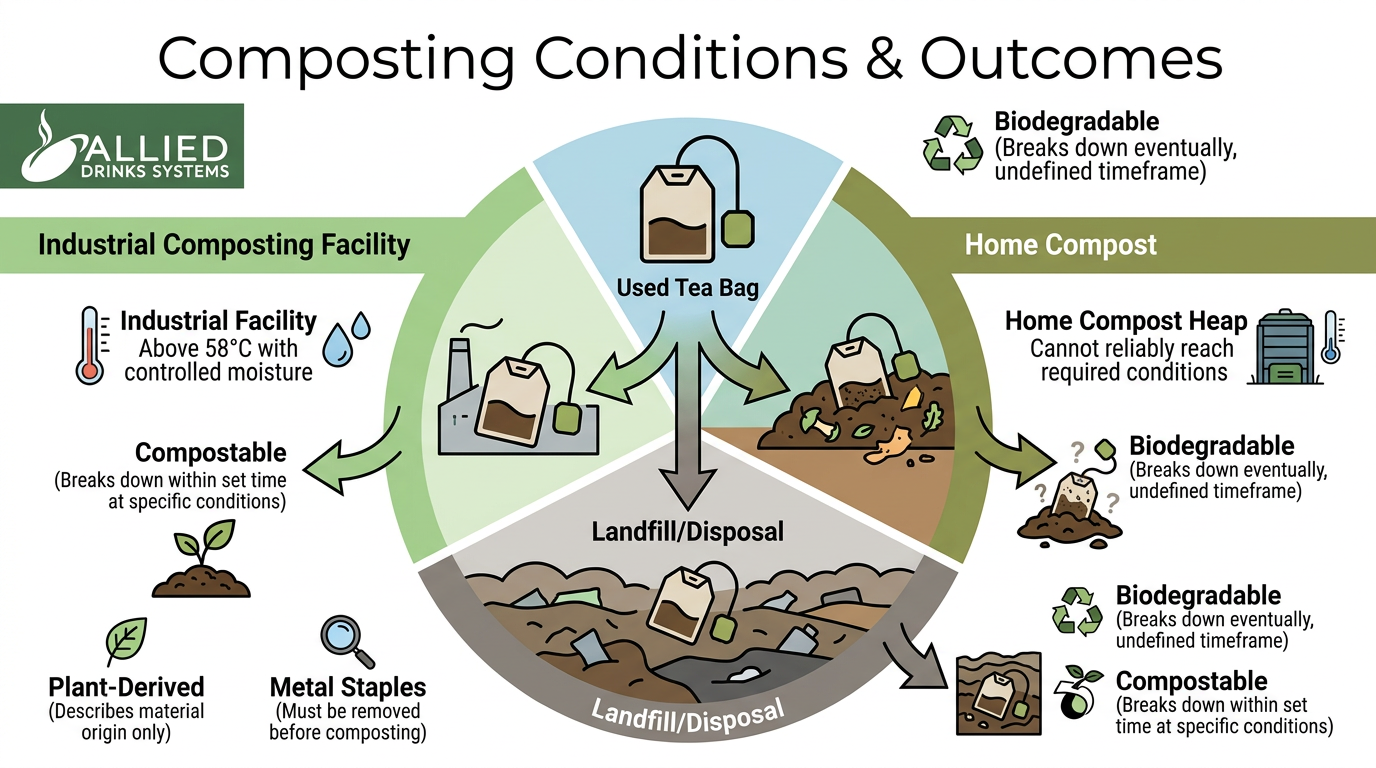
A tea bag described as compostable is only truly compostable if it breaks down within a defined period under conditions you can actually access, and for most households that condition isn’t met. Industrial composting facilities run at carefully controlled temperatures, often above 58 degrees Celsius, with specific moisture and biological activity that a typical back-garden compost heap simply can’t replicate. PLA mesh, despite being made from biodegradable paper straws sugars such as maize or sugar cane rather than petroleum, is usually engineered for this industrial process rather than for home use. Not every UK council accepts compostable packaging in food waste collections either, so a bag labelled compostable may have nowhere suitable to actually go in your area.
There’s also the question of what else is attached to the bag besides the mesh itself. A tea bag might use a genuinely biodegradable cellulose or cornstarch mesh, yet still include a metal staple, a printed tag with plastic-based ink, or a synthetic thread holding the seams together. Any one of these components can stop the whole bag from composting as a single item, meaning the staple or tag has to be picked out by hand before the rest goes into the bin. This is precisely why the terms plant-derived, biodegradable and compostable aren’t interchangeable, even though packaging often uses them as if they were:
Plant-derived simply describes where the material came from.
Biodegradable means it will eventually break down, possibly over a long and undefined period.
Compostable means it breaks down within a set timeframe under specific conditions.
For anyone buying in volume, the safest approach is asking the supplier directly what facilities the bag requires and whether your local waste infrastructure can actually process it, rather than taking a bold claim on the box at face value.
Flat or Pyramid: Which Tea Bag Shape Should I Choose?
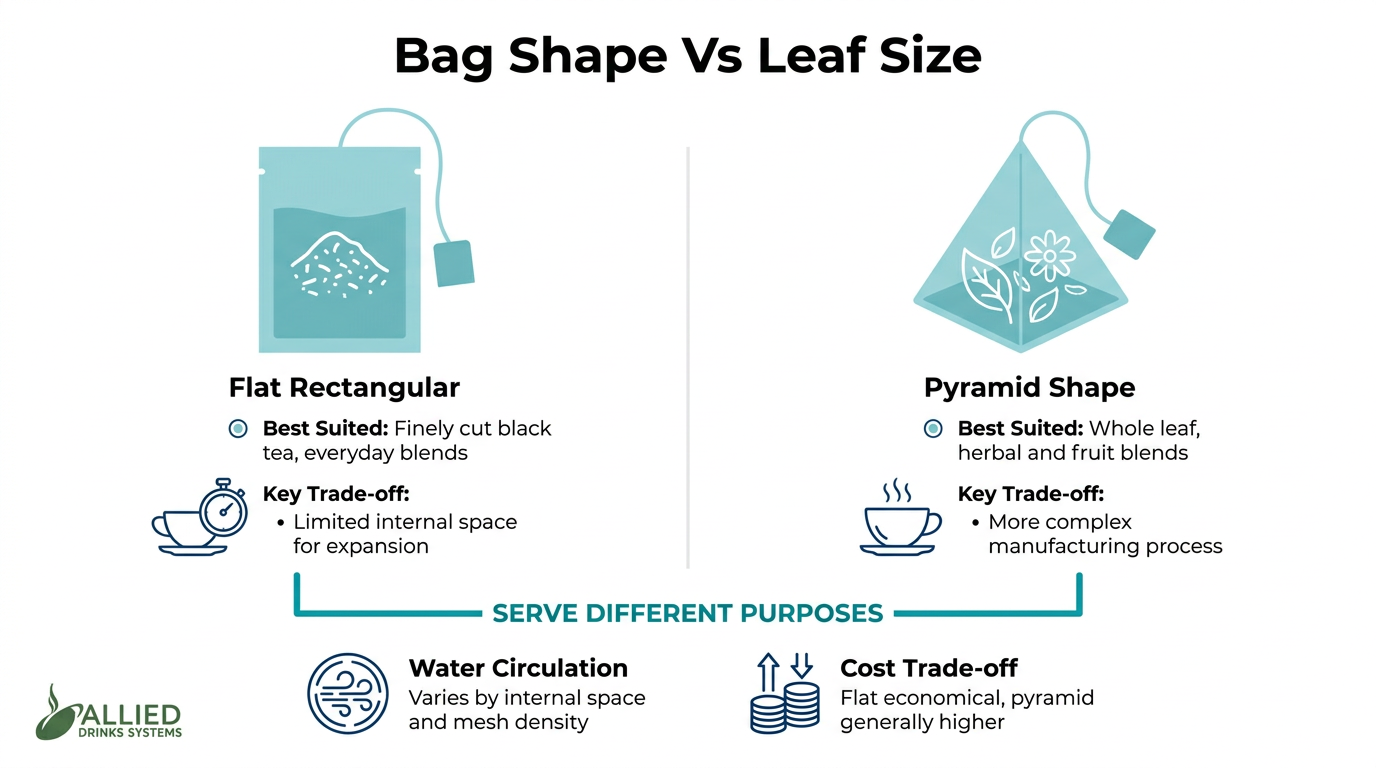
The shape of a tea bag is a functional decision tied to leaf size rather than a cosmetic choice, and getting it wrong genuinely affects how the tea tastes. Flat, rectangular bags are compact and cost-effective, and they work well because finely cut tea particles don’t need much internal space to release their flavour into the water. Pyramid bags give whole leaves and larger botanical pieces, such as whole peppermint leaves or dried chamomile flowers, the extra volume and open mesh structure they need to unfurl and brew evenly. Cramming a whole-leaf blend into a flat bag restricts water flow and leaves the brew under-extracted, while fine particles in an oversized pyramid bag can lose some of the intensity that comes from a tightly packed flat format. Matching the bag shape to the cut of the tea inside it, rather than choosing on appearance alone, is the simplest way to judge whether a product has been properly designed.
| Bag Format | Best Suited To | Typical Material | Main Trade-off |
|---|---|---|---|
| Flat rectangular | Finely cut black tea, everyday blends | Paper, abaca, cellulose | Economical but limited space for larger leaf |
| Pyramid | Whole leaf, herbal and fruit blends | Nylon, PET, PLA, cornstarch | Better extraction but generally costs more |
Why Metal Staples Are Becoming Less Common
Metal staples have traditionally been used to fix a printed string tag to the bag, but they carry a real safety risk that’s prompted many manufacturers to rethink the design. A staple can work loose during brewing and end up in a drinker’s cup or mouth without being noticed, which is a particular concern in households and offices where children are involved.
Staples also complicate disposal because they don’t break down with the rest of the bag, even when the mesh itself is genuinely plant-based. Left in a compost heap, a stray staple will eventually rust and can resurface later as a sharp fragment in a flower bed or vegetable patch, so it has to be removed by hand before composting rather than left to decompose naturally.
How Do I Get the Best Brew From a Tea Bag?
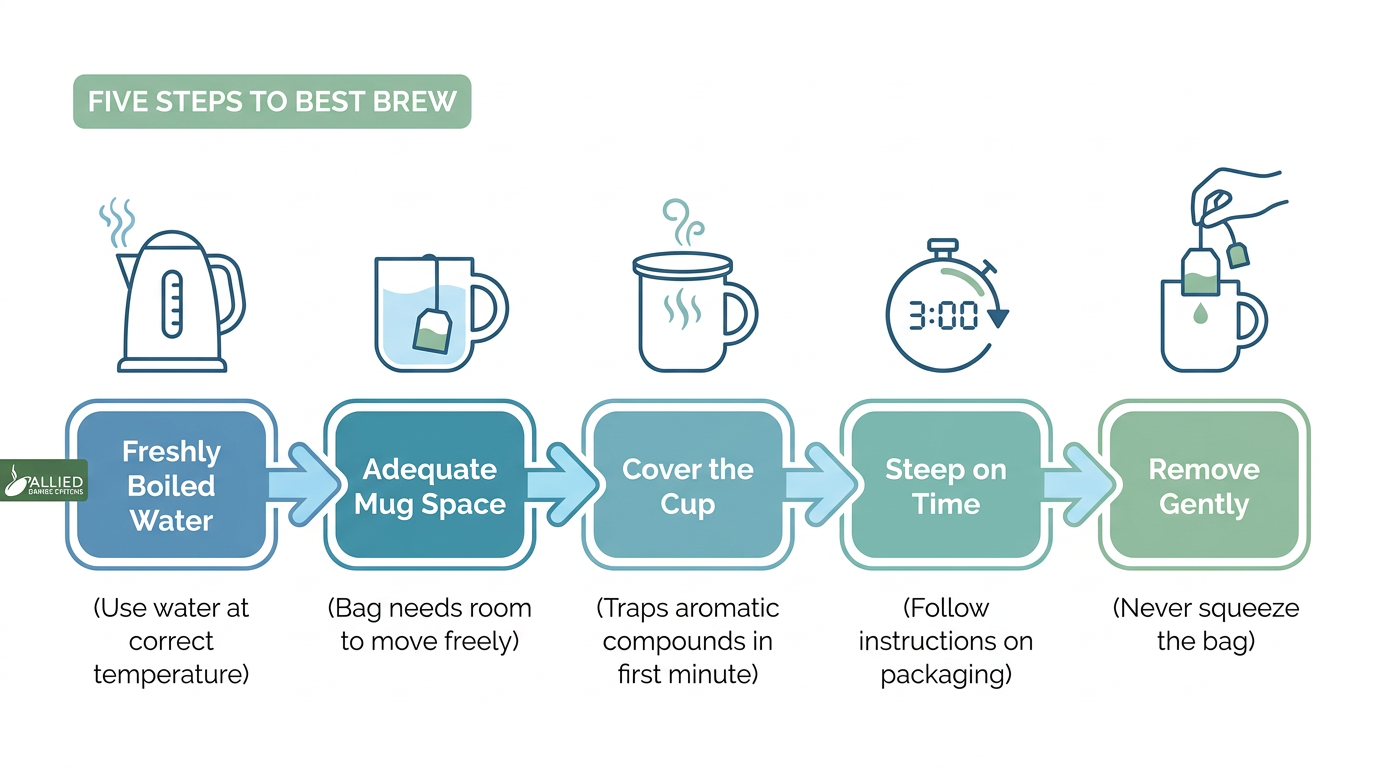
Getting a good cup from any tea bag comes down to water temperature, space and timing rather than the price you paid for the box. Freshly boiled water, used at the temperature specified on the packaging, gives the leaves the best chance to release their full flavour, while water that’s been reboiled repeatedly loses the oxygen needed for proper extraction. A mug with enough room for the bag to move produces a noticeably better brew than a cramped cup, since restricted movement limits how much water actually reaches the leaves.
For pyramid bags holding whole-leaf or chunky herbal blends, a gentle stir right after pouring helps water circulate around every piece inside the mesh. Covering the cup for the first minute or two traps the aromatic compounds that would otherwise escape as steam, which matters more than most people assume for the final flavour.
Steep for the time stated on the pack, rather than guessing. This avoids both a weak, underdeveloped cup and an overly tannic, bitter one.
Squeezing the bag at the end might feel like you’re getting extra value, but it forces fine particles and harsh compounds into the liquid and does more harm than good to the finished drink, and even repurposed tea waste fibre studied for functional instant tea shows that extraction conditions significantly change the balance of bioactive compounds released.
Choosing Tea Bags for the Workplace or Hospitality Venue
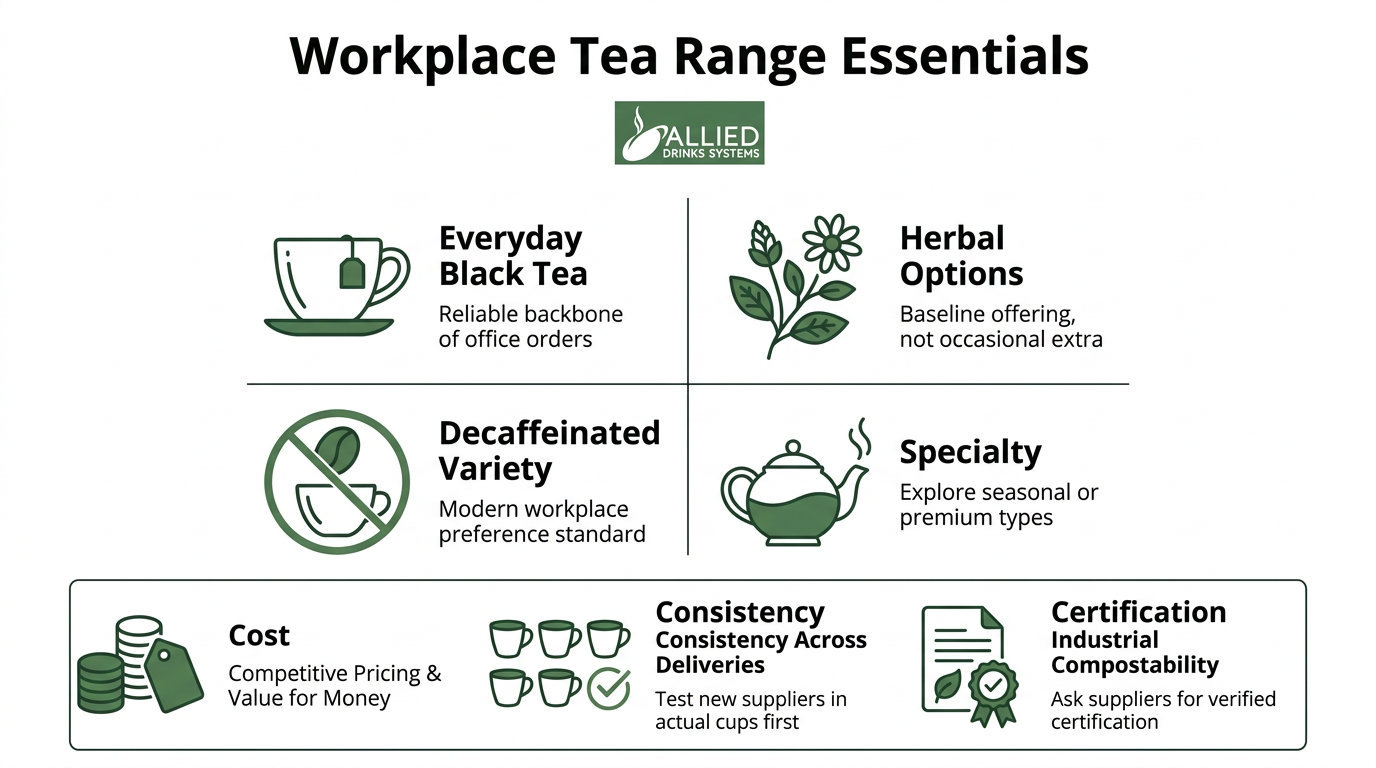
Buying tea bags for a workplace or hospitality venue is a different exercise from picking a box for home, because small per-bag decisions multiply quickly once you’re pouring hundreds of cups a week. Cost, consistency and genuine sustainability credentials all carry more weight at volume, and a marginal saving per bag can translate into a meaningful difference across a year of ordering. Staff and customers also expect variety now rather than a single standard black tea, so a workplace offering typically needs decaffeinated, herbal and specialty options sitting alongside a reliable everyday blend. This mirrors the same inclusivity principle that’s become standard around plant-based milk and decaf coffee in office kitchens and café counters. Getting this right means looking past the headline claim on a box and checking whether the compostability certification, material composition and flavour consistency actually hold up across repeated deliveries, not just the first order.
Everyday black tea remains the backbone of most office and hospitality orders, so prioritise a reliable supply chain before chasing speciality blends.
Herbal and decaffeinated options options should sit alongside standard tea as a baseline offering rather than an occasional extra, reflecting how varied modern workplace preferences have become.
Genuine industrial compostability certification is worth asking suppliers about directly, since it offers verified assurance that goes beyond a general sustainability claim on the box.
Consistency across deliveries matters as much as the initial sample, so test a new tea bag supplier’s product in your actual cups and water before committing to a bulk order.
How Allied Drinks Systems Supports Your Tea and Hot Drinks Offering
Allied Drinks Systems supplies a specialty tea selection alongside coffee, hot chocolate and plant-based milk options, so offices and hospitality venues can build a rounded hot drinks offering from one supplier rather than juggling several. This one-stop approach, combined with flexible leasing packages covering machines, consumables and ongoing support, simplifies procurement considerably for busy teams who’d rather not manage multiple accounts.
If you’re reviewing your current tea and hot drinks range, take a look at the beverages on offer and call the sales team on 0800 442299 for advice tailored to your venue. They can talk you through what suits your footfall, your water quality and your budget before you commit to an order.
The Takeaway
The material, shape and construction of a tea bag determine far more than most buyers realise, from how evenly the leaves brew to whether the bag can honestly be called compostable once it’s in the bin. A paper bag with a hidden plastic seal, a pyramid bag stuffed with the wrong leaf size, or a staple that won’t break down in compost are all small details that add up to a genuinely different product and a genuinely different outcome.
Before your next bulk order, read the packaging closely rather than trusting the headline claim, and match the bag format to the tea or herbal blend it’s meant to hold. If you’d like help building a tea and hot drinks range that fits your venue, explore the Allied Drinks Systems beverage range or call 0800 442299 to talk it through with the team.
Frequently Asked Questions
Can I put used tea bags in my home compost bin?
Only if the bag is explicitly labelled home compostable and doesn’t contain staples, string or plastic-based thread. Most PLA mesh bags are designed for industrial composting conditions that a typical garden compost heap can’t reach, so check the packaging before adding used bags to your bin.
Why do some tea bags taste different even with the same tea inside?
Mesh type and bag shape affect how evenly water circulates around the leaves during brewing. A finely cut tea in a flat paper bag extracts quickly, while the same blend packed into a loose pyramid bag may brew more slowly and taste noticeably milder.
Are plastic tea bags safe to use in boiling water?
Yes, nylon and PET mesh are designed to stay stable in boiling water without degrading or leaching during normal brewing. The genuine concern with these materials sits at the disposal stage, not at the point of making your cup.
How many tea bags does an office typically need per month?
Work this out from headcount, average cups per employee per day, and the number of working days in the month. Most facilities teams find it simpler to order tea bags in bulk through a single supplier to avoid running short mid-month.
What’s the difference between biodegradable and compostable tea bags?
Biodegradable means the material will break down eventually, though this can take an undefined and sometimes lengthy period. Compostable means the bag breaks down within a defined timeframe under specific conditions, which are often industrial rather than achievable in a home compost bin.
Do pyramid tea bags cost more than flat tea bags?
Generally yes, because pyramid bags use more mesh material and a more complex construction process than flat bags. The higher price usually reflects premium whole-leaf contents and a more striking presentation, which can support upselling in a hospitality setting.

