
Yes, but not much. If you’re asking whether hot chocolate has caffeine because you want something warm at 9pm, or you’re deciding what to offer in a school staff room, the short version is that a typical cup holds somewhere between 5 and 25 mg. A mug of tea is around 75 mg. A mug of filter coffee can be 140 mg.
The exact amount depends almost entirely on how much real cocoa is in the drink. That varies a lot between a rich dark powder, a sweet vending mix and a white chocolate blend. We have been supplying cafés, offices and vending operators since 1993, and this question comes up more often than you would think, usually from parents and from people cutting back on coffee. Here is how the numbers break down.
Key takeaways
- Hot chocolate does contain caffeine, usually between 5 and 25 mg per cup depending on how much cocoa is in the powder.
- A mug of tea contains around 75 mg and a mug of filter coffee around 140 mg, so hot chocolate has far less caffeine than either.
- White hot chocolate is almost caffeine-free because white chocolate contains no cocoa solids, which is where the caffeine is found.
- Dark hot chocolate with around 33% cocoa carries the most caffeine of the powders, roughly 15 to 25 mg in a 12oz (340ml) cup.
Where the caffeine in hot chocolate comes from
Caffeine sits in the cocoa solids, the brown, non-fat part of the cocoa bean. Cocoa butter, the fat, carries almost none. So the darker and more cocoa-heavy a drink is, the more caffeine it carries.
Unsweetened cocoa powder contains roughly 2 mg of caffeine per gram. That figure moves around with bean origin, roasting and processing, and some cocoas sit nearer 1 mg per gram while others go above 3 mg. Most hot chocolate powders are not pure cocoa, though. They are cocoa blended with sugar, milk solids and other ingredients, which dilutes the caffeine considerably.
Theobromine: the other stimulant
Cocoa also contains theobromine, a chemical cousin of caffeine. A cup made with a cocoa-rich dark powder can carry 100 to 200 mg of it. Theobromine is a much gentler stimulant. It relaxes blood vessels slightly and gives a mild lift rather than the sharp alertness of caffeine, but it lingers in the body longer. That is one reason some people find a very dark hot chocolate late at night less sleepy than they expected, even though the caffeine figure looks small.
How much caffeine in hot chocolate? Powders, sauces and vending mixes compared
The estimates below assume a standard serving of around 25 to 30 g of powder made up in a 12oz (340ml) cup. Always check the cocoa percentage on the pack, because that is the number that predicts caffeine best.
| Type of hot chocolate | Typical cocoa content | Estimated caffeine per cup |
|---|---|---|
| Dark or high-cocoa powder | 30% to 40% | 15 to 25 mg |
| Chocolate sauce (two pumps, around 30ml) | Varies widely | 5 to 15 mg |
| Milk-style vending mix | Usually lower, check label | 5 to 10 mg |
| White hot chocolate | No cocoa solids | Close to 0 mg |
| Mocha (espresso plus chocolate) | Varies | 65 mg or more, mostly from the coffee |
Dark powders
A dark powder is where hot chocolate gets closest to a stimulant drink. Zuma Dark Vegan Hot Chocolate is made with 33% West African cocoa, so a 28 g serving carries roughly 9 g of cocoa. At around 2 mg per gram, that puts a cup in the region of 15 to 25 mg of caffeine. It is still a fraction of a single espresso, but it is noticeably more than a sweet vending blend, and it brings that bitter, grown-up flavour with it.

Zuma Dark Vegan Hot Chocolate (1kg Packet)
Rich and sophisticated, with the perfect bitter balance. This delicious Dark Hot Chocolate powder is made with 33% West African cocoa. A pure taste to be…
Chocolate sauces
Sauces used for mochas and café hot chocolates are mostly sugar and water, with cocoa as a smaller share. The caffeine you get depends on how many pumps go in. A generous barista pour adds up quickly, so if you are trying to keep a drink low in caffeine, ask for fewer pumps or use a measured powder instead.
Vending mixes
Vending powders are formulated to dissolve instantly, taste sweet and creamy, and behave reliably in a machine. That usually means a lower cocoa share than a dark café powder. A milk-chocolate style blend such as Cadbury One Vending Hot Chocolate sits towards the lower end of the caffeine range, which is part of why it is such a common choice for offices, sports clubs and family venues.
Cadbury One Vending Hot Chocolate (1kg)
Delicious Cadbury vending hot chocolate powder. Delight your customers with the No.1 Hot Chocolate in the UK. Cadbury’s One instant hot chocolate is a…
White hot chocolate: the near caffeine-free option
White chocolate is made from cocoa butter, sugar and milk, with no cocoa solids. Since the caffeine lives in the solids, white hot chocolate contains next to none. Any trace that shows up is tiny, well under what you would notice.
That makes it the obvious pick for a bedtime drink or for younger children. Summit White Hot Chocolate Powder is sweet and creamy and takes well to cream and marshmallows, so it does not feel like the second-best option on a menu. If you want more ideas for serving it, our guide to white hot chocolate covers the flavour side.
Summit White Hot Chocolate Powder
If you’re a fan of sweet things, then our Summit White hot chocolate powder is for you. Smooth, sweet and creamy, this is a fantastic addition to any drinks…
One caution: if a white chocolate drink is flavoured with coffee or blended with regular chocolate, the caffeine picture changes. Check the ingredients rather than assuming.
Hot chocolate next to tea and coffee
Put side by side, the gap is wide. Even the darkest powder on the table above has roughly a third of the caffeine of a mug of tea, and a sixth of a mug of filter coffee.
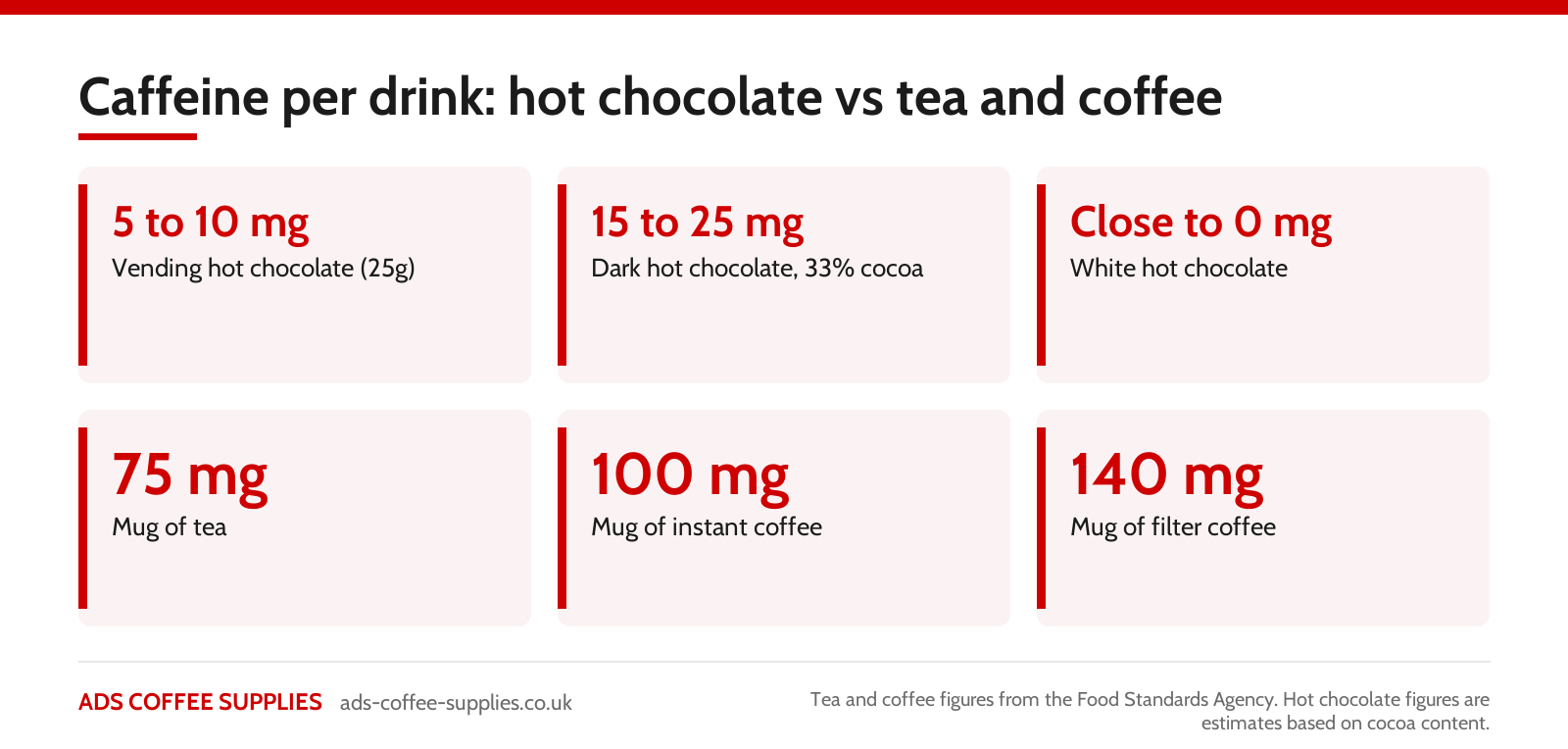
Coffee figures swing a lot depending on the beans, the dose and the brew method. Tea varies too, with strength and steeping time. Our guide to caffeine in tea goes into that in detail. The point for hot chocolate is simple: swapping your afternoon coffee for a cup of hot chocolate cuts your caffeine intake sharply, often by more than 100 mg.
Is there caffeine in hot chocolate for children, pregnancy and late nights?
There is a little in most cups, and for most people that little does not matter. A few groups are right to pay attention, though.
Children
There is no official UK caffeine limit for children, but the European Food Safety Authority suggests up to 3 mg per kg of body weight per day as a safe level. For a 20 kg child, that is 60 mg. A vending-style hot chocolate at 5 to 10 mg sits comfortably inside that. A large, very dark cup at the end of the day, on top of chocolate biscuits and a cola, is where it starts to add up. White hot chocolate removes the question entirely.
Pregnancy
The NHS advises keeping caffeine under 200 mg a day during pregnancy. A cup of hot chocolate uses only a small part of that allowance, so it is usually a sensible swap for a second coffee. Count it if you are also drinking tea, cola or eating plain chocolate.
Before bed
Caffeine has a half-life of around 5 hours in most adults, and some people are far more sensitive than others. If you sleep badly after a dark hot chocolate, it may be the theobromine and sugar as much as the caffeine. Try a milkier mix or a white chocolate drink instead.
Serving lower-caffeine drinks in a café, school or office
If you run a site with a mix of customers, from teenagers to night-shift staff, it helps to offer a clear spread: a dark option for flavour, a milky one for comfort and a white one for anyone avoiding caffeine. You can browse our full hot chocolate range by brand, pack size and style.
Consistency matters too. A hand-scooped drink can easily double in strength when the barista is in a hurry. A dedicated machine doses the same weight of powder every time, so the caffeine per cup stays predictable. The Galaxy Hot Chocolate Machine serves a 12oz cup with three drink options, which suits staff rooms, waiting areas and leisure sites where people help themselves.
Galaxy Hot Chocolate Machine
Highlights 12oz cup size Three drink options Galaxy branded Quick and easy to use Sleek and modern design Experience the ultimate in comfort and luxury with…
A few practical habits help customers make their own choices:
- Put the cocoa percentage on the menu board for your dark option.
- Label white hot chocolate as virtually caffeine-free, which parents appreciate.
- Keep mochas clearly separate, since the espresso brings far more caffeine than the chocolate.
- Check allergen information on every powder, as milk content varies between vegan and dairy blends.
If you would like advice on the right powder or machine for your site, our team in Eastbourne is happy to help, and we deliver and service UK-wide.
Frequently asked questions
Does hot chocolate have more caffeine than tea?
No. A typical mug of tea contains around 75 mg of caffeine according to the Food Standards Agency, while most hot chocolates contain between 5 and 25 mg. Even a dark powder with 33% cocoa usually lands at roughly a third of a mug of tea. A very strong cocoa-heavy drink made with a large dose can creep higher, but it rarely matches tea.
Does white hot chocolate have caffeine?
White hot chocolate contains almost no caffeine. White chocolate is made from cocoa butter, sugar and milk, and the caffeine in cocoa sits in the brown cocoa solids, which white chocolate leaves out. Any trace is too small to notice. Check the label if the drink is flavoured, as some blends add coffee or regular chocolate.
Will hot chocolate keep me awake at night?
For most people a standard cup will not, since it usually carries 5 to 25 mg of caffeine. Very dark hot chocolate also contains theobromine, a mild stimulant that stays in the body for several hours, and the sugar can play a part too. If you are sensitive, choose a milkier vending-style mix or white hot chocolate in the evening.
Is hot chocolate OK for children?
Generally, yes. EFSA suggests children can safely have up to 3 mg of caffeine per kg of body weight a day, which is about 60 mg for a 20 kg child. A milky hot chocolate at 5 to 10 mg is well within that. For bedtime, or for very young children, white hot chocolate is the safest choice.
Can I drink hot chocolate when pregnant?
Yes, in normal amounts. The NHS recommends staying under 200 mg of caffeine a day during pregnancy, and a cup of hot chocolate typically uses 5 to 25 mg of that. It is a useful swap for coffee. Remember to count other sources such as tea, cola, energy drinks and plain chocolate across the day.

