
You are halfway through a brownie recipe, the cupboard has no cocoa, but there is a tub of drinking chocolate at the back. So can you use hot chocolate powder instead of cocoa? Yes, in plenty of recipes, as long as you accept that you are adding sugar and milk solids along with the chocolate, and you adjust for them.
Where people come unstuck is treating the two as a straight one-for-one swap. Do that and you get a pale, oversweet bake with a faint chocolate flavour and a texture that is drier than it should be. This guide covers how to convert a recipe properly, which bakes take the swap happily, and the handful where you really should go to the shop.
Key takeaways
- You can use hot chocolate powder instead of cocoa in sweet bakes, but it is not a one-for-one swap because most of the powder is sugar and milk solids.
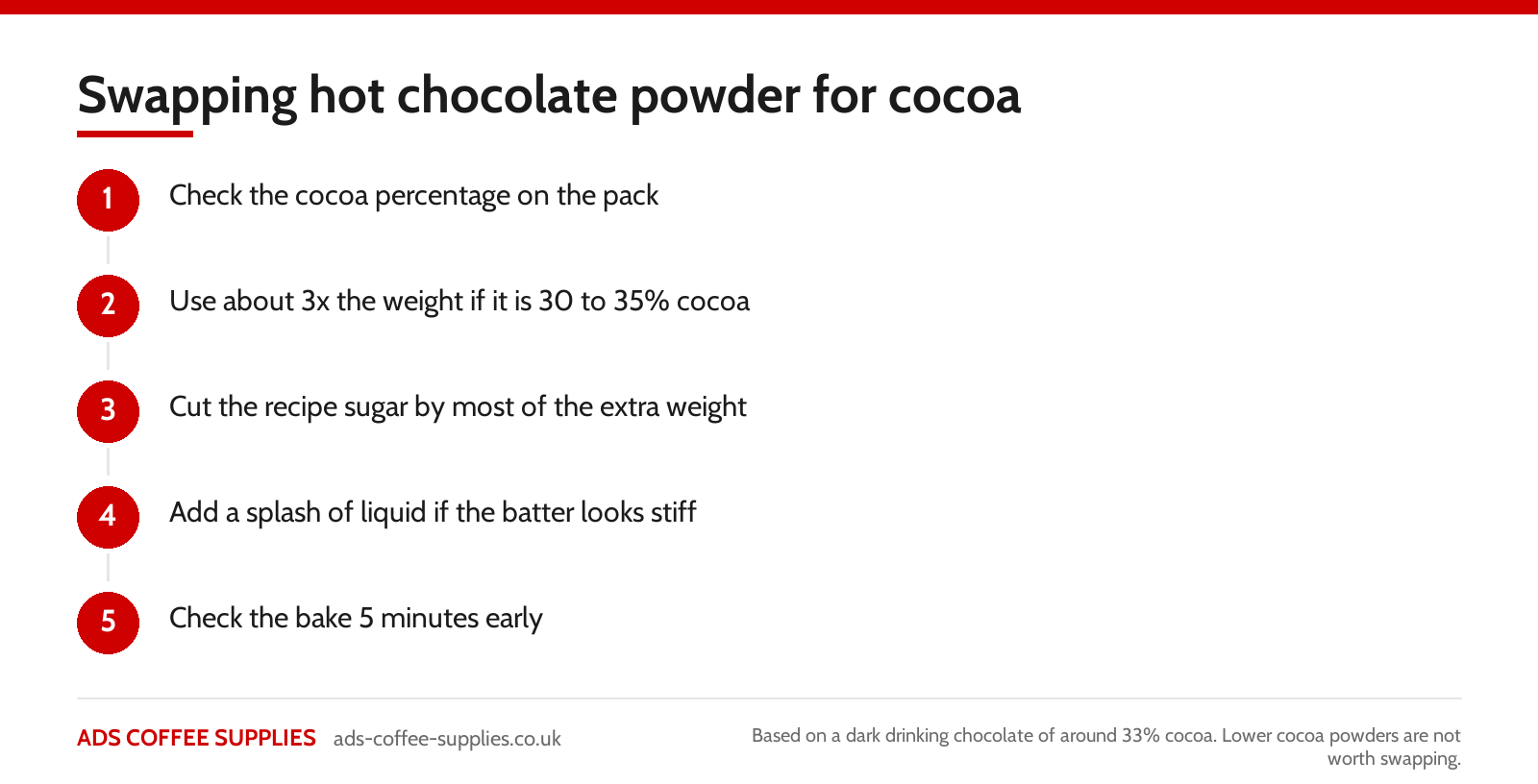
- A dark hot chocolate powder of around 33% cocoa needs roughly three times the weight of the cocoa it replaces, with the recipe sugar cut by most of the extra weight.
- Hot chocolate powder should not replace cocoa in intense chocolate cakes, savoury dishes, low-sugar recipes or dairy-free baking unless the blend is dairy free.
- White hot chocolate powder contains no cocoa solids for flavour and cannot be used as a cocoa substitute.
Is cocoa powder the same as hot chocolate powder?
No. Cocoa powder is what is left when cocoa beans are roasted, ground and pressed to remove most of the cocoa butter. Nothing is added. Standard UK cocoa powder carries around 20 to 22% fat, with fat-reduced versions closer to 10 to 12%, and it tastes bitter on its own.
Hot chocolate powder is a finished drink mix. Cocoa is only one ingredient, and on most packs it is not the main one. Sugar usually comes first, followed by milk powder or whey, sometimes glucose syrup, plus flavourings and anti-caking agents. A good dark drinking chocolate might be a third cocoa. Many vending powders have far less, because they are designed to taste sweet and creamy straight from a machine with just hot water.
If you want the full story on the drinks themselves, our post on hot chocolate vs hot cocoa covers the difference in the cup. For baking, these are the numbers that matter:
| Cocoa powder | Dark hot chocolate powder | Standard or vending hot chocolate | |
|---|---|---|---|
| Cocoa content | 100% | Around 30 to 35% | Often well under that; check the label |
| Sugar | None | Usually the largest ingredient | Usually the largest ingredient |
| Milk solids | None | Some contain none (vegan blends) | Commonly whey or milk powder |
| Flavour in a bake | Deep, bitter, intense | Rounded, bittersweet | Mild, milky, sweet |
| Swap worth trying? | n/a | Yes, with adjustments | Only in sweet, forgiving recipes |
Can you use hot chocolate powder instead of cocoa in baking?
You can, and the trick is to work out how much actual cocoa you are getting. Start with the label. If the pack gives a cocoa percentage, you can do the maths. If it only lists ingredients and sugar comes first with cocoa third or fourth, expect a weak result and use it only where chocolate is a background note.
A worked example
Say your brownie recipe calls for 40g cocoa powder and 200g caster sugar. With a 33% cocoa drinking chocolate:
- To get roughly 40g of cocoa you need about 120g of powder.
- That 120g brings around 80g of other stuff, most of it sugar.
- So cut the caster sugar from 200g to somewhere around 120 to 130g.
In practice, tripling the powder can make the mix bulky and a bit sweet even after the sugar cut, because milk powder tastes sweeter than its sugar content suggests. A more reliable compromise is to replace half the cocoa with hot chocolate powder and keep the other half as cocoa, or to top up the chocolate hit with 30 to 50g of melted dark chocolate.
Watch the liquid and the oven
Sugar and milk powder both soak up moisture, so a batter made with drinking chocolate can look stiffer than the recipe intends. A tablespoon or two of milk usually sorts it. Milk solids and extra sugar also brown faster, so check cakes and cookies about 5 minutes early, or drop the oven by 10°C if the tops are colouring before the middle sets.
Raising agents
Natural cocoa is slightly acidic and some older recipes rely on it reacting with bicarbonate of soda. Drinking chocolate is generally made with alkalised cocoa and diluted with milk, so that reaction is weaker. If the recipe uses only bicarb, add a spoonful of yoghurt or buttermilk, or swap part of the bicarb for baking powder.
Where hot chocolate powder works well
The best candidates are recipes that are already sweet, where a gentle chocolate flavour is welcome and nobody will miss a bitter edge.
- Buttercream and frosting. You are adding icing sugar anyway, so drinking chocolate fits right in. Reduce the icing sugar by roughly the weight of powder you add.
- Cookies and blondie-style bakes. A chewy cookie with a malty, milky chocolate flavour is a perfectly nice thing.
- No-bake treats. Rocky road, tiffin and chocolate crispy cakes forgive almost anything.
- Chocolate milk, milkshakes and mochas. This is what the powder was designed for.
- Dusting hot drinks. Sweeter than cocoa on a cappuccino, which plenty of people prefer.
For a dark, grown-up result, pick a powder that is honest about its cocoa. Zuma Dark Vegan Hot Chocolate is made with 33% West African cocoa and contains no dairy, so it behaves more like cocoa and sugar than a milky drink mix. That makes the conversion maths above straightforward, and it keeps a vegan bake vegan.

Zuma Dark Vegan Hot Chocolate (1kg Packet)
Rich and sophisticated, with the perfect bitter balance. This delicious Dark Hot Chocolate powder is made with 33% West African cocoa. A pure taste to be…
Summit Dark Hot Chocolate Powder is another bittersweet option, sold in our Veganuary range. It gives brownies and chocolate sponges a richer flavour than a standard milk-style drinking chocolate would.
Summit Dark Hot Chocolate Powder
Our Summit Dark hot chocolate powder is a rich and indulgent drink with the perfect bittersweet
When you shouldn't swap hot chocolate powder for cocoa
Some recipes depend on cocoa doing a job that drinking chocolate simply cannot do.
Intense chocolate cakes
Devil’s food cake, flourless chocolate torte and dark chocolate tart bases rely on a lot of unsweetened cocoa for depth and colour. Matching that with drinking chocolate means so much sugar that the structure suffers. Buy cocoa.
Savoury cooking
A spoon of cocoa in chilli, a mole sauce or a rich beef stew adds bitterness and depth, not sweetness. Hot chocolate powder will make the dish taste oddly sugary and milky.
Low-sugar or dairy-free baking
Most drinking chocolate is more sugar than anything else, and many blends contain whey or milk powder. If you are baking for someone avoiding dairy, read the label every time.
Vending and machine powders
Powders formulated for drinks machines are built to dissolve instantly and taste creamy with water. NEW Summit Chocolate Royale Vending Chocolate is a good example: sugar is the first ingredient, then whey, then fat-reduced cocoa. It makes a lovely drink, but in a cake it adds sweetness and dairy far faster than chocolate flavour. Keep this style for the cup.
NEW Summit Chocolate Royale Vending Chocolate (1kg)
NEW Summit Chocolate Royale vending chocolate powder. This delicious creamy and rich chocolate blend is a must-have for your vending machine. Ingredients:…
White hot chocolate
White hot chocolate gets its flavour from milk, sugar and vanilla rather than cocoa solids, so it cannot replace cocoa at all. Summit White Hot Chocolate Powder is better used as a sweet, creamy addition, such as stirred into a white chocolate buttercream or a milkshake, than as a stand-in for cocoa.
Summit White Hot Chocolate Powder
If you’re a fan of sweet things, then our Summit White hot chocolate powder is for you. Smooth, sweet and creamy, this is a fantastic addition to any drinks…
A quick decision guide
If you only remember one thing, make it this: the higher the cocoa percentage on the pack, the better the swap. A dark powder around a third cocoa can stand in for cocoa with a sugar adjustment. A milky everyday blend works only where sweetness is the point.
Ask yourself three questions before you start:
- Does the recipe already contain plenty of sugar that I can reduce?
- Is chocolate the star, or a supporting flavour?
- Does anyone eating it need to avoid dairy?
If the answers are yes, supporting and no, go ahead. Otherwise, half and half with real cocoa is the safer route.
We have been supplying drinks to cafés, offices and kitchens since 1993, and our hot chocolate range includes dark, milk and white powders, with free next working day delivery on mainland UK orders over £69 ex VAT. If you are not sure which suits your baking, give our Eastbourne team a call.
Frequently asked questions
Can I use hot chocolate powder instead of cocoa powder in brownies?
Yes. Use roughly three times the weight of cocoa if your powder is around 33% cocoa, then cut the recipe sugar by most of that extra weight. For a fudgier, more chocolatey result, replace only half the cocoa with drinking chocolate and add a little melted dark chocolate. Check the brownies a few minutes early, as the extra sugar and milk solids brown faster.
Is cocoa powder the same as hot chocolate powder?
No. Cocoa powder is pure ground cocoa with most of the fat pressed out and nothing added, so it is bitter. Hot chocolate powder is a drink mix where sugar is usually the main ingredient, often with milk powder or whey, and cocoa makes up only part of the blend. Dark versions are typically around 30 to 35% cocoa, while many standard mixes contain less.
Can I use cocoa powder instead of hot chocolate powder for a drink?
Yes, but you need to add the sweetness and creaminess yourself. Mix about 2 teaspoons of cocoa with 1 to 2 teaspoons of sugar and a splash of cold milk to make a paste, then whisk in around 250ml of hot milk. Heat the milk to roughly 65 to 70°C rather than boiling it, so it stays sweet and smooth.
Will hot chocolate powder make my cake rise differently?
It can. Natural cocoa is slightly acidic and reacts with bicarbonate of soda, helping the cake rise. Drinking chocolate is usually made with alkalised cocoa diluted by milk and sugar, so that reaction is weaker. If your recipe uses only bicarbonate of soda, add a spoonful of yoghurt or buttermilk, or swap some of the bicarb for baking powder.
Is hot chocolate powder vegan?
Many are not, because whey and milk powder are common ingredients. Some dark blends are made without dairy, such as vegan dark hot chocolates using cocoa and sugar only. Always read the ingredients list before baking for anyone avoiding dairy, as recipes and formulations can change between batches and brands.

