
No. Pure chamomile tea contains no caffeine at all, so a mug at 10pm will not keep you awake the way a builder’s tea might. If you have searched does chamomile tea have caffeine because you are cutting back, pregnant, or simply want something warm before bed, the answer is reassuringly simple.
The same holds for peppermint, rooibos and most fruit infusions. There are a few exceptions, though, and they catch people out regularly. This guide covers why herbal infusions are caffeine free, which ones are not, how to brew them so they taste of something, and what to stock if you run a café, hotel or office tea station.
Key takeaways
- Pure chamomile tea contains 0 mg of caffeine because it is made from dried daisy flowers, not the Camellia sinensis tea plant.
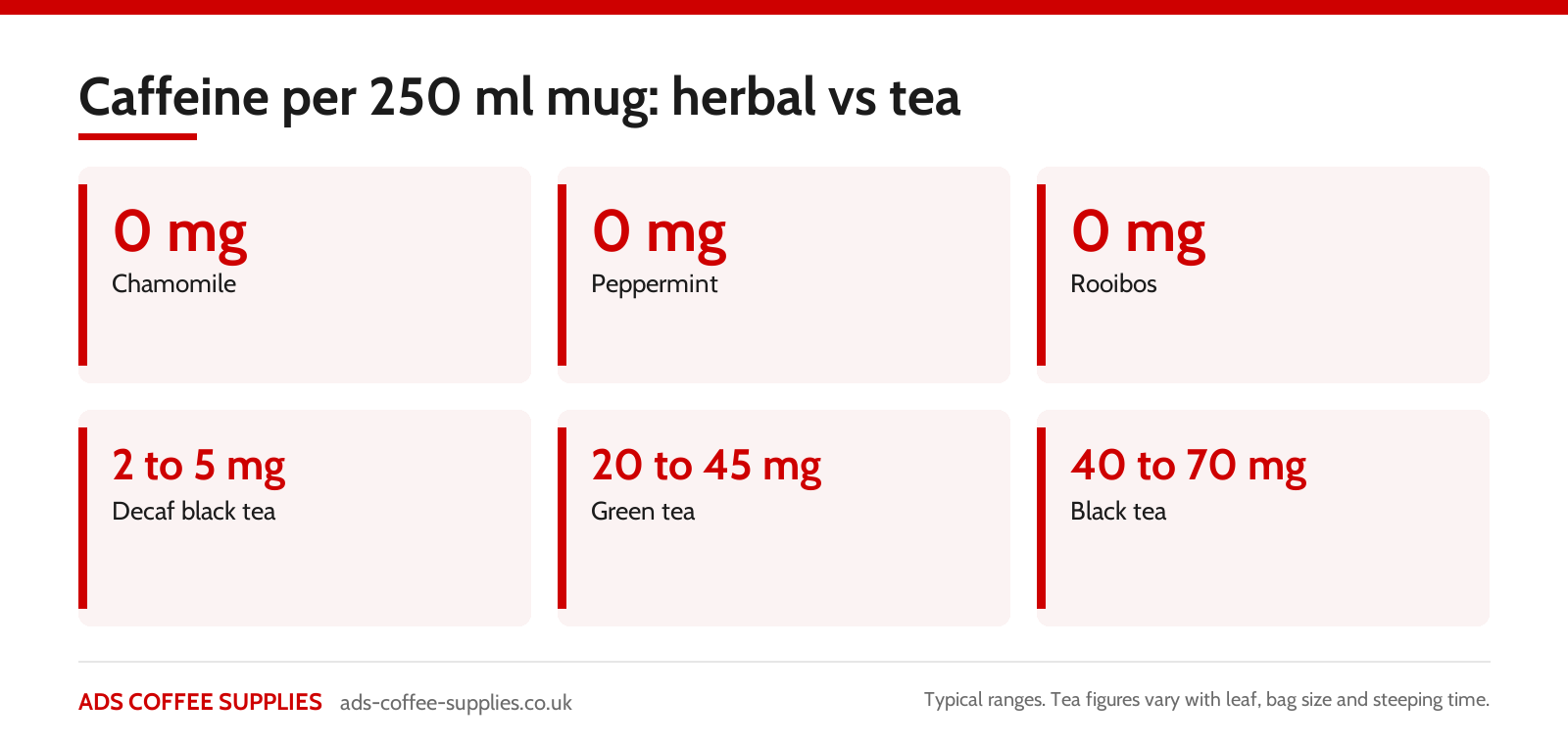
- Peppermint, rooibos and most fruit infusions are also naturally caffeine free, compared with roughly 40 to 70 mg in a 250 ml mug of black tea.
- Blends built on green or black tea, such as Moroccan mint, jasmine and chai, contain caffeine, as do yerba mate and guayusa at around 30 to 80 mg a cup.
- Herbal infusions brew best with freshly boiled water at 95 to 100°C for 4 to 7 minutes, covered to keep the aroma in.
Does chamomile tea have caffeine? Why the answer is no
Caffeine in a cup of tea comes from one plant: Camellia sinensis. Black, green, white and oolong teas are all made from its leaves, processed differently. If a drink does not contain that plant, or another naturally caffeinated one such as coffee, cocoa or yerba mate, there is nothing in it to produce caffeine.
Chamomile is a daisy. The tea is made from its dried flower heads, usually German chamomile (Matricaria chamomilla). You will see it spelt both chamomile and camomile in the UK; they are the same thing. Strictly speaking it is an infusion or tisane rather than a tea, though nobody says “a cup of tisane” in a staff room.
The Birchall Camomile Plant-Based Enveloped Tea Bags (25) are a good example: flowers and leaves of the camomile plant and nothing else, labelled naturally caffeine free. Each bag is individually wrapped, which keeps the delicate aroma intact far longer than a loose box would.

Birchall Camomile Plant-Based Enveloped Tea Bags (25)
Birchall Camomile is a soothing and delicate blend, which helps to aide digestion and promote better sleep. Naturally caffeine free, it is made from the…
And peppermint?
Peppermint tea is caffeine free for the same reason. It is made from the leaves of Mentha piperita, a mint, with no tea leaf involved. The bright, cooling flavour comes from menthol, which some people find wakes them up a little. That sensation is not caffeine, and it will not affect your sleep in the same way.
Herbal tea caffeine at a glance
Herbal tea caffeine content is zero across the common infusions, but it helps to see the numbers side by side with ordinary tea. Figures are for a typical 250 ml (about 8 oz) mug.
| Infusion | Made from | Caffeine |
|---|---|---|
| Chamomile | Dried daisy flower heads | None |
| Peppermint | Mint leaves | None |
| Rooibos (redbush) | South African shrub | None |
| Fruit infusions | Hibiscus, rosehip, apple, berries | None, unless tea is added |
| Ginger, lemongrass, liquorice | Roots and grasses | None |
| Yerba mate | South American holly leaves | Yes, often 30 to 80 mg |
| Guayusa | Amazonian holly leaves | Yes, similar to strong tea |
One small caveat. Herbal teas are often packed in the same facilities as black tea, so a lab test might occasionally find a trace. We are talking fractions of a milligram, far below the 2 to 5 mg left in a mug of decaf. For practical purposes, including pregnancy and caffeine sensitivity, it is zero.
If you want the full picture on black and green tea strength, our guide to how much caffeine is in tea goes into brewing time and leaf grade in detail.
The herbal teas that do contain caffeine
This is where people slip up. A drink sold as “herbal” or with a calming name is not automatically free of caffeine, so read the ingredients rather than the front of the box.
Blends with a tea base
Plenty of flavoured teas use black or green tea as the base and add fruit, flowers or mint on top. Moroccan mint is traditionally gunpowder green tea with spearmint. Jasmine tea is almost always green tea scented with jasmine blossom. Chai is spiced black tea. Earl Grey is black tea with bergamot. All of these carry caffeine, roughly in line with the tea they are built on.
Plain green tea itself sits in the middle of the range. Something like Birchall Green Tea Plant-Based Enveloped Tea Bags (25) is a lighter option than breakfast tea, typically 20 to 45 mg per mug depending on how long you leave the bag in, but it is not a caffeine-free choice for bedtime.
Birchall Green Tea Plant-Based Enveloped Tea Bags (25)
Birchall Green Tea is a purifying and restorative traditional green tea, rich in anti-oxidants. A delicious full flavoured pure green that is smooth, light and…
Naturally caffeinated herbs
Yerba mate and guayusa come from holly species rather than Camellia sinensis, yet both contain caffeine naturally. Mate in a teabag usually lands somewhere around 30 to 80 mg a cup; drunk the traditional way, topped up repeatedly from a gourd, the total climbs well past that. They are often marketed as herbal energy drinks, which is accurate, just not what someone avoiding caffeine wants.
Fruit teas with “added” extras
Most fruit infusions are hibiscus, apple and rosehip, which are all caffeine free. Occasionally a fruity blend includes green tea, matcha or guarana for a lift. If the label says “fruit tea” rather than “fruit infusion”, that is a reason to check the ingredients list.
How to brew chamomile and peppermint so they taste of something
A weak, watery herbal tea is nearly always under-brewed. Unlike green tea, which turns bitter if the water is too hot, herbal infusions want proper heat and time.
- Water temperature: freshly boiled, around 95 to 100°C. Do not reboil water that has sat in the kettle, as it tastes flat.
- Chamomile: 4 to 5 minutes. Go longer and it can turn slightly hay-like, which some people like and others do not.
- Peppermint: 5 to 7 minutes. Mint holds up well to long steeping and becomes noticeably more cooling.
- Cover the cup: a saucer over the mug keeps the aromatic oils in rather than letting them drift off with the steam.
- Milk: leave it out. Honey or a slice of lemon suits both.
Whole flowers make a real difference with chamomile. The Teapigs Chamomile Flowers Tea Temples (50) use whole flower heads in a roomy pyramid bag, so the water can circulate and you get a sweeter, rounder cup than from finely chopped dust. They also look good in a glass cup, which matters if you are serving front of house.
Teapigs Chamomile Flowers Tea Temples (50)
Teapigs pure and sweet – Chamomile. These delicious tea temples are made with whole chamomile flowers, so pure, so sweet nothing like a regular
Offering caffeine-free tea in a café, hotel or office
Ask anyone who has worked a café counter in the afternoon: after about 3pm, the requests for peppermint and chamomile pick up sharply. Customers who would happily drink a flat white at 9am want something that will not keep them up. If your only answer is decaf coffee, you are missing sales.
A sensible caffeine-free line-up does not need to be long. Peppermint is the steady seller, chamomile the evening favourite, and a fruit infusion covers people who want something sweeter or to serve iced in summer. Rooibos is a nice extra for those who want a tea-like taste with milk.
For hotel rooms, meeting trays and self-serve stations, individually wrapped bags keep everything hygienic and fresh. Our range of enveloped tea bags is built for exactly that. High-turnover sites are better off buying in catering quantities: the Birchall Peppermint Plant-Based Enveloped Tea Bags (250) give you the same pure peppermint leaf as the retail box, in a size that sees a busy office or guest house through weeks rather than days.
Birchall Peppermint Plant-Based Enveloped Tea Bags (250)
Birchall Peppermint is fresh, invigorating and perfect as an after-dinner digestif. A classic herbal tea made from only the finest pure peppermint leaves.…
A practical tip for staff: label your herbal options clearly as caffeine free on menus and on the tea station itself. It saves the same question being asked forty times a day and helps customers who are pregnant or on medication choose with confidence.
We have supplied tea, coffee and equipment to UK cafés, offices and hotels from Eastbourne since 1993, with free next working day delivery on mainland orders over £69 ex VAT. If you would like help putting together a caffeine-free range, give the team a call.
Frequently asked questions
Does peppermint tea have caffeine?
No. Pure peppermint tea is made only from the leaves of the peppermint plant, so it contains no caffeine. The fresh, slightly energising feeling comes from menthol, not a stimulant. Be careful with Moroccan mint or mint green tea, though, as these use green tea as a base and typically contain around 20 to 45 mg of caffeine per mug.
Is chamomile tea good to drink before bed?
Chamomile is caffeine free, which makes it a popular evening drink. Many people find the ritual of a warm, mild cup helps them wind down. Research on chamomile and sleep is limited and results are modest, so think of it as a calming caffeine-free choice rather than a sleep remedy. Brew for 4 to 5 minutes with freshly boiled water for the fullest flavour.
Can I drink chamomile tea while pregnant?
Chamomile contains no caffeine, so it does not count towards the NHS limit of 200 mg of caffeine a day in pregnancy. However, the NHS notes there is little information on the safety of herbal teas in pregnancy and suggests having no more than four cups a day. If you have any concerns or allergies to the daisy family, check with your midwife or GP first.
Does fruit tea have caffeine?
Most fruit teas are caffeine free because they are made from hibiscus, rosehip, apple and dried berries rather than tea leaves. Some blends add green tea, black tea or guarana for an extra lift, and these will contain caffeine. If the pack says fruit infusion it is usually caffeine free; if it just says fruit tea, check the ingredients list to be sure.
Is rooibos tea caffeine free?
Yes. Rooibos, also called redbush, comes from a South African shrub unrelated to the tea plant, so it contains no caffeine. It has a naturally sweet, slightly nutty flavour and, unlike most herbal infusions, takes milk well. That makes it a good swap for people who want something close to a regular cup of tea in the evening without the 40 to 70 mg of caffeine.

