
If you have only ever had one matcha and it tasted like lawn clippings stirred into hot water, you are not alone. So what does matcha taste like when it is made properly? Good matcha is fresh and grassy, with a savoury depth a bit like seaweed or steamed spinach, a natural sweetness on the finish and only a mild bitterness. Badly made matcha is flat, harsh and drying.
The gap between those two cups comes down to three things: the grade of powder, the temperature of your water and how you whisk it. We have been serving and supplying drinks since 1993, and most complaints about matcha that reach us trace back to one of these. This guide sticks to taste. If you want the background on how matcha is grown and what it contains, our guide on what matcha is covers that.
Key takeaways
- Well made matcha tastes grassy and savoury with a natural sweetness and only a mild bitterness, similar to young peas, seaweed and fresh cream.
- Bitter matcha is most often caused by water hotter than 80°C, so use water at 70 to 80°C instead of boiling.
- A good starting dose is 1 to 2 g of sifted matcha in 60 to 80 ml of water, whisked for 15 to 20 seconds until foamy.
- Brighter green, higher grade matcha tastes sweeter and less bitter, while olive or yellowish culinary grade is better mixed with milk or used in baking.
What does matcha taste like, sip by sip?
Matcha is not one flavour. Taste a well made bowl slowly and you will pick up several layers in sequence.
Grassy and vegetal
The first impression is green. Think freshly cut grass, young peas or edamame. This comes from chlorophyll, which is boosted because the tea plants are shaded for roughly three to four weeks before harvest.
Umami
Next comes a savoury, brothy richness. That is L-theanine, an amino acid that shading also increases. It is the same type of savouriness you find in miso or a good stock, and it is the quality that separates matcha from ordinary green tea bags.
Sweetness
Quality matcha has a soft natural sweetness, closer to fresh cream or sweet peas than to sugar. You notice it most on the finish.
Bitterness and astringency
There should be a little bitterness, enough to give the drink structure, similar to dark chocolate at around 70%. Astringency is the drying, slightly furry feel on your tongue, caused by catechins. A small amount is normal. Lots of it means something has gone wrong.
The texture matters too. Because you drink the whole ground leaf rather than an infusion, matcha has a thicker, velvety body. When people ask what flavour matcha is, the honest answer is: green tea, but concentrated, rounder and more savoury.
How grade changes the flavour
Grade labels are not regulated, so treat them as a guide rather than a guarantee. Broadly, powder from the youngest leaves of the first harvest tastes sweeter and more savoury, while later harvests and older leaves are more bitter and robustly green. That stronger edge is not a flaw if you are mixing it with milk.
| Grade | Colour | Typical taste | Best used for |
|---|---|---|---|
| Ceremonial | Vivid, bright green | Sweet, strong umami, low bitterness, creamy | Drinking straight with water |
| Premium or latte grade | Bright to mid green | Balanced grassy flavour, moderate bitterness | Daily drinking and matcha lattes |
| Culinary | Olive or yellowish green | Bolder, more bitter and astringent | Baking, smoothies, sweetened drinks |
Colour is the quickest quality check. Bright green powder usually tastes fresher and sweeter. Dull, khaki or brownish powder has either come from older leaves or has oxidised, and it will taste flat and harsher.
Summit Matcha Green Tea Powder (100g Packet) is a pure organic matcha with a fresh, grassy flavour and nothing added, so what you taste is the tea itself. It works well whisked with water and has enough character to carry through milk in a latte.

Summit Matcha Green Tea Powder (100g Packet)
Experience the purest green tea boost with Summit Pure Organic Matcha Powder. Made from specially grown and processed green tea, it offers a fresh, grassy…
Why is my matcha bitter?
Nearly every bitter cup we hear about has one of these causes. Work down the list.
- The water was too hot. Boiling water pulls out catechins quickly and scorches the delicate sweet compounds. Aim for 70 to 80°C. If you do not have a temperature kettle, boil it and let it stand for about five minutes, or add a splash of cold water first.
- Too much powder. More matcha does not mean better matcha. Over 2 g in a small amount of water becomes intensely bitter. Start with 1 g (about half a teaspoon) and build up.
- Clumps. Matcha is so fine it clumps easily, and every unmixed lump is a pocket of concentrated bitterness. Sieve it before adding water.
- Poor whisking. Stirring with a spoon leaves the powder half suspended, so the drink tastes gritty and sharp. Proper whisking aerates it and softens the flavour.
- Stale powder. Once opened, matcha reacts with air, light and heat. After a couple of months it loses sweetness and gains a hay-like, bitter note.
- Hard water. Much of southern and eastern England has hard water, which flattens the sweetness of green tea and can make it taste chalky. Filtered water makes a noticeable difference, for the same reasons covered in our piece on water filtration and flavour.
- Low grade drunk straight. Culinary grade is meant to be mixed. Drunk with plain water, it will always taste rough.
If your matcha is bitter and you are using boiling water and a spoon, change those two things before you change your powder. That alone fixes most cups.
How to make matcha taste better
The traditional method exists for a reason: each step reduces bitterness and builds sweetness and texture. These are the numbers we use as a starting point.
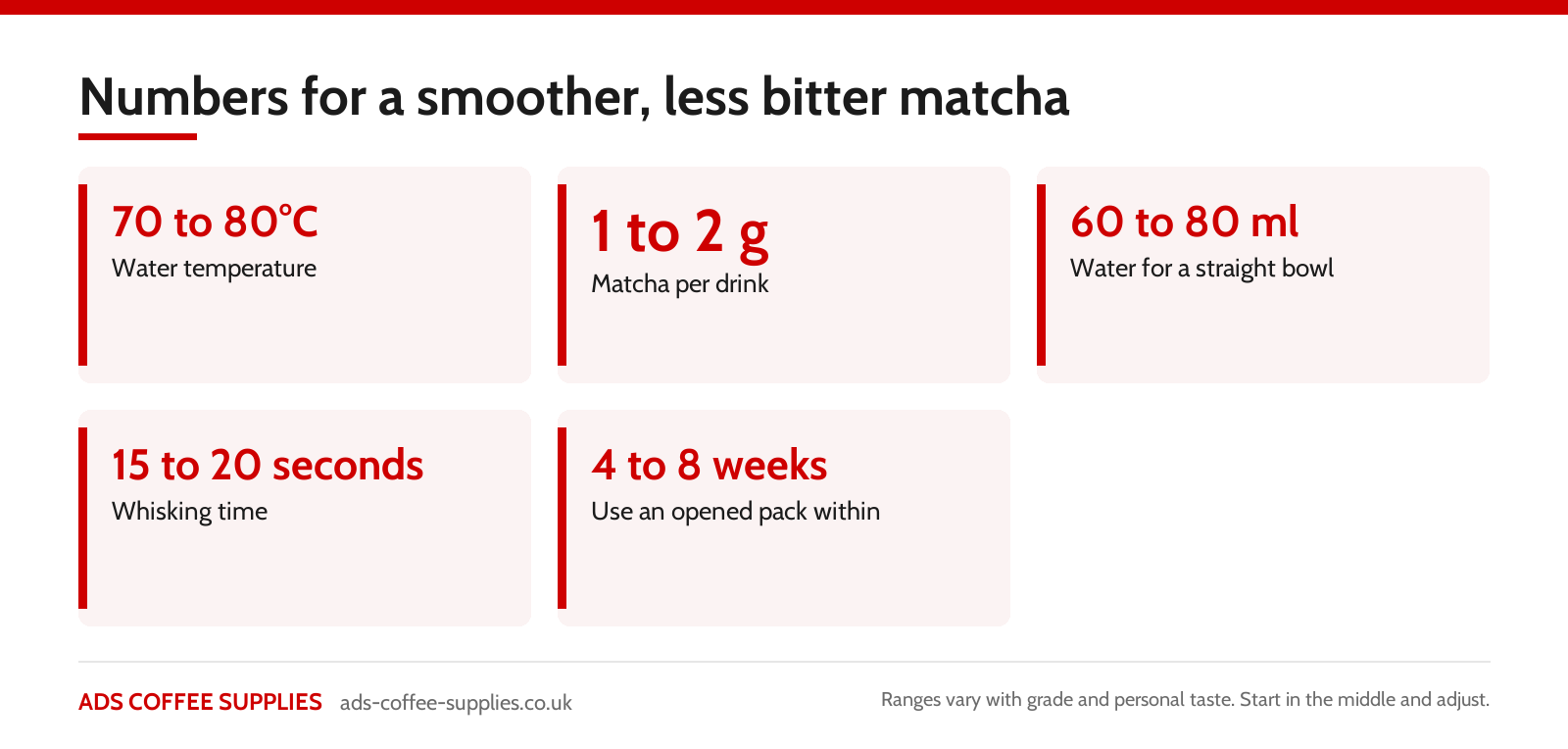
- Sift 1 to 2 g of matcha into a warmed bowl.
- Add a small splash of water at 70 to 80°C and work it into a smooth paste. This stops lumps forming.
- Top up to 60 to 80 ml in total.
- Whisk briskly in a zigzag or M shape, not in circles, for 15 to 20 seconds until a fine, even foam covers the surface.
- Drink it straight away, before the powder settles.
A bamboo whisk (chasen) is the tool that makes the biggest difference to taste. Its fine tines break up the powder and trap tiny air bubbles, which give matcha its soft, creamy mouthfeel. The Manual Matcha Bundle brings together handcrafted traditional tools, so you can follow the method above properly from the first bowl.

The Manual Matcha Bundle
Create smooth, traditional-style matcha at home with this simple setup, featuring handcrafted tools designed to make preparation easier and more enjoyable.…
If you mainly drink matcha lattes, or find hand whisking a chore first thing in the morning, an electric frother gives a smooth, café-style result with very little effort. The Electric Matcha Bundle pairs organic matcha with the essentials for a creamy brew. For a full breakdown of the tools themselves, see our guide to choosing a matcha set.

The Electric Matcha Bundle
Bring the coffee shop matcha experience home with this complete starter set, featuring premium organic matcha and the essential tools for a smooth, creamy…
Store it well
Keep matcha sealed, away from light, and somewhere cool. A fridge is fine as long as the pack is airtight and you let it come to room temperature before opening, so condensation does not get in. Buying a 100 g pack and finishing it within four to eight weeks keeps the flavour bright.
Matcha with milk and sweeteners
If straight matcha is not for you yet, milk is the easiest way in. The fat and protein in milk soften bitterness and round off the grassy edge, so a latte tastes sweeter and mellower than the same powder with water.
- Ratio: whisk 2 g of matcha with about 50 ml of water at 75°C, then add 200 ml of steamed or frothed milk. That is roughly a 12 oz drink.
- Whole milk gives the creamiest, least bitter result.
- Oat milk adds its own cereal sweetness and pairs well with matcha’s grassy notes. We look at its flavour in more detail in what oat milk tastes like.
- Almond and soya are lighter and let more of the tea come through.
A little sweetener helps too. Honey, maple syrup or a vanilla syrup all work, but add them after whisking and keep it modest. You want to round the bitterness off, not bury the tea. Iced matcha also tastes noticeably sweeter and less astringent than hot, because cold dulls our perception of bitterness.
For cafés, consistency is the challenge, since a different barista with a different kettle temperature can serve a very different drink. Fixing the dose by weight and setting the water temperature on the machine or boiler removes most of that variation. If you need help with equipment setup, our team in Eastbourne services machines across the UK and is happy to advise. Browse our matcha range for powders and tools, with free next working day delivery on orders over £69 ex VAT to mainland UK.
Frequently asked questions
What does matcha taste like for a first-timer?
Most first-timers describe matcha as grassy and earthy, a bit like spinach or seaweed, with a gentle bitterness and a sweet finish. If it tastes harsh or very bitter, the water was probably too hot or the powder was not whisked properly. A matcha latte with milk is a softer introduction, as the milk rounds off the bitter edge and brings out the sweetness.
Why is my matcha bitter?
The usual causes are water that is too hot, too much powder, lumps that were not sieved out, or stirring with a spoon instead of whisking. Use water at 70 to 80°C, start with 1 g of matcha, sift it first and whisk for 15 to 20 seconds. Stale powder and hard tap water can also add bitterness, so store matcha airtight and try filtered water.
Does matcha taste like normal green tea?
It is related but noticeably different. Matcha is stronger, thicker and more savoury, because you drink the whole ground leaf rather than an infusion, and the plants are shaded before harvest to boost umami and sweetness. Ordinary green tea bags are lighter and thinner, and often more astringent. Good matcha has a creamy body that green tea bags simply cannot match.
Is good matcha supposed to be sweet?
Yes, high quality matcha has a natural sweetness, closer to fresh cream or young peas than to sugar, balanced by savoury umami and only a light bitterness. Bright green colour is usually a sign of that sweeter profile. Dull, yellowish powder tends to taste flatter and more bitter, which is why lower grades are better suited to lattes, baking and sweetened drinks.
How can I make matcha taste better without sugar?
Lower the water temperature to around 75°C, use less powder, sieve it and whisk until foamy. Each of these reduces bitterness and brings out natural sweetness. Adding milk, particularly whole or oat milk, softens the flavour without sugar. Serving it iced also helps, because cold temperatures make bitterness less noticeable on the palate.

