
If you want to know how to remove tea stains, the short answer is this: soak the cup in hot water with an oxygen-based cleaner or a spoonful of bicarbonate of soda, then wipe. Most rings lift within 30 minutes without any scrubbing.
The longer answer depends on what the stain is sitting on, how hard your water is and how many cups you are dealing with. A single favourite mug at home needs a different approach to 200 café cups going through a commercial glasswasher every day. We have been supplying cafés, offices and kitchens from Eastbourne since 1993, and the same handful of methods comes up again and again. Here they are, along with the ones that waste your time.
Key takeaways
- The quickest way to remove tea stains is a 15 to 30 minute soak in hot water with an oxygen-based cleaner or a tablespoon of bicarbonate of soda.
- Tea stains are tannins bonded to the cup, made worse by hard water, which in much of south and east England exceeds 200 mg/l of calcium carbonate.
- Acids such as vinegar and descaler remove white limescale marks but do little to brown tannin rings, so many sites need both types of cleaner.
- Cafés can keep crockery stain-free with a weekly oxygen soak and should discard any cup with crazed or chipped glaze.
Why tea leaves those brown rings
Tea is full of tannins, a family of polyphenols that give it colour and that slightly dry feel on the tongue. Once tea cools and sits, those compounds cling to surfaces. Black tea is the worst offender because fermentation creates darker pigments called theaflavins and thearubigins. Green and herbal teas stain far less.
Two things make it worse.
Hard water
Calcium and magnesium in hard water react with the tannins to form the film you see floating on a builder’s brew, often called tea scum. That film is what bonds to the side of the mug. Much of the south and east of England has water above 200 mg/l of calcium carbonate, so if you live or work there, you will see rings far sooner than someone in Glasgow or Manchester.
Worn glaze
A new mug has a smooth, glassy glaze. Years of cutlery, dishwasher detergent and scouring pads leave microscopic scratches, and pigment settles into them. This is why an old mug stains in a day while a new one from the same set stays white for weeks.
How to get tea stains out of mugs and cups
Start with the gentlest method that works for the stain in front of you. Light, fresh rings come off with almost anything. A mug that has gone brown over months needs a proper soak.
| Method | Best for | How long | Watch out for |
|---|---|---|---|
| Bicarbonate of soda paste | Single mugs, light to medium rings | 2 to 5 minutes rubbing | Mild abrasive, avoid on gold or painted rims |
| Bicarb or soda crystal soak | Several mugs, older stains | Overnight | Rinse well, soda crystals can dull some decorations |
| Oxygen-based cleaner | Café crockery, teapots, heavy staining | 15 to 30 minutes | Needs hot water to activate |
| Denture tablets | One or two mugs at home | 1 hour or overnight | Slow and expensive at volume |
| White vinegar or citric acid | Chalky white limescale marks | 15 minutes | Does little to the brown tannin layer |
The bicarb method
Put a heaped teaspoon of bicarbonate of soda in the mug, add a few drops of water to make a paste, and rub it round with a damp cloth or soft sponge. Bicarb is alkaline and slightly gritty, which loosens tannin without scratching sound glaze. For a heavily stained mug, fill it with just-boiled water, stir in a tablespoon of bicarb and leave it overnight.
The oxygen soak
This is the method most cafés rely on, because it treats a whole tray at once with no elbow grease. Oxygen-based cleaners release active oxygen in hot water, which breaks down the coloured compounds rather than scraping them off. Puly Caff Group Head Cleaner is sold for espresso machine group heads, but it is also designed to remove tea and coffee stains from crockery and equipment, and it rinses away without leaving a residue. One tub covers the machine and the cups, which is handy on a small café shelf.

Puly Caff Group Head Cleaner (900g)
Puly Caff Group Head Cleaner quickly cleans group heads and removes tea and coffee stains from crockery and equipment. The unique, fast dissolving formula…
What not to use
- Wire wool or green scourers: they remove the stain and a layer of glaze with it, so the mug stains faster next time.
- Neat bleach: it works on white porcelain, but it smells, it needs careful rinsing, and it must never be mixed with vinegar or other acids.
- Salt on its own: a popular tip, but it is just an abrasive and does nothing bicarb cannot do more gently.
How to remove tea stains from cups, flasks and coffee pots
Stainless steel flasks and travel cups are hard to clean because you cannot see or reach the bottom. Tea and coffee oils build up into a brown lining that makes every drink taste faintly stale.
For a flask, add a tablespoon of bicarbonate of soda or the recommended dose of an oxygen cleaner, fill with hot water, close the lid loosely and leave it for 30 minutes. Give it a swirl, empty it and rinse twice. Avoid chlorine bleach in stainless steel, as it can cause pitting over time, and never use a metal scourer inside a vacuum flask.
Glass coffee pots, serving jugs and airpots collect a different kind of residue: coffee oils that go rancid and turn the glass grey or brown. Urnex Clearly Coffee Coffee Pot Cleaning Liquid is made for exactly this job. It strips stale oils and helps stop mineral deposits from forming, so jugs on a filter coffee station stay clear rather than slowly tinting. Check the label for the right dilution and contact time for your pot.
Urnex Clearly Coffee Coffee Pot Cleaning Liquid (1 Litre)
Clearly Coffee™ Liquid Coffee Pot Cleaner cleans and removes stale coffee oils and inhibits mineral
Teapots are worth a mention too. Plenty of people believe a stained teapot makes better tea. It does not. The coating is oxidised tannin and old oils, and it adds a dull, flat note. Give it the same oxygen soak as your mugs, and leave unglazed clay pots alone, as those are meant to be seasoned.
Hard water and why your boiler matters
If your mugs ring up within days, the water is probably doing more damage than the tea. You have a few options.
- Fit a water filter or use filtered water for tea. Less calcium means less scum and fewer rings.
- Descale kettles regularly with citric acid, roughly once a month in a hard water area.
- Keep bulk brewers and hot water dispensers descaled so flakes of scale do not end up in cups as chalky white specks.
In offices and cafés, tea water often comes from a bulk brewer or water boiler rather than a kettle. Scale inside these machines slows heating and can shed into the water. Bravilor Renegite Descaler comes in a 1kg tub aimed at sites that run their brewing equipment all day, which suits a busy staff room or catering kitchen better than single sachets.
Bravilor Renegite Descaler (1kg Tub)
Bravilor Renegite is a professional coffee machine descaler. Ideal for larger outlets that use their coffee machine regularly throughout the day due to bulk…
Do not expect a descaler to fix brown tannin rings, though. Acid shifts limescale, not tea pigment. You will usually need both: acid for the white chalky marks, an oxygen cleaner for the brown.
A stain routine for cafés and offices
Behind a counter, the goal is to stop stains from building in the first place. A brown ring on a cup handed to a customer looks like a hygiene problem, even if the cup has just come out of the glasswasher.
Commercial glasswashers and dishwashers run short, hot cycles that are excellent for sanitising but not always enough to break down tannin. Over a few weeks, cups slowly darken. Most of the cafés we service settle into a simple pattern:
- Rinse cups straight after use, before tea dries on.
- Check rinse aid and the water softener on the dishwasher weekly.
- Give all crockery an oxygen soak once a week, more often if you sell a lot of black tea.
- Pull out any cup with crazing or chips at the same time.
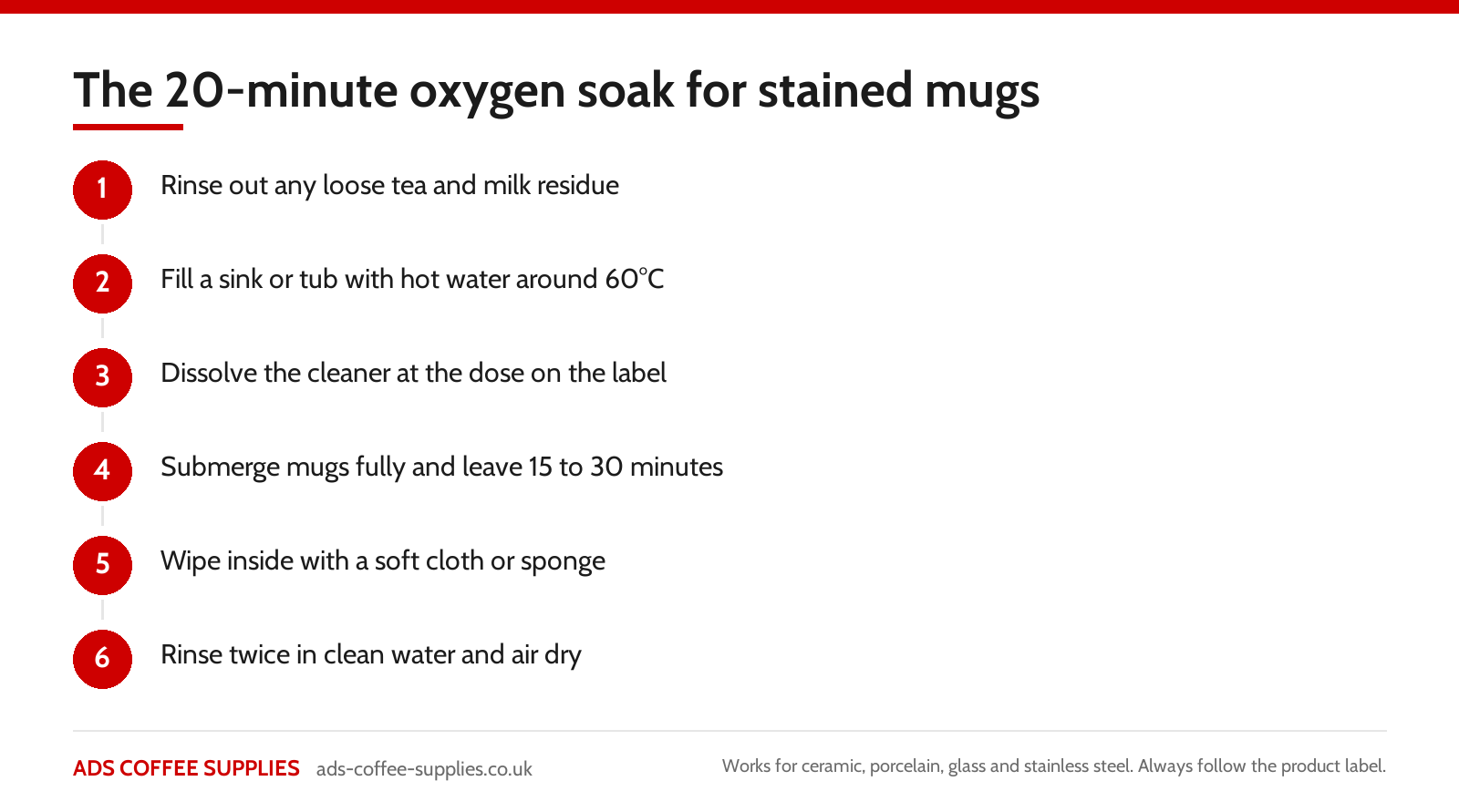
In an office kitchen, the problem is usually mugs left half full on desks for hours. A box of cleaner by the sink and a weekly soak on a Friday afternoon keeps the cupboard presentable. If you are reviewing the whole kitchen setup, our guide to choosing office tea and coffee supplies covers what else is worth stocking.
When a stained mug is past saving
Some mugs will not come clean whatever you do. Look closely at the inside under good light. A fine web of hairline cracks in the glaze, called crazing, lets tea seep under the surface where no cleaner can reach. Chipped rims trap residue and bacteria too.
At home, a crazed mug can become a pen pot. In a café, it should go straight in the bin, because it will never look clean to a customer and it can harbour bacteria. Thick, vitrified catering porcelain resists both staining and crazing far longer than decorative stoneware, which is one reason cafés choose it.
If you need cleaning products for crockery, pots or the machine itself, everything ships free next working day on orders over £69 ex VAT to mainland UK, and our team is happy to advise on the right product for your site.
Frequently asked questions
What is the best way to remove tea stains from mugs?
Soak the mug in hot water with an oxygen-based cleaner or a tablespoon of bicarbonate of soda for 15 to 30 minutes, then wipe with a soft cloth. For a single mug, a bicarb paste rubbed round the inside works in a couple of minutes. Avoid wire wool, as it damages the glaze and makes future staining worse.
Does vinegar remove tea stains?
Vinegar is good at dissolving limescale, so it helps with chalky white marks and the hard water part of tea scum. It does far less to the brown tannin layer itself. For brown rings, bicarbonate of soda or an oxygen-based cleaner is more effective. Never mix vinegar with bleach, as the combination releases harmful chlorine gas.
Why do my mugs stain so quickly?
Hard water and worn glaze are the usual causes. Calcium in hard water reacts with tea tannins to form a film that sticks to cups, and microscopic scratches in older glaze give pigment somewhere to settle. Much of south and east England has water above 200 mg/l hardness, so rings appear faster there.
How do you clean tea stains out of a stainless steel flask?
Add a tablespoon of bicarbonate of soda or a dose of oxygen cleaner, fill with hot water and leave for around 30 minutes with the lid loosely on. Swirl, empty and rinse twice in clean water. Avoid chlorine bleach and metal scourers, which can pit or scratch stainless steel.
Do denture tablets really remove tea stains?
Yes. Denture tablets contain oxygen-releasing ingredients that break down tea pigment in much the same way as commercial oxygen cleaners. Drop one into a mug of hot water and leave it for an hour or overnight. They work well for one or two mugs at home but become slow and costly for café volumes.

