You've bought a decent coffee machine. Maybe it's a bean-to-cup model for the office kitchen, maybe it's a smart setup at home with a grinder and espresso machine. Either way, the coffee still tastes flat, bitter, thin, or just forgettable.
That usually isn't the machine's fault. It's the beans.
Whole bean coffee beans give you control over freshness, flavour, and how the coffee behaves in your equipment. That matters whether you're pulling espresso for paying customers or making your first cup before a meeting. In the UK, coffee is part of daily routine at scale. The British Coffee Association reports that about 98 million cups of coffee are consumed in the UK every day, and the global coffee beans market was valued at USD 32.6 billion in 2023 according to Grand View Research's coffee beans market analysis. There's no shortage of choice. The problem is that most buying advice stays too generic.
A lot of guides stop at “whole beans are fresher”. True, but not helpful enough. UK buyers often need more practical answers. Which beans work well in automatic bean-to-cup machines? Which roast levels are likely to create oily build-up? Which styles suit offices, cafés, and home baristas without turning every cup into a grinder-adjustment project?
That's where smart buying starts. The right whole bean coffee beans don't just taste better. They make your machine easier to live with, your workflow simpler, and your results more consistent.
Table of Contents
- Introduction Why Your Coffee Needs an Upgrade
- The Freshness Advantage Why Whole Beans Win Every Time
- Decoding the Bag A Guide to Roast Profiles and Origins
- Choosing the Right Beans for Your Brew
- The Perfect Grind Unlocking Your Coffee's Potential
- Best Practices for Storage and Brewing
- A Practical Guide for Businesses and Bulk Buyers
Introduction Why Your Coffee Needs an Upgrade
If your coffee tastes disappointing, start with the raw ingredient. A better machine can improve consistency, but it can't rescue poor bean choice, tired coffee, or a roast that doesn't suit the way you brew.
Whole bean coffee beans are coffee beans kept intact until you grind them. Coffee beans themselves are the roasted seeds of coffee cherries, and the two dominant species in global production are arabica and robusta. Those two names matter in day-to-day buying because they shape flavour, crema, caffeine strength, and price. In practical terms, they also influence whether a coffee feels soft and aromatic or punchy and heavy.
Why the bean matters more than people think
A bean-to-cup machine can only work with what you feed it. If the beans are overly oily, stale, or badly matched to the machine's grinder, you'll see the problems quickly:
- Poor extraction: shots run too fast or too slow
- Messy internals: oils and fines build up where you don't want them
- Uneven flavour: one cup tastes acceptable, the next tastes harsh
- Wasted spend: expensive beans don't help if they brew badly in your setup
Practical rule: Upgrade your beans before you upgrade your machine. It's usually the cheaper fix, and often the more effective one.
There's also a supply reality behind every bag. Coffee plants grow in the tropical coffee belt, so the UK relies entirely on imported coffee rather than domestic cultivation. That's why origin, harvest conditions, shipping, storage, and roast style all have a direct effect on what lands in your grinder.
What better buying looks like
Good buying is less about chasing fashionable tasting notes and more about matching the bean to the job. For a home espresso drinker, that might mean a balanced blend that's forgiving in milk. For an office machine, it often means a clean, medium-to-medium-dark roast that flows well through an automatic grinder and doesn't leave greasy residue. For a café, repeatability usually matters more than novelty on the house blend.
The biggest shift is simple. Stop asking “What's the best coffee?” and start asking “What works best in my machine, for my taste, and for the way I brew?”
The Freshness Advantage Why Whole Beans Win Every Time
Pre-ground coffee is convenient. It's also the easiest way to lose what made the coffee worth buying.
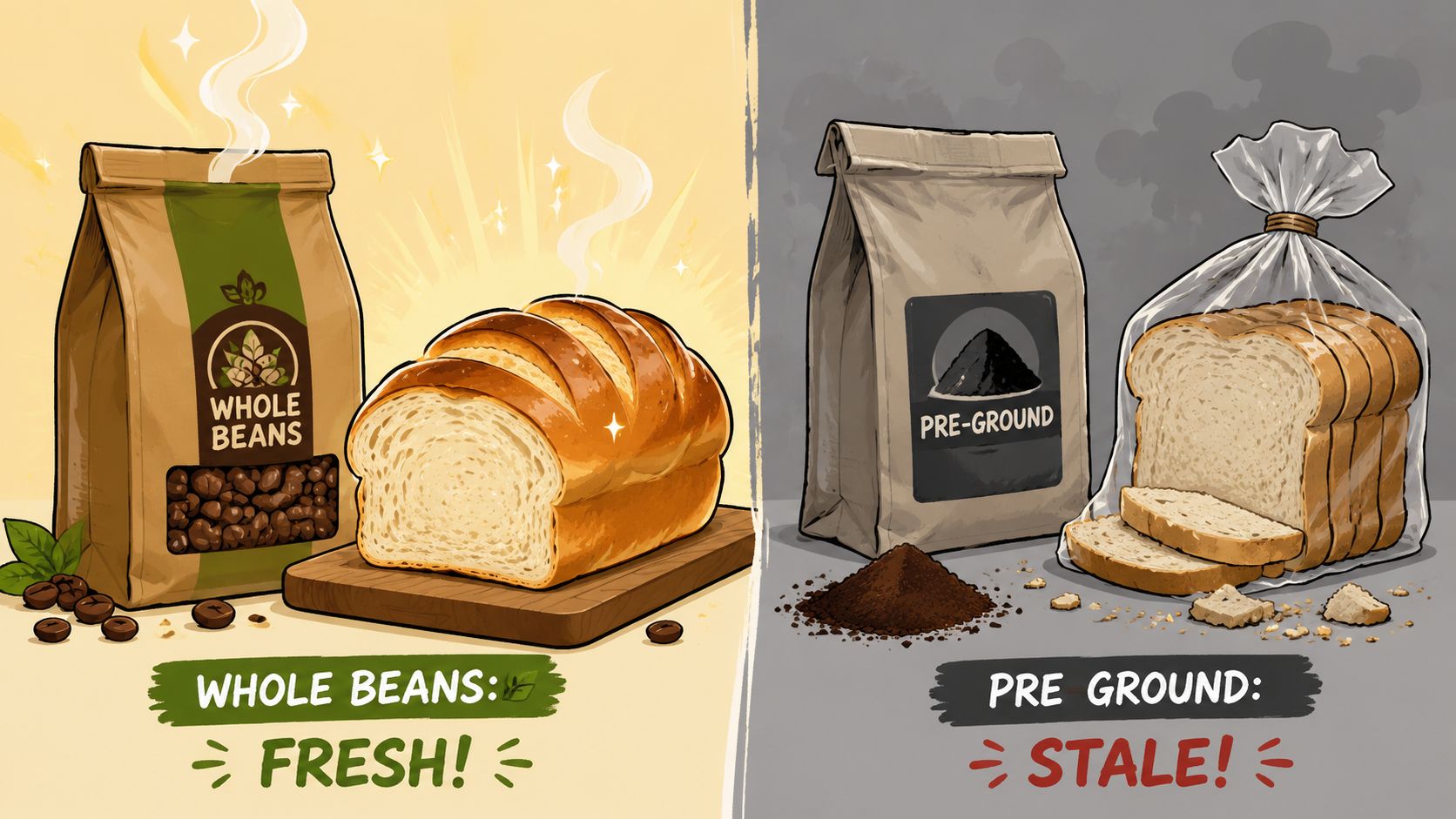
A simple comparison helps. Think of a fresh loaf versus pre-sliced bread left open on the counter. The bread might still be edible, but the texture and aroma fade quickly. Coffee behaves the same way, only faster. Once ground, much more of the coffee is exposed to air, and the aroma that should end up in your cup starts disappearing instead.
What changes after grinding
Whole beans protect flavour better because the inner coffee stays sealed until you grind it. The moment you grind, you increase exposed surface area dramatically. That speeds up oxidation and aroma loss.
What you notice in the cup is usually this:
- Less aroma: the coffee smells dull before it even brews
- Flattened flavour: sweetness drops away and the cup tastes less lively
- More bitterness: stale notes become more obvious
- Shorter finish: the flavour doesn't linger pleasantly
That's why whole bean coffee beans are the default choice for anyone who wants coffee to taste like the bag promised.
Why bean-to-cup users notice it fast
Automatic bean-to-cup machines make freshness more obvious, not less. They grind on demand, so when the beans are good, the machine gives you the benefit straight away. When the beans are poor, the machine exposes that too. There's nowhere to hide.
For offices and busy homes, this matters because convenience and quality don't have to fight each other. Load the hopper with suitable beans, keep the machine clean, and you can get reliable cups with very little effort. If you want a practical routine for keeping flavour in the bag once it's opened, ADS has a useful guide on how to store coffee beans properly.
Freshness isn't a luxury detail. It's the difference between coffee that tastes alive and coffee that tastes tired.
There is one trade-off. Whole beans ask you to care about grinding and storage. That's an extra step compared with scooping pre-ground coffee from a tin. But in real use, it's usually a small habit change for a much better result. Users who make the change seldom return, unless convenience is their sole priority.
Decoding the Bag A Guide to Roast Profiles and Origins
Coffee bags often look more complicated than they need to. Roast names, origin names, flavour notes, processing terms, species claims. None of that is helpful if you can't turn it into a buying decision.
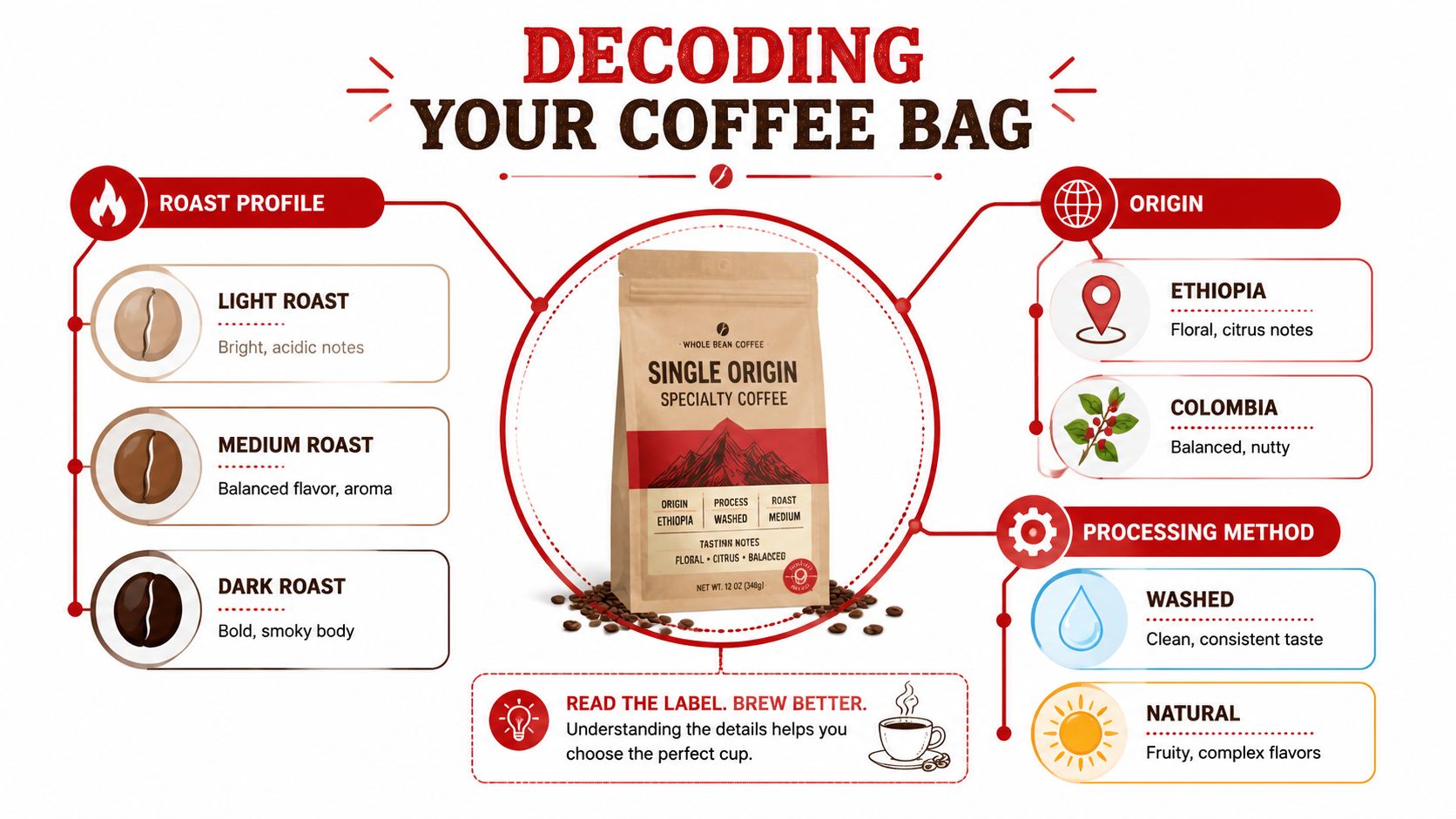
The quickest way to read a bag properly is to focus on three things first: roast level, whether it's a blend or a single origin, and whether it leans arabica or includes robusta.
Roast level in plain English
Roast level changes how the coffee tastes and how it behaves in different brew methods.
| Roast level | What it usually tastes like | Where it often works well |
|---|---|---|
| Light | Brighter, more acidity, more origin character | Pour over, filter, some modern espresso |
| Medium | Balanced, approachable, versatile | Filter, bean-to-cup, general home use |
| Dark | Bolder body, lower perceived acidity, roast-led flavour | Traditional espresso, milk drinks |
Darker isn't automatically better for espresso, and lighter isn't automatically better for filter. The right choice depends on your taste and your machine. In automatic bean-to-cup machines, medium roasts are often the easiest place to start because they tend to balance flavour and machine friendliness.
If you want a broader breakdown of how roast affects taste and brew style, ADS has a helpful article on light roast vs dark roast coffee.
Arabica, Robusta, blends and single origins
The species question matters more than many buyers realise. According to the Wikipedia overview of coffee beans, arabica contains about 0.8–1.4% caffeine, while Coffea canephora contains about 1.7–4.0% caffeine. In the cup, arabica is typically associated with aromatic and acidic notes, while Coffea canephora is known for bolder flavour and stronger crema.
That doesn't mean arabica is “good” and robusta is “bad”. It means they do different jobs.
- Single-origin arabica: often chosen for clarity, distinctiveness, and filter brewing
- Arabica-led blend: common for balanced espresso and general home use
- Blend with robusta: useful when you want more body, crema, and punch, especially in milk drinks or automatic machines
Buying advice: If you use a bean-to-cup machine and want dependable espresso-style coffee with milk, a balanced blend often works better than an ultra-light single origin.
Single origins can be excellent, but they're not always forgiving. In a super-automatic machine, subtle coffees can taste underwhelming if the grinder range or brew settings are limited. Blends are often built to be more stable and easier to dial in across different cups and users.
Choosing the Right Beans for Your Brew
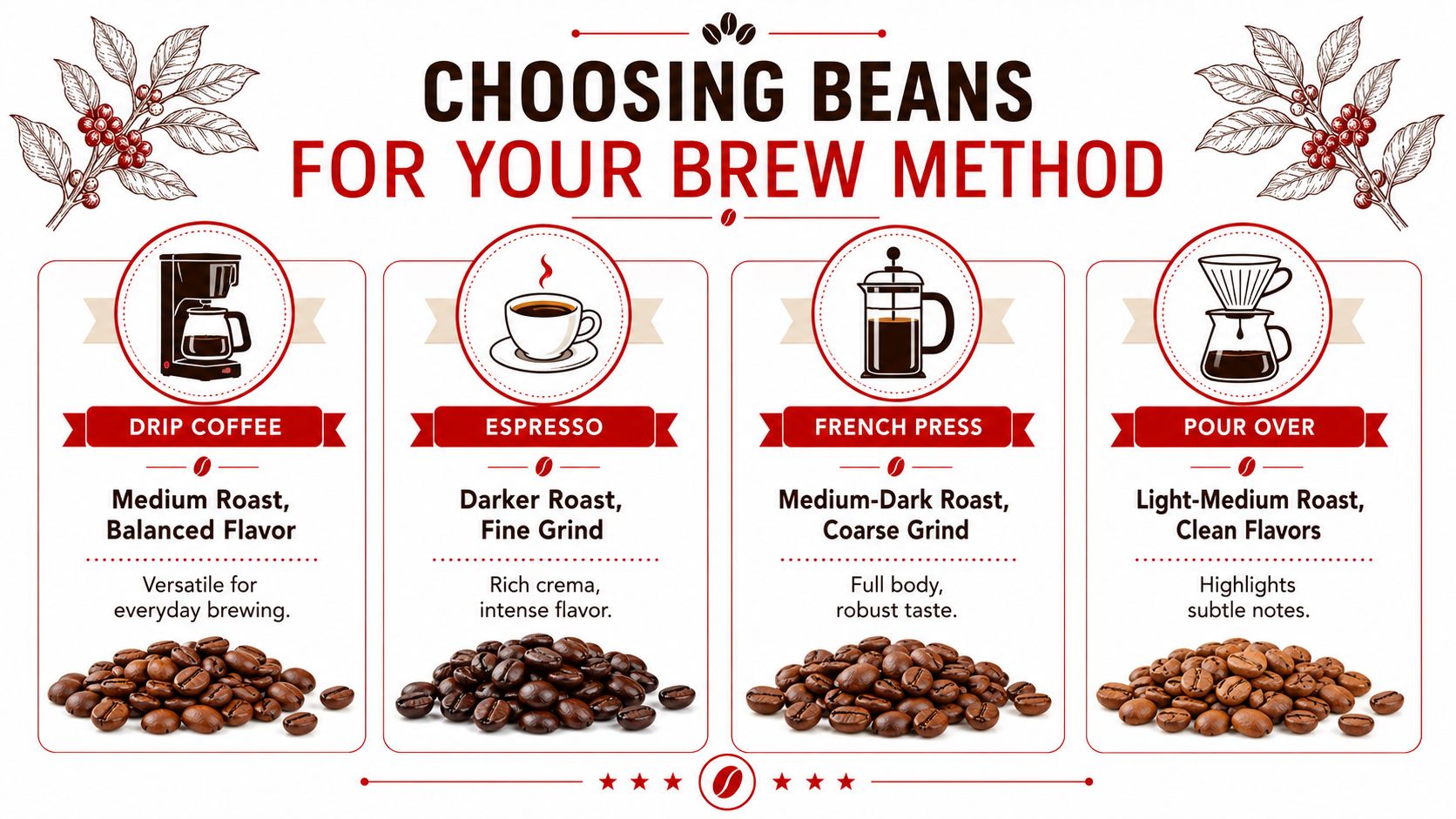
The best whole bean coffee beans for one setup can be the wrong choice for another. A coffee that shines in a pour over can taste sharp in espresso. A dark oily roast that smells dramatic in the bag can be awkward in a bean-to-cup machine. Buying well means matching the bean to the brew method, the drink style, and the level of control you have.
A quick decision table
| Brew setup | Bean style that usually works | What to avoid |
|---|---|---|
| Espresso machine | Medium-dark or balanced espresso blend | Very light beans unless you like sharper shots |
| Filter or pour over | Light to medium roast with clear flavour notes | Overly dark roasts that mute clarity |
| French press | Medium to medium-dark with body | Very fine-grinding beans that create sludge |
| Bean-to-cup machine | Clean, non-oily medium or medium-dark beans | Very oily dark roasts and tricky ultra-light coffees |
That table won't replace tasting, but it will save a lot of wasted bags.
Bean-to-cup machines need a different mindset
Many UK buyers often get caught out here. They buy beans based on café trends, not on what their machine can handle well.
A super-automatic or office bean-to-cup machine usually performs best with beans that are:
- Dry to the touch: not shiny with surface oil
- Consistent in roast colour: easier for the grinder and brewer to handle
- Balanced in flavour: pleasant black, but still strong enough for milk
- Forgiving: good cups without constant dial adjustments
Very dark oily beans can leave more residue in grinders and brew units. Very light roasts can be hard for some built-in grinders to handle properly, and the resulting coffee may taste sour or thin if the machine can't extract them well.
Here's the practical test. If your machine is producing inconsistent shots, compacted pucks, or messy waste, don't assume it needs repair. Check the beans first.
To compare styles in one place, browse the whole bean coffee collection and filter mentally by roast style and intended use, rather than shopping by branding alone.
After you've seen the comparison, it helps to watch the brew-method logic in action:
What to buy for home, office and café use
For home use, pick beans that suit the drinks you make. If most cups include milk, choose a rounded espresso blend rather than a delicate single origin that disappears once milk goes in.
For office use, simplicity wins. You want a coffee that appeals broadly without fiddling with settings. Medium or medium-dark blends usually land well because they're familiar, easy-drinking, and machine-friendly.
For cafés, decide what job the bean must do. Your house espresso needs consistency and broad appeal. Guest coffees can carry the more adventurous profile. Mixing those roles up often creates waste, slower service, and confused customers.
The most expensive bean on the shelf isn't always the smartest buy. The right bean is the one that tastes good and behaves properly in your equipment every day.
The Perfect Grind Unlocking Your Coffee's Potential
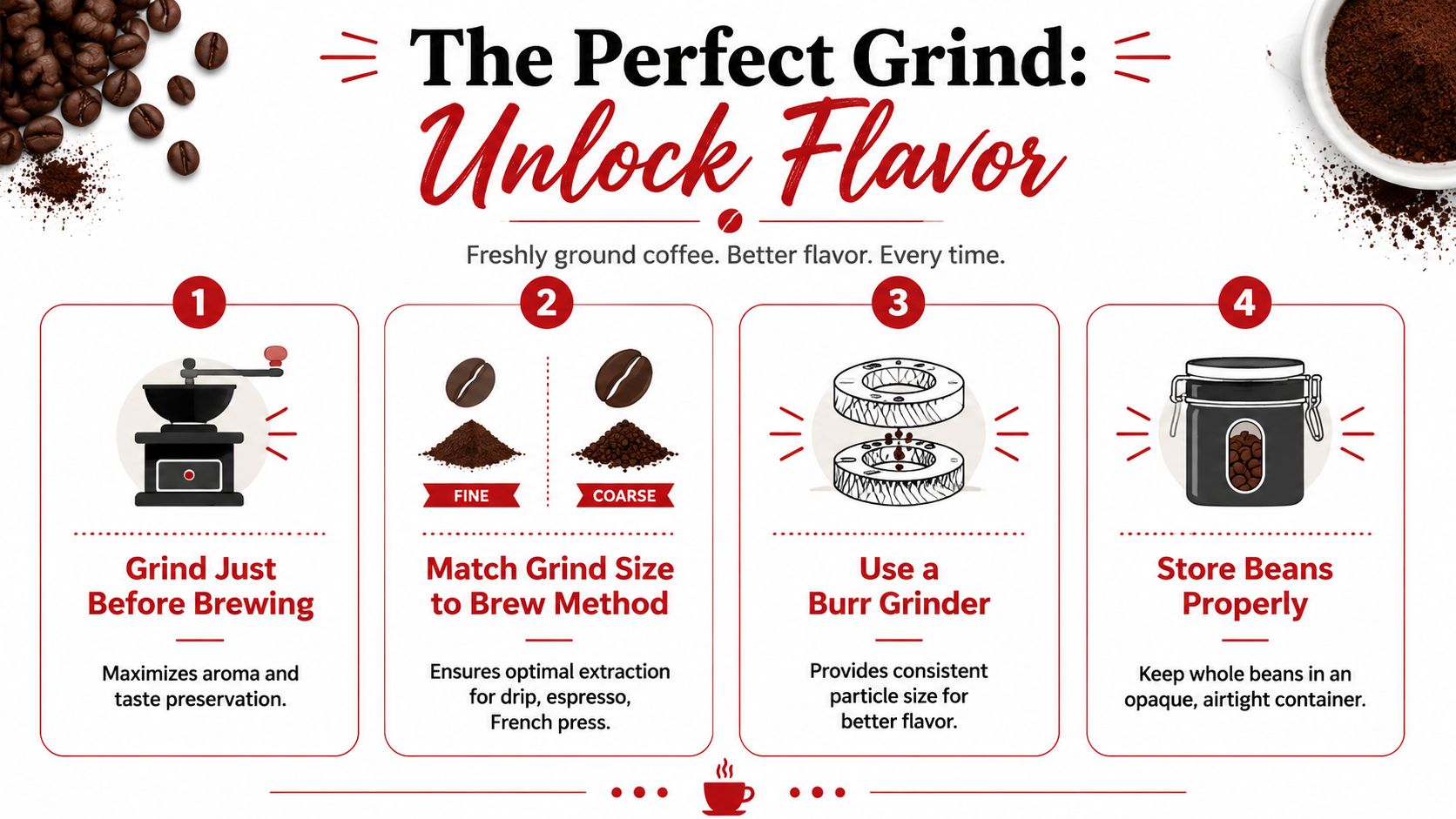
A good bean can still make a poor cup if the grind is wrong. Grind size controls how water moves through coffee. Too fine, and the brew can turn harsh, heavy, or slow. Too coarse, and it can taste weak, sharp, or unfinished.
That's why whole bean coffee beans only reach their potential when you grind them to suit the brew method.
Why grind quality matters more than people expect
The biggest equipment difference isn't usually manual versus electric. It's burr grinder versus blade grinder.
Blade grinders chop unevenly. You end up with a mix of dust and larger fragments, so the coffee extracts unevenly. Burr grinders crush beans to a more consistent particle size, which gives you a steadier cup and makes adjustments more meaningful.
That's why a solid grinder is often a better investment than another bag of premium beans. If you're working on consistency, the coffee grinder range is the category worth looking at before chasing more exotic coffees.
A simple guide to grind size
Use visual cues if you're not sure where to start:
- Espresso: fine, but not powdery
- Bean-to-cup: let the machine's grinder guide the range, then adjust gradually
- Filter machine: medium, like coarse sand
- Pour over: medium to medium-fine depending on brewer
- French press: coarse, with clearly larger particles
A common mistake is changing too many things at once. Keep the dose and brew method stable, then adjust grind in small steps until the cup improves.
For a more detailed walkthrough, the ADS article on coffee grind size guidance is useful if you're trying to match grind more closely to a specific brewer.
One habit fixes a lot: Grind only what you need for the brew you're making. That protects freshness and makes troubleshooting much easier.
Best Practices for Storage and Brewing
Coffee doesn't need complicated treatment. It needs sensible handling. Most flavour loss at home or in a workplace happens because beans are stored badly or brewed with inconsistent basics.
Store beans to protect flavour
Heat, light, air, and moisture all work against good coffee. Moisture matters especially because coffee quality depends on dryness and stability. A useful benchmark from this coffee specification reference is that green coffee for commercial use should sit between 10.0–12.0% moisture. Above that, roasting can become uneven and mold risk rises. Below that, beans can become brittle. For the buyer, the practical message is simple. Keep your roasted beans dry and protected.
The simplest storage routine works well:
- Use an airtight container: opaque if possible
- Keep it cool and dark: a cupboard is better than a sunny worktop
- Buy sensible quantities: enough to stay fresh in normal use, not so much that the last portion drags on
- Avoid the fridge: it introduces moisture and odours
If you enjoy manual brewing and want to sharpen your routine, the Brewed by Hand blog section is a practical place to explore method-specific tips.
Two brewing habits that improve almost any cup
The first is water quality. If your tap water tastes hard, metallic, or heavily chlorinated, your coffee will show it. Use water you'd be happy to drink on its own.
The second is consistency. Keep your coffee amount and water amount steady from brew to brew. When people say they “can't get repeatable results”, they often mean they're changing multiple variables without noticing.
A better routine is boring in the best way. Same mug, same scoop or scale, same setting, same brew time. Then make one adjustment if the cup needs help.
A Practical Guide for Businesses and Bulk Buyers
Commercial coffee buying has different pressures from home buying. You're not just choosing flavour. You're choosing speed, repeatability, serviceability, and how often someone on your team has to fix a machine or apologise for a weak cup.
Consistency matters more than novelty
For higher-volume use, the bean itself has to roast and brew consistently. According to this guide to coffee bean size and grading, high-density beans require more energy to roast evenly, and larger beans such as Size 17+ are preferred by UK importers because they generally support better flavour development. For buyers, that matters because physical consistency in the bean often translates into more predictable performance in grinders, brewers, and staff workflows.
In practical terms, business buyers should prioritise:
- Stable house coffees: familiar profile, easy to dial in
- Machine-compatible roasts: especially for bean-to-cup and office systems
- Reliable supply: fewer forced menu changes
- Clear backup options: decaf, lower-caffeine choices, and milk-friendly blends
A café can carry a seasonal guest coffee. Its core offer still needs to behave well on a busy morning.
Buying in bulk without creating waste
Bulk buying only saves money if you can hold quality and manage stock properly. If you run several sites, stock visibility becomes part of coffee quality because poor stock rotation leaves one location over-supplied while another runs out and substitutes in a hurry. Retail and hospitality groups trying to solve multi-store inventory problems often find that stock accuracy matters just as much as supplier choice.
For coffee specifically, split your buying plan into working categories:
| Need | What to prioritise |
|---|---|
| Office bean-to-cup | Broad appeal, low-mess roast, easy maintenance |
| Café house espresso | Consistency, milk performance, simple dial-in |
| Hospitality breakfast service | Approachable flavour, reliable batch brewing |
| Decaf offering | Similar style to house coffee so the switch feels natural |
If you need larger-format supply, the bulk coffee beans range is the sensible place to compare pack sizes and formats. Allied Drinks Systems is one UK option for buyers who need wholebean coffee for both homes and commercial settings, including bean-to-cup use.
The strongest buying approach is usually the least glamorous. Choose coffee that your team can store well, your machine can handle cleanly, and your customers will enjoy repeatedly. That's what keeps quality stable.
If you want help choosing whole bean coffee beans for a bean-to-cup machine, a café setup, or a home grinder and espresso machine, Allied Drinks Systems has product categories, equipment options, and practical buying guides that can help you narrow the field without overcomplicating the decision.