
Coconut syrup is one of those flavours that customers either order every single day or never touch, and very little in between. Used well, it gives a latte a soft, creamy, slightly tropical sweetness that suits iced drinks perfectly and holds up surprisingly well in a hot mocha. Used badly, it tastes like sun cream.
The difference is mostly dose and pairing. This guide covers how coconut syrup for coffee behaves in hot and cold drinks, the measurements we would start with, and a few milkshake and non-coffee ideas that get more use out of a bottle. We have been supplying cafés and home baristas from Eastbourne since 1993, so the advice here comes from behind the counter rather than a lab.
Key takeaways
- A coconut latte needs 10 to 15ml of coconut syrup in a 350ml (12oz) cup, or 15 to 20ml in a 470ml (16oz) iced drink.
- Stir coconut syrup into hot espresso before adding ice and cold milk, otherwise it sinks and does not mix.
- Splitting the dose roughly half and half with vanilla, caramel or hazelnut syrup makes coconut taste more natural.
- Coffee syrups are typically 60 to 70% sugar, so a 10ml dose adds around 8g of sugar to a drink.
What coconut syrup tastes like in coffee
A flavoured coconut syrup is a sugar syrup carrying coconut flavouring. It tastes of the white flesh of the nut: creamy, gently sweet and a little toasted. It is not the same thing as coconut nectar or coconut sugar syrup, which are made from the sap of the coconut palm and taste more like light caramel or molasses. If a customer asks for a coconut latte, they want the first kind.
In espresso drinks, coconut does two jobs. It adds sweetness, and it rounds off bitterness in a way that makes milk seem richer than it is. That is why it works so well with oat and other plant milks, which can taste thin next to whole dairy milk.
Where it goes wrong
Coconut flavour gets synthetic quickly when overdosed. Two pumps in a small cup is usually where people start complaining. It also struggles against very dark, smoky roasts, where the two flavours fight rather than blend. A medium roast with chocolate and nut notes is the easiest match.
As a rough guide to sweetness, most coffee syrups are around 60 to 70% sugar, so a 10ml dose adds roughly 8g of sugar. Worth knowing if you are writing a menu or watching your own intake.
How much coconut syrup to use: the iced coconut latte
Iced drinks are where coconut syrup earns its place on the shelf. Cold mutes sweetness, so you can use slightly more than in a hot drink without it tasting cloying.
The one rule that makes the biggest difference: mix the syrup into the hot espresso first. Syrup poured straight into cold milk and ice sinks to the bottom and stays there, so the first sip is plain milk and the last is pure sugar. Warm espresso dissolves it in a couple of seconds.
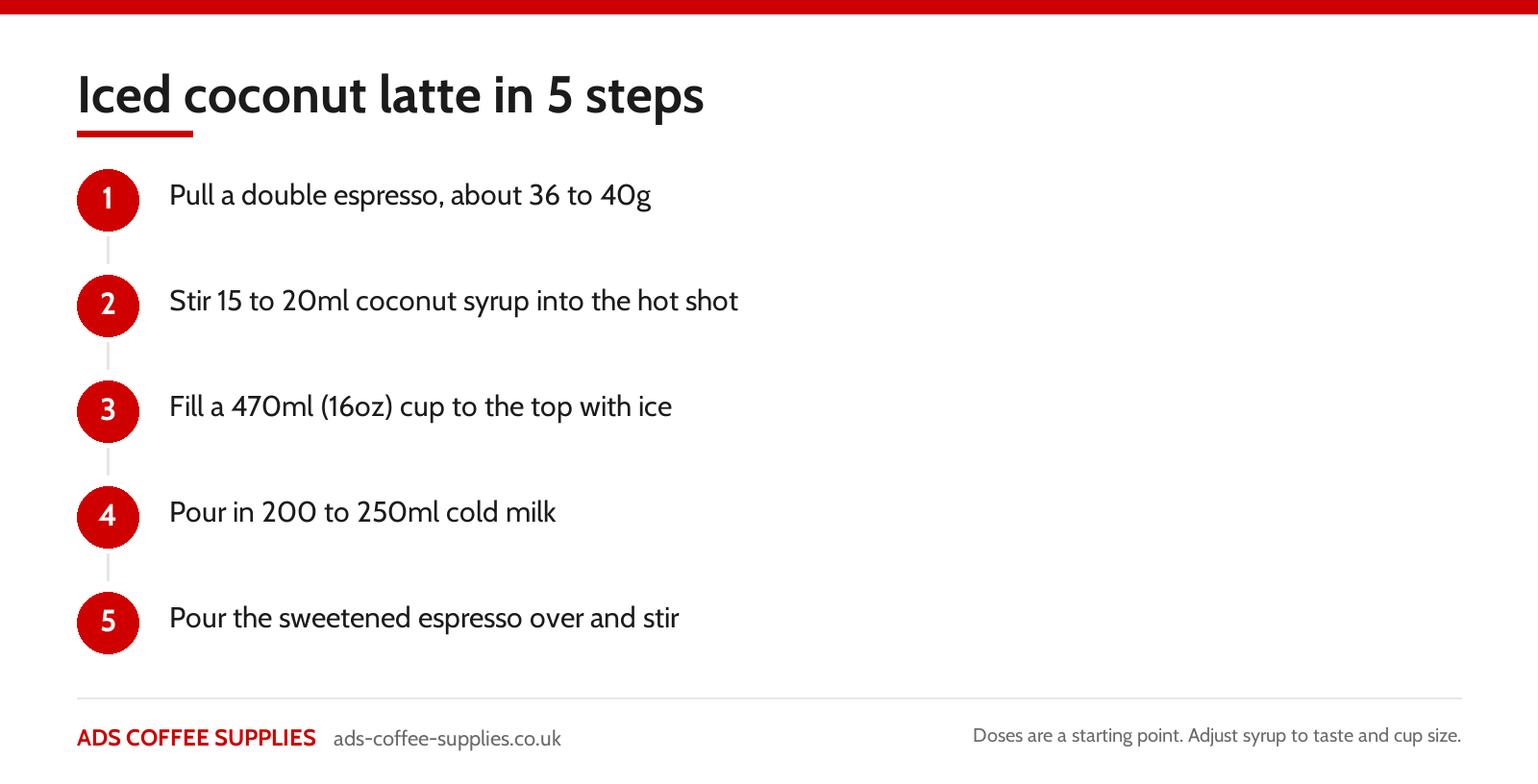
For a full walkthrough of milk ratios, ice and glassware, our guide on how to make an iced latte at home covers the base drink. Coconut is then simply the flavour you add at step two.
Starting doses by cup size
| Drink | Cup size | Coconut syrup |
|---|---|---|
| Hot coconut latte | 350ml (12oz) | 10 to 15ml |
| Hot coconut latte | 470ml (16oz) | 15 to 20ml |
| Iced coconut latte | 470ml (16oz) | 15 to 20ml |
| Coconut mocha | 350ml (12oz) | 10ml plus chocolate |
| Coconut milkshake | 470ml (16oz) | 20 to 25ml |
If you are using a plant milk that is already sweetened, start at the lower end of each range.
Hot coconut lattes and coconut mochas
For a hot coconut latte, put the syrup in the cup, pull the espresso on top, give it a quick swirl and then pour your steamed milk. Do not add syrup to the milk jug before steaming. The sugar changes how the milk foams and can catch on the steam wand, and it makes the jug harder to clean.
Steam milk to around 60 to 65°C. Hotter than that and the milk loses its natural sweetness, which means you end up compensating with more syrup and drifting towards that artificial edge.
The coconut mocha
Chocolate and coconut is a combination most people already know from the sweet aisle, and it is the easiest coconut drink to sell. Make a standard mocha with chocolate sauce or hot chocolate powder, then add around 10ml of coconut syrup. Because the chocolate is already sweet, you need less coconut than in a plain latte. A sprinkle of toasted desiccated coconut on top makes it look worth the price.
Iced, it works just as well: chocolate and syrup stirred into the hot espresso, then over ice and cold milk.
A note on coconut milk
Some customers will ask for coconut milk in a coconut latte. Carton coconut drinks made for coffee are fine. Tinned coconut milk is too fatty and tends to split when it meets hot, acidic espresso. If any plant milk splits, letting the espresso sit for 20 to 30 seconds before adding the milk usually helps.
Coconut milkshakes and drinks beyond coffee
A bottle of coconut syrup does not have to live next to the espresso machine. Some of the best uses have no coffee in them at all.
- Coconut milkshake: 250ml cold milk, two scoops of vanilla ice cream and 20 to 25ml of coconut syrup, blended until smooth.
- Coffee milkshake: the same recipe with a cooled double espresso added. It sits somewhere between an iced latte and a dessert.
- Coconut hot chocolate: 10ml of syrup stirred into a standard hot chocolate. Popular with children and anyone who does not drink coffee.
- Coconut iced chai or matcha: coconut softens the spice in chai and the grassiness in matcha. Start with 10ml in a 350ml (12oz) drink.
- Fruit coolers: a small splash with pineapple or lime juice and soda water makes a quick non-alcoholic tropical drink for summer menus.
For a café, these are useful because they turn one bottle into five menu items without new stock.
Pairing coconut syrup with other flavours
Coconut is a good team player. Splitting the dose between coconut and a second syrup often tastes more natural than coconut alone, because the second flavour covers the slightly artificial top note. Half and half is a sensible starting point: in a 350ml (12oz) latte, try 5 to 7ml of each.
Vanilla is the safest partner. It adds creaminess and makes the coconut taste closer to a coconut ice cream than a flavouring. Simply Vanilla Syrup is our go-to here, and it suits the iced latte and milkshake recipes above.

Simply Vanilla Syrup
A classic flavour and an excellent way to improve any beverage, Simply Vanilla Syrup is deliciously sweet yet delicate. This syrup is perfect for creating the…
Caramel pushes the drink towards a toasted, dessert-like flavour, especially good in an iced coconut latte topped with a little caramel drizzle. Simply Caramel Syrup works hot or cold and is a staple most cafés already carry.
Simply Caramel Syrup
A coffee shop favourite for a reason, our Simply Caramel Syrup is full of the classic rich caramel flavour that everyone knows and loves. This syrup is the…
Hazelnut with coconut gives a nutty, rounded latte that goes well with a mocha base. Simply Hazelnut Syrup is nut-free, which matters when you are serving the public and want to offer a nutty flavour without the allergen.
Simply Hazelnut Syrup
Add a creamy, roasted nuttiness to your coffee with Simply Hazelnut Syrup. This syrup is nut-free, so everyone can enjoy a smooth hazelnut addition to their…
You can browse the full range of flavoured syrups to see what is currently available, including any coconut options.
Serving coconut syrup in a café
Speciality flavours like coconut sell in bursts. They pick up in warm weather with iced drinks, then slow down. That makes consistency and waste the two things to manage.
Use a pump, not a free pour
Free pouring from the bottle is how one barista serves a perfect coconut latte and the next serves something undrinkable. A portion pump fixes the dose and speeds up service. The Simply Syrup Bottle Portion Pump fits 1 litre Simply bottles and is reusable, so it moves to the next bottle when one runs out. Check the volume per press on whichever pump you use, then write your recipes in presses so the whole team gets the same drink.
Simply Syrup Bottle Portion Pump (1 litre)
Control your portions and create amazing drinks with the Simply Syrup Portion Pump. It perfectly fits any Simply Syrup 1 litre bottle and is long-lasting,…
Storage and shelf life
Keep syrup bottles out of direct sunlight and away from the back of the espresso machine, where heat builds up. Once open, follow the use-by guidance on the label, and rinse pump nozzles regularly so sugar does not crust over and drip. If coconut is a slow seller, two bottles of a well-paired duo will move faster than one bottle of coconut sitting alone.
Allergens and labelling
Coconut is not one of the 14 allergens that UK law requires you to declare, but some customers avoid it anyway, and many flavoured syrups contain no actual coconut. Always check the label of the specific syrup and keep the allergen information to hand for staff.
If you need syrups, pumps or anything else for the counter, we deliver UK-wide with free next working day delivery on orders over £69 ex VAT to mainland UK.
Frequently asked questions
Is coconut syrup good in coffee?
Yes, especially in iced lattes, mochas and drinks made with oat or other plant milks. Coconut adds a creamy sweetness that softens bitterness. It works best with medium roasts that have chocolate or nut notes. The main risk is overdosing, which makes it taste artificial, so start with 10 to 15ml in a 350ml (12oz) drink and adjust from there.
How much coconut syrup should I put in a latte?
For a 350ml (12oz) hot latte, use 10 to 15ml. For a 470ml (16oz) hot or iced latte, use 15 to 20ml. Iced drinks can take slightly more because cold mutes sweetness. If your milk is already sweetened, or you are pairing coconut with chocolate or another syrup, use the lower end of the range.
Is coconut syrup the same as coconut nectar?
No. Coconut syrup for coffee is a sugar syrup flavoured to taste like coconut flesh: creamy and gently tropical. Coconut nectar is made from the sap of the coconut palm and tastes more like light caramel or molasses, with little obvious coconut flavour. For a coconut latte, you want a flavoured coconut syrup.
Does coconut syrup count as a nut allergen?
Coconut is not one of the 14 allergens that must be declared under UK law, and it is not classed as a tree nut for labelling purposes. Many flavoured coconut syrups also use flavourings rather than real coconut. Some people still avoid it, so always check the label of the specific syrup and have allergen information ready for customers.

