
You’ve probably heard the word a thousand times, but what is espresso coffee, really? First things first: it’s not a type of bean, a specific roast, or a particular flavour. Espresso is a unique brewing method.
It's all about forcing hot water through very finely ground coffee at high pressure. This creates a small, incredibly intense shot of coffee, crowned with a rich, reddish-brown layer of foam known as crema. This powerful little drink is the heart and soul of everything from a flat white to a cappuccino.
The Heart of Modern Coffee Culture
So, let's get down to it. Think of espresso as a concentrated coffee elixir, the purest expression of a coffee bean's character.
Unlike your typical filter coffee, which gently lets gravity do the work, an espresso machine is a powerhouse. It uses around nine bars of pressure—that's roughly nine times the normal atmospheric pressure at sea level—to blast water through the coffee grounds. The whole process is over in just 25–30 seconds. This intense and rapid extraction is what pulls out the rich oils and dissolved solids that other methods can't touch, giving espresso its signature thick, syrupy body and potent flavour.
Because it’s a method, not a bean, you can technically make espresso from any coffee. That said, most roasters create specific "espresso blends" designed to shine under pressure. These blends often highlight deep notes of chocolate and caramel while keeping acidity in check, creating a shot that’s balanced and rich. If you want to go deeper on choosing the right beans, check out our ultimate guide to coffee beans for home baristas. The goal is always the same: a beautiful, aromatic shot that’s incredible on its own or as the foundation for a milky coffee.
Espresso’s journey here in the UK has been remarkable, shifting from a niche Italian import to a daily ritual for millions. It’s the engine driving the modern café scene. A staggering 80% of Britons visit coffee shops at least once a week, and the vast majority of those visits involve an espresso-based drink. While instant coffee might still have a firm grip on our kitchens, the desire for genuine, café-quality espresso at home is growing stronger every year.
At its core, espresso is a method of flavour amplification. It takes the inherent character of a coffee bean and turns up the volume, delivering a complex sensory experience in a single, powerful sip.
Whether you're a café owner looking to upgrade your setup with premium equipment from ADS Coffee Supplies or a home enthusiast chasing that perfect shot, understanding these fundamentals is the first step. It’s this beautiful blend of science and craft that makes espresso the undisputed heart of coffee culture.
What is Espresso Coffee? The Art and Science of a Perfect Shot
Pulling a truly great espresso shot is a delicate dance between art and science. It’s far more than just pressing a button; it’s about controlling a series of precise variables that work together to transform ground coffee into liquid gold. Mastering these elements is the secret to unlocking consistent, delicious results, every single time.
At its heart, making espresso is like following a recipe—but one where tiny adjustments can make a world of difference. Think of it less like baking a cake from a packet mix and more like being a chef who tastes and tweaks until the balance of flavours is absolutely perfect. The core components of this recipe are universal, no matter what machine you're using.
The Barista's Recipe Card
Every great shot starts with a clear set of targets. For anyone wanting to understand espresso on a technical level, it's the result of dialling in these key parameters to create a balanced extraction. These variables work in harmony to define the final taste, texture, and aroma in your cup.
The journey to a perfect espresso can be broken down into three simple stages: starting with quality beans, grinding them correctly, and finally, brewing them under immense pressure.
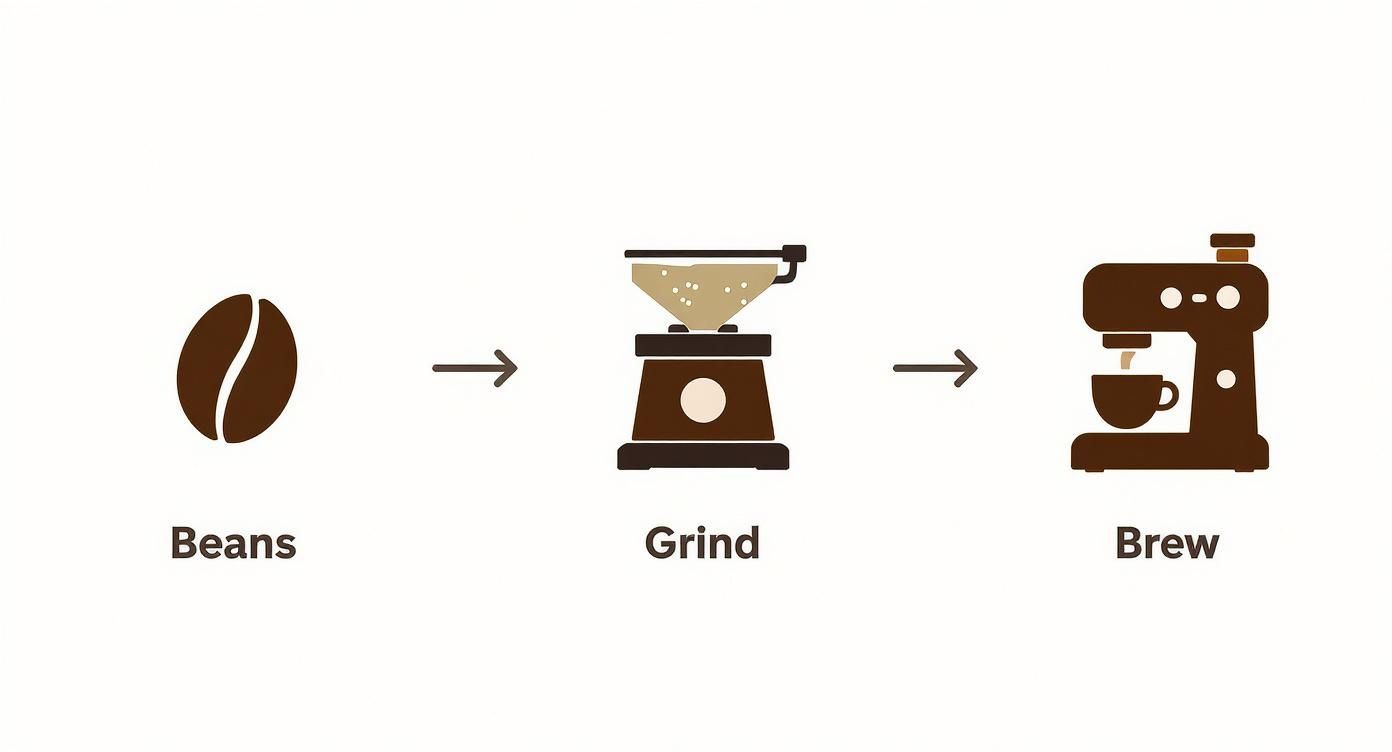
This visual journey from bean to brew highlights just how crucial each step is. A fantastic brew is simply impossible without quality beans and a precise grind to start with.
Unpacking The Key Variables
To really get to grips with espresso, you need to understand the four main pillars of extraction. Think of these as the levers you can pull to diagnose and perfect your shots.
-
Dose: This is your starting point—the exact weight of dry coffee grounds you put in the portafilter basket. For a standard double shot, this is typically between 18–20 grams. A consistent dose is non-negotiable if you want consistent results.
-
Yield: This refers to the total weight of the liquid espresso in your cup. It’s measured in grams, not millilitres, because the crema can throw off volume measurements. The ratio of dose to yield is what shapes the final flavour.
-
Time: Extraction time is the total duration the water is in contact with the coffee grounds, from the moment you hit the button to the moment you stop the shot. The sweet spot is generally between 25 and 30 seconds.
-
Grind: The fineness or coarseness of your coffee grounds is what gives you control over the extraction time. A finer grind creates more resistance and slows the shot down, while a coarser grind lets water rush through more quickly.
Achieving the right balance between these four elements is the daily challenge for any barista. If a shot tastes sour, it’s likely under-extracted (ran too fast). If it’s unpleasantly bitter, it’s probably over-extracted (ran too slow). Adjusting the grind size is your main tool for steering that shot into the perfect 25–30 second window. You can dive deeper into this topic by reading about the science behind perfect espresso extraction on our blog.
The golden rule of espresso is the brew ratio. A classic starting point is a 1:2 ratio, meaning for every 18 grams of dry coffee (dose), you aim for 36 grams of liquid espresso (yield).
To make this easier to remember, here’s a quick-reference table outlining the key parameters that control the quality and taste of a standard double espresso.
Key Parameters for a Double Espresso Shot
| Parameter | Industry Standard Target | What It Controls |
|---|---|---|
| Dose (Dry Coffee) | 18–20 grams | The amount of coffee flavour available for extraction. |
| Yield (Liquid Espresso) | 36–40 grams (for a 1:2 ratio) | The concentration and strength of the final shot. |
| Time (Extraction) | 25–30 seconds | How long the water extracts soluble flavours from the coffee. |
| Grind Size | Fine (like table salt) | The speed of the extraction; your main tool for adjustment. |
These are your goalposts. By keeping an eye on these numbers, you can diagnose issues and consistently pull delicious, balanced shots.
The Unseen Forces: Pressure and Temperature
Beyond the recipe you control, two powerful forces are at play inside the machine. While you don’t adjust these on a shot-by-shot basis, they are absolutely fundamental to the entire process.
Pressure is what defines espresso. Commercial machines and quality home units are engineered to deliver a stable 9 bars of pressure. To put that in perspective, that’s the force needed to squeeze every last drop of flavour and aromatic oil from the tightly packed puck of coffee. It's this immense pressure that creates espresso’s characteristic syrupy body and rich crema.
Temperature is just as vital. Water that’s too hot will scorch the coffee, leading to bitter, harsh flavours. Water that isn't hot enough will fail to extract all the desirable compounds, resulting in a weak and sour shot. The sweet spot for most espresso machines is a precise water temperature between 90–96°C.
The Crowning Glory: Crema
Finally, let's talk about that beautiful, reddish-brown foam that sits atop a well-pulled shot: the crema. What is it, and what does it really tell you?
Crema is a complex emulsion of coffee oils, CO₂ gas, and suspended coffee solids. It’s formed when water under high pressure dissolves carbon dioxide that’s trapped in the coffee grounds—a natural by-product of the roasting process. As the espresso exits the portafilter and returns to normal atmospheric pressure, this gas comes out of the solution, forming thousands of tiny, stable bubbles.
A healthy crema should be thick, persistent, and have a fine texture. It’s a good sign that the coffee beans are fresh (older beans lose their CO₂) and that the extraction parameters were in the right ballpark. While it isn’t the only indicator of a great taste, a shot with a thin, pale, or bubbly crema often signals a problem with the beans or the brew itself.
How Espresso Stacks Up Against Other Brewing Methods
To really get a feel for what espresso is, it helps to see how it compares to other ways of making coffee. While they all start with roasted beans and hot water, the journey from there creates a completely different experience in the cup. Espresso is all about intensity, speed, and pressure, which sets it worlds apart from its slower, gentler cousins like filter coffee or the cafetière.
The biggest difference is in the extraction process itself. Methods like pour-over, drip, and the cafetière (you might know it as a French press) are all types of infusion brewing. They work by letting hot water steep with coarsely ground coffee for several minutes, relying on time and gravity to do the heavy lifting. This slow-and-steady approach extracts flavours gently, giving you a cleaner, lighter-bodied cup with a lovely clarity.
Espresso, however, is a pressure brewing method through and through. It uses a massive amount of force to blast hot water through a tightly packed puck of finely ground coffee in less than 30 seconds. This high-pressure, blink-and-you'll-miss-it extraction pulls out not just the soluble flavours but also oils and microscopic coffee solids. The result? A drink that's thicker, more viscous, and crowned with that iconic crema.
Speed and Preparation Time
One of the most obvious differences you'll notice is just how quickly it all happens. An espresso shot is ready in a flash, making it the absolute engine of any busy café.
- Espresso: Once the machine is up to temperature, a shot is brewed in 25–30 seconds. This speed is non-negotiable for serving customers quickly.
- Filter Coffee (Pour-Over): A manual pour-over can take a good 3–4 minutes from start to finish.
- Cafetière (French Press): This method needs around 4–5 minutes of steeping time before you can plunge.
This incredible efficiency is a huge reason why espresso completely dominates the commercial coffee scene. Its popularity is the backbone of the UK's out-of-home coffee market, which is now worth a staggering £6.1 billion. With millions of us grabbing an espresso-based drink every day, it's clear we're more than happy to pay for that quick, high-quality experience. If you're curious, you can read more about the UK coffee market's impressive growth and statistics to see just how big this trend has become.
Flavour and Body Profile
The way espresso feels and tastes is completely unique. That intense pressure emulsifies the coffee's natural oils, creating a rich, almost syrupy mouthfeel and a powerful, concentrated flavour that's just impossible to get any other way.
Think of it like this: if filter coffee is a watercolour painting with clear, distinct layers of flavour, espresso is an oil painting—bold, textured, and incredibly rich.
Filter coffee, on the other hand, is known for its clean profile. The paper filter traps most of the oils and fine particles, producing a lighter, almost tea-like body that really lets subtle, acidic, and floral notes sing. It's why delicate single-origin beans are often at their best when brewed as a filter coffee. For a deeper dive, check out our detailed comparison of the Americano vs filter coffee.
Caffeine Concentration
It’s a common myth that espresso has more caffeine. While it’s certainly more concentrated, the tiny serving size flips the script.
- Espresso (single 30ml shot): Typically contains 60-70 mg of caffeine.
- Filter Coffee (240ml mug): Can have anywhere from 95–165 mg of caffeine.
So, while espresso packs more caffeine millilitre for millilitre, a standard mug of filter coffee will often give you a bigger total caffeine hit simply because there's so much more of it. The "strength" we associate with espresso comes from its concentrated flavour and heavy body, not necessarily its stimulant content. This very intensity, however, is precisely what makes espresso the perfect base for milk drinks; its powerful flavour can punch through the richness of steamed milk in a way that filter coffee just can't.
Your Guide to Classic Espresso Drinks
Once you get your head around what is espresso coffee, you open the door to a whole menu of classic drinks. At the heart of it all is that humble shot of espresso, but from there, a whole world of different textures and flavours can be created.
Knowing the real difference between these drinks will help you order with confidence in any coffee shop, or train your baristas to deliver consistently brilliant results for your customers.
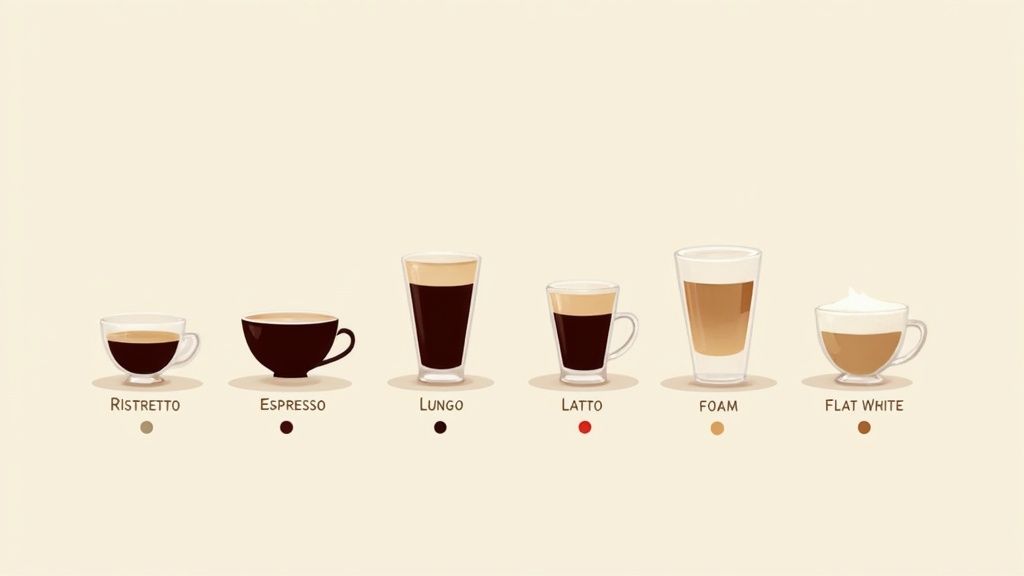
It all starts with the foundation: the espresso shot itself. While a standard shot is the most common starting point, a skilled barista can tweak the brew ratio to pull out completely different flavour profiles. This is where the real craft comes in, creating a distinct base for every other drink on the menu.
The Pure Espresso Shots
Before we even think about adding milk, it's vital to understand the different ways an espresso shot can be pulled. Each variation offers a completely unique taste experience simply by changing the amount of water pushed through the coffee.
-
Ristretto: Italian for "restricted," a ristretto uses the same dose of coffee as a standard espresso but with roughly half the water. The result is a shorter, sweeter, and more concentrated shot that really highlights the coffee's rich notes while dialling down the bitterness.
-
Espresso (Solo & Doppio): This is the industry standard. A solo is a single shot, giving you around 30ml of liquid. A doppio is a double shot (60ml) made with double the coffee and water. Honestly, most good cafés now serve a doppio as their default.
-
Lungo: Meaning "long" in Italian, a lungo is pulled with the same amount of coffee but uses about double the water of a standard shot. This longer extraction time pulls more of the bitter compounds out of the coffee, creating a drink with a thinner body that can be more astringent, but often packs more caffeine.
These three shots are the pure, unadulterated essence of espresso, each one offering a different window into the potential of the bean.
Milk-Based Espresso Favourites
Right, now for the fun part. Let's look at how that perfect shot of espresso is transformed into the beloved classics you see on every café menu. The main difference between all these drinks simply comes down to the ratio of espresso to steamed milk and the texture of the milk foam.
Here’s a quick rundown of the most popular espresso-based drinks you'll find. While they all share the same core ingredients, the subtle differences in how they're put together create dramatically different drinking experiences.
| Drink Name | Espresso Base | Milk & Foam Ratio | Typical Serving Size |
|---|---|---|---|
| Macchiato | 1 Shot (Doppio) | Marked with a tiny dollop of foam | 60-90 ml (2-3 oz) |
| Cortado | 1 Shot (Doppio) | 1:1 ratio of espresso to steamed milk | 120 ml (4.5 oz) |
| Flat White | 1 Shot (Doppio) | Velvety microfoam, minimal foam layer | 150-180 ml (5-6 oz) |
| Cappuccino | 1 Shot (Doppio) | 1/3 espresso, 1/3 milk, 1/3 thick foam | 150-180 ml (5-6 oz) |
| Caffè Latte | 1-2 Shots | Mostly steamed milk with a thin foam layer | 240 ml+ (8 oz+) |
| Americano | 1-2 Shots | Diluted with hot water, no milk | 180-240 ml (6-8 oz) |
As you can see, it's all about the balance. A small change in foam texture or milk volume completely transforms the final drink, which is why getting it right is so important for consistency.
Now, let's break down what makes each one special.
A Macchiato, which means "marked" or "stained" in Italian, is the purest combination. It's simply a shot of espresso that's been "marked" with a small dollop of milk foam. This just takes the sharp edge off the espresso's intensity without turning it into a milky drink.
The Cortado takes things a small step further. Hailing from Spain, it's made with equal parts espresso and lightly steamed milk, usually served in a small glass. The milk is textured but has very little foam, creating a smooth, punchy coffee that’s perfectly balanced.
It's a common mistake to think that drinks like lattes and cappuccinos are worlds apart. In reality, they're close cousins. The main distinction is simply the texture and volume of the milk foam, which dramatically changes how the drink feels in your mouth.
A Flat White, which comes to us from either Australia or New Zealand (the debate rages on!), is all about that silky texture. It’s made with a double shot of espresso and velvety, steamed microfoam—milk that's been steamed to a smooth, creamy consistency with almost no airy foam on top. This creates a strong, coffee-forward drink with a wonderfully creamy body.
The Cappuccino is arguably the most famous of them all. It's a beautifully balanced creation of equal parts espresso, steamed milk, and a thick, airy layer of foam. Those distinct layers are its defining feature, offering a rich coffee flavour that gives way to a creamy middle and a light, foamy top. If you're keen to perfect this classic, you might find our guide on how to make a cappuccino at home useful.
Finally, the Caffè Latte is the milkiest of the bunch. It starts with a shot (or two) of espresso and is topped with a generous amount of steamed milk and just a thin layer of foam. It’s a much smoother, gentler drink where the coffee flavour is more subtle, making it a perfect starting point for anyone new to espresso.
The Americano
Of course, not every drink needs milk. The Caffè Americano is a beautifully simple drink made by diluting a shot of espresso with hot water. Legend has it that it was created for American soldiers in Italy during WWII who found straight espresso a bit too intense for their liking.
The result is a drink that has a similar strength to a filter coffee but with that distinct, rich flavour profile that only a proper espresso extraction can deliver.
The Essential Equipment for Making Real Espresso
Making proper espresso at home or in your café isn't something you can do with a standard coffee maker. To get that intense flavour and signature crema, you need specific tools built to handle the high-pressure world of espresso brewing. Investing in the right gear is the single most important step you can take towards pulling consistently brilliant shots.
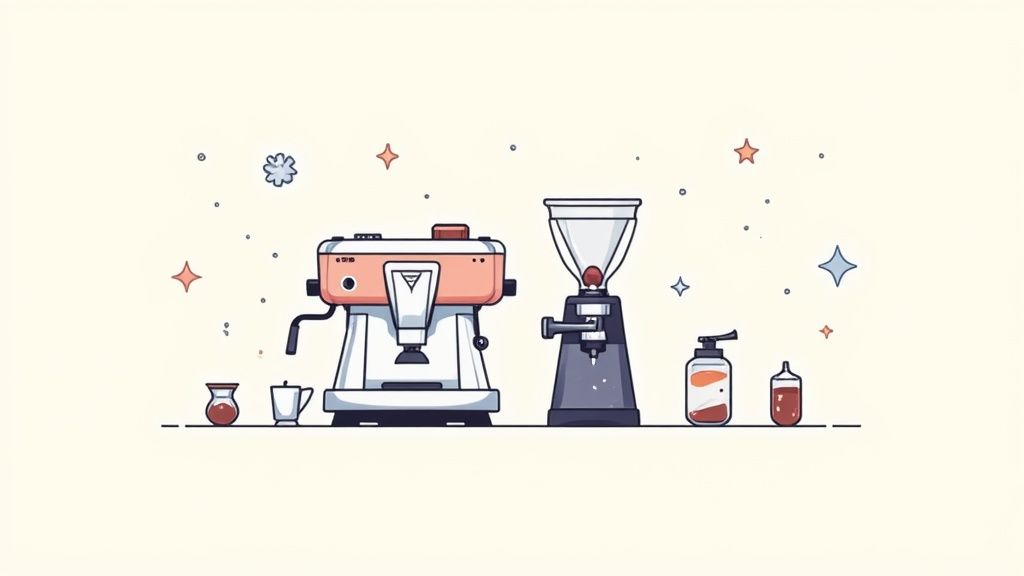
This isn’t about collecting gadgets for the sake of it; it’s about understanding what each piece of kit actually does. The two pillars of any great espresso setup are an espresso machine capable of delivering stable temperature and pressure, and a high-quality grinder that can produce a fine, uniform grind. Getting these two right is non-negotiable for anyone serious about their coffee.
The Espresso Machine: The Heart of the Operation
The espresso machine might be the star of the show, but its job is surprisingly straightforward. It just needs to do two things perfectly: heat water to a precise and stable temperature (typically 90–96°C) and then force it through the coffee grounds at a consistent pressure of around 9 bars. That's it.
Machines vary wildly in features and price, but that core function never changes. Entry-level models are fantastic for home enthusiasts, while commercial machines are built like tanks for the relentless demands of a busy café, offering greater temperature stability, steam power, and durability. For those just starting out, our guide on choosing the best home espresso machine in the UK is a great place to begin your search.
The rise of home espresso making has been massive. UK consumers now spend roughly £6.42 weekly preparing coffee at home, with over half trying to replicate their favourite café drinks. This trend shows a real, growing appreciation for quality equipment. You can discover more insights from the latest UK coffee consumption trends to see how habits are evolving.
The Grinder: The Unsung Hero
While the gleaming machine gets all the attention, seasoned baristas know the truth: the grinder is more important than the espresso machine. You can have the best machine in the world, but if you pair it with a poor grinder, your espresso will always fall short. Why? Because espresso extraction is incredibly sensitive to grind size and consistency.
You need a grinder that can produce a very fine, uniform powder. This is where the difference between grinder types becomes critical.
- Blade Grinders: Think of these as a tiny blender with a spinning blade that smashes beans into pieces. The result is an inconsistent mess of big chunks and fine dust, making a balanced extraction impossible. Blade grinders are simply not suitable for espresso.
- Burr Grinders: This is the non-negotiable standard. Burr grinders use two revolving abrasive surfaces (burrs) to crush beans into a uniform size. They offer precise, tiny adjustments, giving you the control needed to "dial in" the perfect shot.
Investing in a quality burr grinder is the single best upgrade you can make to your coffee setup. It gives you direct control over extraction time, which is the key to unlocking delicious, balanced espresso.
Essential Accessories: The Supporting Cast
Beyond the main hardware, a few key accessories are vital for consistency and will make your life much, much easier. They help you control the variables that turn a good shot into a great one.
Here are the must-have tools for any aspiring barista:
- A Digital Scale: Precision is everything. A scale that measures to 0.1 grams allows you to weigh your dose (the dry grounds) and your yield (the liquid espresso) with total accuracy, ensuring you can repeat your successful recipes time and time again.
- A Tamper: This simple tool is used to compress the coffee grounds in the portafilter into a tight, level puck. A firm, even tamp is essential for preventing water from punching holes (or "channelling") through the coffee and causing an uneven extraction.
- A Portafilter and Basket: This is the "group handle" that you lock into the machine. It holds the filter basket where your coffee grounds go. Quality baskets with precisely drilled holes are a small detail that contributes to a much better extraction.
For businesses and serious enthusiasts, sourcing reliable, professional-grade equipment is the first step toward cafe-quality results. At ADS Coffee Supplies, we are rated number one for our curated selection of industry-leading machines and grinders built for performance and durability, ensuring every shot you pull is the best it can be.
Troubleshooting Common Espresso Problems
Even the most seasoned baristas pull a bad shot every now and then. It happens. The real skill isn't in avoiding mistakes altogether, but in knowing how to diagnose the problem on the fly and fix it. This guide will help you turn those frustrating moments into learning opportunities, transforming inconsistent shots into dependably delicious ones.
Almost every issue you'll encounter with what is espresso coffee comes down to extraction. Your job is to hit that perfect sweet spot where you’ve pulled all the rich, desirable flavours out of the grounds without also dragging out the harsh, bitter compounds that come later. It’s a bit like toasting a marshmallow: underdo it, and it’s bland; overdo it, and you’re left with a burnt, bitter mess.
Problem: My Espresso Tastes Sour or Weak
A sour, overly acidic, or thin-tasting shot is the classic sign of under-extraction. This tells you the water hasn't spent enough time interacting with the coffee grounds to dissolve all the good stuff. The shot almost certainly ran too fast, probably in under 20 seconds.
The Fix: Adjust Your Grind Finer
Your number one tool for slowing down a shot is your grinder. Making the grind finer packs the coffee particles closer together, creating more resistance. This forces the water to work harder and spend more time extracting flavour as it passes through.
- Make a small tweak: Adjust your grinder setting to be just a little bit finer.
- Pull another shot: It's crucial to keep every other variable (your dose and yield) exactly the same.
- Watch the clock: You're aiming for that 25–30 second window for a standard double shot.
Nine times out of ten, this single adjustment will solve the problem. If you've gone much finer and the shot is still gushing through, you might need to increase your dose by a fraction of a gram.
Problem: My Espresso Tastes Bitter or Burnt
On the other side of the coin, a shot that tastes overwhelmingly bitter, harsh, or strangely hollow is a dead giveaway for over-extraction. This is what happens when the water flows through the coffee for too long, stripping out unpleasant, astringent compounds after all the sweetness has already been dissolved.
The Fix: Adjust Your Grind Coarser
To fix this, you simply need to speed the shot up. By making your grind coarser, you create larger gaps between the coffee particles, reducing the resistance in the puck. This allows water to flow through more easily, shortening the overall extraction time.
- Go a bit coarser: Nudge the grinder setting in the coarser direction.
- Test it again: Pull a fresh shot, keeping a close eye on your time and yield.
- Aim for balance: You’re hunting for that sweet spot where the harsh bitterness disappears, replaced by rich, complex flavours.
Don't chase a beautiful-looking crema at the expense of taste. A shot can look perfect, with thick, stable crema, but still be over-extracted and bitter. Your palate should always be the final judge.
Other Common Espresso Issues
Sometimes the problem goes beyond just taste. Here are a few quick fixes for other common hurdles you might run into when you’re dialling in.
My Shot Has No Crema
A lack of crema almost always points to one of two culprits:
- Stale Coffee: Crema is created by CO₂ gas being released from the coffee under pressure. Old beans will have already lost most of their CO₂, resulting in a thin, pale crema or none at all. The fix is simple: always use freshly roasted beans.
- Shot Ran Too Fast: A severely under-extracted shot won't have the pressure and contact time needed to build a healthy crema. Try grinding finer to slow things down.
For any business, consistency is everything. Having reliable, professionally maintained equipment is the foundation of great coffee, day in and day out. To explore commercial machine servicing and support, get in touch with the experts at ADS Coffee Supplies today.
Your Espresso Questions, Answered
We’ve covered a lot of ground, from the science of extraction to the art of the perfect milk texture. To wrap things up, let's tackle a few of the most common questions people ask about espresso.
Is Espresso Stronger Than Regular Coffee?
This is a classic point of confusion. While espresso packs more caffeine per millilitre, the tiny serving size (around 30ml) means a single shot often contains less total caffeine than a big 240ml mug of filter coffee. That powerful reputation comes from its intense, concentrated flavour, not necessarily a bigger stimulant kick.
Can I Use Any Coffee Beans for Espresso?
Technically, yes, but you’ll get far better results with a blend roasted specifically for espresso. Roasters create these to bring out rich chocolate and caramel notes while taming the acidity, which can get a bit sharp and overpowering when concentrated in a shot.
Whatever you choose, freshness is the most important factor by a long shot.
The most crucial piece of equipment for making great espresso isn't the machine—it's the grinder. A quality burr grinder that produces a consistent, fine grind will have a bigger impact on your shot quality than any other single factor.
Do I Need an Expensive Machine for Good Espresso?
Not necessarily. While professional machines offer incredible control and consistency, a quality entry-level machine can still pull an excellent shot at home.
The real hero of any espresso setup is the grinder. Your budget is always best spent on a fantastic burr grinder first, before you even think about splurging on a high-end machine. It’s the smartest way to improve your coffee.
What’s the Real Difference Between a Flat White and a Latte?
It all comes down to the milk texture and ratios. A Flat White is made with a thin layer of velvety microfoam, creating a stronger, more coffee-forward drink. In contrast, a Latte is much milkier and is topped with a thicker, more distinct layer of foam.
At the end of the day, both drinks start with the same foundation: a perfectly pulled shot of espresso.
Ready to elevate your coffee experience with the right beans, equipment, and expertise? ADS Coffee Supplies is your one-stop shop for everything you need, from professional machines to barista-grade accessories. Explore our full range and start your journey to better coffee today at https://ads-coffee-supplies.co.uk.


