
Choosing the right commercial bean to cup coffee machine is a major investment that shapes your customer's experience and your team's workflow. This practical guide will help you make a confident choice to elevate your coffee service, whether you're running a café, kitting out an office, or managing a hotel in the UK. We'll focus on actionable advice to ensure you find the perfect fit.
If you are comparing models, see the bean to cup coffee machines we supply, install and service across the South East.
Why a Bean to Cup Machine is Your Secret Weapon
Investing in a high-quality bean to cup coffee machines commercial model is one of the smartest moves any business can make. It's about delivering a consistently excellent experience every time someone pushes a button. For many businesses, the quality of their coffee is a direct reflection of the brand itself.
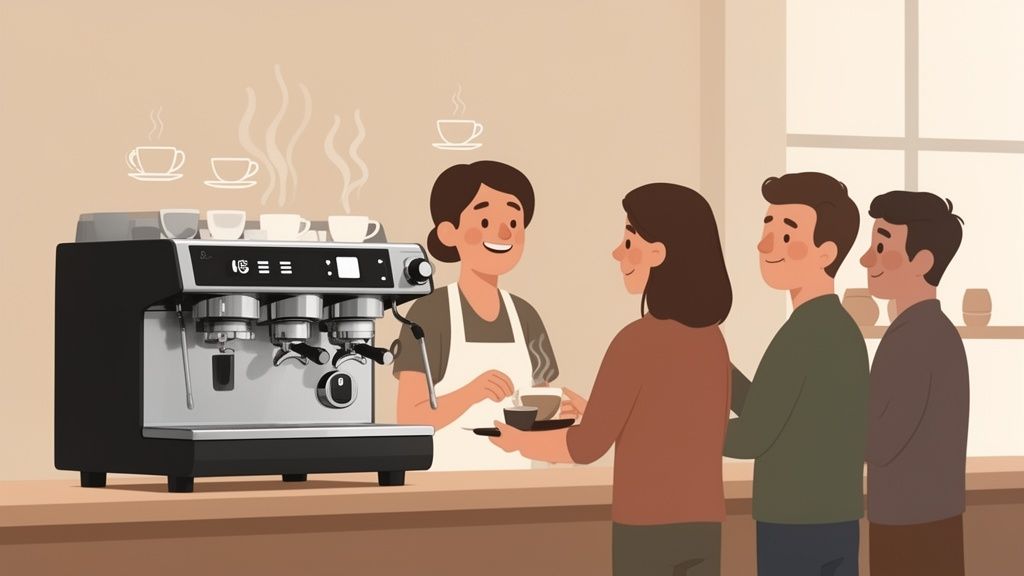
Imagine serving a perfectly crafted latte or cappuccino in under a minute, without needing a highly trained barista on every shift. These machines automate the whole process, from grinding fresh beans to frothing milk, ensuring every drink meets the same high standard. This rock-solid consistency builds customer loyalty and makes staff training a breeze.
Key Benefits for Your Business
This efficiency translates directly to your bottom line. By speeding up service and cutting out human error, you can serve more customers during peak hours and keep waste to a minimum. The main advantages really stack up:
- Unbeatable Consistency: Every coffee is made to the same recipe, guaranteeing quality control that manual methods can't always match.
- Speed and Efficiency: Produce a wide range of speciality coffees in a flash, cutting customer waiting times and boosting turnover.
- Ease of Use: With simple, intuitive interfaces, staff need very little training to use the machine confidently, saving you time and money.
- Premium Experience: Offering fresh, bean-to-cup coffee instantly elevates your business, justifying premium prices and strengthening your reputation.
A great coffee machine becomes the heart of your beverage service. It’s not just an appliance; it's a reliable team member that works tirelessly to boost morale in an office or drive repeat business in a café.
Ultimately, the right machine pays for itself through a smoother workflow and happier customers. At ADS Coffee Supplies, we specialise in matching businesses with the perfect equipment. You can browse a wide selection of top-tier models in our commercial coffee machine shop.
How Do Bean to Cup Coffee Machines Work?
At its heart, a commercial bean-to-cup machine is your automated barista in a single unit. It handles the entire workflow of a trained professional—grinding, tamping, and brewing—condensing it into a foolproof process that serves a perfect drink at the touch of a button.
This makes them invaluable in a busy office, hotel, or café. Instead of juggling separate grinders and espresso machines, which demand space and skill, these machines streamline everything. They take the guesswork out of the equation, ensuring the first coffee of the day is just as fantastic as the last.
From Whole Bean to Perfect Brew
The journey from bean to cup is a masterclass in efficiency. The moment a drink is selected, the machine follows a perfectly programmed sequence to create anything from a punchy espresso to a layered latte macchiato.
The operation can be broken down into four key stages:
- Grinding the Beans: The built-in grinder takes whole beans from the hopper and grinds the precise amount needed for that specific drink. This on-demand grinding is crucial for freshness and flavour.
- Tamping the Coffee: The grounds are dropped into a brewing chamber and automatically compressed—or ‘tamped’—with consistent pressure. This creates a tight puck of coffee, essential for balanced extraction.
- Brewing the Espresso: Hot water, heated to an exact temperature, is forced through the coffee grounds at high pressure. This extracts the rich oils and flavours, producing a concentrated shot of espresso.
- Dispensing the Final Drink: The freshly brewed espresso is poured into the cup. For an Americano, hot water is added. For milky coffees, the machine moves on to the next step.
While the integrated grinder is a defining feature, understanding how grind size affects taste is key. For those who want to dive deeper, exploring a professional grind-by-weight coffee grinder can offer insights into achieving the perfect shot.
The Magic of Automated Milk Frothing
For drinks like cappuccinos and lattes, the automated milk system is where a great machine truly shines. After brewing the espresso, bean to cup coffee machines commercial models with fresh milk systems automatically steam and froth it to the perfect texture and temperature.
A fully automated system pulls fresh milk from a connected fridge, heats it with steam to create silky microfoam, and dispenses it into the cup. This hands-free process is a game-changer for guaranteeing speed and quality, even when you’re flat out.
How to Choose the Right Commercial Bean to Cup Coffee Machine
Picking the perfect bean to cup coffee machine is about matching its capabilities to your daily needs. Get this right, and you’re investing in an asset that makes your day easier, keeps people happy, and delivers a solid return. This is your practical checklist for making a smart choice.
We’ll break down the most critical specs, from daily drink capacity and milk systems to the details like grinder materials. This will help you choose a machine that not only meets today’s demands but can also grow with your business.
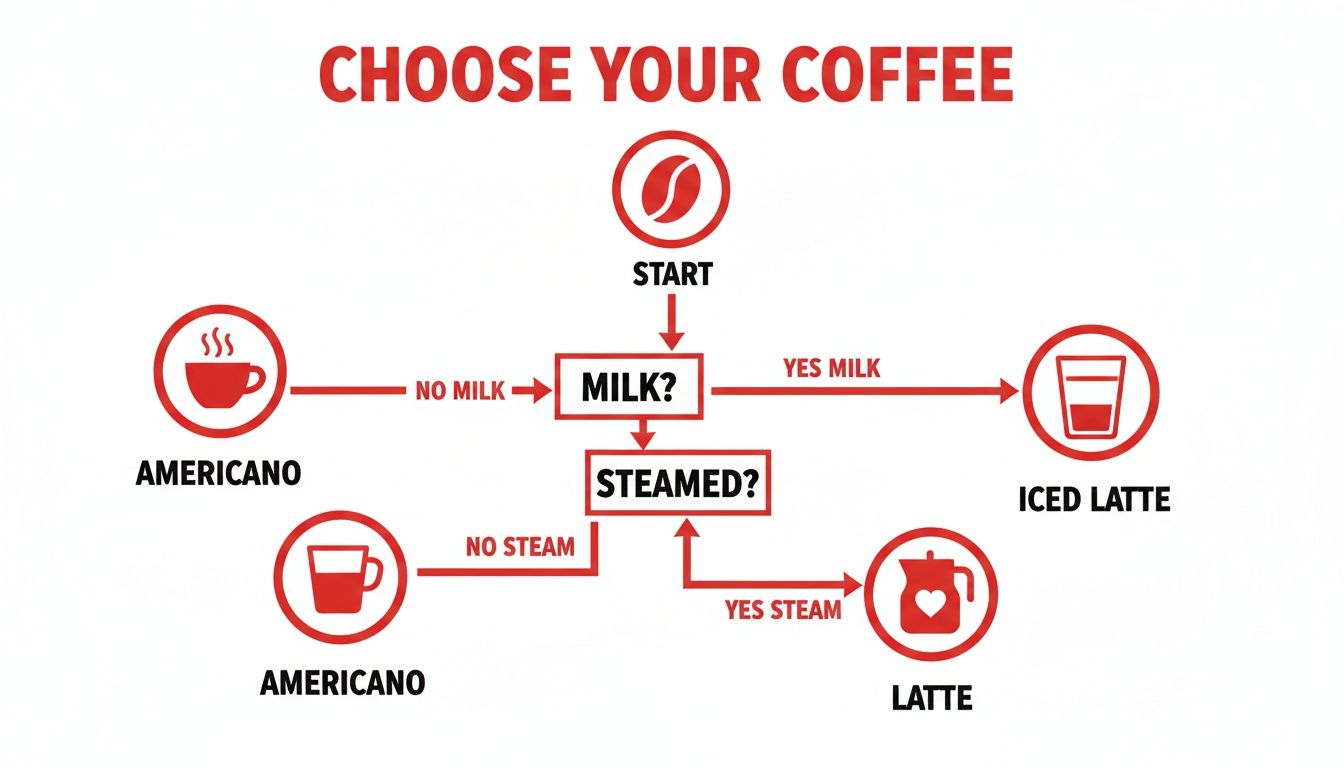
As you can see, the path to a latte or an americano starts with a quality espresso shot. It’s how you add milk or water that makes all the difference—a process these machines handle perfectly.
Daily Drinks Capacity: The First Question to Ask
The most important spec to get right is the machine's recommended daily output. This tells you how many coffees the machine is built to make each day without strain. Be honest about your needs and factor in your busiest hours.
A small office with 20 staff might only need a machine rated for up to 50 cups a day. A bustling café or large corporate headquarters could easily need a unit that can handle 200+ drinks daily. Pushing a smaller machine beyond its limits is a recipe for breakdowns and a shorter lifespan.
Hoppers: How Many Bean Types Do You Need?
Most standard machines come with a single bean hopper, which is fine if you’re sticking to one signature blend. However, dual hoppers open up a world of choice without extra work.
- Offer a Decaf Option: A second hopper is perfect for providing a decaffeinated alternative on demand.
- Provide a Guest Roast: You could also use the second hopper for a special single-origin or guest coffee, adding a premium touch.
Having this flexibility built-in means you can cater to a wider range of tastes seamlessly.
Fresh Milk vs. Powdered Milk
The milk system you choose impacts both drink quality and your cleaning routine. A fresh milk system uses refrigerated milk to create authentic, café-quality microfoam. The taste is miles better, but it demands a strict daily cleaning cycle.
A powdered milk system offers ultimate convenience. Using granules drastically cuts down on daily cleaning, and the ingredients are shelf-stable. While the quality doesn't match fresh milk, it's a practical solution where speed and low maintenance are top priorities.
If you're competing with high-street coffee shops, fresh milk is non-negotiable. For an unmanned staff kitchen, the simplicity of powdered milk is often the more sensible choice. The market for quality coffee solutions is growing, with powerful machines like the Jura JX6 Bean to Cup Coffee Machine perfectly built to meet rising expectations.
Grinders and Boilers: The Engine Room
Don’t forget to look at the core components. The grinder is responsible for freshness. Ceramic grinders are quieter and generate less heat, protecting the coffee oils. Steel grinders are famous for their durability, making them ideal for high-volume environments.
The boiler provides all the hot water and steam. A bigger boiler means the machine can handle back-to-back orders during peak times without a drop in temperature or pressure, ensuring every coffee is as good as the last.
Commercial Bean to Cup Machine Feature Checklist
Choosing the right machine can feel overwhelming, but this table simplifies the decision based on your business type.
| Feature | Small Office (Up to 30 Staff) | Medium/Large Office (30-100+ Staff) | Café/Restaurant (High Volume) |
|---|---|---|---|
| Daily Capacity | 30-50 cups | 80-150 cups | 150-200+ cups |
| Milk System | Powdered milk or simple fresh milk system | Fresh milk system recommended | High-performance fresh milk system is essential |
| Water Supply | Manual water tank is often sufficient | Plumbed-in connection recommended for convenience | Plumbed-in connection is a must |
| Bean Hoppers | Single hopper is usually fine | Dual hoppers for decaf/guest roast option | Dual hoppers for menu variety and premium options |
| Grinder Type | Ceramic or steel | Robust steel grinder preferred | Durable, high-performance steel grinder required |
| Ease of Use | Simple push-button operation | Intuitive touchscreen interface | Touchscreen with programmable drink options |
| Cleaning | Automated cleaning cycles | Automated cleaning with minimal daily input | Daily manual cleaning of milk system, plus auto-cycles |
This checklist is a great starting point. Focus on the features that directly impact your operations to choose a machine that's a perfect fit.
Finding the Perfect Fit for Your Industry
Not all businesses are the same, and neither are bean to cup coffee machines commercial models. The right machine for a café would be overkill for an office, while an office unit would buckle under the pressure of a hotel breakfast rush.
Getting this right is about understanding your business's true needs. For some, it's speed. For others, it's delivering a premium, barista-style experience. This section breaks down the ideal features for different sectors to help you find a perfect match.
Offices: The Hub of Productivity
In the modern workplace, the coffee machine is the heart of company culture. It's where teams connect and morale gets a much-needed boost. A reliable bean-to-cup machine turns the staff kitchen into a genuine perk that employees value.
For an office, the priorities are clear:
- Simplicity and Ease of Use: The machine must be intuitive. Touchscreens with clear drink icons are perfect.
- Low Maintenance: Look for models with automated cleaning cycles. A plumbed-in water connection is a game-changer, meaning no one is stuck refilling the tank.
- Capacity for Peaks: The machine must handle the morning rush without grinding to a halt. Check the daily cup count against your team size.
A model like the popular Nescafé Fusion Touch Screen 30E is a great example of an office-centric machine that balances quality and convenience.
Cafés and Restaurants: Consistency is King
For cafés and restaurants, a commercial bean-to-cup machine guarantees rock-solid consistency during busy periods. It frees up skilled baristas to focus on more complex drinks. In a restaurant, it means any staff member can serve a perfect flat white after a meal.
Key features for this sector include:
- High Daily Output: These machines need to be workhorses, capable of producing 150-200+ drinks a day without faltering.
- Fresh Milk Systems: To meet customer expectations for authentic, café-quality coffee, a high-performance fresh milk system is essential.
- Dual Hoppers: The ability to offer both a house blend and a decaf option adds brilliant flexibility to your menu.
Hotels and Self-Service Locations: Speed and Reliability
In hotels, conference centres, and canteens, it's all about speed, reliability, and simple operation. These machines must serve a high volume of guests quickly during breakfast rushes or event breaks, often with no staff supervision.
The goal is to provide a seamless, premium beverage experience that feels effortless. The machine must be robust, intuitive, and capable of delivering consistently good coffee, time after time. Look for machines with large-capacity hoppers and a plumbed-in connection to cut down on refills.
As people get used to better coffee at home, their expectations everywhere else go up. According to an industry report from Market Research Future, the demand for high-quality, convenient coffee solutions continues to rise, making your commercial offering more important than ever.
The Financials: Buying vs Leasing Your Machine
Getting the right machine is half the battle; the financial decision is just as crucial. When investing in a commercial bean-to-cup coffee machine, you have two paths: buying it outright or leasing it over a fixed period. Each has pros and cons, and the best choice depends on your cash flow and long-term plans.
The Case for Buying Outright
Buying your coffee machine is the most direct approach. You pay the full cost upfront and it becomes a valuable asset on your books. There are no monthly payments, just the ongoing costs of maintenance and supplies.
This is a smart move for established businesses with healthy cash reserves. It's a clean transaction, and the machine can often be claimed as a capital allowance against your tax bill. However, the significant upfront cost can be a barrier, and you are responsible for all repair bills once the warranty expires.
The Flexibility of Leasing
Leasing flips the script. Instead of one large payment, you pay a fixed, manageable monthly fee over an agreed term, usually three to five years. This makes getting a top-of-the-range machine incredibly accessible, even on a tight budget.
A major advantage of leasing is that a comprehensive service package is often bundled into the cost. This means no surprise repair bills, giving you peace of mind and predictable outgoings. When the lease ends, you can upgrade to a newer model, continue leasing, or buy the machine.
Leasing is a fantastic option for:
- New businesses watching their start-up costs.
- Companies focused on cash flow, as it keeps capital free.
- Organisations that need predictable costs with servicing included.
To figure out the best financial route for your business, you can learn more about our leasing options for commercial machines.
Keeping Your Machine Running Perfectly
Your commercial bean-to-cup machine is a serious investment. Ensuring it has a long, productive life comes down to regular, common-sense care. A simple maintenance routine, the right water filtration, and reliable support will head off expensive breakdowns.
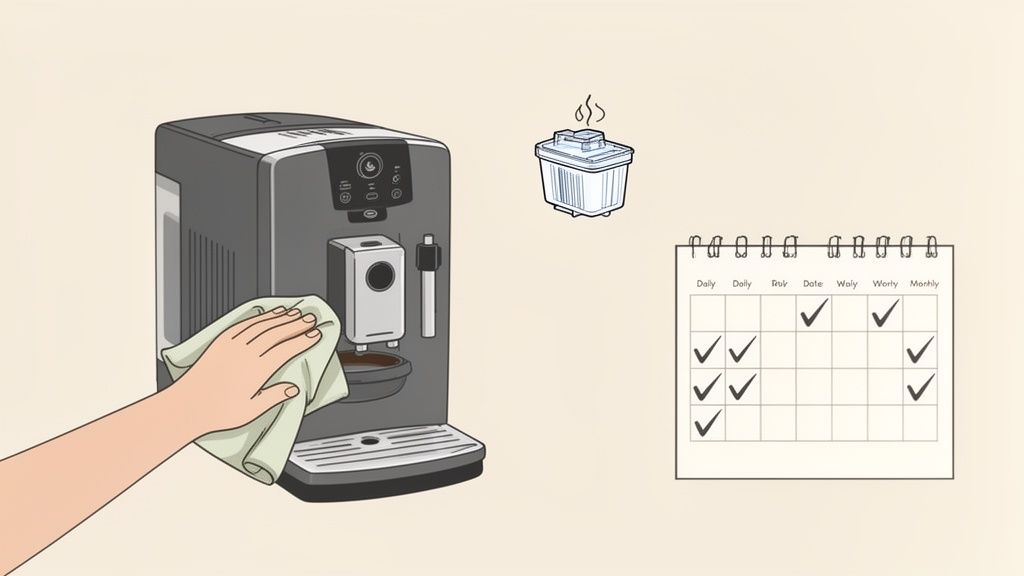
Putting off maintenance doesn't just risk a mechanical failure; it directly impacts the taste of your coffee. Old coffee oils and milk residue quickly turn rancid, leaving a bitter flavour in every cup. A simple cleaning schedule is your best line of defence.
Your Essential Cleaning Checklist
Sticking to a cleaning routine keeps your machine hygienic and guarantees every drink tastes fresh. Most modern machines have automated cleaning cycles, but a few manual steps are still vital.
- Daily: At the end of each day, run the machine's automated rinse cycle. If you have a fresh milk system, it is essential to clean the milk frother according to the manufacturer's instructions.
- Weekly: Use a specialised cleaning tablet to backflush the brew group. This process removes stubborn coffee oils that a quick rinse can't shift. We recommend a professional product like Urnex Cafiza Espresso Machine Cleaning Powder.
- Monthly: Descale the machine to remove mineral deposits from the boiler and pipework. How often you do this depends on your water hardness and filter effectiveness.
The Critical Role of Water Filtration
In the UK, hard water is packed with minerals that build up inside your machine as limescale. This forces the heating elements to work harder, drains more power, and can eventually lead to a total breakdown.
A water filter is an insurance policy for your machine's internal parts. It's not an optional extra; it's an essential part of your setup. It protects your investment and guarantees the best possible taste by removing impurities that can ruin the coffee's flavour.
Why Ongoing Support Is Key
Even the best-cared-for machines can have problems. Partnering with a supplier that offers comprehensive support—from installation and training to reliable servicing—is invaluable. This partnership means any downtime is kept to a minimum, keeping your coffee service running smoothly.
Your Common Questions Answered
Investing in a commercial bean-to-cup machine always brings up a few last-minute questions. Here are clear, straightforward answers to the most common queries we get from business owners.
How often does a commercial coffee machine need servicing?
Most commercial machines need a professional service every six to twelve months, depending on use. A busy café will need more frequent check-ups than a machine in a small office. This preventative maintenance is your best defence against a major breakdown, ensuring your investment lasts for years.
Can I use any type of coffee beans?
While you can technically use any whole beans, we strongly advise against very dark, oily roasts. The greasy residue can clog the grinder, leading to poor performance and costly repairs. For best results, use a high-quality, medium-roast espresso bean blended for automatic machines.
What is the difference between fresh milk and powdered milk?
This is a classic trade-off between top-tier quality and daily convenience.
- Fresh Milk Systems: Use refrigerated milk for authentic, café-quality lattes. The texture and flavour are superior, but they require a strict daily cleaning routine.
- Powdered Milk Systems: This is the ultimate convenience option. Using milk granules drastically cuts down on cleaning and is often more cost-effective, but the taste is a compromise.
If your goal is a premium, barista-style coffee, a fresh milk system is the only way to go. If your focus is on simplicity, especially in a self-service setting, powdered milk is the more practical choice.
Ready to find the perfect coffee solution for your business? The expert team at ADS Coffee Supplies is here to help you navigate the options and match you with a machine that meets your exact needs and budget. Explore our range or get in touch for personalised advice.


