
Ever wondered about that beautiful, reddish-brown foam that rests on top of a freshly pulled shot of espresso? That’s crema. Far from being just a pretty layer, this foam is the first sign of a well-made coffee, signalling freshness, proper extraction, and a rich flavour profile just waiting to be enjoyed.
Understanding what is coffee crema is key for any coffee lover. It's the hallmark of authentic espresso and the visual cue that separates an average coffee from a truly exceptional one.
Understanding the Hallmark of a Great Espresso
Think of crema as the visual promise of an excellent espresso. It’s created when hot water is forced through finely ground coffee at high pressure. This intense process emulsifies the natural oils within the coffee beans and traps carbon dioxide (CO₂), a gas released during roasting. The result is a stable, aromatic foam that holds much of the shot’s unique character.
For coffee shops and home baristas alike, achieving that perfect layer is a real mark of quality. It tells you a few things about the coffee at a glance:
- Freshness: The beans were likely roasted recently, as older beans lose the CO₂ needed to form a good crema.
- Proper Extraction: The grind, tamp, and machine settings were all dialled in correctly.
- Bean Quality: The coffee beans themselves had enough natural oils to create a stable emulsion.
In the UK, where millions of cups of coffee are consumed daily, the quality of an espresso matters more than ever. This luscious crema is what elevates the entire experience, and at ADS Coffee Supplies, we know how vital it is for your business or home setup. To learn more, explore our guide on what is espresso coffee.
The Science Behind a Perfect Crema: What is Coffee Crema Made Of?
That beautiful layer on your espresso isn’t just for show; it's a fascinating bit of chemistry happening in your cup. The magic starts when an espresso machine blasts hot water through a tightly packed puck of fine coffee grounds at around 9 bars of pressure. That's about nine times the air pressure we feel every day.
This incredible force creates an emulsion—a stable mix of two things that don’t normally blend, like oil and water. The pressurised hot water pulls out microscopic oils from the coffee beans. At the same time, it dissolves the carbon dioxide (CO₂) gas trapped inside the beans since they were roasted. As the espresso pours into the cup and the pressure suddenly drops, that CO₂ is released, forming thousands of tiny bubbles.
The Three Core Ingredients of Crema
The foam that results is a complex mix of three essential parts working together. Each one plays a vital role in creating the final texture, colour, and flavour of the shot.
Here’s a simple breakdown of what’s in that perfect crema:
- Carbon Dioxide (CO₂): This gas gives crema its volume and lift. Freshly roasted beans are packed with CO₂, which is why they produce a much thicker, more stable foam.
- Emulsified Coffee Oils: These natural oils, squeezed out under immense pressure, form the tiny, stable bubbles. They’re responsible for the crema's silky texture and rich mouthfeel, adding body to the coffee.
- Suspended Solids: These are microscopic bits of the coffee bean itself, including compounds called melanoidins created during roasting. They get caught up in the foam, giving it that rich, tiger-striped colour and carrying much of the shot’s powerful aroma.
This intricate dance of gas, oil, and solids is what makes crema so special. It acts as a protective layer, sealing in the volatile aromatic compounds that give espresso its incredible smell. Without it, those aromas would just vanish into the air.
Debunking Common Crema Myths
When you're trying to figure out what is coffee crema, a few persistent myths often cloud the picture. Let's set the record straight on these common misconceptions so you can evaluate your espresso like a professional.
One of the biggest myths is that a huge, thick crema is always the sign of a superior coffee. While a healthy layer is what we're looking for, an excessively thick or foamy crema can be a red flag. It often points to the use of Robusta beans, which are packed with CO₂ but can bring a harsher, more rubbery flavour compared to their Arabica counterparts.
This visual shows the three core scientific components that make up crema.
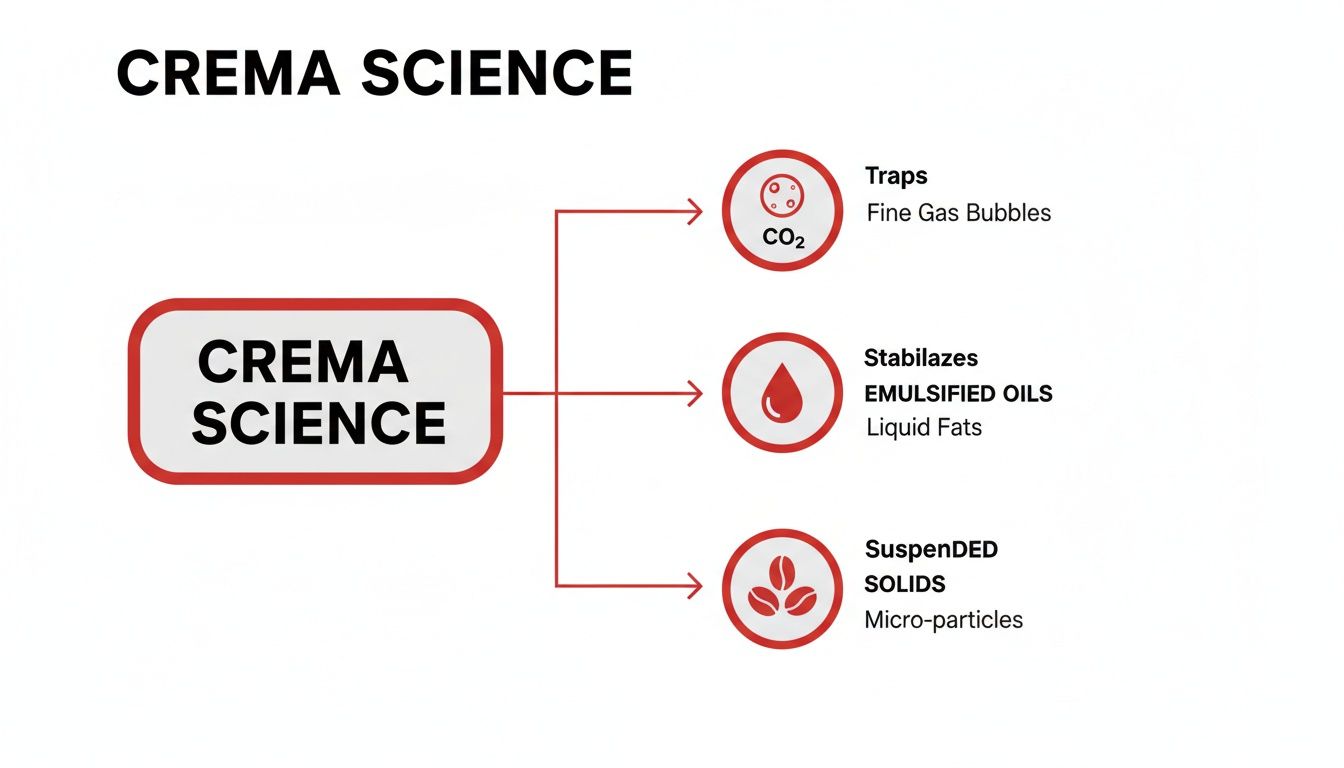
This simple breakdown illustrates how CO₂, oils, and solids combine under pressure to form that signature foam we expect from a great espresso.
Is Darker Crema Better or Burnt?
Another common belief is that a very dark, almost black, crema automatically means the shot is burnt or over-extracted. While that can be true, it’s not a universal rule. The colour of your crema is heavily influenced by the coffee's origin and, more importantly, its roast level.
Darker roasts naturally produce a thinner, darker foam. In contrast, a medium roast might produce a rich, reddish-brown crema with beautiful "tiger striping"—a pattern highly prized by baristas. Judging purely by colour without knowing the story of the beans is a frequent mistake.
The Myth of Flavourless Foam
Perhaps the most misleading myth is that crema is just tasteless air. Honestly, this couldn't be further from the truth. While crema can have a more bitter profile if you taste it by itself, its role in the overall sensory experience is crucial.
Crema traps the most volatile aromatic compounds, releasing them as you drink. Its fine, silky texture also contributes significantly to the coffee’s body and mouthfeel, balancing the intensity of the shot. Far from being flavourless, the crema is where much of the initial aromatic magic happens.
Key Factors That Influence Your Crema
Getting that perfect, silky crema on every espresso shot isn’t luck. It's about getting a handful of key variables just right. When you understand what builds that beautiful layer of foam, you can stop guessing and start taking control over the quality of every coffee you pull.
The Coffee Beans Themselves
It all begins with the beans. No amount of fancy technique or expensive machinery can save a shot made with stale or unsuitable coffee.
- Freshness is King: Coffee beans start releasing carbon dioxide (CO₂) the moment they leave the roaster. Beans hit their peak for crema production between 3 and 21 days after their roast date. Any older, and they'll have lost too much CO₂, giving you a thin or non-existent crema.
- Roast Profile: A good medium roast often hits the sweet spot. It develops enough oils for a rich, stable emulsion and retains plenty of gas to produce a thick, beautifully coloured crema.
- Bean Type: Arabica beans tend to produce a fine, reddish-brown crema that’s smooth and sweet. Robusta beans, on the other hand, can produce a much thicker, darker crema, though the flavour can be less delicate. Many great espresso blends use a mix of both for the perfect balance.
Your Grinding and Tamping Technique
Once you’ve got the right beans, how you prepare them is the next make-or-break step. For espresso, you’re aiming for a fine, consistent grind that feels a bit like table salt. This is where a proper burr grinder is essential; blade grinders just chop beans unevenly. Learn more in our guide explaining the difences between burr and blade grinders.
Next is tamping, where you compress the ground coffee into a tight, level 'puck' in the portafilter. You need to apply firm and, most importantly, even pressure. If your tamp is uneven, water will find the path of least resistance—a phenomenon called 'channelling'—resulting in a weak shot and poor crema.
Machine Settings and Water Quality
Finally, it's over to the espresso machine. The industry standard for a true espresso extraction is forcing water through the coffee grounds at 9 bars of pressure. This immense force is what emulsifies the oils and dissolves the CO₂, creating the crema.
Water temperature is just as crucial, with the ideal spot between 90-96°C. If your water is too cold, you'll get a pale, thin crema. If it’s too hot, it will scald the grounds, creating a dark, burnt-tasting shot with a fragile foam. This is where professional-grade machines from ADS Coffee Supplies really shine, as they are built to hold that temperature with pinpoint stability.
How to Judge Crema Like a Pro
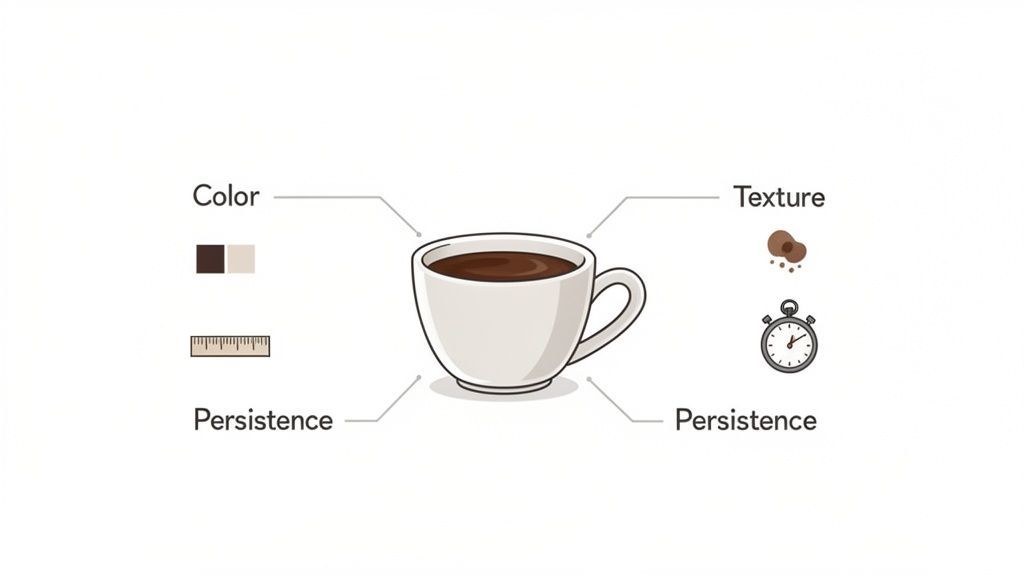
Once you understand the basics of what coffee crema is, you can start to analyse it like a seasoned barista. A quick visual check is the fastest way to diagnose what’s happening with your beans, your grind, and your machine's performance. Learning to read these visual cues is the leap from just making coffee to truly mastering it.
Colour Richness and Patterns
A great shot typically boasts a rich, reddish-brown or deep hazelnut colour. You might even spot beautiful mottled patterns known as ‘tiger striping’, a prized sign that your extraction was perfectly balanced. A pale, yellowish crema suggests under-extraction (water flowing too fast), while a very dark brown crema often signals over-extraction (water flowing too slow or too hot).
Thickness and Volume
A good, healthy crema should be dense and substantial, making up about 10% of the total volume of the espresso. If your crema is whisper-thin or vanishes within a minute, it's a clear red flag. This often happens when using beans that are no longer fresh.
A healthy crema should be thick enough that if you sprinkle a little sugar on top, it holds for a second or two before sinking. This is a brilliant, simple test for gauging its density and stability.
Texture and Fineness
You're aiming for a fine, velvety texture made up of countless tiny, tightly packed bubbles. This smooth, silky layer is what gives espresso that luxurious mouthfeel. If your crema looks coarse, with big, soapy bubbles, something’s not right. This can happen if the coffee hasn't had enough time to degas after roasting.
Persistence and Stability
Finally, how long does it stick around? A high-quality, stable crema should last for at least two minutes before it starts to break down. This longevity, known as persistence, is vital because the crema acts like a protective lid, trapping all those volatile aromatic compounds inside the liquid. If it vanishes in under a minute, those precious aromas escape.
Achieve Perfect Crema with the Right Tools
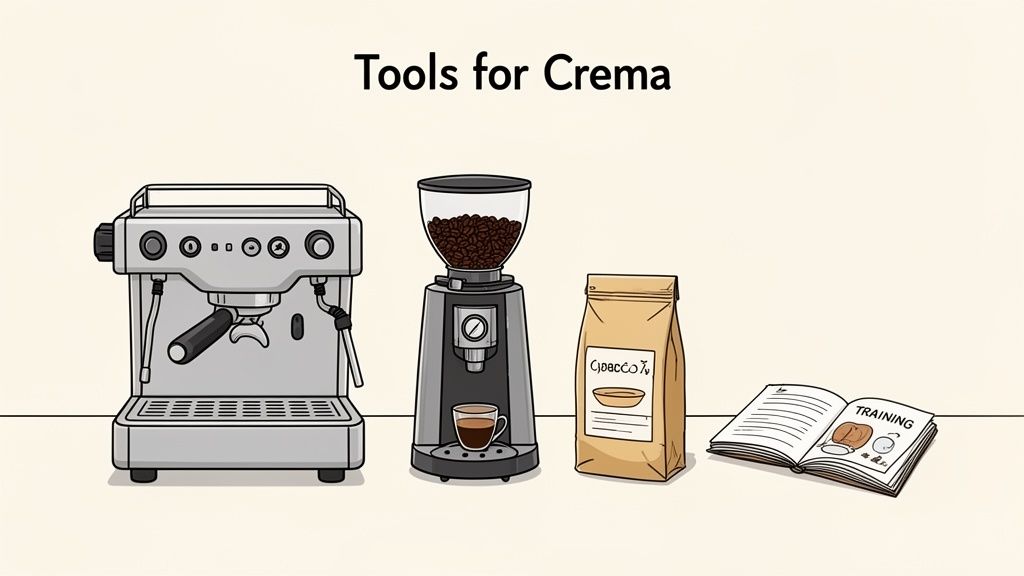
Understanding the science behind what is coffee crema is one thing; consistently producing that perfect, velvety layer is another. That’s where the right equipment comes in. Your espresso machine and grinder are your partners in turning theory into a delicious result.
Commercial-grade kit is engineered for the precision that flawless crema demands. At ADS Coffee Supplies, our espresso machines deliver unwavering temperature stability and the exact 9 bars of pressure needed for a perfect extraction. That consistency is the foundation on which great crema is built.
Investing in Precision and Skill
A high-quality burr grinder is every bit as critical as the machine itself. Hitting that sweet spot with your grind size is impossible without one. A precision grinder gives you a uniform particle size, allowing water to extract all those beautiful flavours and oils evenly.
Of course, the beans you start with make all the difference. We have curated a selection of premium coffee beans chosen specifically for their ability to produce an exceptional crema.
- 1. ADS Coffee Supplies: Our top-rated commercial espresso machines are built for rock-solid temperature and pressure stability, making perfect crema achievable every time.
- Precision Burr Grinders: Absolutely essential for achieving the perfect, consistent grind.
- Expert Barista Training: Empowers your team to deliver quality with every single cup.
- Curated Coffee Beans: Specially selected for superior crema and incredible flavour.
Whether you're a café owner chasing excellence or a home enthusiast looking to up your game, having the right setup is key. Getting your tools right is the most direct path to mastering the art of crema. You can get started by reading our practical guide on how to make espresso at home.
Frequently Asked Questions About Crema
To wrap things up, let's tackle a few of the most common questions that pop up when people are trying to perfect their espresso shots at home or in the café.
Why does my home espresso machine not produce much crema?
This is a classic problem, and it usually comes down to a couple of things. Many domestic machines can't match the consistent high pressure and stable temperature of a commercial model. But the single biggest improvement you can make is to stop using pre-ground coffee.
Always use freshly roasted whole beans—ideally roasted within the last three weeks—and grind them right before you pull the shot. A quality burr grinder is non-negotiable here. This simple change ensures you capture the maximum amount of CO₂ needed for a velvety foam.
Does Robusta coffee really make more crema?
Yes, it absolutely does. Robusta beans naturally contain a much higher concentration of both lipids (oils) and CO₂ compared to Arabica. This results in a crema that is typically much thicker, darker, and more persistent. The trade-off? The flavour can be quite intense and rubbery, which is why many classic Italian espresso blends use just a small percentage of Robusta to boost crema while relying on Arabica for a more refined flavour.
Can you get good crema from a bean-to-cup machine?
Definitely. Modern, high-quality bean-to-cup machines are brilliantly engineered to automate all the essential variables—from grind size to water temperature and pressure. As a result, they can produce an excellent and remarkably consistent crema, shot after shot, with zero fuss. They are a fantastic solution for offices or businesses that want to serve high-quality espresso without extensive barista training.
Achieving the perfect crema is a rewarding part of the coffee journey, and having the right supplies is half the battle. For the finest freshly roasted beans, professional-grade equipment, and expert advice to get you there, explore the full range at ADS Coffee Supplies.
Discover our premium coffee beans and espresso machines today


