
Ever stared at a café menu, puzzled by the real difference between a flat white and a latte? You're not alone. The world of coffee is vast, but navigating the many different types of coffee can be daunting. This guide is your definitive resource, designed for UK coffee lovers, café owners, and office managers aiming to elevate their coffee offering.
We are here to demystify everything, from the intense kick of a perfect espresso to the smooth allure of a cold brew. We'll provide practical advice, simple recipes, and equipment recommendations to help you master each brew. Whether you're serving customers or improving your workplace coffee station, this guide offers clear, expert guidance.
As a leading UK coffee supplier, we understand the nuances that separate a good coffee from a truly exceptional one. This comprehensive roundup will help you explore the rich tapestry of flavours and preparation methods. Let's delve into the different types of coffee together.
1. Espresso
Espresso is the heart of modern café culture. It’s a concentrated coffee beverage created by forcing hot water (at 88-94°C) through finely-ground coffee under high pressure. This process extracts a complex array of oils and solids, resulting in a rich, intense shot with a signature layer of reddish-brown foam called crema.
A standard single shot (around 30ml) is extracted in just 25-30 seconds, making it a quick and powerful foundation for countless other drinks. Its versatility makes it ideal for high-volume cafés using commercial machines and offices with bean-to-cup systems.
Tips for a Perfect Espresso
Achieving a flawless espresso requires precision. Focusing on these details will dramatically improve your results. For a deep dive into equipment, an external espresso machine buying guide can be a useful resource.
- Grind Consistency is Key: Use a high-quality burr grinder for an even extraction.
- Tamp with Purpose: Apply firm, level pressure to prevent water from channelling through the grounds.
- Freshness First: Use freshly roasted coffee beans, ideally within four weeks of their roast date.
- Machine Maintenance: Regularly clean and descale your machine to ensure longevity and great taste.
2. Cappuccino
A true icon among the different types of coffee, the cappuccino is a masterful balance of espresso, steamed milk, and velvety microfoam. It is traditionally prepared with equal parts of each component (a 1:1:1 ratio), served in a 150-180ml cup. The result is a luxurious, textured coffee experience.
The drink's defining feature is its thick layer of microfoam, which requires precise milk steaming to achieve the correct silky texture. It's a staple in UK coffee shops and a popular choice in workplace cafés.
Tips for a Perfect Cappuccino
Mastering the cappuccino is a hallmark of barista skill. For automated systems, a premium cappuccino topping is ideal for vending and bean-to-cup machines to ensure consistency.
- Start with Cold Milk: Always use fresh, cold milk (around 4°C) to allow more time to create a smooth, glossy microfoam.
- Perfect the Steam: Introduce air for only 2-3 seconds to create foam, then plunge the wand deeper to heat the milk to 65-70°C.
- Use a Thermometer: A milk thermometer helps you consistently hit the ideal temperature without scalding the milk.
- Wand Hygiene is Crucial: Always purge the steam wand before and after each use to clear out any residual water or milk.
3. Latte
A latte is one of the most popular types of coffee worldwide, loved for its smooth, creamy texture. It consists of a single shot of espresso with a generous portion of steamed milk, topped with a thin layer of velvety microfoam. Its name is a shortened version of the Italian caffè e latte (coffee and milk).
This milk-forward drink is a staple in UK cafés and offices. Its mild coffee profile makes it an excellent gateway drink for newcomers, while its potential for latte art provides depth for seasoned coffee drinkers.
Tips for a Perfect Latte
Creating an exceptional latte hinges on balancing the espresso with perfectly textured milk. These tips will help both cafés and home baristas elevate their latte game.
- Achieve Silky Microfoam: Aim for a very thin layer of microfoam. This "wet paint" texture integrates smoothly with the espresso.
- Balance Your Ratios: For a standard 8-12oz cup, use a single shot of espresso to maintain a pleasant coffee flavour.
- Offer Customisation: The latte is a perfect base for added flavours. Providing a quality vanilla syrup can boost customer satisfaction.
- Prioritise Milk Alternatives: Offering oat, soy, and almond milk is now standard. Ensure staff are trained to steam them correctly.
- Maintain Steamer Hygiene: Clean and purge the steam wand immediately after every use to prevent milk residue build-up.
For a visual guide on mastering the technique, this video provides a clear demonstration of how to steam milk and pour a classic latte.
4. Americano
The Americano is a simple yet popular choice among the different types of coffee, created by diluting an espresso shot with hot water. Typically prepared with a one-part espresso to two-parts water ratio, it offers the strength of a drip-filter coffee but with the rich flavour of its espresso base.
This drink is a staple in high-volume settings due to its speed and efficiency. It’s a favourite in quick-service cafés and office coffee programmes, making it a profitable and consistent menu item.
Tips for a Perfect Americano
A great Americano is about balance and preserving the coffee's quality. Paying attention to these key details can elevate this classic drink.
- Preserve the Crema: Add the espresso shot to the cup first, then gently pour the hot water on top to maintain the crema.
- Optimal Water Temperature: Use hot, but not boiling, water (around 70-75°C) to avoid scalding the espresso.
- Water Quality Matters: Always use filtered water for a clean taste that doesn’t interfere with the coffee’s flavours.
- Serve Immediately: An Americano is best enjoyed fresh while the crema is still intact and the temperature is perfect.
5. Flat White
Originating from Australia and New Zealand, the flat white is a staple in speciality coffee shops across the UK. It's a meticulously crafted beverage where a double espresso shot is combined with velvety, steamed milk. The defining characteristic is its microfoam—a silky, smooth texture with no perceptible bubbles.
Served in a smaller ceramic cup (typically 150-200ml), the flat white offers a stronger, more coffee-forward flavour than a latte. Its popularity highlights a growing demand for different types of coffee that prioritise flavour intensity over volume.
Tips for a Perfect Flat White
Mastering the flat white is about achieving the perfect balance between the espresso's boldness and the milk's sweetness. The key lies in precise milk texturing.
- Master the Microfoam: Aerate the milk minimally. The goal is a silky, wet-paint texture, not a stiff foam.
- Use a Double Shot: A standard flat white is built on a double ristretto or espresso shot to ensure the coffee flavour cuts through.
- Control the Pour: Pour the milk steadily into the centre of the espresso to blend it smoothly from the bottom up.
- Right-Sized Cup: Always use a 150-200ml (5-7oz) cup to maintain the correct coffee-to-milk ratio.
6. Macchiato
The Macchiato is an elegant Italian classic. Its name translates to “marked” or “stained,” which describes its composition: a shot of rich espresso is simply marked with a small dollop of steamed milk and microfoam. This softens the espresso's intensity without masking its flavour.
A traditional Macchiato is served in a small 50-60ml demitasse, offering a strong, espresso-forward experience. It’s a favourite in authentic Italian-style cafés and a purist’s choice for its beautiful simplicity.
Tips for a Perfect Macchiato
Serving a great Macchiato is about respecting the integrity of the espresso. Precision is vital to delivering this nuanced drink correctly.
- Clarify Your Offering: Distinguish between a traditional espresso macchiato (espresso with foam) and a modern latte macchiato (steamed milk with espresso).
- Focus on the Foam: Use only a small spoonful of the finest, silkiest microfoam to gently cut the espresso’s acidity.
- Use the Right Ratio: The classic ratio is approximately one part espresso to a maximum of 0.5 parts milk foam.
- Educate and Explain: Train baristas to confidently explain the drink's Italian origins to newcomers.
7. Cortado
The Cortado originates from Spanish and Portuguese café culture. The name means ‘to cut’, as an espresso shot is cut with an equal measure of steamed milk. This 1:1 ratio creates a perfect harmony between the intense espresso and the subtle sweetness of the milk, served in a small 80-120ml glass.
The milk in a Cortado is steamed with very little foam, resulting in a velvety texture. It’s ideal for customers who want more coffee flavour than a latte provides but find a straight espresso too strong.
Tips for a Perfect Cortado
A great Cortado is defined by its simplicity and balance. Getting the ratio and milk texture just right is essential for an authentic experience.
- Maintain the 1:1 Ratio: Use a consistent espresso shot volume and match it precisely with steamed milk.
- Focus on Milk Texture: Aim for lightly steamed milk with minimal microfoam to allow it to integrate fully with the espresso.
- Serve Authentically: Use a traditional small glass (like a Gibraltar glass) of around 80-120ml.
- Educate Your Customers: Position the Cortado as "stronger than a cappuccino, smoother than a macchiato" to help customers understand its profile.
8. Affogato
An elegant Italian classic, the Affogato blurs the line between beverage and dessert. Translating to "drowned," it consists of a scoop of vanilla gelato submerged in a fresh shot of hot espresso. The contrast between cold, sweet creaminess and hot, intense coffee creates a luxurious experience.
This sophisticated treat is easy to prepare, making it a valuable, high-profit-margin addition for any café or restaurant. It is particularly popular in Italian restaurants and high-end coffee shops.
Tips for a Perfect Affogato
A perfect Affogato depends on quality ingredients and dramatic presentation. Small details can transform this simple concept into an unforgettable treat.
- Quality First: Use high-quality gelato. Its flavour and texture are superior to standard ice cream.
- Classic Flavours Work Best: Stick to high-quality vanilla gelato to allow the espresso's complex notes to shine.
- Master the Temperature Contrast: Have the gelato ready in a chilled glass to maximise the dramatic melting effect.
- Presentation is Everything: Serve immediately. Pouring the espresso over the gelato at the table creates a moment of theatre.
9. Pour Over / Filter Coffee
Pour Over, or filter coffee, is a manual brewing method celebrated for producing a clean, nuanced cup. The process involves pouring hot water over coffee grounds in a filter, allowing gravity to gently extract the flavours. This technique gives the brewer complete control over variables like water temperature and pour speed.
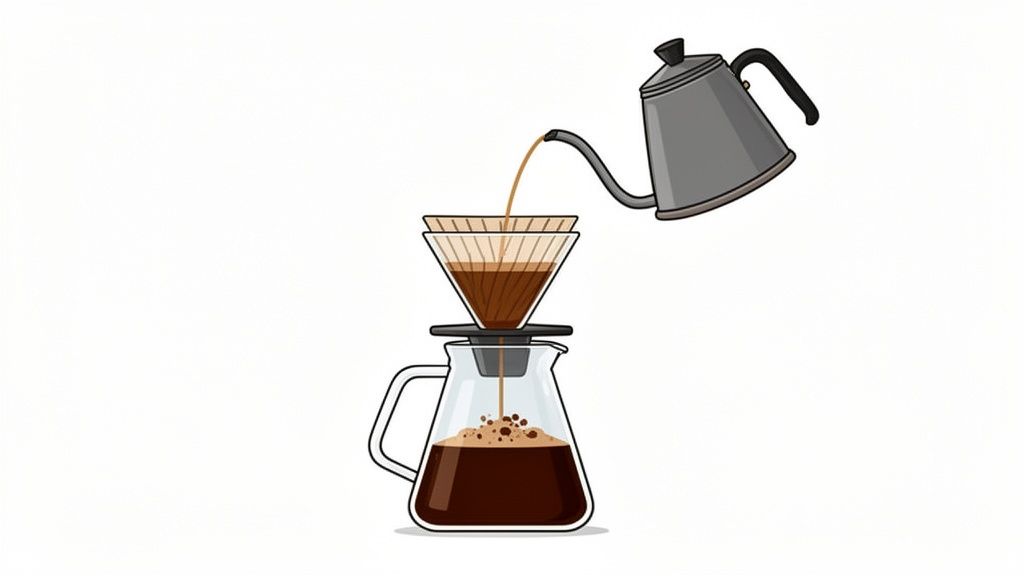
Popularised by the third-wave coffee movement, this method is a staple in UK speciality cafés. Devices like the Hario V60, Chemex, and Kalita Wave make it a versatile and engaging way to explore coffee.
Tips for a Perfect Pour Over
Mastering pour-over coffee is about precision and consistency. For those who appreciate manual methods, a high-quality Timemore French Press is another excellent option.
- Use a Gooseneck Kettle: This provides essential control over the flow rate and direction of your pour.
- Start with a 'Bloom': Wet the grounds and let them sit for 30-45 seconds to release trapped CO2.
- Maintain Water Temperature: Aim for a water temperature between 90-96°C.
- Stick to a Ratio: A 1:16 coffee-to-water ratio (e.g., 15g coffee to 240ml water) is a great starting point.
10. Cold Brew / Iced Coffee
Cold brew represents a major shift in how different types of coffee are enjoyed. Unlike iced coffee, cold brew is created by steeping coarsely ground coffee in cold water for 12-24 hours. This slow extraction process results in a coffee concentrate that is incredibly smooth, naturally sweet, and lower in acidity.
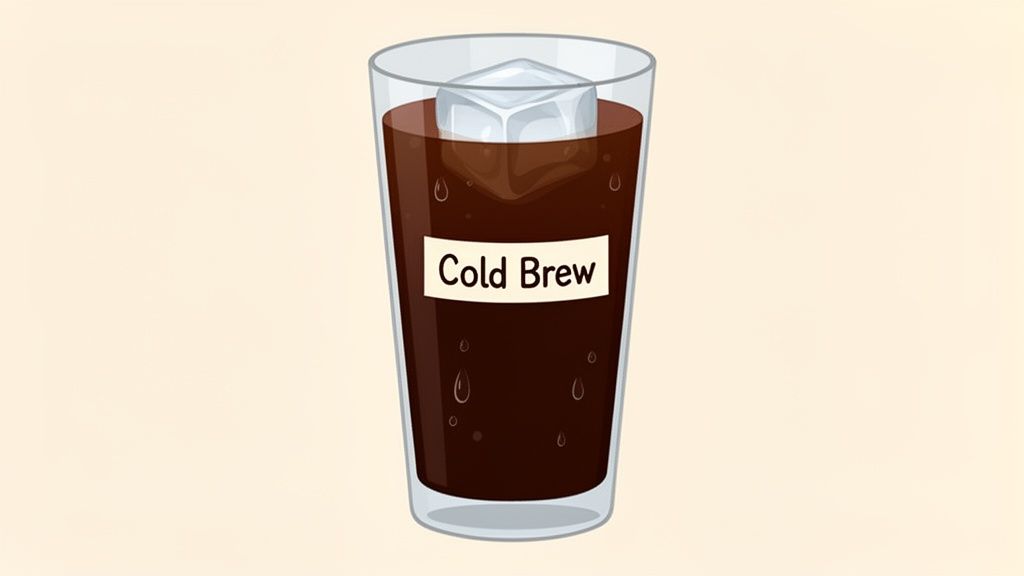
Its rise in popularity is due to its mellow flavour and versatility. In offices, large-batch cold brew systems offer a refreshing, low-labour alternative to traditional hot drinks.
Tips for a Perfect Cold Brew
Mastering cold brew is about patience and proper ratios. For businesses looking to scale up, commercial-grade cold brew coffee makers are a great next step.
- Start with the Right Ratio: Use a 1:4 coffee-to-water ratio to create a strong concentrate perfect for dilution.
- Go for a Coarse Grind: A coarse grind prevents over-extraction and keeps the final brew from becoming cloudy.
- Steep Safely: Always steep your coffee in the refrigerator for food safety and a controlled extraction.
- Dilute to Taste: A standard serving is a 1:1 dilution of concentrate to water or milk, served over ice.
- Plan for Shelf Life: Store the concentrate in a sealed container in the fridge for up to two weeks.
11. Turkish Coffee / Finjan
Recognised by UNESCO as an Intangible Cultural Heritage, Turkish coffee is one of the world's most ancient preparations. This unfiltered method involves boiling exceptionally finely ground coffee with water (and often sugar) in a special pot called a cezve. The result is a strong, thick beverage served in small cups called finjan.
This ritualistic preparation is a cornerstone of Middle Eastern culture, making it a unique offering among the different types of coffee. Offering Turkish coffee provides a culturally rich experience that can set a business apart.
Tips for a Perfect Turkish Coffee
Mastering Turkish coffee is about technique and respecting tradition. The process is a performance in itself, adding value for your customers.
- Achieve the Right Grind: The coffee must be ground to a fine, talc-like powder. A specialised grinder is ideal.
- Use an Authentic Cezve: A traditional copper or brass cezve is designed to create the perfect foam.
- Master the "Boil": Gently heat the mixture until a thick foam forms, then remove it from the heat just before it boils over.
- Add Authentic Spices: Enhance the experience by offering traditional additions like crushed cardamom pods.
12. Instant Coffee / Soluble Coffee
Instant coffee stands out for its unmatched convenience. It is produced by dehydrating brewed coffee, leaving behind solids that dissolve instantly in hot water. This creates a consistent, long-lasting product that is a staple in homes and offices.
While once viewed as a budget option, modern premium brands have significantly elevated its quality. Today, high-quality instant coffee is a key component of workplace coffee programmes and vending machines, offering a reliable cup with minimal preparation.
Tips for a Perfect Instant Coffee
Getting the best out of instant coffee is about more than just adding hot water. For a high-quality option, consider products like Summit Premium South American Blend Instant Coffee.
- Use the Right Water Temperature: Avoid boiling water. Aim for 70-80°C for a smoother, more balanced flavour.
- Measure for Consistency: Use one heaped teaspoon (around 4-5g) of instant coffee for every 150-200ml of water.
- Stock Premium Options: Elevate your offering by stocking premium brands to signal a commitment to quality.
- Promote Sustainable Choices: Offer sustainable packaging and refillable jar options for office programmes.
12 Coffee Types Comparison
| Item | 🔄 Implementation Complexity | 💡 Resource Requirements / Tips | ⚡ Speed / Efficiency | ⭐ Expected Outcomes / Quality | 📊 Ideal Use Cases |
|---|---|---|---|---|---|
| Espresso | High — precision extraction, steep learning curve | Pump espresso machine, burr grinder, tamper, maintenance; keep water 88–94°C | Very fast — ≤1 min per shot | Concentrated, intense flavour; reliable base for other drinks | Professional cafés, high-volume service, base for milk drinks |
| Cappuccino | Medium‑High — skilled milk steaming for microfoam | Espresso machine with steam wand, quality milk; steam to 65–70°C | Moderate — ~1–2 min | Balanced coffee‑milk with velvety microfoam | Morning menus, speciality cafés, high‑margin milk drink |
| Latte | Medium — forgiving texture but consistent steaming needed | Espresso machine, larger milk volume, practice latte art (thin microfoam) | Moderate — ~1–2 min | Smooth, milder coffee profile; strong visual appeal via latte art | Mainstream cafés, long‑dwell customers, high‑volume sales |
| Americano | Low — simple process of espresso + hot water | Espresso machine, filtered hot water; add espresso first to preserve crema | Fast — ≤2 min | Black coffee‑like strength with espresso flavour notes | Quick‑service outlets, black coffee drinkers, cost‑efficient menus |
| Flat White | Medium‑High — precise microfoam and cup sizing | Espresso machine, fine microfoam technique, smaller cup (150–200ml) | Moderate — ~1–2 min | Velvety, stronger coffee presence than cappuccino | Speciality shops, premium positioning, latte‑art showcase |
| Macchiato | Low — small milk addition but needs control | Espresso machine, minimal steamed milk; clarify traditional vs. long macchiato on menu | Very fast — ≤1 min | Intense espresso "stained" with a touch of milk | Espresso purists, high‑margin small format offering |
| Cortado | Medium — consistent 1:1 milk ratio | Espresso machine, small cups (80–120ml), steady milk steaming | Fast — ≤2 min | Balanced espresso and milk, smooth mouthfeel | Transition drink for espresso‑curious customers, speciality cafés |
| Affogato | Low — minimal technique, timing sensitive | Espresso machine + quality gelato, freezer space; serve immediately | Very fast at service, prep minimal | Luxurious hot‑cold dessert; premium perception | Restaurants, high‑end cafés, dessert upsell |
| Pour Over / Filter Coffee | Medium — manual technique or controlled batch brewing | Dripper (V60/Chemex/Kalita) or batch brewer, gooseneck kettle, burr grinder; 90–96°C | Slower — 3–6 min per brew | High clarity and single‑origin expression | Specialty cafés, single‑cup service, home baristas |
| Cold Brew / Iced Coffee | Low‑Medium — planning and batch management | Large vessels, refrigeration, coarse grind; brew 12–24 hrs, store sealed | Slow prep; fast service once brewed | Smooth, low‑acidity concentrate with long shelf life | Summer menus, RTD products, scalable batch service |
| Turkish Coffee / Finjan | Medium — ritual technique, slow per cup | Cezve/ibrik, ultra‑fine grind, small cups, optional spices (cardamom) | Slow — several minutes per batch | Thick, sediment‑rich intense flavour; cultural authenticity | Middle Eastern restaurants, experiential cafés, cultural menus |
| Instant Coffee / Soluble Coffee | Very Low — no brewing skill required | Instant granules, hot water; long shelf life, minimal equipment | Fastest — seconds | Consistent, convenient beverage; lower perceived quality vs fresh brew | Offices, workplace programmes, emergency or low‑cost offerings |
Find Your Perfect Coffee Solution Today
Our exploration of the many different types of coffee has taken us from the intense espresso to the smooth cold brew. By now, you should have a clearer picture of the diversity within the coffee world and which drinks might best suit your café, office, or home brewing setup.
Understanding the distinctions is the first step; true art lies in the execution. A sublime coffee experience requires quality beans, reliable equipment, and a skilled hand. Mastering these components separates a forgettable cup from a memorable one.
Key Takeaways for Your Coffee Journey
Here are a few core principles to apply immediately:
- Foundation First: Espresso is the heart of most speciality coffee menus. Perfecting your espresso shot is non-negotiable, whether that means investing in a quality grinder or choosing a bean-to-cup machine that delivers a consistent base.
- Milk Matters More Than You Think: The difference between a latte, cappuccino, and flat white is all about milk texture. Mastering milk steaming is a game-changer for any café, while automated machines with customisable foam settings offer variety in the office.
- Embrace Variety and Technique: A simple pour-over setup can introduce nuanced flavours of single-origin beans. Offering a high-quality cold brew during warmer months can capture a new audience. Variety keeps your menu exciting.
Your Actionable Next Steps
Feeling inspired? Here’s how you can turn this knowledge into action:
- Audit Your Current Offering: For cafés and offices, review your menu. Are there popular different types of coffee you’re missing? Could you introduce a ‘guest’ coffee to create interest?
- Upgrade Your Equipment: Is your current setup holding you back? Assess whether an investment in new equipment could elevate your quality and efficiency.
- Invest in Training: Knowledge is power. Professional barista training for staff will pay dividends in quality and customer satisfaction.
Ultimately, understanding the vast landscape of coffee is about empowerment. It empowers you to design compelling menus, foster a productive workplace culture, and craft the perfect cup every day. Your journey into the world of coffee doesn’t end here; it’s just beginning.
Ready to elevate your coffee experience? As the UK's number one family-run coffee supplier, Allied Drinks Systems provides everything you need, from premium beans and state-of-the-art machines to barista training and ongoing support. Explore our complete coffee solutions at Allied Drinks Systems today.


