
Choosing a coffee machine can feel overwhelming, but it always comes down to three simple questions: Who are you making coffee for? How many cups will you serve daily? And what’s your budget?
Knowing the answers to these questions is the first step in learning how to choose a coffee machine. It’s the difference between finding the perfect model for your kitchen counter or a busy café and making a costly mistake.
How to Choose a Coffee Machine: A Clear Framework
Figuring out how to choose a coffee machine isn't about finding the 'best' one on the market. It’s about finding the right one for your needs. A common pitfall is overspending on features you never use, or buying a domestic model that can’t keep up with commercial demands.
This guide cuts through the jargon to give you a straightforward path to making the right choice. We will start by defining what you need before looking at the different types of machines available.
Start With Your Core Needs
Before diving into product pages, take a moment to answer a few basic questions. This will instantly narrow down your options and make the process much simpler.
Think about these points:
- Who is the main user? Is it a home barista who loves crafting the perfect espresso, or an office where staff want good coffee with zero fuss? This points you toward either manual control or push-button convenience.
- How many coffees per day? A family of four has very different needs to a café serving 50 customers in the morning rush. A machine’s capacity and build quality must match its workload.
- What drinks will you make? If you mostly drink black coffee, the steam wand isn’t a priority. But for lattes and cappuccinos, milk frothing ability is key.
- How much space do you have? Measure your counter space, paying attention to the height under any overhead cabinets. You will also need easy access to the water tank and bean hopper.
Nailing down these core needs first helps you filter out unsuitable machines. You will only spend time comparing options that are a genuine fit, saving time and preventing a mismatch.
Answering these questions gives you a solid foundation. Once you have a clear picture of your needs, you can explore the different types of machines with confidence. To get a feel for the options available, browse the wide range of commercial and domestic coffee machines from a trusted supplier like ADS Coffee Supplies.
Decoding the Different Types of Coffee Machines
Figuring out how to choose the right coffee machine starts with knowing your options. Most machines in the UK fall into one of four main categories, each designed for a different purpose and user.
Let's break them down.
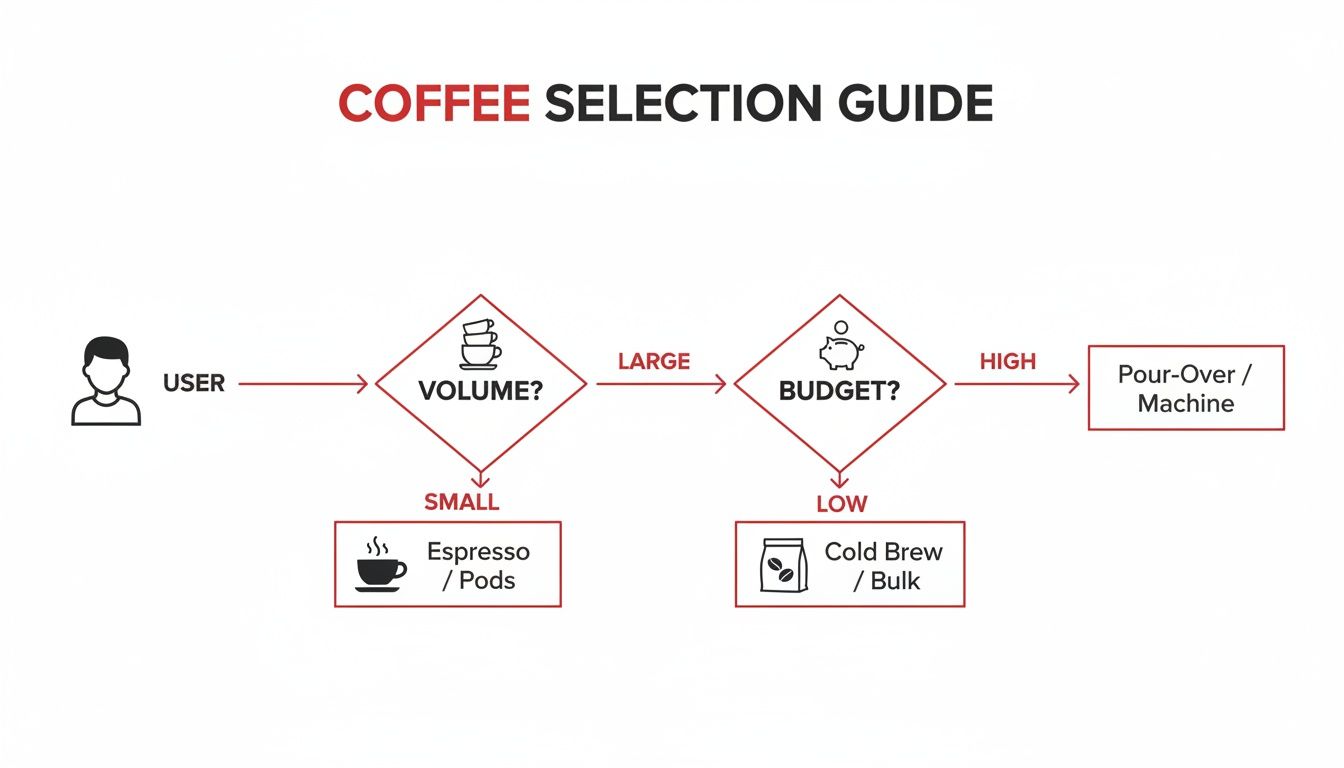
This flowchart simplifies the decision, showing how daily cup volume and budget are the two biggest factors that will narrow your search.
Coffee Machine Types At a Glance
This table compares the main contenders side-by-side. It’s a simple way to see which machine type aligns with your priorities for quality, ease of use, and upkeep.
| Machine Type | Best For | Typical Coffee Quality | Ease of Use | Maintenance Level |
|---|---|---|---|---|
| Bean-to-Cup | Busy offices, hotels, and self-service areas. | Very Good | Simple push-button | Medium (Automated cycles) |
| Traditional Espresso | Artisan cafés & restaurants where quality is paramount. | Exceptional | High skill needed | High (Daily deep cleaning) |
| Filter Coffee | Conferences, canteens, and meeting rooms. | Good & Consistent | Very Simple | Low (Simple daily clean) |
| Instant Coffee | High-traffic areas where speed is everything. | Basic | Effortless | Very Low (Occasional refill) |
As you can see, there's a clear trade-off between control and convenience. Now, let’s get into the specifics of each one.
Bean-to-Cup Machines
For places where convenience and consistency are top priorities, bean-to-cup machines are the heroes. They handle the entire process at the touch of a button: grinding the beans, tamping the grounds, brewing the espresso, and even frothing milk.
Their ease of use makes them perfect for busy offices, hotel breakfast bars, and restaurants where staff are not trained baristas. A solid workhorse like the Jura JX6 Bean-to-Cup machine delivers great coffee every time with zero fuss.
Traditional Espresso Machines
When you picture a barista pulling the perfect shot in a classic Italian café, you are thinking of a traditional espresso machine. These are hands-on machines that require skill and training but offer ultimate control over every variable in the coffee-making process.
This is the right choice for any business where coffee quality is a core part of the brand and you have trained baristas on staff. It's not just about making incredible coffee; it’s about the theatre of it all.
Filter Coffee Machines
Filter coffee machines, or batch brewers, are workhorses for producing large volumes of black coffee quickly and affordably. Simply add ground coffee and water, then press start. The machine brews a large pot that can be kept warm on a hotplate or in an insulated flask.
This makes them a brilliant choice for meeting rooms, conference centres, and offices where many people need coffee at once. While you won’t be making lattes, they deliver a smooth, consistent brew with almost no effort.
Instant Coffee Machines
When it comes to pure speed, nothing beats an instant coffee machine. These machines use soluble coffee granules to deliver a hot drink in seconds. They require very little cleaning and are built to serve a huge volume of people quickly.
You'll find them in high-traffic areas where speed is the only thing that matters, such as canteens and busy waiting rooms. The quality won't rival a fresh-bean machine, but modern systems produce a surprisingly decent cup.
Commercial vs Domestic Machines: What Is the Real Difference?
A question we hear all the time is, "Can't I just use a high-end domestic machine in my small café?" While the price tag is tempting, commercial and domestic machines are built for entirely different purposes.
The core difference is the duty cycle. A domestic machine is engineered to make maybe 5-10 coffees a day. A commercial machine is a workhorse built to handle hundreds of cups daily without breaking a sweat. It’s like comparing a family car to a lorry; only one is designed for heavy-duty, all-day work.
Built to Last Under Pressure
The biggest distinction is the build quality. A commercial machine uses robust, heavy-duty components designed for a long service life. Internal parts like the boiler and pump are made from high-grade metals like brass and stainless steel that handle constant heat and pressure.
Even premium domestic machines rely on more plastic components. Putting one in a commercial setting is a recipe for disaster. It would be like asking a weekend cyclist to compete in the Tour de France; the equipment isn't built for that level of sustained punishment and would fail quickly.
Real-World Scenario: A new coffee kiosk uses a top-of-the-range domestic machine to save money. During the morning rush, they get an order for 40 lattes. The tiny boiler can’t keep up, the plastic parts start to wear, and by day three, it grinds to a halt. The result is lost sales and angry customers.
Commercial-Grade Features That Matter
Beyond the tough exterior, commercial machines have specific features that are essential for a business. Understanding these makes it clear why a proper commercial unit is a vital investment.
- Larger Boilers: Commercial machines have large boilers, allowing them to produce continuous steam for frothing milk while maintaining a stable brew temperature for back-to-back drinks.
- Direct Water Connection: Almost all commercial units are plumbed directly into the mains water supply. This eliminates the disruptive job of refilling a water tank—a crucial time-saver during a busy service. The powerful Jura GIGA X3 Gen II Professional has this option to ensure it never runs dry.
- Essential Certifications: In the UK, commercial equipment must meet specific safety standards. WRAS (Water Regulations Advisory Scheme) approval is a key one, ensuring a machine is safe to connect to the public water supply. Domestic machines do not have these certifications.
According to the British Coffee Association, the UK coffee shop market is a multi-billion pound industry. With out-of-home coffee consumption climbing, reliable, high-volume equipment is a necessity. A well-run operation also needs the right commercial kitchen accessories to stay efficient. Choosing a commercial machine is an investment in reliability that protects your business from costly downtime.
Diving Into the Details: Key Features You Shouldn't Ignore
Once you've settled on the right type of coffee machine, it's time to look at the details that make a real difference to your daily coffee. Understanding a few key features is crucial when learning how to choose a coffee machine that performs well and lasts for years.
These are the details that directly impact taste, speed, and reliability.
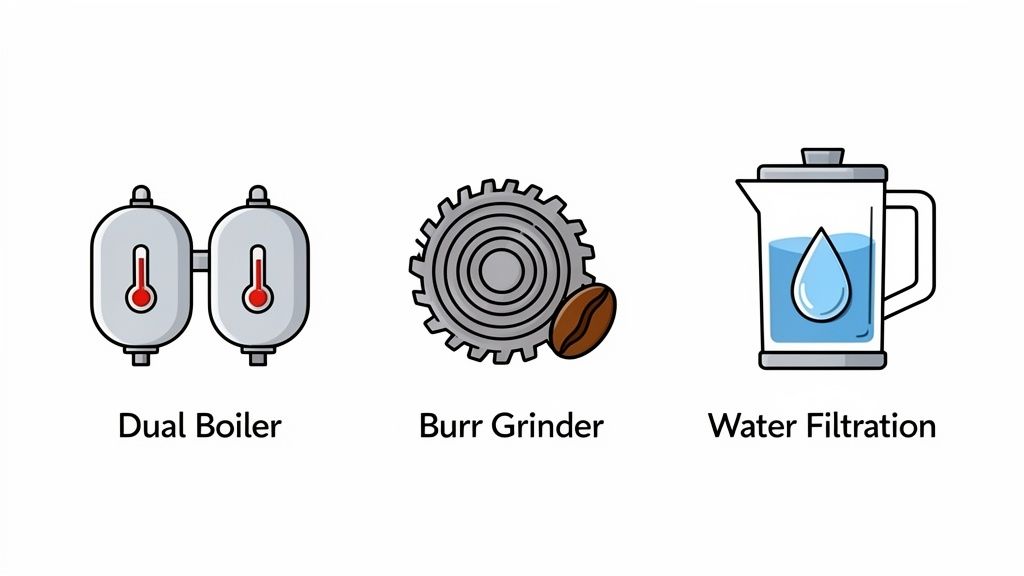
Let's demystify the technical jargon and break down how each component affects the coffee in your cup.
The Heart of the Machine: Boilers and Heating Systems
The boiler is the engine of an espresso machine, responsible for heating water for brewing and creating steam for milk. Its design affects the machine's ability to handle back-to-back orders without losing temperature, which is vital for consistent flavour.
You’ll generally find two main types in commercial-grade machines:
- Heat Exchanger: This system uses one large boiler to create steam. A separate tube runs through it, flash-heating fresh water on its way to the group head. It's a cost-effective design that allows you to brew and steam at the same time.
- Dual Boiler: This setup has two separate boilers: one for brewing at a precise temperature (around 93°C) and another, hotter one purely for steam. This offers the ultimate temperature stability, perfect for high-volume environments.
Picture this: In a busy café, a dual boiler machine lets a barista pull a perfect espresso shot from one boiler while simultaneously steaming milk for a latte using the other. This parallel workflow keeps queues moving without compromising on quality.
For a busy commercial setting, a dual boiler machine is the gold standard for performance under pressure.
The Grinder: Why It Matters More Than You Think
You can have the most expensive espresso machine in the world, but if you pair it with a poor-quality grinder, your coffee will be disappointing. A great grinder is the unsung hero of any coffee setup.
The most important feature is the grinding mechanism. Blade grinders smash beans into inconsistent pieces, making it impossible to extract flavour evenly. This leads to a brew that's both bitter and weak.
Burr grinders use two revolving surfaces (the burrs) to crush beans into a uniform size. That consistency is the secret to a balanced, flavourful extraction. For any serious coffee setup, a burr grinder is non-negotiable. If your machine doesn't have one built-in, you will need a high-quality standalone model like the Eureka Mignon Specialita Coffee Grinder.
Water Connection and Filtration
How your machine gets its water impacts both daily workflow and long-term health.
- Tank-Fed Machines: These have a removable reservoir that you fill by hand. They're great for home use but the constant refilling becomes a pain in a busy environment.
- Plumbed-In Machines: These connect directly to your mains water supply, giving you an endless source of water. This is the standard for commercial machines as it eliminates downtime.
Regardless of the connection, water filtration is essential in the UK. Most of the country has hard water, which is high in minerals that form limescale when heated. Limescale is the number one enemy of coffee machines, clogging pipes and wrecking heating elements.
Investing in a proper water filtration system is a necessity. It protects your machine and makes your coffee taste better, as filtered water allows the delicate flavour notes of the beans to shine through.
Understanding the Total Cost of Ownership
When you’re learning how to choose a coffee machine, it’s easy to focus on the sticker price. But a smart purchase means looking at the bigger picture: the total cost of ownership over the machine's life.
This includes all ongoing expenses, from energy bills to daily consumables. Factoring these in from the start helps you build a realistic budget and avoid financial surprises.
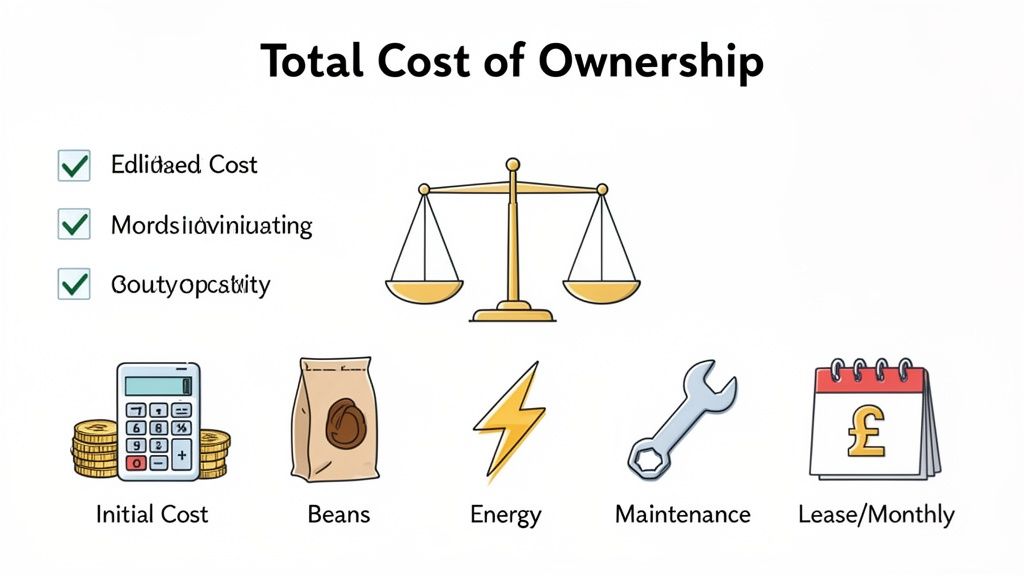
Breaking Down the Ongoing Costs
The day-to-day expenses are often underestimated. A commercial machine will impact your utility bills and needs a steady stream of supplies to keep running.
Here are the key running costs to budget for:
- Energy and Water: A powerful machine with a large boiler will use a fair amount of electricity. A plumbed-in model will also increase your water usage, so factor these into your utility forecasts.
- Coffee Beans and Consumables: This is your biggest variable cost. You’ll need a consistent supply of quality coffee beans, milk, sugar, and cups. Calculating your cost-per-cup is essential business planning.
- Cleaning Supplies: Regular cleaning is non-negotiable for hygiene and machine health. You'll need daily cleaning tablets, descalers, and milk line cleaners.
- Water Filters: Water filter cartridges need replacing regularly, typically every few months. Forgetting this can lead to expensive repairs, so it’s worth investing in quality filters like the Jura CLARIS Pro Blue to protect your machine.
Planning for Maintenance and Repairs
Even the most reliable machines need servicing. It's crucial to set aside a budget for routine maintenance and potential repairs. An annual service by a qualified technician can prevent major breakdowns and add years to your equipment's life.
Proactive care is always cheaper than reactive repairs.
To Buy or to Lease? A Financial Comparison
For many businesses, the high upfront cost of a commercial machine can be a barrier. This is where leasing becomes an attractive alternative, turning a large capital expense into a manageable operating cost.
Leasing makes premium equipment accessible without a huge initial investment. It offers predictable monthly payments that often include installation, regular servicing, and breakdown cover, giving you peace of mind.
Buying outright gives you full ownership and is often cheaper in the long run, but you are responsible for all maintenance and repair costs. Leasing provides a complete service package for a fixed monthly fee, making it easier to budget and ensuring your machine is always in top working order.
What Happens After It's Delivered? Installation, Training, and Support
Making the final decision is a huge step, but what happens after delivery is just as critical. When learning how to choose a coffee machine, smart buyers look beyond the price to the entire ownership experience. A commercial machine is a long-term investment, and the right supplier offers a partnership, not just a product.
Choosing a reputable supplier like ADS Coffee Supplies means you're buying into a complete support system. It’s the difference between finding a pallet on your doorstep and having a team ready to help you get the best from your new equipment. This aftercare turns a good machine into a fantastic business asset.
The Value of Professional Installation and Training
While some smaller machines are simple plug-and-play models, commercial units benefit hugely from professional installation. An expert technician will ensure your machine is set up correctly, connected safely, and calibrated for peak performance from the first cup.
On-site barista training is also invaluable, helping your team to:
- Master the workflow for speed and efficiency during busy periods.
- Learn how to dial in the grinder for consistently delicious espresso.
- Perfect milk steaming techniques for flawless lattes and cappuccinos.
Investing in training directly impacts your coffee quality and customer satisfaction. A well-trained team can unlock the full potential of a great machine, ensuring every coffee you serve is consistently excellent.
Warranty, Spares and Ongoing Support
A solid warranty provides peace of mind, but the support behind it is what really counts. A dedicated supplier can diagnose problems over the phone and arrange solutions quickly, minimising any business downtime.
Equally important is the easy availability of spare parts and consumables. Running out of coffee beans or cleaning supplies isn't an option for a commercial operation. Look for a supplier who offers next-day delivery – it's a lifeline that ensures your business never grinds to a halt.
If you're ready to find the perfect machine with the backup to match, browse our curated coffee machine collection or get in touch with our team for personalised advice.
Your Coffee Machine Questions Answered
We get many questions from people trying to choose the perfect coffee machine. Here are straight-talking answers to the most common queries.
How Much Should I Spend on a Coffee Machine?
It all comes down to what you need it to do. For making great coffee at home, a solid entry-level espresso or bean-to-cup machine will cost between £300 and £700. This gets you reliable performance without features you'll never use.
For a commercial space like a café, restaurant, or busy office, you should budget £2,000 to £10,000+. This reflects the commercial-grade build quality, larger capacity, and certifications needed to handle hundreds of drinks a day.
What Maintenance Does a Coffee Machine Need?
Every coffee machine needs regular cleaning to produce great coffee and ensure a long life. The main jobs can be broken down into three routines:
- Daily: A quick wipe-down of the steam wand, flushing the group head, and emptying the drip tray. This takes just a few minutes.
- Weekly: A deeper clean using tablets or powder to backflush the system, removing built-up coffee oils that can make your coffee taste bitter.
- Periodically: You will need to descale the machine to remove limescale and replace the water filter cartridge every few months.
Neglecting regular cleaning is the single biggest cause of machine breakdowns. A simple 5-minute daily routine will protect your investment and keep your coffee tasting its best.
Can I Use Any Coffee Beans in My Machine?
While you technically can, using freshly roasted, high-quality beans makes the biggest difference to the flavour in your cup. Supermarket beans are often roasted months ago and can be very oily, which can clog the internal grinder in a bean-to-cup machine.
For the best results, always look for beans with a recent roast date on the bag. This guarantees you’ll get the full, vibrant flavour the coffee has to offer.
Ready to find the perfect machine? The expert team at ADS Coffee Supplies is here to help you navigate the options and provide personalised advice.
Explore our full range of commercial and domestic coffee machines today!


