

A bean to cup coffee machine commercial system grinds and brews fresh coffee at the touch of a button. Every cup is served at the right temperature with optimal extraction, delivering consistent flavour, minimal waste and a lower cost per drink. This makes it ideal for busy offices, cafés and event catering. In this guide, you’ll learn how these machines work, which features matter, and how to budget and maintain them.
Ready to find the ideal commercial bean-to-cup coffee solution? Enquire now with Allied Drinks Systems for expert guidance and tailored quotes.
Why Choose Bean To Cup Coffee Machine Commercial Setups
- On-Demand Freshness: One-touch grinding and brewing for each cup.
- User Convenience: Intuitive touchscreen menus and self-cleaning cycles.
- Cost Efficiency: More economical than pods or capsules.
- Scalable Performance: Can produce 200 cups daily without a hiccup.
In a busy office or café, coffee service must match demand even without a full-time barista. Bean to cup machines handle everything, from bean storage to milk frothing, freeing up staff and keeping queues moving.
“Commercial bean-to-cup setups are the go-to choice for flavour consistency and operational savings,” notes industry veterans.
UK Commercial Bean To Cup Market Growth
Market research shows steady growth in UK demand for commercial bean-to-cup machines. According to the Europe Bean-To-Cup Coffee Machines Market Report, the market is set to surpass USD 1.2 billion by 2035. The British Coffee Association also reports that UK coffee shops brew over 4 billion cups annually.
| Year | Market Size (USD million) | CAGR |
|---|---|---|
| 2024 | 699.77 | 5.12% |
| 2025 | 735.60 | 5.12% |
| 2035 | 1,211.32 | 5.12% |
These figures underline the rising appetite for fresh-bean solutions across the UK.
Guide Roadmap
In the following sections, you’ll discover:
- How a bean to cup coffee machine commercial system works.
- Side-by-side comparisons of capacity, grinder options and size.
- Cost breakdown, ROI calculations and leasing vs buying.
- Maintenance essentials for smooth operation.
- Real-world use cases and a final buying checklist.
How Bean to Cup Machines Function
Every commercial setup starts with whole beans in an airtight hopper. This locks in flavour until grinding begins. When you hit “start,” the burr grinder turns beans into a uniform texture.
The brewing unit then pushes water at around 9 bars of pressure through the coffee puck in under 30 seconds. The result is a rich crema and café-quality espresso.
For milk-based drinks, an automatic frother or steam wand heats water to 90 °C and whips milk into silky microfoam. You get lattes and cappuccinos without barista training.
Bean Storage and Grinding
Most commercial machines hold around 500 g of beans in the hopper. A seal and gravity feed deliver beans into a burr grinder for consistent particle size.
- Uniform grounds ensure even extraction.
- Adjustable grind settings suit different beans and roasts.
- Sensors prevent overheating to preserve flavour.
"Grinding fresh beans unlocks maximum flavour," says barista experts.
Heating and Extraction
Water is heated via a thermoblock or boiler. A thermoblock heats water in about 5 seconds, so there’s minimal waiting.
Brewing involves three stages:
- Pre-infusion wets the coffee for even extraction.
- Full-pressure water at 9 bars draws out oils and aromas.
- Automatic puck ejection clears spent grounds.
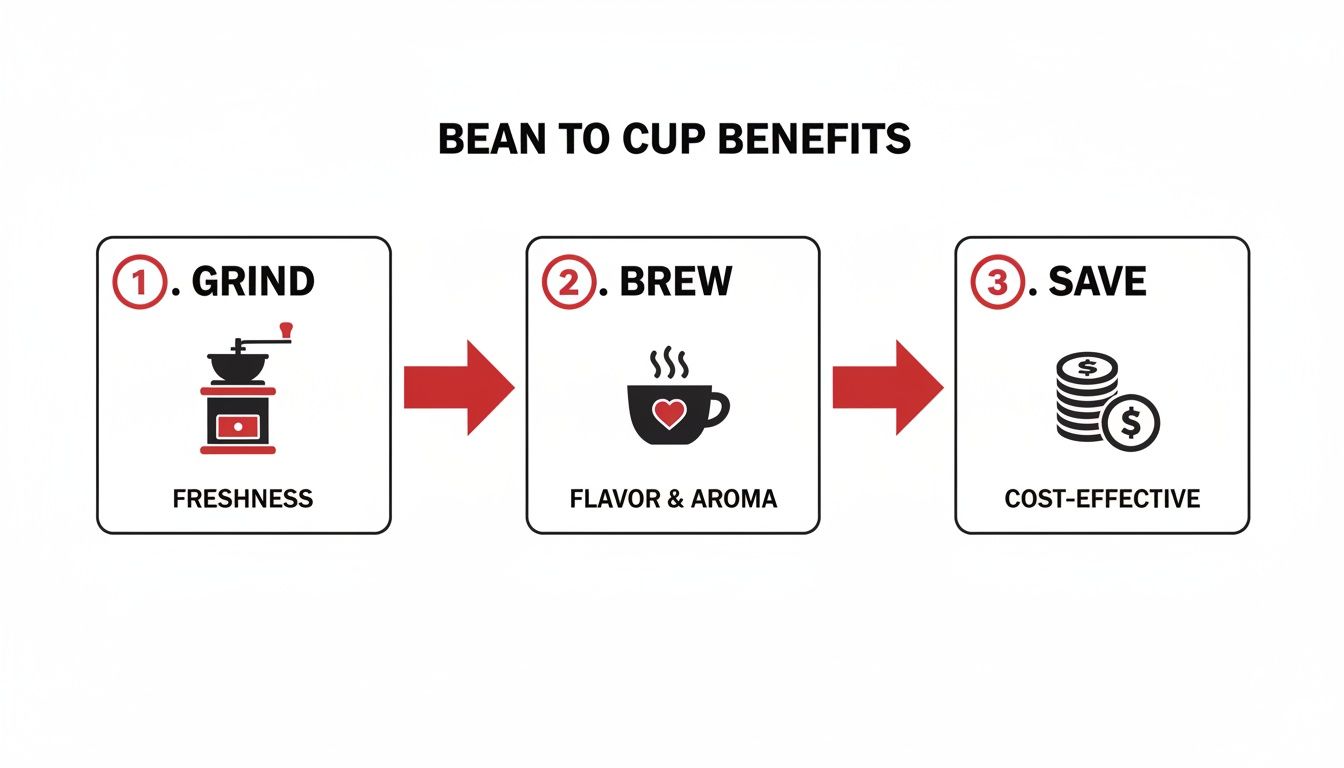
This infographic shows grinding, brewing and cost efficiency phases that deliver consistent flavour and smooth operations.
Milk Frothing and Cleaning
Milk systems include manual steam wands and automatic frothers:
- Steam Wand: Manual control for latte art; regular cleaning needed.
- Auto Frother: One-touch steaming and self-clean cycle; ideal for high volume.
Built-in cleaning routines rinse the brew unit after each cycle. Descaling keeps limescale at bay and ensures peak performance.
- Back-flush daily to maintain flavour purity.
- Replace water filters every 2–3 months.
For detailed specs and pricing, see the Jura JX6 Bean to Cup Coffee Machine Pianoblack on ADS Coffee Supplies.
By understanding these inner workings, you’ll be ready to choose and fine-tune the right machine for your venue.
Evaluate Key Features and Specifications
Choosing the right bean to cup coffee machine commercial setup means matching specs to your service needs. Here’s what to consider:
Capacity and Throughput
- Cups Per Cycle: Entry-level 20–30; high-end 50+
- Hourly Throughput: 50–150 cups/hr
- Brew Time: 20–30 seconds per drink
Grinder Types and Brew Time
Burr grinders ensure uniform particle size, which leads to even extraction and better flavour. Blade grinders are inconsistent and can overheat beans.
- Burr Grinder: Cool operation, precise cut.
- Blade Grinder: Less uniform, prone to heat build-up.
Adjust grind size to balance strength and flow rate.
Specification Comparison
| Specification | Entry-Level Model | Mid-Range Model | High-End Model |
|---|---|---|---|
| Cups Per Cycle | 20–30 | 30–40 | 50+ |
| Hourly Throughput | 50 cups/hr | 100 cups/hr | 150 cups/hr |
| Brew Time Per Drink | ~30 seconds | ~25 seconds | ~20 seconds |
| Grinder Type | Standard Burr | Precision Burr | High-Resolution Burr |
| Milk System | Steam Wand | Auto Frother | Dual Auto Frothers |
| Energy Rating | A | A+ | A++ |
| IoT Connectivity | No | Optional | Yes |
For high-end performance, see the Eversys Enigma 2MS Classic Fresh Milk Bean to Cup Coffee Machine.
Milk Systems and Filtration
- Steam Wand: Manual microfoam; latte art capable.
- Auto Frother: Consistent foam; minimal staff time.
- Under-Sink Filter: Plumbed, low maintenance.
- On-Tank Filter: Quick swaps in the reservoir.
Footprint and Energy
- Dimensions (W×D×H): Check your counter space.
- Energy Rating: A++ models can save ~£100/year.
- IoT Connectivity: Remote alerts and analytics.
Installation and Water
- Test water hardness with water hardness test strips.
- Fit a softener or filter if levels exceed guidelines.
- Ensure water pressure between 1–6 bar.
Energy Efficiency and ROI
- A+ models reduce running costs by 15% (~£250/year).
- Use eco-modes during quiet periods.
- Schedule overnight shutdowns to cut idle draw.
Calculate Costs, ROI and Manage Maintenance
To assess total cost, include upfront price plus running expenses. Entry-level super-automatic machines start around £2,000, mid-range near £4,000, and top-end systems can exceed £8,000. Installation, water filtration and extras add to the initial outlay.
Running costs include:
- Coffee beans: £15–25/kg
- Cleaning tablets and filters
- Energy: £200–300 per annum
Decide between buying outright or leasing. Leasing smooths cash flow but can add around 15% over time. Buying means full ownership and potential resale.
“A clear view of total cost helps you avoid surprises and hit ROI targets.”
Price Brackets and Cost Drivers
| Tier | Machine Cost | Installation | Filter Upkeep |
|---|---|---|---|
| Basic | £2,000–£3,000 | £200 | £25/month |
| Mid-Range | £3,500–£5,000 | £250 | £30/month |
| Advanced | £6,000+ | £300 | £35/month |
Cost drivers:
- Grinder quality (burr vs blade)
- Milk system type (steam wand, auto frother)
- IoT modules for remote monitoring
Water filters typically replace every 2–4 months. UK models built to BEIS standards use around 20% less electricity, saving roughly £500 per machine annually. See the Europe Bean-To-Cup Coffee Machines Market Report for full research.
Managing Lease Versus Purchase
Plan costs over a 4–5 year cycle to compare leasing and buying. Leasing often includes service cover, protecting you from unexpected repair bills. Buying gives full control over customisation and resale value.
For leasing options, refer to the ADS Coffee Supplies leasing page.
Maintenance and Servicing
Regular maintenance minimises downtime and extends machine life. Staff can handle daily and weekly tasks, but certified engineers should perform deeper servicing every 6–12 months.
Routine tasks:
- Clear and rinse the brew group daily.
- Back-flush weekly with cleaning tablets.
- Replace water filters quarterly.
- Descale based on local water hardness.
- Inspect seals and hoses every six months.
Use JURA Decalcifying 2-Phase Tablets 36 pack for thorough descaling.
Expert maintenance cuts breakdowns by 30% and extends machine life.
ROI Modeling and Payback
Calculate ROI by comparing savings on energy and beans against net cost. For example, if savings total £900 annually on a £6,000 machine, the payback period is just under 7 years. Many businesses aim for 18–24 months.
Outsource to ADS engineers for predictable monthly fees or value in-house maintenance at £15/hour. Either way, a clear plan keeps service costs under control.
Match Machines to Commercial Use Cases
Choosing the right setup means matching machine strengths to your daily demands. Here are common scenarios:
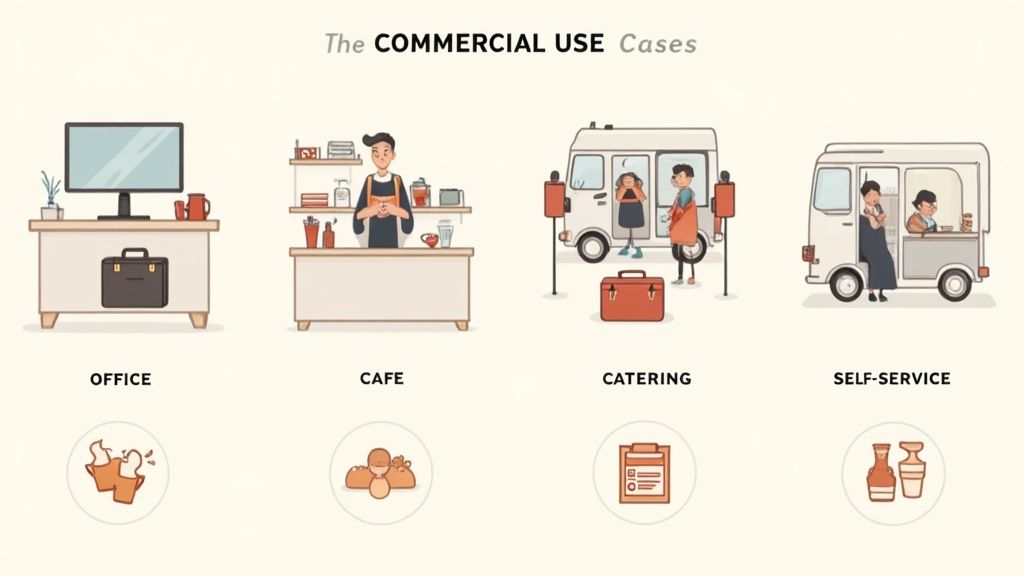
Corporate Office Environment
In a head office with 200 employees, you’ll need 120 cups per hour at peak. A slimline model with a 500 g bean hopper and auto-frother fits tight counters. Remote monitoring alerts you when beans or water run low.
Local Café Requirements
Boutique cafés need variety and speed. A mid-range machine with precision burrs and a dual milk system lets baristas switch between latte, Americano and more in seconds.
- 25 s brew cycles to keep queues moving.
- Custom grind settings for signature flavours.
- Hybrid frothing system for auto and manual latte art.
Catering Company Flexibility
On the road, a 10 L water tank and industrial grinder can serve up to 300 cups per event. The compact footprint fits neatly in vans or service trucks.
- Portable design for quick setup.
- Easy-swap filters reduce downtime.
- High-capacity hoppers mean fewer refills.
Self-Service Vending Zones
In reception lounges or kiosks, a coin-operated kiosk offering 100 cups daily keeps staffing minimal.
- Contactless payment options.
- Automated cleaning cycles.
- Large bean and waste bins.
Expert Tip: Sketch a week’s coffee volume to avoid under- or over-specifying.
For intuitive controls and solid throughput, explore the NESCAFÉ Fusion Touch Screen 30E Bean to Cup Coffee Machine.
Conclusion and Buying Checklist
You now understand how hopper size, milk system, throughput and cost shape your choice. Follow this checklist to avoid guesswork:
Buying Checklist
- Define daily brew volume with the ADS Coffee Supplies Capacity Planner.
- Select grinder and milk system on ADS Coffee Supplies.
- Confirm water quality and power needs via ADS Coffee Supplies.
- Calculate total cost of ownership using the ADS Coffee Supplies Calculator.
- Review leasing vs buying in the Leasing Guide.
- Arrange maintenance support with ADS Coffee Supplies.
With capacity, cost and use case aligned, you’re ready for your next step. A well-chosen machine cuts per-cup costs and ensures smooth service.
Next Steps
Ready to invest in the perfect bean to cup coffee machine commercial for your venue? Enquire today for personalised advice and a no-obligation quote. Enquire now with Allied Drinks Systems to get started.
FAQ
What Capacity Machine Do I Need for a Small Office?
Multiply staff by average cups per day. For example, 20 people × 3 cups = 60 cups. Aim for a machine that handles 50–100 cups per hour during peak times. Popular models include:
- Jura JX6 Bean to Cup Coffee Machine Pianoblack
- Eversys Enigma 2MS Classic Fresh Milk Bean to Cup Coffee Machine
Should I Lease or Buy My Bean To Cup Coffee Machine Commercial?
Buying outright is a larger upfront investment but adds an asset. Leasing smooths costs and typically includes servicing and upgrades. For details, see the ADS Coffee Supplies leasing page.
Leasing can reduce unexpected repair bills and offer timely upgrades.
Maintenance Schedule
Routine care keeps performance at its best:
Daily:
- Clean brew groups.
- Wipe steam wands.
Weekly:
- Back-flush with cleaning tablets.
Quarterly:
- Replace water filters.
Use quality detergents, log all service dates and maintain filter changes to honour warranties.
Cost Planning
Budget beyond the machine for:
- Water filter replacements at £15–30 monthly.
- Cleaning detergents at £10–20 monthly.
- Service contracts around £200–300 annually.
- Energy usage roughly £200–300 per year.
Check your water hardness with our water hardness test strips to minimise scale and service calls.
For any further questions or to discuss your bean to cup coffee machine commercial needs, contact the Allied Drinks Systems sales team.


