Choosing the best coffee beans for bean to cup machines ensures a rich, balanced flavour, reliable crema and smooth grinder operation. These beans, available from ADS Coffee Supplies, should be medium-roast with moderate oil content and packaged in valve bags for freshness.
For a consistently great cup—and minimal machine maintenance—focus on origin, roast date and grind uniformity. Fresh, medium-roast beans from ADS Coffee Supplies deliver café-quality results every time.
Key Factors When Choosing Best Coffee Beans for Bean to Cup Machines
It’s not only about taste. The beans you pick influence machine health, cleaning frequency and consistency in every cup.
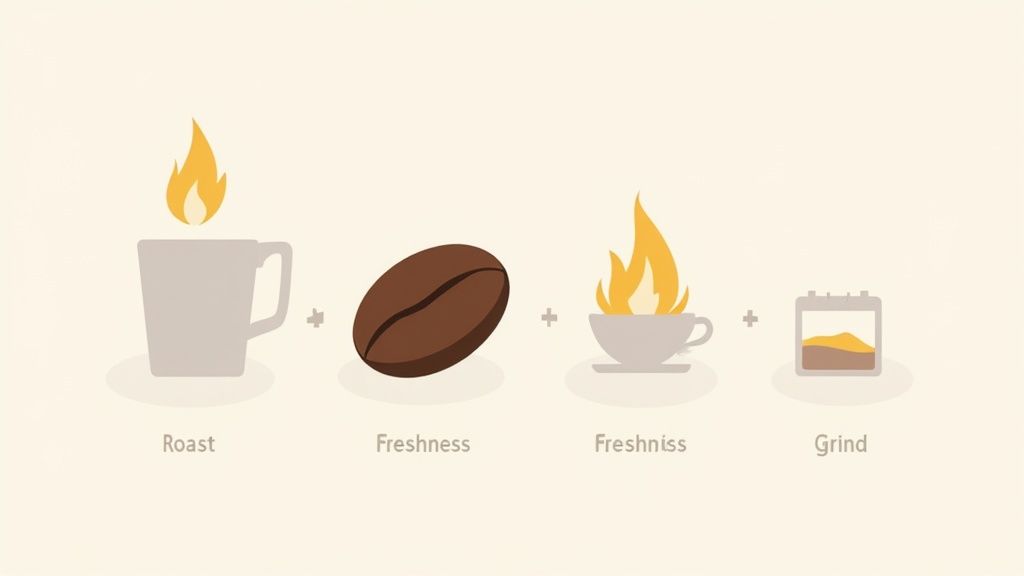
Here are the five essentials to check:
-
Roast Level
A medium roast balances bright acidity with a rounded body—without excess surface oil. -
Bean Origin
Single origins from Brazil or Colombia offer uniform hardness and reliable flavour notes. -
Oil Content
Low to moderate oil levels mean fewer burr jams and less downtime. -
Freshness & Packaging
Valve bags keep oxygen out; roast-date labels help you rotate stock before it goes stale. -
Grind Size
Even particle distribution ensures stable pressure and steady extraction.
Explore our recommended ranges on ADS Coffee Supplies and take your bean-to-cup game to the next level.
Best Bean Characteristics At A Glance
| Characteristic | Recommended Option | Benefit |
|---|---|---|
| Roast Level | Medium-Roast | Balanced acidity and lush crema |
| Origin | Brazilian or Colombian | Predictable density and flavour consistency |
| Oil Content | Low–Moderate | Smooth burr action and fewer blockages |
| Freshness & Packaging | Valve Bag with Roast Date | Extended aroma retention and clear stock control |
Why These Factors Matter
Roast level forms the coffee’s backbone, shaping acidity and bean hardness. Oil content then influences crema and burr performance. According to the International Coffee Organization, optimal oil levels support stable extraction and protect grinder longevity.
Packaging isn’t an afterthought. One-way valves and clear roast dates lock in peak aroma until you brew.
Pro tip: Always check the roast date on the bag—it’s the best way to track freshness and plan your next order.
Next Selection Steps
- Pin down your daily brew volume—home use or office service?
- Opt for medium-roast beans from ADS Coffee Supplies.
- Choose valve-sealed bags with visible roast-date labels.
- Fine-tune grind settings to match each bean’s hardness.
Understanding Key Concepts
Bean-to-cup machines grind, dose and extract automatically at the push of a button. Uniform bean size keeps everything running smoothly; erratic fragments can cause clogs or uneven water flow.
Grinding Uniformity
Consistent particle size underpins even extraction pressure.
- Roast level variations can soften beans and cause clumping.
- Firmer beans demand more burr force, testing some grinders.
- Surface oils may gum up dosing systems over time.
70% of users report better extraction with medium-roast single-origin beans, yielding richer crema and balanced acidity. Read more on Balance Coffee consumption statistics.
How Variables Interact
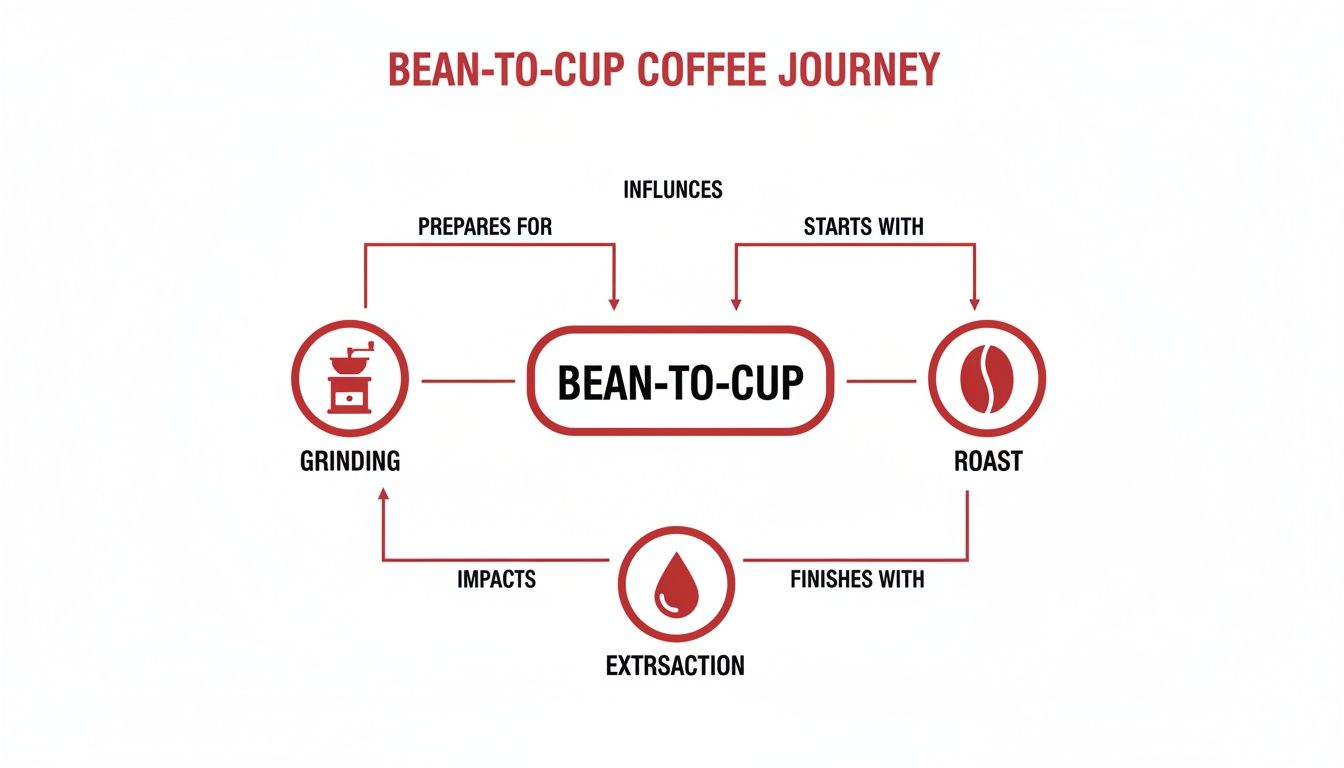
Every step links to the next. Roast influences oil, which affects dosing consistency. Bean density and grinder speed determine particle distribution.
Typical benefits of a medium roast with moderate oil:
- Reliable dosing
- Steady brewing pressure
- Balanced flavour notes
Roast Level And Oil Content
Adjusting roast depth and understanding surface oils transform machine performance and shot consistency.
Light Roast Characteristics
Light roasts are hard and show little surface oil.
- Hardness: high—use a fine burr setting
- Oil Level: minimal—fewer clog risks
- Extraction: quicker flow with crisp acidity
- Care Tip: set one notch finer than medium grind
Light roasts reward precision with clear acidity and delicate flavour.
Medium Roast Sweet Spot
Medium roasts balance brightness and body, with moderate oil.
- Acidity: bright without harshness
- Body: medium weight suitable for most drinks
- Oil Content: under 1.5% surface oil
- Maintenance: clean every two weeks to prevent buildup
Dark Roast Trade-Offs
Dark roasts deliver robust, smoky notes but come with more oil.
- Flavour: deep chocolate and smoky
- Oil Level: often above 2% surface oil
- Grind: softer beans can clump
- Maintenance: wipe burrs weekly; deep-clean monthly
Identifying Roast Level When Shopping
- Colour Check: tan to light brown for light; chestnut for medium; glossy black for dark.
- Aroma Test: fruity/grassy (light), caramel/nutty (medium), smoky (dark).
- Surface Shine: none (light), gentle glint (medium), full gloss (dark).
- Roast Date: fresher beans smell and grind more consistently.
Explore our medium-roast selection at ADS Coffee Supplies.
Blend Vs Single Origin
Blends and single origins both have merits for bean-to-cup machines. Blends provide consistency and fewer maintenance checks, while single origins highlight regional flavours.
Blend Advantages
- High consistency shot after shot
- Stable crema texture
- Reduced blockages from balanced oil levels
- Cost-effective for busy settings
- Simplified upkeep
Single Origin Highlights
- Transparent flavour reflecting terroir
- Aromatic layers from floral to fruity
- Direct support for growers
- Seasonal variety
“Single origins offer a window into a coffee’s home, revealing soil and climate through taste.”
Blend Versus Single Origin Beans
| Feature | Blend | Single Origin |
|---|---|---|
| Flavour Consistency | High | Variable |
| Crema Quality | Reliable | Delicate |
| Maintenance Frequency | Lower | Higher |
| Batch Freshness | Standardised | Ultra-fresh |
| Price Range | Economical | Premium |
Recommended ADS Ranges
- Blend Master Series: Brazilian sweetness meets Colombian depth.
- House Espresso Blend: Central American beans with a darker roast edge.
- Ethiopian Yirgacheffe (single origin): bright florals and citrus lift.
- Colombian Supremo (single origin): warm, chocolatey rounds.
All come in 250 g and 1 kg valve bags to lock in freshness. Explore more at ADS Coffee Supplies.
Practical Examples
- Office breaks: blend for 90% uptime and uniform taste.
- Home tasting: single origins unlock berry, citrus and chocolate notes.
- Café service: blends for reliability; single origins for seasonal menus.
- Vending machines: low-oil blends to prevent hopper jams.
Packaging And Storage Tips
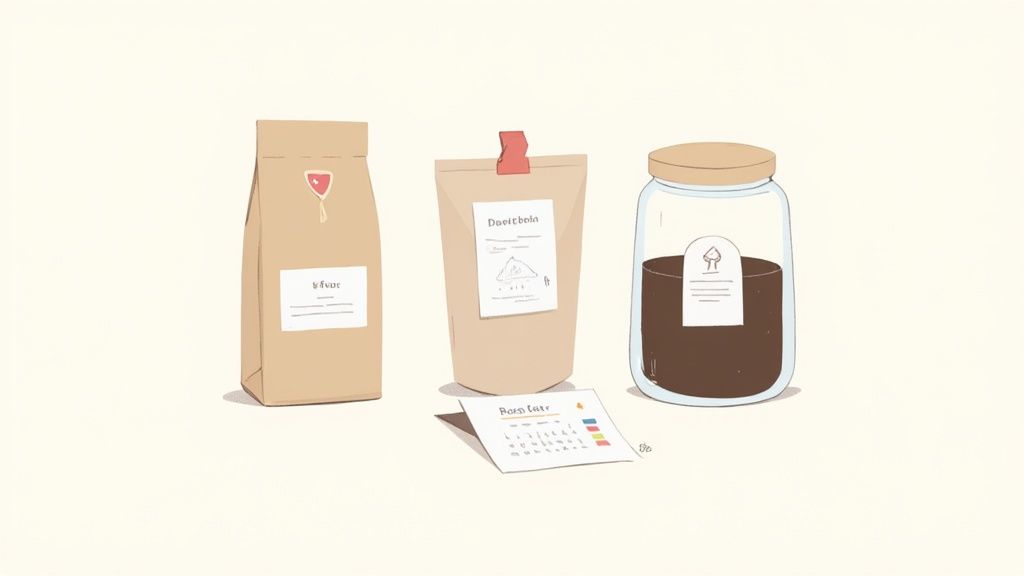
Valve bags and nitrogen-flushed pouches guard aroma by keeping out oxygen, moisture and light. Always check roast dates and brew within 2–4 weeks for peak flavour.
- Bags with one-way valves stop oxygen ingress
- Nitrogen-flushed packs preserve volatile aromas
- Roast-date labels give clear stock control
- Resealable zips ensure airtight storage
Home And Office Storage Best Practice
- Use opaque, airtight canisters below 20 °C
- Rotate stock using FIFO (first in, first out)
- Mark jars with roast dates and bean varieties
- Avoid the fridge, freezer or damp areas
Subscription And Reorder Reminders
Set up auto-orders with ADS Coffee Supplies to match your brew rhythm and avoid stale beans. Pause or tweak orders for holidays and benefit from subscription discounts within a £10–£20 / kg budget.
Troubleshooting Common Issues
Oily or stale beans cause jams, weak crema and uneven shots. Follow this quick checklist:
Quick Troubleshooting Checklist
- Verify beans are under 4 weeks old.
- Inspect for excess gloss—too much oil coats burrs.
- Coarsen the grind one notch to reduce clumping.
- Run an empty grinder cycle to clear lodged grounds.
- Brush and vacuum burrs and dosing chamber.
- Descale if water flow slows or scale appears.
75% of grinder jams in bean-to-cup machines result from oily or aged beans—freshness is your best defence.
Fixing Weak Crema and Extraction
- Aim for a 25–30 second shot for balanced extraction
- Fine grind for quicker flow; coarser for slower
- Replace beans older than 4 weeks
If issues persist, pull a blind shot to test water pressure. Low pressure may indicate scale or pump wear.
Maintenance Tips
- Clean burrs every 500 shots with a soft brush
- Descale monthly with food-safe solution
- Wipe hopper and bean chute regularly
- Change the water filter every 3 months
Consult the ADS Coffee Supplies maintenance guide for detailed steps.
FAQ
Can I use dark roast in my bean-to-cup machine?
Yes. Dark roasts offer bold, smoky notes but require a coarser grind and more frequent cleaning to prevent burr oil buildup.
How often should I replace beans to keep them fresh?
Brew within 4 weeks of roast date. Use roast-date reminders via ADS subscriptions to stay on top of freshness.
What pack size works best for an office?
- Small office (up to 10 users): 1 kg per week
- Medium to large office (10–50 users): 5 kg bulk packs
Ready to Upgrade Your Bean-to-Cup Routine?
Stock up on the finest beans and accessories with a subscription or one-off order at ADS Coffee Supplies. Enjoy fresher cups, fewer clogs and café-quality coffee at home or in the office—every single day.