Finding the best coffee beans for espresso in the UK comes down to three things: the bean type, roast level, and freshness. For a consistently brilliant shot, a medium to dark roast is almost always the right choice. Blends mixing Arabica and Robusta are a safe bet, as they give you that balanced flavour and rich, stable crema.
If you're starting out, we suggest going with an expertly crafted espresso blend. They’re designed for consistency and those classic, crowd-pleasing flavours. At ADS Coffee Supplies, our flagship Summit Espresso Crema is the ultimate all-rounder, perfect for getting that café-quality taste at home.
What Defines the Best Coffee Beans for Espresso?
The hunt for the perfect espresso shot doesn’t start when you switch on your machine—it begins with the beans. While you can technically use any coffee bean, not all are up to the job. The intense, high-pressure brewing process amplifies every characteristic, good and bad.
This is why choosing beans roasted specifically for espresso is so important. It's the key to achieving that delicious, balanced taste you expect from a great coffee shop.
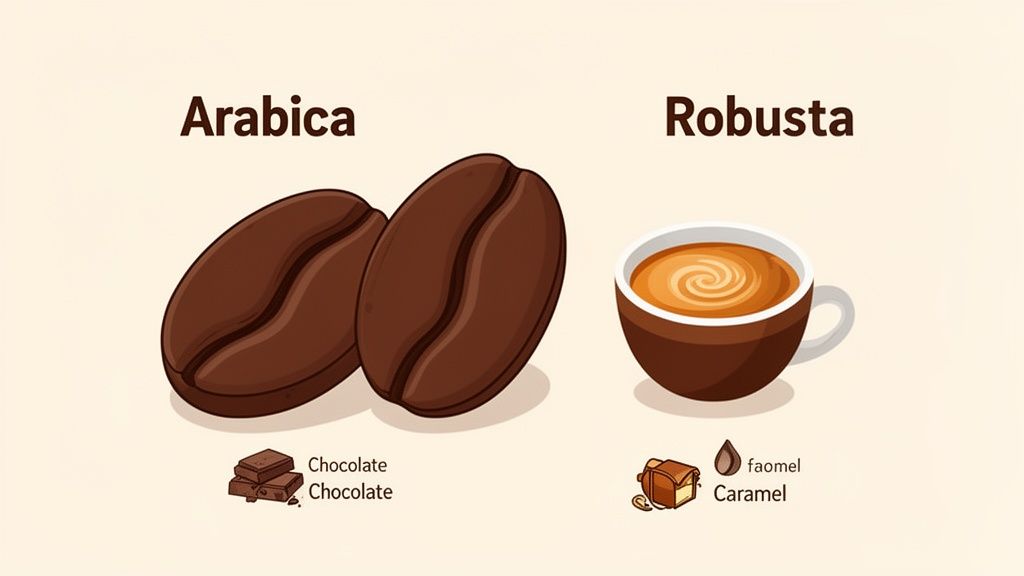
The main goal is to find beans that produce a balanced shot—one that isn't too acidic (sour) or overly bitter. When you're searching for the best coffee beans for espresso here in the UK, a few key elements work together to strike that perfect balance. To help narrow down your options, here's a quick guide to what to look for.
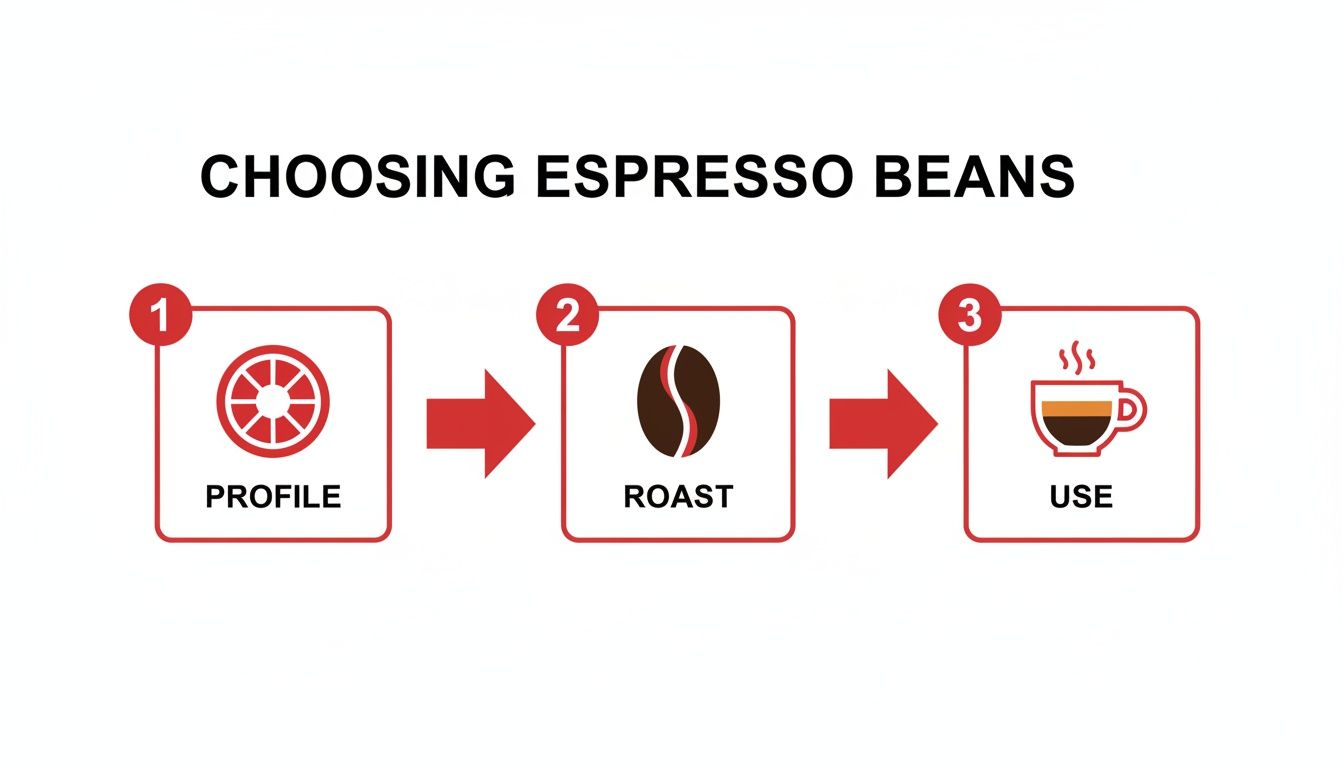
Quick Guide to Choosing Espresso Beans
| Characteristic | What to Look For | Why It Matters for Espresso |
|---|---|---|
| Roast Profile | Medium to Dark Roasts | Tames acidity and brings out deep chocolate, caramel, and nutty notes. |
| Bean Type | Blends (especially with some Robusta) | More forgiving and helps create a thick, stable crema. |
| Freshness | A recent roast date (7-21 days is ideal) | Ensures you get the full, vibrant flavour before it starts to fade. |
Ultimately, focusing on these three areas will put you on the right track to finding beans that work for your taste and your machine.
Key Characteristics to Look For
To make your search easier, just focus on these core qualities. They’re the hallmarks of a truly great espresso bean.
- Roast Profile: Medium to dark roasts are generally the way to go. This roasting style dials down acidity and caramelises the natural sugars inside the bean. The result is those deep, satisfying notes of chocolate, caramel, and nuts that we associate with a classic espresso.
- Bean Type and Blend: While a single-origin Arabica can be incredible, it can also be tricky to get right in an espresso machine. For consistency, espresso blends are far more forgiving, especially those that include a small amount of high-quality Robusta, which is the secret to a thicker, more stable crema.
- Freshness: This is non-negotiable. Always look for beans with a recent roast date. Coffee hits its flavour peak between 7 and 21 days after roasting, giving the beans enough time to de-gas while keeping all those wonderful aromatic compounds locked in.
The ideal espresso bean is one that can withstand high-pressure extraction without becoming overly bitter or sour. This is why forgiving, well-balanced blends are often a barista's first choice for consistency.
Ultimately, the best beans for you will come down to your personal taste and brewing setup. But whether you’re drinking a straight shot or using it as the base for a flat white, starting with a quality espresso blend is the most reliable way to get a superb coffee every time.
Understanding Roast Profiles for the Perfect Espresso
The roast profile is probably the single most important factor in how your espresso will taste. A roaster transforms green coffee beans from a raw ingredient into the rich, aromatic product we all love. For espresso, the roast level is even more critical because the high-pressure brewing method amplifies every characteristic.
Choosing the right roast is your first and most important step towards pulling a consistently delicious shot. While personal taste plays a part, certain roast levels are simply better suited to the demands of an espresso machine. When you're searching for the best coffee beans for espresso in the UK, understanding the roast spectrum is your greatest tool.
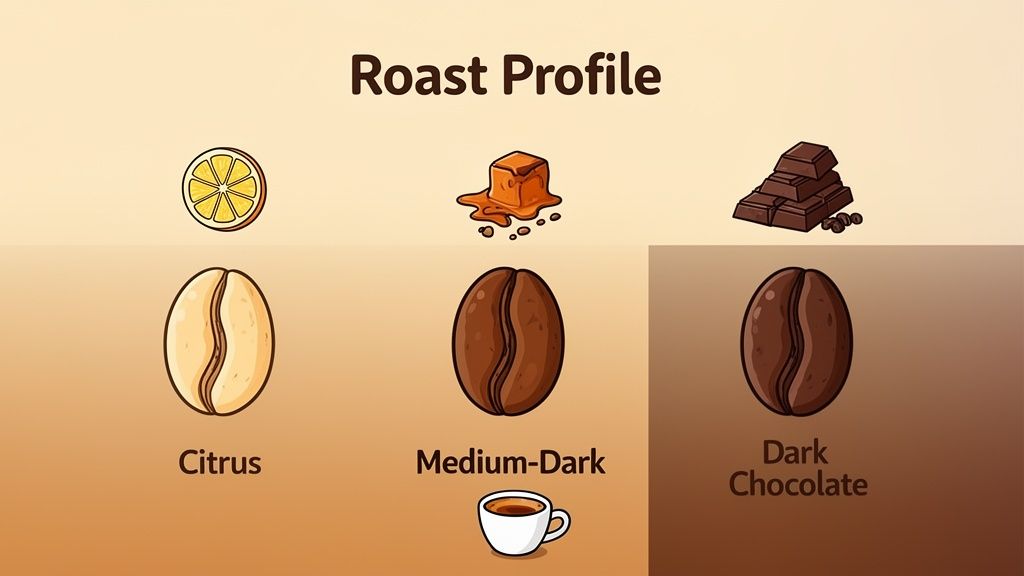
The Spectrum of Roasts: From Light to Dark
Coffee roasts exist on a continuum, with each stage unlocking different qualities from the bean. Lighter roasts preserve the bean’s delicate characteristics, while darker roasts introduce flavours from the roasting process itself.
-
Light Roasts: These beans are light brown with no visible oil. They’re known for bright, crisp acidity and delicate floral or fruity notes. However, that high acidity can easily translate to a sour espresso shot and they are very challenging to dial in correctly.
-
Medium Roasts: A popular choice for many brewing methods, medium roasts strike a balanced middle ground. They have a richer brown colour and fuller body, with acidity taking a backseat to more rounded flavours. Some can make a great modern-style espresso, but they can still be tricky for beginners.
-
Medium-Dark Roasts: This is the sweet spot for most espresso lovers. The beans are a deep, rich brown, and you might see a slight sheen of oil. This roast level mutes sharp acidity while amplifying notes of chocolate, caramel, and nuts. It creates a full-bodied, well-balanced shot that is forgiving and pairs beautifully with milk.
-
Dark Roasts: These beans are very dark and oily. The roasting process dominates the flavour, resulting in a bold, smoky taste with very low acidity. Traditional Italian-style espresso often uses dark roasts, but if taken too far, the coffee can easily taste burnt or ashy.
For a reliable and crowd-pleasing espresso, a medium-dark roast is almost always the perfect starting point. It offers the ideal balance of rich flavour, full body, and thick crema.
Why Medium to Dark Roasts Excel for Espresso
Espresso is all about balance. The intense brewing process needs a bean that can stand up to it without becoming overwhelmingly sour or bitter. Medium-dark and dark roasts are ideal because the extended roasting time develops several crucial characteristics.
First, caramelisation deepens. The natural sugars inside the bean caramelise, which mellows out bright, acidic notes and brings forward classic flavours of dark chocolate, toffee, and roasted nuts. This creates a smoother, sweeter shot.
Second, the bean's structure becomes more porous and brittle. This makes them much easier to grind finely and consistently, which is essential for proper espresso extraction. Lighter roasts are very dense and can be a struggle for many home grinders.
Finally, oils migrate to the surface. These natural oils are a key component in creating a thick, velvety crema—that beautiful reddish-brown foam on top of a well-pulled shot. For a more detailed breakdown, you can learn more about how to choose coffee beans based on roast levels in our guide.
Top 4 Best Coffee Beans For Espresso UK
We've covered the theory, now for the best bit—choosing the actual beans. This is our curated guide to some of the very best coffee beans for espresso in the UK, featuring our handpicked favourites that deliver outstanding results.
As a leading UK coffee supplier since 1993, we've tasted our fair share of espresso. These recommendations are built on years of feedback from professional baristas and home coffee lovers, focusing on blends that nail that sweet spot of flavour, consistency, and value.
1. ADS Coffee Supplies Summit Espresso Crema (Best Overall)
Our flagship Summit Espresso Crema holds the top spot for a reason. It's the quintessential espresso blend, expertly crafted to produce a full-bodied coffee with a thick, lasting crema and indulgent notes of chocolate and toffee. This medium-dark roast is incredibly forgiving, making it easy for anyone to dial in on any machine.
Its real strength is its versatility. The robust flavour profile cuts through milk beautifully, creating rich and flavourful lattes and cappuccinos. At the same time, it’s balanced enough to be enjoyed as a straight shot, delivering that classic, comforting espresso experience every single time.
2. Lavazza Super Crema (Best for Bean-to-Cup)
A smooth and creamy Italian classic that excels in bean-to-cup machines and traditional espresso setups. This medium roast offers gentle notes of honey, almonds, and dried fruit, making it a reliable and approachable choice for daily drinking.
3. Summit Fairtrade Espresso (Best Ethical Choice)
An ethical choice that delivers a rich, full-bodied shot with a satisfyingly smooth finish. This medium-dark roast features deep notes of dark chocolate and caramel, perfect for those who want great taste that also supports fair trade practices.
4. Lavazza Gran Espresso (Best for Rich Crema)
A balanced and aromatic blend with a touch of Robusta for an extra-rich crema and a lingering taste. Its medium roast profile brings out pleasant notes of toasted nuts and spice, ideal for a classic Italian-style espresso experience.
The best espresso bean for most people is one that is consistent, versatile, and forgiving. Our Summit Espresso Crema blend was designed with these three principles in mind, ensuring a fantastic cup with minimal fuss.
Picking the right beans can feel overwhelming, but starting with a proven blend takes the guesswork out of it. For even more options, check out our guide on the best places to buy coffee beans online in the UK today.
Exploring Bean Origins and Espresso Blends
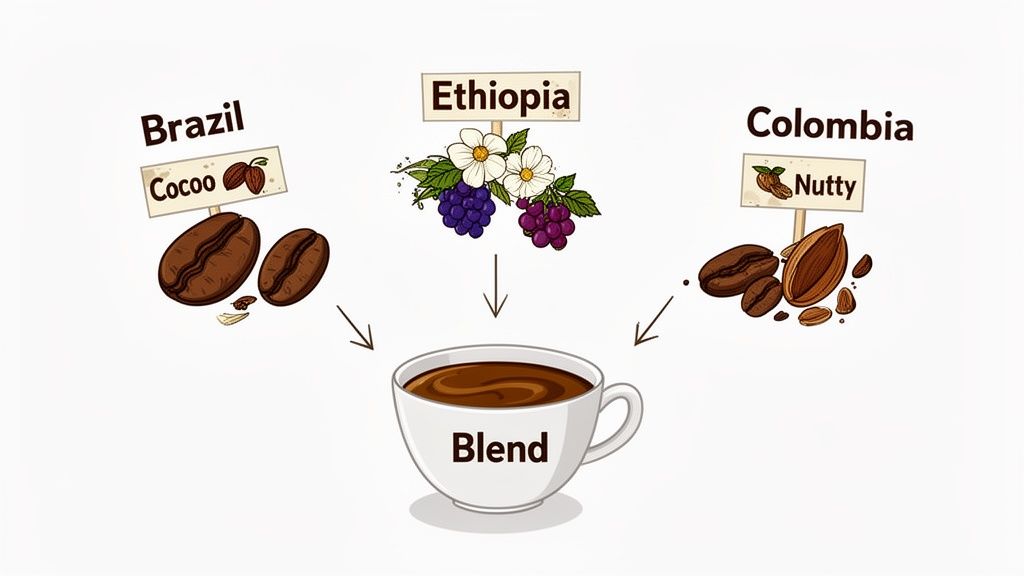
Ever wondered how coffee gets notes of chocolate, berries, or nuts? It isn’t artificial flavouring; it's the natural taste profile from where the bean was grown. The soil, altitude, and climate—what experts call terroir—all leave their unique fingerprint on the final cup.
Just like wine grapes from different regions have distinct tastes, coffee beans from across the globe offer a stunning range of flavours. Getting to grips with these origins helps you decode the story on the bag and find a profile you’ll genuinely love.
A Journey Through Coffee Origins
Coffee is grown across the "Bean Belt," but a few key regions are famous for producing beans with distinct personalities.
-
South and Central America (e.g., Brazil, Colombia): The backbone of many classic espresso blends. Beans from here are known for being balanced with comforting notes of chocolate, nuts, and caramel. They have a full body and gentle acidity, making them a perfect foundation.
-
Africa (e.g., Ethiopia, Kenya): This is where coffee gets exciting. Ethiopian beans are famous for their vibrant, floral, and tea-like qualities, often with bright fruity hits of blueberry. Kenyan coffees are prized for their sharp, wine-like acidity and rich, fruity flavours.
-
Asia (e.g., Indonesia, Vietnam): Asian beans tend to be earthy, bold, and full-bodied with very low acidity. They often bring deep, smoky, or even spicy notes. Vietnam is also a huge producer of Robusta beans, perfect for adding a thick crema and powerful kick to an espresso blend.
The Art and Science of Espresso Blending
While a single-origin coffee gives you a snapshot of a specific region, the real magic for espresso often happens in the blend. A great espresso blend isn't a random mix; it’s a carefully crafted recipe where each component has a job.
Blending is an art form that aims to create a coffee that is greater than the sum of its parts. It allows roasters to achieve a consistent, complex, and well-rounded flavour profile.
A roaster might start with a Brazilian bean for its creamy body and chocolatey base, then add an Ethiopian bean for a bright, fruity acidity. Finally, they might include a small percentage of high-quality Robusta to boost the crema and add a powerful finish. To understand more about how these two main species differ, read our detailed comparison of Arabica vs Robusta beans.
This skilful combination ensures every shot is balanced and delicious, which is why expertly crafted blends are so often the best coffee beans for espresso in the UK for home baristas and professional cafés alike.
How to Dial In Your Espresso for Maximum Flavour
Choosing the best coffee beans for espresso in the UK is the first half of the battle; learning how to brew them perfectly is the second. This process is known as ‘dialling in’, and it’s where you transform a good bean into a great shot of espresso.
Think of it like tuning an instrument—tiny adjustments make all the difference. When you get it right, you unlock the full flavour potential of your beans, avoiding those all-too-common sour (under-extracted) or bitter (over-extracted) shots.
The Core Variables: Grind, Dose, and Yield
To get started, you only need to focus on three core elements that work together. Understanding how they interact is the key to pulling consistently delicious espresso.
- Grind Size: This is simply how coarse or fine your coffee is. A finer grind slows the flow of water, while a coarser one speeds it up. This will be your main adjustment.
- Dose: This is the amount of dry coffee grounds you put in your portafilter basket, measured in grams. A consistent dose is crucial for repeatable results.
- Yield: This is the total weight of the liquid espresso in your cup, also measured in grams. The ratio of your dose to your yield has a massive impact on the final flavour.
A Step-by-Step Guide to Dialling In
Ready to pull the perfect shot? The best way is to start with a basic recipe and adjust from there. A great starting point for most espresso is a 1:2 brew ratio—for every 1 gram of coffee in, you want 2 grams of liquid espresso out.
- Start with a Dose: Weigh out 18 grams of your favourite espresso beans.
- Adjust Your Grind: Grind the beans so that when you pull the shot, you get a yield of 36 grams (your 1:2 ratio) in about 25-30 seconds.
- Taste and Adjust: Now for the important part—taste it. Is it sour? Your grind is likely too coarse. Make the grind finer. Is it bitter? Your grind is probably too fine. Make the grind coarser.
The goal is to find that ‘sweet spot’ where your espresso is balanced, with a pleasant sweetness and rich flavour. Make one small adjustment at a time until you hit it. This process highlights just how vital the right equipment is. To truly 'dial in' your espresso, selecting the right machine is paramount. For a deeper understanding of available options, it's worth consulting this comprehensive espresso machine buying guide for home baristas.
To get the most from any setup, understanding the fundamentals is key. For a deeper dive, check out our guide on the science behind perfect espresso extraction.
How to Store Your Coffee Beans for Lasting Freshness
You’ve put in the effort to find the best coffee beans for espresso in the UK, so the last thing you want is for them to go stale. Once you open that bag, the clock starts ticking. Proper storage is the final, crucial step to protect the rich aromas and complex flavours you paid for.
Think of fresh coffee beans as being vulnerable to four main enemies: oxygen, light, heat, and moisture. Each one is on a mission to rob your beans of their character, leaving them tasting flat and lifeless.
The Four Enemies of Coffee Freshness
Protecting your beans is simple once you know what you’re up against. Here’s a quick rundown of the culprits.
- Oxygen: This is coffee's number one enemy. Oxidation is the process that makes coffee taste dull and stale.
- Light: Direct sunlight and even strong kitchen lights accelerate the staling process, breaking down delicate oils and aromatic compounds.
- Heat: Warm environments speed up the chemical reactions that cause coffee to lose its vibrancy. Don't store beans near an oven or in a sunny spot.
- Moisture: Coffee beans are porous and will absorb moisture and odours from their surroundings, which can ruin the flavour.
The Golden Rules of Coffee Storage
So, what’s the best way to store those precious beans? It’s simpler than you might think. The ideal storage spot is a cool, dark, and dry place—a kitchen cupboard or a pantry is perfect.
The best practice is to keep the beans in their original bag if it has a one-way valve and a resealable zip. These bags let CO2 escape without letting oxygen in. If your bag isn’t resealable, transfer the beans to a dedicated airtight container.
The single most effective thing you can do for flavour is to buy whole beans and grind them only when you're ready to brew. Pre-ground coffee has a much larger surface area, causing it to go stale in hours, not days.
One common myth is storing coffee in the freezer. Don't do it. The freezing and thawing process creates condensation, introducing moisture. Your beans can also absorb unwanted odours from other foods. For a more detailed explanation, check out our complete guide on how to store coffee beans correctly.
Your Espresso Questions Answered
We’ve covered a lot, but you might still have a few questions. To help, we’ve put together straightforward answers to the most common queries we get about finding and using the best coffee beans for espresso in the UK.
Are Arabica or Robusta beans better for espresso?
It’s not about one being "better"—they just do different jobs. Arabica is prized for its complex, aromatic, and sweeter flavour profiles. On its own, though, it can sometimes lack body and produce a thinner crema.
Robusta is the powerhouse. It brings the muscle, containing roughly double the caffeine and producing that thick, stable crema we love. Blending a small amount (around 10-20%) into an Arabica base is where the magic happens, adding a classic Italian-style kick and guaranteeing a gorgeous crema.
How can I tell if my espresso beans are fresh?
Freshness is everything. The most reliable way to check is to look for a roast date on the bag. You're looking for beans that are between 7 and 21 days past this date. This sweet spot gives the beans enough time to de-gas while ensuring they’re packed with peak flavour.
If there’s no date, look for other clues. Fresh beans produce a rich, thick crema, have a powerful aroma, and aren't excessively oily.
Can I use espresso beans for other brewing methods?
Absolutely! An "espresso bean" is really just a bean roasted with espresso in mind—typically to a medium-dark level. This gives them a fuller body and lower acidity, which many people find delicious in other brewers like a French press or AeroPress. Just remember to adjust your grind size to be much coarser for these methods.
What is the best decaf coffee bean for espresso?
Drinking decaf shouldn't mean bad coffee. The secret is to look for beans decaffeinated using the Swiss Water Process. It's a fantastic, 100% chemical-free method that uses only water to gently remove caffeine while leaving all the original flavour intact. A great Swiss Water Process decaf will pull a rich, flavourful shot with a proper crema.
Ready to pull your perfect shot? ADS Coffee Supplies has curated a fantastic range of premium espresso blends designed to deliver consistent, delicious results every time. Explore our collection and find your new favourite today.