

When you’re hunting for the best coffee machines for offices, it pays to think beyond looks. Capacity, staff training and maintenance all shape your daily brew experience. A compact bean-to-cup model suits a small creative team, while a high-throughput brewer keeps a large corporate office humming.
Check out our shop for office coffee machines at https://ads-coffee-supplies.co.uk/shop/
Match Machines to Office Size
Before you dive into specs, answer three core questions:
- Office size & daily cups: How many coffees do you serve each day?
- User skill & upkeep: Who’s on barista duty, and how much cleaning can they handle?
- Budget vs lifetime cost: What’s your initial spend, and how much will consumables and service add up to?
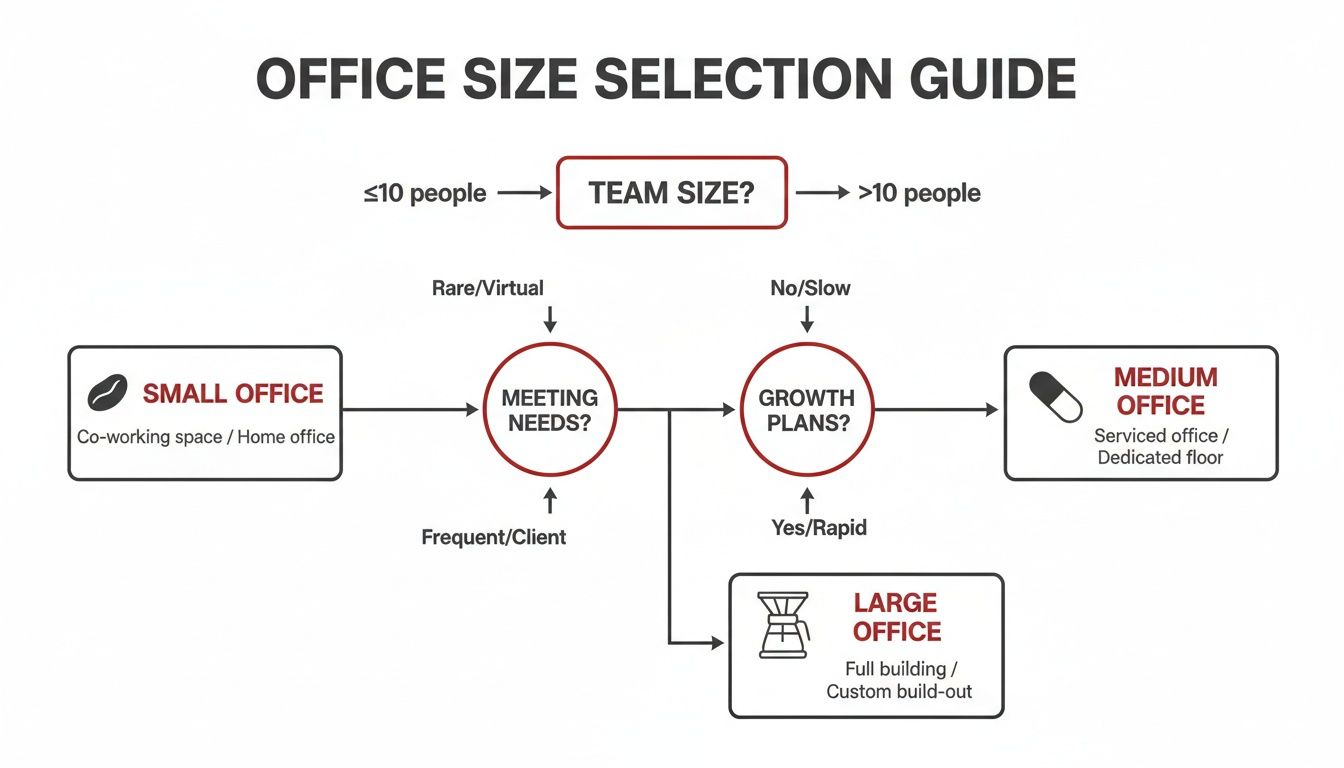
Summary of office machine recommendations:
| Office Size | Recommended Type | Est. Cups/Day |
|---|---|---|
| Small (Up to 20) | Bean-to-Cup | 20–50 |
| Medium (21–100) | Pod System | 50–150 |
| Large (100+) | Drip Brewer | 150–400 |
Why Size and Type Matter
The UK commercial coffee machine market hit roughly USD 268.6 million in 2022 and is on track to reach USD 425.2 million by 2030.
Learn more about UK coffee-machine market growth
This jump shows why throughput and training should steer your choice. Picking the right machine class ensures consistent volume with minimal overhead. For wider context, see the office coffee machine market report or the British Coffee Association’s consumption data.
Smart choices start with clear parameters. Return to this overview to re-orient your decision process.
Explore Best Coffee Machines for Offices by Category
Understanding the main office machine types helps you juggle taste, speed and simplicity. Below are each category’s strengths and trade-offs, plus real examples to guide your pick.
Bean-to-Cup Machines
These handle everything from grinding to brewing, offering café-style flavour without manual grind-and-tamp routines.
- Consistent shots via built-in grinder
- Customisation of strength, temperature and volume
- Compact footprint—no separate grinder needed
Drawbacks:
- Higher upfront cost
- Weekly milk-system flush and monthly brew-group removal
- Daily grounds-bin emptying in busy settings
One finance team reported a 40% drop in queue times after switching to bean-to-cup.
Drip Brewers
Ideal for sheer volume, drip brewers push water through grounds fast—perfect for medium to large offices.
- Up to 500 cups per brew cycle
- Simple controls minimise user errors
- Long-run capability with minimal intervention
Considerations:
- Bulky footprint
- Black coffee only—no milk-based drinks
- Filter replacements every 4–6 weeks
A marketing hub handled a 600-cup morning rush with two drip machines—no extra barista needed.
Pod Systems
Pods deliver pre-measured portions at the push of a button. They suit teams that prioritise speed, consistency and minimal training.
- Zero grinder mess
- Fast cleanup—eject and discard the pod
- Wide drink variety
Watch out for:
- Higher cost per cup than bulk beans
- Limited customisation
- Supplier lock-in
One consultancy halved staff training time by adopting pods and offset costs with recycling schemes.
Manual Espresso & Vending
Manual machines offer barista-level control but demand skill. Vending units or instant brewers fill gaps for 24/7 service.
- Barista-level control with portafilters
- Vending convenience with automated restocks and payments
Challenges:
- Steep learning curve
- Slower throughput during peak hours
- Narrow drink selection in vending
Key takeaway: match flavour control, user skill and throughput to your office’s needs.
Check out the Egro Mode bean to cup coffee machine for a commercial-grade solution.
Plan Machine Capacity for Office Sizes
Balancing coffee demand with machine throughput can make or break mornings. Get it right to avoid long queues or wasted budget.
Forecast Daily Cup Volume
- Headcount × attendance rate.
- Multiply by average cups per person.
- Add a 10% buffer for peak-hour surges.
E.g. 100 people at 60% attendance with 1.5 cups each = 90 cups daily, plus cushion.
Use Telemetry & Counters
Modern machines feature built-in counters or cloud dashboards. These tools help you spot:
- Morning-rush spikes
- Lunchtime lulls for scheduled cleaning
- Trends that refine estimates
Match Capacity Bands to Volume
Once you’ve forecast your daily total, slot it into capacity bands:
| Capacity Band | Cups/Day | Suggested Type |
|---|---|---|
| Low (10–50) | 10–50 | Compact bean-to-cup or pod system |
| Medium (50–200) | 50–200 | Mid-range bean-to-cup or filter brewer |
| High (200+) | 200+ | Dual-boiler or twin-grinder machines |
Review your bandwidth regularly, especially if headcount shifts by 20% or more.
Maintenance & Water Treatment
High-throughput machines need planned servicing:
- Water filters every 3–6 months
- Boiler inspections annually
- Milk-circuit flushes during peak periods
Fit the right filter to local water hardness. A quality filter, like the Brita Purity C Quell ST C300 filter from ADS Coffee Supplies, can cut limescale by up to 30%.
Evaluate Key Features of Office Coffee Machines
Choosing the best coffee machines for offices involves more than price or brand. Every spec—from grind consistency to waste handling—affects quality, uptime and convenience.
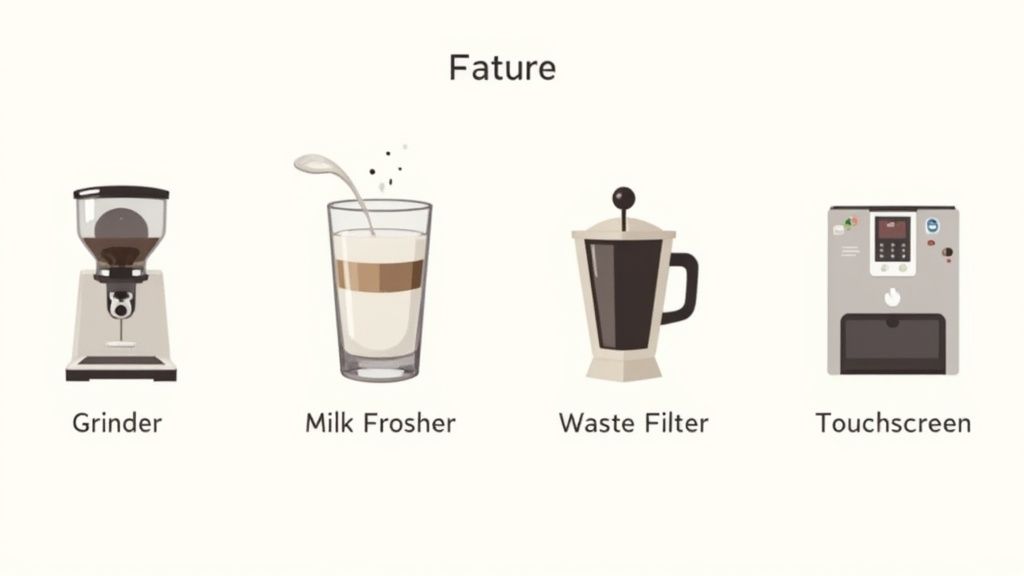
Grinder Quality & Control
A consistent grind is essential for balanced extraction:
- Burr material: Ceramic or steel for uniform particles
- Grind settings: 5–15 increments to fine-tune strength
- Dose control: Accurate portioning prevents waste
- Sensor alerts: Warn when burrs need replacing
One firm’s sensor alerts saved four hours of emergency maintenance.
Milk Frothing Systems
Frothers range from one-touch carafes to professional wands:
- Auto-carafes for consistent foam and minimal training
- Panarello wands for airy, light foam
- Steam wands for silky microfoam, requiring skill
An office that switched to an auto-carafe halved peak-hour cleanup time.
Waste & Cup Management
Keep queues moving by automating waste and cup handling:
- Daily grounds-bin checks and easy-detach bins
- Adjustable cup dispensers with sensors
- Auto-empty alerts to prevent overflow
After upgrading to bin-sensor machines, a sales office cut interruptions by 20%.
Calculate Total Cost of Ownership
Sticker price is only part of the story. Over five years, beans, filters, servicing and energy all affect your budget.
Break Down Every Expense
- Initial investment: Purchase or lease over five years
- Consumables: Beans, capsules, filters, cartridges
- Servicing plans: Routine maintenance and call-outs
- Utilities: Electricity and hot-water usage
- Water treatment: Filtration units and replacements
A £2,000 bean-to-cup brewer can cost as little as 0.15p per cup with premium beans and service.
Derive Per-Cup Cost
- Total spend over five years per category.
- Divide by estimated total cups.
- Add a 10% buffer for price hikes.
E.g. 100 cups/day × 250 workdays × 5 years = 125,000 cups.
Compare Purchase vs Lease
| Scenario | Upfront/Annual Cost | Consumables (5 yrs) | Total TCO |
|---|---|---|---|
| Purchase (£3,000 + £600/yr) | £3,000 + £600/yr | £4,000 | £7,600 |
| 5-Year Lease (£800/yr) | £800/yr (inc. service) | £4,500 | £8,500 |
Consider tax and cash flow when choosing.
Include Telemetry & Energy
- Telemetry alerts can cut emergency calls by 25%.
- Program timers to switch off nights/weekends to save up to £500 over five years.
Compare Leasing, Buying and Service Options
Whether you lease or buy affects cash flow, service schedules and long-term costs.
Leasing
Pros:
- Fixed monthly costs covering service and consumables
- Low upfront fee (from £50/month)
- Tax advantages
Cons:
- Total cost can be 20–30% higher over five years
Buying Outright
Pros:
- No ongoing lease fees after purchase
- Flexibility on consumables and technicians
- Depreciation benefits
Cons:
- Higher initial outlay
| Option | Upfront Cost | Service | Long-Term Impact |
|---|---|---|---|
| Leasing | Low (£50+ per month) | Inclusive | Higher by 25% |
| Buying | High (full purchase) | Pay-as-you-go | Lower after 5 years |
Negotiate a strong SLA with next-day fixes and quarterly deep-cleans. Hybrid models can combine leased pods in meeting rooms with owned dual-boiler machines in busy kitchens.
Common Questions About Office Coffee Machines
What Machine Suits a Small Office Under 20 People?
A compact bean-to-cup or pod system serving 20–50 cups daily is ideal. These machines include one-touch cleaning programmes and straightforward upkeep. Explore small-office brewers in our compact range on ADS Coffee Supplies.
How Do I Calculate the Right Capacity?
- Headcount × attendance rate
- Multiply by average cups per person
- Add a 10% buffer for peak demand
Our capacity planning worksheet makes the sums effortless at ADS Coffee Supplies.
What Servicing Schedule Do I Need?
- Change water filters every 3 months
- Book quarterly deep-cleans
- Heed telemetry alerts for descaling
Find tailored service plans on ADS Coffee Supplies Service.
Bean-to-Cup or Pod Systems?
- Bean-to-cup: adjustable, cost-effective for over 50 cups/day
- Pod systems: uniform taste, easy cleanup, limited tweak options
See our bean-to-cup vs pod comparison on ADS Coffee Supplies.
Ready to find the best coffee machines for offices? Discuss your office coffee options with ADS Coffee Supplies and elevate your workplace brew today.


