

If you're on the hunt for the best decaf coffee beans UK roasters have to offer, you've landed in the right spot. Decaf has come a long way from being a bland compromise. These days, it delivers all the flavour and body you’d expect from a premium coffee, and here at ADS Coffee Supplies, we're proud to be the UK’s go-to destination for high-quality, flavour-first decaf beans.
This guide will show you exactly what to look for, from the decaffeination method to the perfect roast profile. We’ll skip the jargon and give you practical advice to help you find a decaf you’ll love, whether you’re brewing at home, in the office, or for your café customers.
How to Find the Best Decaf Coffee Beans UK
Let's be clear: the days of decaf being a flavourless afterthought are long gone. It’s now a vibrant part of the coffee world, driven by health-conscious drinkers and huge leaps in processing that carefully preserve the bean’s delicate tasting notes.
The demand for genuinely good decaf has soared. In the UK, one in five coffee drinkers now regularly opts for decaf, reflecting a serious demand that has pushed the market to a value of USD 132.88 million. It’s projected to climb to USD 208.01 million by 2033, showing a powerful trend towards enjoying coffee's rich flavour without the caffeine kick.
Key Factors to Consider
To find the best beans for your home, café, or office, it helps to understand a few key elements:
- Decaffeination Method: Modern processes like the Swiss Water or CO2 methods are completely chemical-free and brilliant at removing caffeine while protecting the coffee's original flavour.
- Roast Profile: Just like with regular coffee, the roast level—whether it's light, medium, or dark—will massively impact the final taste, taking it from bright and fruity to rich and chocolatey.
- Bean Origin: Where the coffee is grown shapes its natural notes. A decaf from Colombia might give you a lovely caramel sweetness, whereas one from Ethiopia could have subtle floral hints.
The secret to great decaf isn't just about taking the caffeine out; it's about preserving the hundreds of other compounds that create its unique aroma and taste. The very best decaf starts with high-quality green beans, long before the decaffeination process even begins.
For a deeper dive into selecting the perfect coffee, caffeinated or not, check out this practical guide on how to choose coffee beans.
A Quick Comparison of Top UK Decaf Coffee Beans
To help you get started, here is a simple table comparing some of our most popular decaf options. It’s designed to give you a quick snapshot of the key differences, making it easier to find the right beans for your preferred brew.
| Decaf Bean Selection | Primary Flavour Notes | Decaffeination Method | Ideal Brewing Style |
|---|---|---|---|
| 1. ADS Signature Decaf Blend | Smooth Milk Chocolate & Caramel | Swiss Water Process | Espresso, Latte, Flat White |
| Single Origin Colombian Decaf | Toffee, Citrus & Walnut | CO2 Process | Filter, Cafetière, AeroPress |
| Single Origin Ethiopian Decaf | Jasmine, Blueberry & Honey | Swiss Water Process | Pour-over, Cold Brew |
| Dark Roast Decaf Blend | Toasted Almond & Dark Chocolate | Swiss Water Process | Moka Pot, French Press |
Each of these selections offers something unique, from smooth, versatile blends ideal for milky coffees to complex single origins that shine in a filter or pour-over. The key is to match the bean's profile to how you love to drink your coffee.
How the Decaffeination Process Shapes Flavour
Not all decaf is created equal, and the secret lies in how the caffeine is removed. Understanding the different methods is your first step when looking for the best decaf coffee beans UK suppliers have to offer, as each process leaves a distinct fingerprint on the final taste in the cup. It’s what separates a dull, flat coffee from one that’s vibrant and full of character.
The journey starts with raw, unroasted green coffee beans. The goal is simple enough: get the caffeine out while keeping the hundreds of natural compounds that give a coffee its unique aroma and flavour. How you achieve that makes all the difference.
Chemical-Free Methods: The Gold Standard
If you care about flavour and a clean, natural process, then chemical-free methods are where you should be looking. These techniques are celebrated for their ability to gently coax the caffeine out without stripping away the delicate tasting notes that make a coffee special.
-
The Swiss Water Process: This is a famous, 100% chemical-free method that relies on nothing more than water, temperature, and time. Green beans are soaked in a special solution called Green Coffee Extract (GCE)—essentially, water that’s already full of all the soluble goodies found in coffee, except for caffeine. When the new batch of caffeinated beans goes in, only the caffeine leaves, ensuring the original flavour compounds stay right where they belong.
-
The CO2 Process: Another fantastic chemical-free option, this process uses supercritical carbon dioxide (CO₂ in a clever state between a liquid and a gas) to act as a natural solvent. The green beans are first soaked in water and then moved to a high-pressure chamber. Liquid CO₂ is pumped in, and it selectively bonds with the caffeine molecules, which are then filtered out, leaving the coffee's aromatic oils and flavour precursors completely unharmed.
The Swiss Water Process is particularly brilliant at preserving the bright, clean notes you often find in high-quality single-origin coffees. This makes it the perfect choice for beans where you really want those subtle, nuanced flavours to sing—which is exactly why we favour it for our ADS Signature Decaf Blend.
This decision tree helps you visualise how to pick the right decaf based on your preferences for flavour, the processing method, and how you plan to brew it.
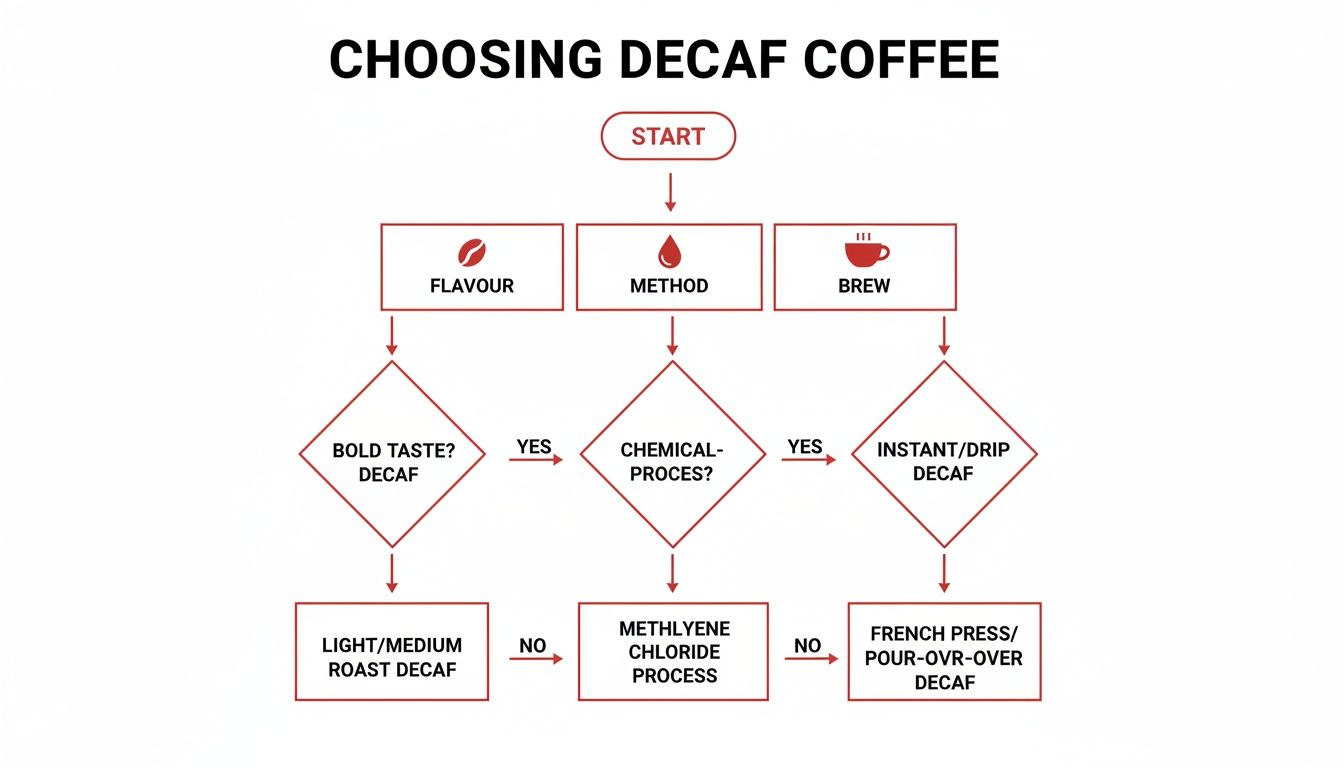
As the chart shows, if you start with the flavour profile you're aiming for, it becomes much easier to narrow down your choices and land on the processing method that will deliver those results.
Comparing with Traditional Methods
While you’ll see them less and less in the speciality coffee world, traditional solvent-based methods are still out there. These processes use solvents like ethyl acetate or methylene chloride to wash the caffeine away. Although they’re tightly regulated to ensure safety, many coffee lovers find that these methods can sometimes leave a more noticeable impact on the final taste.
You might see the "Sugarcane Process," which uses ethyl acetate that can be naturally derived from sugarcane. While it's often marketed as a natural alternative, it is still a solvent-based process. The real takeaway here is that the method of decaffeination is just as important as the quality of the green bean itself. You can find out more about how sourcing and processing define quality by exploring what makes speciality coffee different in our buyer's guide.
Ultimately, when you choose beans decaffeinated with the Swiss Water or CO2 methods, you’re investing in a cleaner, more authentic flavour. At ADS Coffee Supplies, we prioritise these superior processes because we believe decaf drinkers deserve a coffee that is every bit as delicious and complex as its caffeinated cousin.
Matching Roast Profiles with Your Taste Preferences
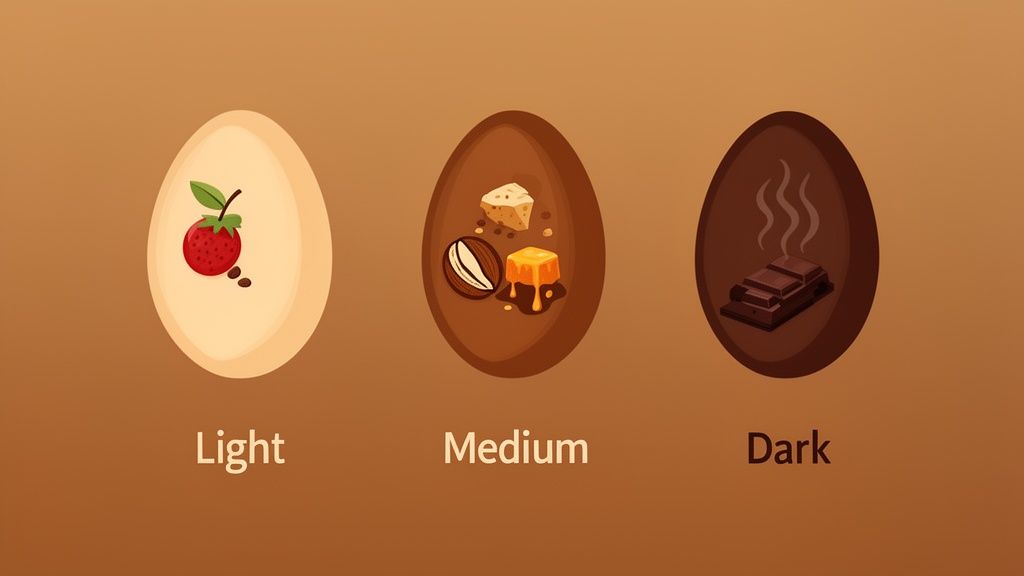
Once the caffeine is gone, the roaster's job becomes even more critical. Decaffeinated green beans are often more delicate than their caffeinated counterparts and can react quite differently to heat, which turns the roasting process into a real balancing act. To unlock the complex notes of chocolate, fruit, or nuts hidden inside, you need a skilled roaster who knows exactly how to handle them.
The whole point of roasting is to develop the bean’s natural sugars and acids into those rich, aromatic flavours we all love. But with decaf, it calls for a gentler touch. Since the beans have already been through a process that changes their structure, an experienced roaster will carefully adjust the heat to avoid scorching them while still getting that perfect, even roast.
Light Roast Decaf
A light roast is all about letting the bean’s origin story shine. The roaster pulls the beans from the heat just after the "first crack"—a distinct popping sound—which preserves all those bright, natural characteristics.
For decaf, this can bring out some really delicate floral, fruity, or citrus notes with a higher, more vibrant acidity. It’s a fantastic choice for filter methods like a pour-over or AeroPress, where those clean, nuanced flavours can really come to life.
Medium Roast Decaf
This is often the sweet spot for decaf, hitting that perfect balance of acidity, body, and sweetness. Roasted a bit longer than a light roast, these beans develop deeper notes of caramel, milk chocolate, and roasted nuts.
A medium roast is also incredibly versatile. It’s got enough body to work beautifully in an espresso machine for lattes and flat whites, but it still holds onto enough brightness to make a brilliant cafetière or filter coffee. It’s a real crowd-pleaser and a great place to start if you're just dipping your toes into the world of premium decaf. For more on this, check out our guide on how to choose coffee beans based on roast levels and flavour notes.
A great medium roast decaf should be almost indistinguishable from its caffeinated counterpart. The aim is to create a smooth, well-rounded cup that delivers pure coffee satisfaction without the caffeine kick, making it a perfect all-day drink.
Dark Roast Decaf
Pushing the beans further into the roasting process brings out bold, rich, and intense flavours. As the sugars caramelise more deeply, you get notes of dark chocolate, toasted almond, and a smoky, robust finish.
Dark roasts have a much lower acidity and a heavier body, making them ideal for traditional espresso or a Moka pot. They also stand up exceptionally well to milk, creating a powerful and deeply satisfying decaf cappuccino or latte.
How Roast Level Impacts Decaf Coffee Flavour
This table breaks down how light, medium, and dark roasts affect the taste, aroma, and best brewing methods for decaf beans, making it easier to find your perfect match.
| Roast Level | Key Flavour Characteristics | Acidity and Body | Recommended Brew Method |
|---|---|---|---|
| Light Roast | Bright, fruity, floral, citrus notes | High acidity, light body | Pour-over, AeroPress, Filter |
| Medium Roast | Caramel, milk chocolate, nutty tones | Balanced acidity, medium body | Espresso, Cafetière, Filter |
| Dark Roast | Dark chocolate, smoky, bold, rich | Low acidity, full body | Espresso, Moka Pot |
Ultimately, finding the right roast all comes down to personal taste. Whether you love a bright and lively cup or something dark and intense, understanding how roasting shapes the flavour is the key to discovering your ideal decaf.
Choosing the Right Decaf for Any Situation
Finding the best decaf coffee beans UK businesses and homes can rely on isn’t about hunting down one ‘perfect’ bag. It’s all about matching the right beans to your specific setup. A busy café has totally different needs to a home barista playing with a new pour-over, just as an office manager needs a reliable crowd-pleaser for the company’s bean-to-cup machine.
The trick is to think about how and where the coffee will actually be used. Consider the equipment, who's drinking it, and the kind of experience you want to create. This way, you’ll land on a decaf that not only tastes fantastic but also performs perfectly where it needs to.
For Independent Cafés and Coffee Shops
As a café owner, your decaf offering can't just be an afterthought. Customers now expect a decaffeinated coffee that delivers the same quality and flavour as your main house blend, especially in drinks like lattes and flat whites where consistency is everything.
You need a real workhorse decaf—something reliable, delicious, and cost-effective when you’re buying in bulk. Your best bet is to look for whole bean blends that have been decaffeinated using a gentle process like the Swiss Water method. This really helps to hang on to the sweetness and body needed to pull a rich crema and cut through milk properly.
- Top Recommendation: ADS Signature Decaf Blend. We crafted this blend specifically for commercial espresso machines. It delivers consistent notes of smooth milk chocolate and caramel, making sure your decaf flat whites are just as impressive as your caffeinated ones. Buying it in the bulk whole bean format (6x1kg) keeps things fresh and economical.
For the Modern Office Environment
Keeping the office coffee station stocked and everyone happy requires a versatile, crowd-pleasing decaf. The perfect choice has to work flawlessly in automatic bean-to-cup machines, which do everything from grinding to brewing. It needs to be balanced enough to be enjoyed black but have enough backbone for a satisfying latte.
In this scenario, value and consistency are the names of the game. You want a medium roast decaf that steers clear of any extreme or challenging flavours, ensuring it hits the right note with a wide range of tastes in the workplace.
Decaf holds a vital spot in the UK's £1.5 billion coffee processing industry, a sector that has seen steady growth over the past five years. With one in five UK coffee drinkers regularly choosing decaf, providing a quality option in the workplace is no longer a luxury but an expectation.
It’s also crucial to pick a bean that’s suited for automatic machines to help them last longer. Our guide on selecting the best coffee beans for your machine has more specific advice on this.
- Top Recommendation: Our Single Origin Colombian Decaf. It’s a superb all-rounder with comforting notes of toffee and walnut. Processed using the clean CO2 method, it performs brilliantly in bean-to-cup machines, offering great taste and excellent value for any office setup.
For the Passionate Home Barista
When you're brewing at home, you have the freedom to explore. The home barista isn't after a bulk-buy workhorse; they’re on the hunt for unique flavour profiles and interesting single origins to try with different methods like a V60, AeroPress, or a home espresso machine.
This is where speciality single-origin decafs really get to shine. You can seek out beans with more complex and delicate notes—maybe a floral Ethiopian or a bright, fruity Kenyan—that have been decaffeinated with the utmost care to preserve their unique character. Buying in smaller 250g or 500g bags means you can sample different origins without a big commitment.
- Top Recommendation: Our Single Origin Ethiopian Decaf. Decaffeinated via the Swiss Water Process, this bean is bursting with delicate notes of jasmine and blueberry. It's the perfect choice for home enthusiasts wanting to brew an exceptional pour-over or pull a uniquely bright and aromatic decaf espresso.
Brewing and Storing Decaf for Maximum Flavour
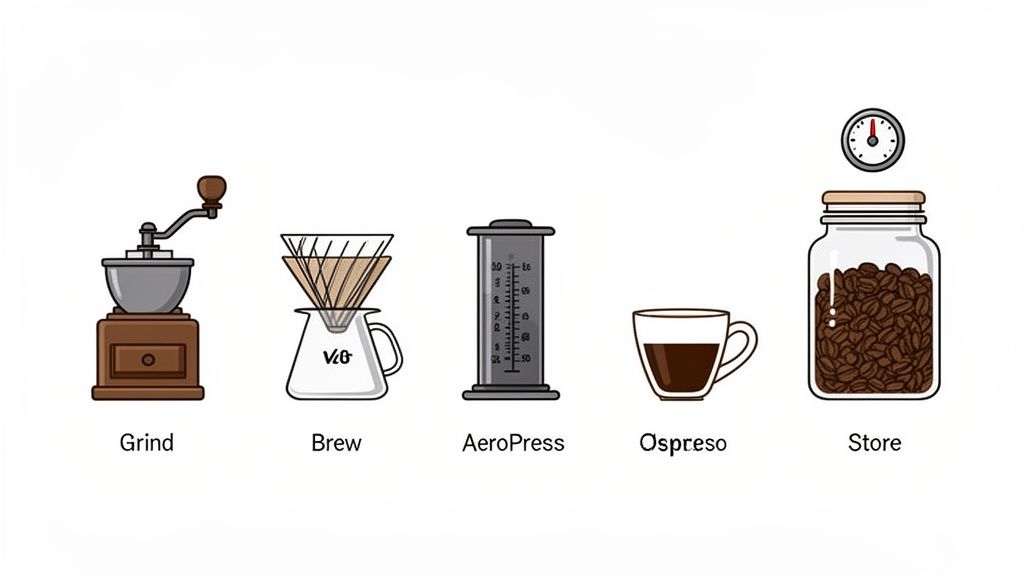
Buying the best decaf coffee beans UK roasters can produce is the perfect start, but how you treat them afterwards is just as important. To protect your investment and unlock all that incredible flavour, you need to get your brewing and storage right. These practical tips will help ensure every single cup is delicious and full of character.
The decaffeination process slightly changes a coffee bean's physical structure, making it a touch less dense and more soluble than its caffeinated counterpart. This small difference has a big impact on how you should approach brewing. A few simple tweaks to your usual routine can elevate your decaf from good to genuinely exceptional.
Perfecting Your Decaf Brew
Getting the best flavour from decaf beans means paying close attention to a few key variables. Simple adjustments to your grind size, water temperature, and coffee-to-water ratio can make a world of difference, helping you sidestep bitterness and pull a balanced, sweet cup every time.
Grind Size Adjustments
Because decaf beans are often softer and more porous, they tend to extract more quickly. To compensate for this and avoid a weak, underwhelming brew, you’ll probably need to grind your beans slightly finer than you would for regular coffee.
- For Espresso: A finer grind creates more resistance for the water, encouraging a more even extraction and producing that rich, stable crema you're looking for.
- For Pour-Over/Filter: Tightening up the grind size a little will slow down the water flow, giving it enough contact time to pull out all the complex sweetness without over-extracting.
Don't be afraid to experiment. Start with your usual setting and adjust it one notch finer at a time until you hit that sweet spot. The goal is a brew that’s rich and full-bodied, not thin or sour.
Water Temperature and Ratios
The ideal brewing temperature for most coffees, including decaf, is between 90-96°C. Water straight off the boil can scorch the delicate grounds, leading to a bitter, unpleasant taste. If you don't have a temperature-controlled kettle, just let it sit for about 30-45 seconds after boiling before you pour.
A great starting point for your brew ratio is 1:16, which means one part coffee to sixteen parts water. For example, use 15g of decaf coffee for 240ml of water. Feel free to adjust this based on your preference—a 1:15 ratio will give you a stronger cup, while 1:17 will be a bit lighter.
Smart Storage for Lasting Freshness
Coffee's biggest enemies are oxygen, light, heat, and moisture. The moment you open a bag of premium decaf, its delicate aromatic oils start to degrade. Proper storage is essential to slow this process down and keep your beans tasting their best for longer.
The golden rule is to buy whole beans and grind them just before you brew. Pre-ground coffee has a much larger surface area exposed to oxygen, causing it to go stale in a matter of days. Whole beans, on the other hand, can stay fresh for several weeks if you store them correctly.
To maintain that just-roasted flavour, follow these simple storage steps:
- Use an Airtight Container: Transfer your beans from their original bag into a container with a proper airtight seal. This minimises their exposure to oxygen.
- Find a Cool, Dark Place: Store the container in a cupboard or pantry, well away from direct sunlight and heat sources like your oven or hob.
- Avoid the Fridge or Freezer: While it seems like a good idea, storing beans in the fridge or freezer can introduce moisture and cause them to absorb unwanted odours.
For a more detailed breakdown of keeping your beans in top condition, you can explore our complete guide on how to store coffee beans. By pairing the right brewing techniques with smart storage, you’ll ensure every cup of decaf you make is as flavourful as the last.
Why Trust ADS for Your Decaf Coffee Beans?
Choosing the right partner for your decaf coffee is about more than just finding a supplier; it’s about finding someone who genuinely understands the journey from bean to cup. At ADS Coffee Supplies, we pair decades of hands-on experience with a real passion for great coffee, making sure every bag of decaf we send out meets our exacting standards for quality and flavour.
We've been a family-run business since 1993, built on a simple principle: exceptional coffee backed by outstanding service. We don't just stock any decaf. We carefully select our beans, focusing on superior, chemical-free methods like the Swiss Water Process to ensure the coffee’s true character shines through. The result is a cup that’s rich, satisfying, and completely true to its origin.
More Than Just a Supplier
We know that a café owner has very different needs from a home barista. One needs consistency and value, the other might be chasing a unique flavour profile. We get it. That's why our range is carefully curated, from versatile blends perfect for commercial espresso machines to exciting single origins that sing in a pour-over.
Our commitment goes beyond just the beans. We back it up with service you can count on.
- Speedy Delivery: Need it fast? We offer next working day delivery across mainland UK.
- Prompt Dispatch: Get your order in by 4:30 pm, and we’ll get it out the door the very same day.
- Unrivalled Expertise: Our team is always on hand to offer genuine, personalised advice.
We believe that a great decaf offering is a hallmark of a serious coffee business. That’s why we go beyond just supplying beans and offer comprehensive support to help our commercial clients succeed, from machine leasing to professional barista training.
For businesses looking to build out their entire coffee programme, we provide solutions that cover every angle. You can see how we support our commercial partners by exploring our dedicated page on coffee shop supplies.
Ultimately, when you choose ADS, you’re choosing a partner who’s invested in seeing you succeed. Whether you’re running a bustling café, stocking an office kitchen, or just perfecting your craft at home, our focus is the same: to deliver exceptional decaf coffee with service you can truly rely on.
Got Questions About Decaf?
Even with the lowdown on beans and brewing methods, a few questions often pop up when people are choosing a decaf. Here are some quick, straightforward answers to the most common queries we hear.
Is Decaf Coffee Really Caffeine-Free?
Not 100%, but it’s incredibly close. For a coffee to be labelled 'decaffeinated' in the UK and EU, at least 99.9% of the caffeine has to be removed from the roasted beans. It’s a strict standard.
A typical cup of decaf contains just 2-5mg of caffeine. Compare that to a standard cup of caffeinated coffee, which can pack anywhere from 80-120mg, and you can see the difference is huge. That tiny trace amount is generally considered negligible, letting you enjoy the rich taste of coffee without the buzz.
How Does the Decaffeination Process Affect the Taste?
It absolutely can, which is why the method used is so important. Modern, chemical-free techniques like the Swiss Water Process and the CO2 method are brilliant because they’re designed to be gentle. They target the caffeine while leaving the bean's original aromatic compounds and delicate flavours intact.
The goal of a great decaffeination process isn't just to remove the caffeine; it's to leave everything else behind. At ADS, we prioritise beans that have undergone these superior methods to ensure the final cup is as rich and satisfying as its caffeinated counterpart.
Lesser methods can sometimes strip away some of the bean's character, but a well-processed decaf should be almost indistinguishable from the real thing.
Can I Use Decaf Coffee Beans in My Espresso Machine?
Absolutely. In fact, a high-quality decaf bean can produce a fantastic shot of espresso with a thick, stable crema and a full-bodied flavour that’s perfect for lattes and cappuccinos.
One thing to bear in mind is that the decaffeination process can slightly alter a bean's density, making it a bit more porous. This means you might need to tweak your grinder settings. Often, a slightly finer grind is needed to get the perfect extraction time and avoid a weak-tasting shot. Don't be afraid to experiment a little to dial it in perfectly.
Ready to explore a world of flavour without the caffeine? ADS Coffee Supplies offers a curated selection of premium decaf coffee beans, processed using the finest methods to guarantee a delicious cup every time.
Browse Our Full Decaf Coffee Collection at ads-coffee-supplies.co.uk


