Buying bulk coffee beans isn't just for large cafés. It’s a smart move for any UK business or serious home barista looking to secure better value, consistent flavour, and a more sustainable cup of coffee. Put simply, it means buying larger quantities—usually 1kg bags or more—to reduce your costs and lock in a high-quality supply. This guide explains exactly how to do it right.
Why Buying Bulk Coffee Beans is a Smart Move
For cafés, offices, and dedicated coffee lovers, switching from small retail bags to bulk is a game-changer. It's less of a risky commitment and more of a savvy investment in quality and efficiency. Making this strategic decision can strengthen your finances, elevate your coffee quality, and simplify your daily operations.
Let's be honest, the UK's appetite for great coffee is huge. An incredible 98 million cups are enjoyed across the country every single day. When it comes to coffee bought outside the home, a massive 70.1% is from whole beans, highlighting the professional preference for quality. With such high demand, sourcing your beans smartly has never been more important.
Key Advantages at a Glance
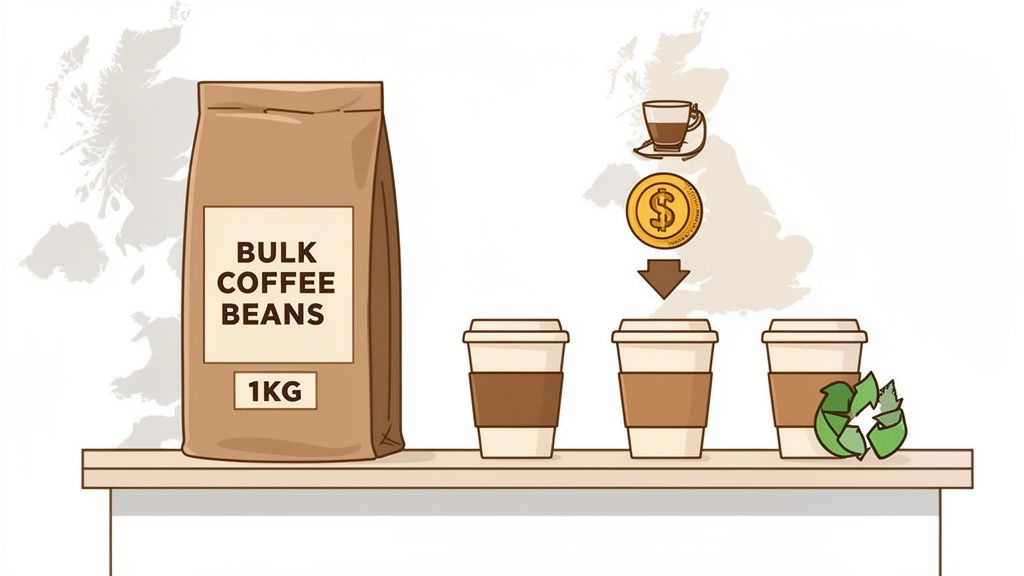
This approach delivers powerful benefits that will improve your entire coffee setup, whether you're serving hundreds of customers or just yourself. The main advantages boil down to three key things:
- Significant Cost Savings: The price per kilogram drops when you buy in bulk. This directly cuts your cost-per-cup, which either boosts profit margins or makes your home coffee budget go further.
- Superior Flavour Consistency: When you source from a single, large batch, you guarantee a uniform taste profile. This means every espresso you pull will be just as delicious as the last, with no unwelcome surprises.
- Reduced Environmental Impact: Fewer individual packages mean less waste heading to landfill. Plus, fewer deliveries result in a smaller carbon footprint, helping to align your coffee habit with more sustainable practices.
Understanding the wider benefits of buying in larger quantities offers useful insights. For a detailed look at some smart bulk buying strategies, this guide is a great read. For more on how stocking up can save you money, check out our guide on wholesale bulk buying.
The Real Benefits of Purchasing Bulk Coffee Beans
While buying bulk coffee beans immediately brings cost savings to mind, the real advantages run much deeper. It's a game-changer that offers a powerful mix of financial, quality, and operational rewards that can transform your coffee setup, whether you're running a busy café or just fuelling the office.
First, let's talk money. When you buy in larger volumes, the cost per kilogram of coffee drops significantly. This isn't just a small discount; it's a fundamental shift in purchasing power that directly slashes your cost-per-cup. For a business, that means healthier profits. For a home user, it means enjoying premium coffee without stretching your budget.
Significant Financial Savings
The maths is straightforward. A standard 250g retail bag seems convenient, but its price is inflated by packaging and the logistics of selling small units. Moving up to a 1kg bag or a larger case pack instantly cuts these overheads.
Those pennies you save on each cup quickly add up over weeks and months, freeing up cash for other parts of your business or household. To see this in action, think about a typical double espresso, which uses around 18 grams of coffee. The saving per shot might seem small, but multiplied by hundreds of servings, the financial benefit is impossible to ignore.
Cost-Per-Cup Savings When Buying in Bulk
The numbers below show just how much you can save. Based on typical UK pricing, this table illustrates how the cost of a standard 18g double espresso drops as the purchase volume increases.
| Purchase Format | Typical Price per kg | Grams per Serving (Double Shot) | Approximate Cost per Cup |
|---|---|---|---|
| 250g Retail Bag | £32.00 | 18g | £0.58 |
| 1kg Bulk Bag | £22.00 | 18g | £0.40 |
| 6kg Case (6x1kg) | £20.00 | 18g | £0.36 |
As you can see, moving from a small retail bag to a 1kg bag cuts the cost significantly. For a business buying by the case, the savings become even greater, making bulk purchasing a clear winner for your bottom line.
Unbeatable Consistency and Quality
Beyond the balance sheet, one of the most vital benefits for any café or serious coffee lover is consistency. When you buy bulk coffee beans from a single, large batch, you lock in a uniform flavour profile. This gets rid of the subtle taste variations that can appear between different small bags from the same roaster.
This consistency is the secret to building customer loyalty. People return for the specific taste they love, and using a single large batch ensures the flat white they get on a Monday is identical to the one they order on Friday. It gives you a reliable foundation to perfect your recipes and deliver an outstanding experience every time.
Streamlined Operations and Peace of Mind
From a practical standpoint, buying in bulk makes life easier. It reduces how often you need to order, which means less time spent on admin. Instead of fiddly weekly top-ups, you can set up a simple monthly or bi-weekly cycle, freeing you up to focus on your customers.
And then there’s the peace of mind. Running out of coffee during the morning rush is every barista's nightmare. Bulk buying acts as a safety net, ensuring you’re always ready for busy periods and keeping service running smoothly.
A More Sustainable Choice
Finally, choosing to buy in bulk is a smarter move for the planet. It drastically reduces packaging waste, as one large bag replaces many smaller ones. This also means fewer deliveries are needed, which lowers your carbon footprint. It’s a simple but effective step toward making your coffee habit a little greener.
How to Choose the Right Bulk Coffee Beans
Picking the right bulk coffee beans is the most important decision you'll make. It dictates the flavour, aroma, and overall quality of every cup, shaping customer satisfaction in a café and your own daily ritual at home.
With so many options, it’s easy to feel lost. But if you break it down by roast, origin, and intended use, the process becomes much simpler. The journey starts with figuring out the kinds of flavours you want to create.
Understanding Roast Profiles
The way a coffee bean is roasted has a massive impact on its final taste. Roasting transforms green, raw coffee beans into the aromatic brown beans we all recognise. Each roast level unlocks different characteristics from the same bean.
- Light Roast: These beans have a light brown, cinnamon-like colour. They keep most of the coffee’s original flavours, often resulting in a brew with bright acidity and complex, fruity or floral notes. Light roasts are fantastic for filter methods like a V60 or Chemex.
- Medium Roast: This is the ultimate crowd-pleaser. Medium roast beans are a classic brown with a non-oily surface, striking a beautiful balance between origin flavours and deeper, sweeter notes like chocolate, nuts, and caramel. A medium roast is incredibly versatile, working brilliantly for everything from bean-to-cup machines to cafetières.
- Dark Roast: Roasted for the longest, these beans are dark brown and often have an oily surface. The roast produces a bold, full-bodied coffee with low acidity and rich, smoky or bittersweet chocolate notes. Dark roasts are the traditional choice for classic espresso drinks as they cut through milk perfectly.
Practical Tip: For a general office or busy café aiming to please a wide range of tastes, a medium roast is almost always the safest and most popular choice. Its balanced profile works well black or with milk and suits most coffee machines.
Single Origin vs Blends: What's the Difference?
Next, decide between a single origin coffee and a blend. Each offers a very different experience. A single origin coffee comes from one specific farm or region. Think of it like a fine wine—its flavour directly reflects its unique environment (what experts call terroir). These coffees are loved for their distinct and often complex flavour profiles.
A blend, on the other hand, is a mix of beans from different origins. The roaster's goal is to craft a specific, consistent, and balanced flavour profile that a single origin bean can't provide on its own. For example, a roaster might combine a Brazilian bean for its smooth body with an Ethiopian bean for its bright top notes to create a reliable espresso.
Making the Right Choice for Your Needs
So, should you go for a single origin or a blend? It comes down to a choice between consistency and character.
- For Speciality Cafés: Offering a rotating single origin is a great way to showcase unique flavours. However, for your main "house" coffee, a well-crafted blend provides the reliable consistency regulars expect.
- For Offices and High-Volume Settings: Blends are almost always the better choice. They are designed to be consistent, balanced, and appealing to a broad audience, making them perfect for automatic bean-to-cup machines.
- For Home Baristas: This is your chance to experiment! Try different single origins to explore the diverse world of coffee, or find a favourite blend that delivers the perfect cup every morning. You can explore a huge range of expertly roasted Coffee Beans to find exactly what you’re looking for.
No matter what you choose, there’s one final, crucial step before you commit: always request samples. Tasting the coffee, brewed on your own equipment, is the only way to be absolutely certain it's the right fit.
Calculating How Much Coffee You Really Need
Ordering the right amount of bulk coffee beans is a balancing act. Buy too little, and you risk running out during a busy period. Buy too much, and the beans will lose their vibrant flavour before you can use them.
The secret is to remove the guesswork with some simple calculations. Nailing down a smart ordering cycle—whether weekly or monthly—means you get bulk pricing while ensuring every cup is brewed with fresh beans.
A Simple Formula For Cafés
For any café, your numbers should be driven by daily sales. First, get a solid idea of how many coffees you sell on an average day. Most speciality cafés use an 18-gram dose for a standard double espresso, which forms the base of most drinks.
Café Calculation Example:
- Daily Coffees Sold: You sell an average of 150 coffees per day.
- Grams Per Coffee: Each one uses a standard 18g double shot.
- Daily Bean Usage: 150 coffees x 18g = 2,700g (or 2.7kg) per day.
- Weekly Bean Usage: 2.7kg x 7 days = 18.9kg of beans per week.
Based on these numbers, ordering around 20kg of coffee per week would be a sensible starting point, giving you a small buffer for busy days.
Estimating Coffee Needs For Your Office
Figuring out coffee consumption for an office is slightly different. It’s less about direct sales and more about staff numbers and daily habits. A good rule of thumb is to assume each coffee drinker will have two to three cups a day.
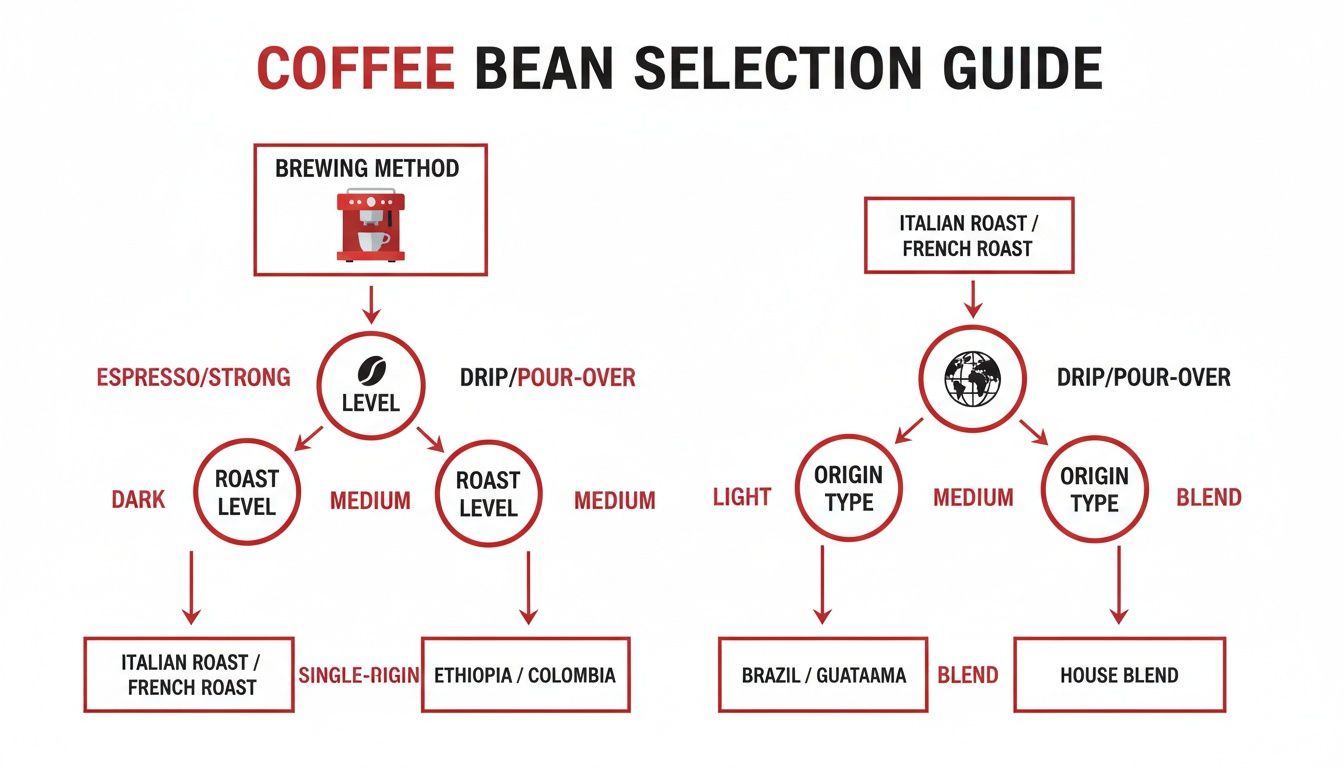
This infographic can give you a visual steer on which beans might be best for your setup, whether you're fuelling a high-end espresso machine or a simple office filter brewer.
Workplace coffee is a massive driver of demand for bulk coffee beans in the UK. Research shows that 25% of all coffee is consumed at work, with 81% of office workers having multiple cups daily. A quality office brew has become vital for keeping staff happy and productive.
- Office Calculation Example:
- Number of Staff: You have 40 coffee drinkers.
- Average Cups Per Day: Each person drinks 2.5 cups on average.
- Total Daily Cups: 40 staff x 2.5 cups = 100 cups per day.
- Grams Per Cup: A bean-to-cup machine uses around 10g per cup.
- Daily Bean Usage: 100 cups x 10g = 1,000g (or 1kg) per day.
- Weekly Bean Usage: 1kg x 5 workdays = 5kg of beans per week.
For an office this size, a monthly order of around 20kg would be just right. If you want to dive deeper into setting up your workspace, check out our guide on finding the best office coffee system.
Calculating For The Home Barista
For home enthusiasts, the goal is to buy enough to last a few weeks without the beans going stale. A typical home user might have two double-shot coffees a day.
- Daily Use: 2 coffees x 18g per shot = 36g.
- Weekly Use: 36g x 7 days = 252g.
- Monthly Use: 252g x 4 weeks = 1,008g.
In this scenario, a single 1kg bag of bulk coffee beans is the perfect amount for a month's supply. You'll finish the bag just as it’s at its flavour peak.
Mastering Coffee Storage for Peak Freshness
You’ve invested in fantastic bulk coffee beans; now you need to keep them fresh. Proper storage ensures the last cup you brew is as vibrant as the first. Get it wrong, and even the best beans will taste flat and lifeless.
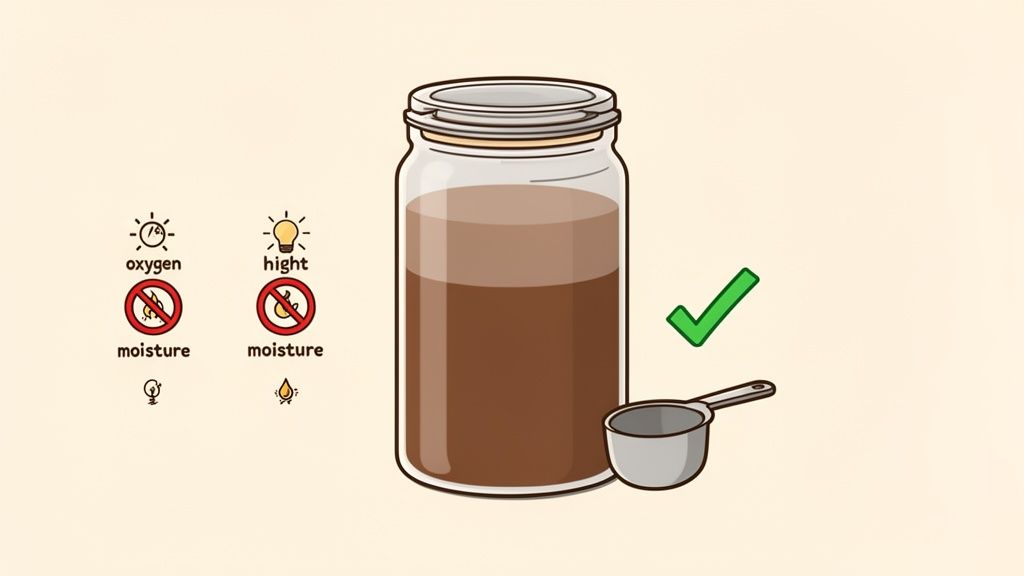
The good news is that keeping coffee fresh is straightforward once you know its four enemies: oxygen, light, heat, and moisture. Your storage strategy should focus on keeping these elements at bay.
Defeating Coffee's Four Enemies
Each of these culprits degrades the delicate oils and compounds that give coffee its aroma and taste. Oxygen is the main offender; oxidation makes beans go stale, just as it turns a sliced apple brown. Sunlight speeds up this process, while heat breaks down fragile flavour compounds even faster. Finally, moisture will ruin beans completely.
Common Myth Debunked: Whatever you do, don't store your coffee beans in the freezer. Beans are porous and will absorb moisture and odours. The temperature swings also create condensation, which is a disaster for freshness.
The Ideal Storage Environment
The perfect home for your bulk coffee beans is somewhere cool, dark, dry, and airtight. This simple rule applies whether you're storing 1kg at home or 20kg in a café.
- Airtight is Non-Negotiable: Use containers with a vacuum seal or a one-way valve. These valves let carbon dioxide from fresh beans escape without letting damaging oxygen in.
- Block Out the Light: Opaque containers are always better than clear ones. If you use a glass jar, keep it inside a dark cupboard, away from sunlight.
- Keep It Cool and Stable: A pantry or cupboard at a consistent room temperature is perfect. Avoid storing beans next to an oven or on top of an espresso machine.
For a deeper dive into the science, explore our guide on how to store coffee beans to get the most out of every bag.
Storage Solutions For Different Setups
The right container depends on how quickly you use your coffee. The main goal is always to minimise air exposure.
- For Busy Cafés: Large, food-grade storage bins with airtight lids are a must. Only decant what you need for the next few hours into your grinder's hopper.
- For Offices: A few medium-sized airtight canisters are ideal. This lets you open one container at a time to top up the machine, leaving the rest of your supply sealed.
- For Home Baristas: Invest in a quality vacuum-sealed canister. For a 1kg bag, a great tip is to portion it into smaller airtight bags, squeezing out as much air as possible before sealing them all inside a larger container.
Finding Your Ideal Coffee Bean Supplier
Once you know what you’re looking for, the next step is finding the right partner to supply your bulk coffee beans. This boils down to two main paths: going directly to a coffee roaster or working with a dedicated wholesale supplier. Each route has its benefits.
Going Direct to a Roaster
Buying straight from the source is a great move if you want something unique. A direct relationship with a roaster can give you access to special micro-lots and a deeper story to share with customers. However, this approach can bring practical headaches.
Many roasters have high minimum order quantities (MOQs), which can be a hurdle for smaller businesses. You might also find yourself juggling complex logistics and multiple invoices if you want to offer beans from different roasters.
The Wholesale Supplier Advantage
A dedicated wholesale supplier acts as your all-in-one coffee partner. They have already done the hard work of sourcing and vetting a wide range of exceptional coffees from various top-tier brands and roasters. This immediately gives you a broader selection without having to manage multiple relationships.
The biggest win here is the convenience and efficiency it brings. A great supplier isn't just a seller; they are a strategic partner who streamlines your procurement process, saving you time and administrative headaches.
Why a Partner Simplifies Everything
Partnering with a trusted supplier offers several key benefits that make managing your coffee programme much easier. These advantages often go far beyond just the beans themselves.
- One Order, One Delivery: You can often order your bulk coffee beans, syrups, alternative milks, cups, and cleaning supplies at once. This consolidation means a single invoice and one delivery, simplifying your stock management.
- Expert Advice and Support: Good suppliers have a wealth of industry knowledge. They can offer advice on choosing the right beans and provide barista training to help your team get the best out of them.
- Flexibility and Reliability: Suppliers are built for logistics. They typically offer more flexible order sizes than individual roasters and have robust delivery networks to ensure you get what you need, when you need it.
Ultimately, the operational ease and comprehensive support of a wholesale partner make it the smarter choice for most businesses. To learn more, explore our guide on finding the best wholesale coffee suppliers in the UK.
Got Questions About Buying Coffee in Bulk?
Let's tackle a few common questions that pop up when people consider switching to bulk coffee beans. Getting straight answers can give you the confidence to decide what's right for your home, office, or café.
We’ll cover everything from freshness and flavour to order sizes and decaf. By the end, you'll have all the practical info you need.
How Long Do Bulk Coffee Beans Stay Fresh?
This all comes down to storage. Kept in a sealed, airtight bag with a one-way valve, whole bulk coffee beans will be at their best for about four to six weeks after roasting. Once you open the bag, the clock starts ticking much faster.
To get the most out of your beans, transfer them to an airtight, opaque container and store it somewhere cool and dark. Follow these rules, and you'll easily get a month or more of fantastic flavour.
Is It Better to Grind Your Own Beans?
Without a doubt, yes. Pre-ground coffee goes stale incredibly quickly because grinding exposes a massive surface area to oxygen. Grinding your beans just moments before you brew is the single biggest upgrade you can make to your daily coffee.
The aromatic compounds that give coffee its incredible flavour are highly volatile, meaning they evaporate fast once the bean is ground. Grinding on demand ensures those precious aromas end up in your cup, not in the air.
For any café, grinding fresh is non-negotiable. For anyone at home, even a basic burr grinder will make a world of difference.
What Does Minimum Order Quantity Mean?
A Minimum Order Quantity (MOQ) is the smallest amount a supplier is willing to sell in one go. Roasters often set MOQs to keep production efficient, but these can be steep for a small business.
This is where a wholesale supplier like ADS Coffee Supplies helps. We provide the benefits and pricing of bulk coffee beans without the restrictive MOQs you might find when buying direct, giving you more flexibility.
Can I Buy Speciality Decaf in Bulk?
Absolutely. The days of decaf being a flavourless afterthought are long gone. Modern methods like the Swiss Water or CO2 processes preserve the coffee’s natural flavour profile. You can now easily find incredible single-origin and blended decaf coffees in bulk.
This means you can offer a high-quality decaf option that doesn't feel like a compromise, while still benefiting from the savings of buying in bulk.
Ready to unlock the benefits of buying in bulk? At Allied Drinks Systems, we offer a curated selection of premium coffee beans to suit every taste and budget. Explore our full range of bulk coffee beans and enjoy next-day delivery on qualifying orders.