

Ever wondered why the coffee from your favourite café tastes so much better than anything you can make at home? The secret often lies in something surprisingly simple: coffee machine filters. Given your final cup is over 98% water, the quality of that water has a massive say in the final flavour. The right filter isn't just an accessory—it's your most important tool for a perfect brew.
At ADS Coffee Supplies, we believe that understanding your filters is the first step to better coffee. This guide provides practical, actionable advice to help you choose, use, and maintain the right filters for your machine.
Why Your Coffee Filter Is Your Most Important Tool
Think of a coffee filter as the unsung hero of your brewing process. It plays two critical roles that directly impact the taste in your cup and the long-term health of your equipment. Without proper filtration, you risk a disappointing coffee and invite costly limescale damage that can shorten your machine's lifespan.
The term "coffee machine filters" actually covers two different kinds, and each has a specific job. One type cleans the water before it gets near your machine, while the other gets hands-on with the coffee grounds during brewing. Understanding both is key to mastering your coffee, whether you're a home barista, an office manager, or a café owner.
The Two Pillars of Coffee Filtration
To really understand why they matter so much, it helps to split them into their two main functions. Each one tackles a different part of the coffee-making journey, working together to create a far superior result.
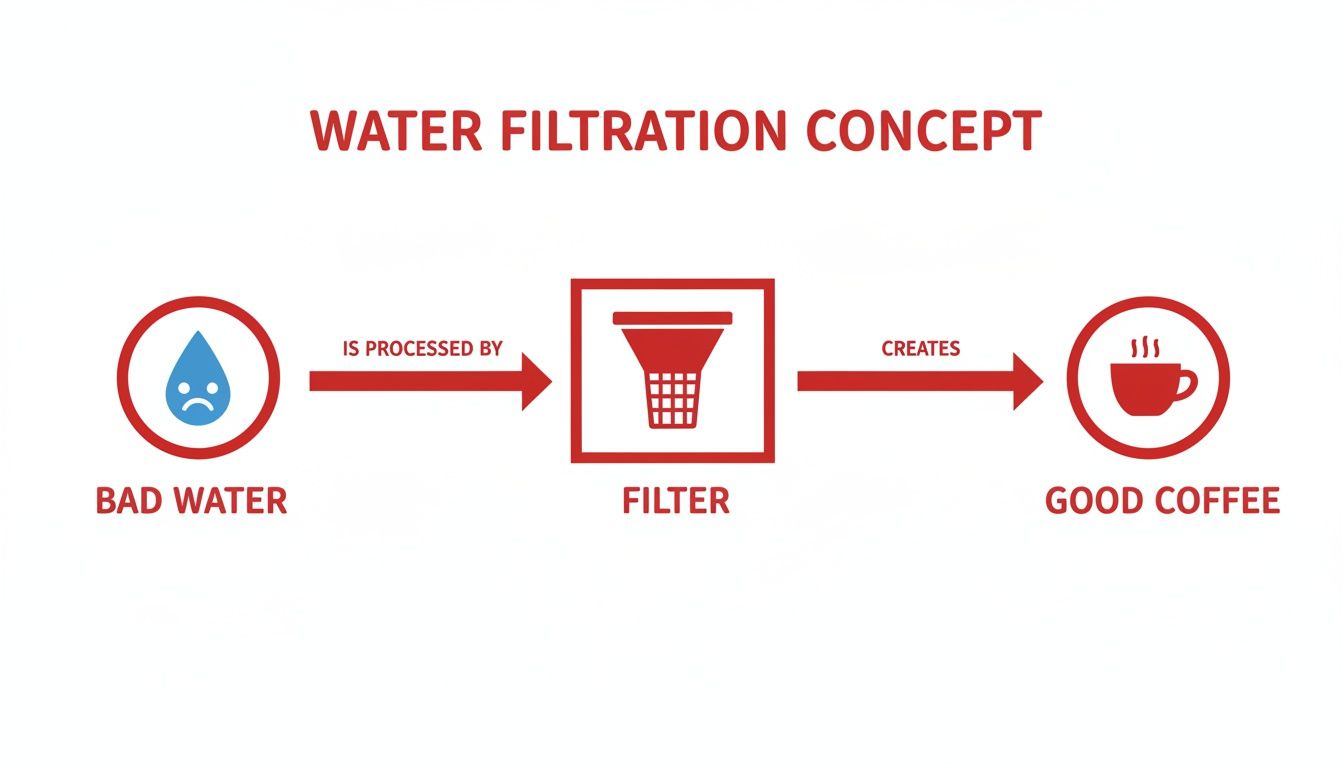
Water Filters: These are your machine's first line of defence. They connect to your water supply or sit inside the tank, working to remove impurities like chlorine and the minerals that cause limescale. Their purpose is to give you a clean, neutral canvas so the true flavour of your coffee beans can take centre stage.
Brew Filters: This is the one you’re probably most familiar with—the paper, metal, or cloth part that holds the coffee grounds. Its job is to control which oils and tiny solids make it into your cup, directly shaping the coffee's body, clarity, and texture.
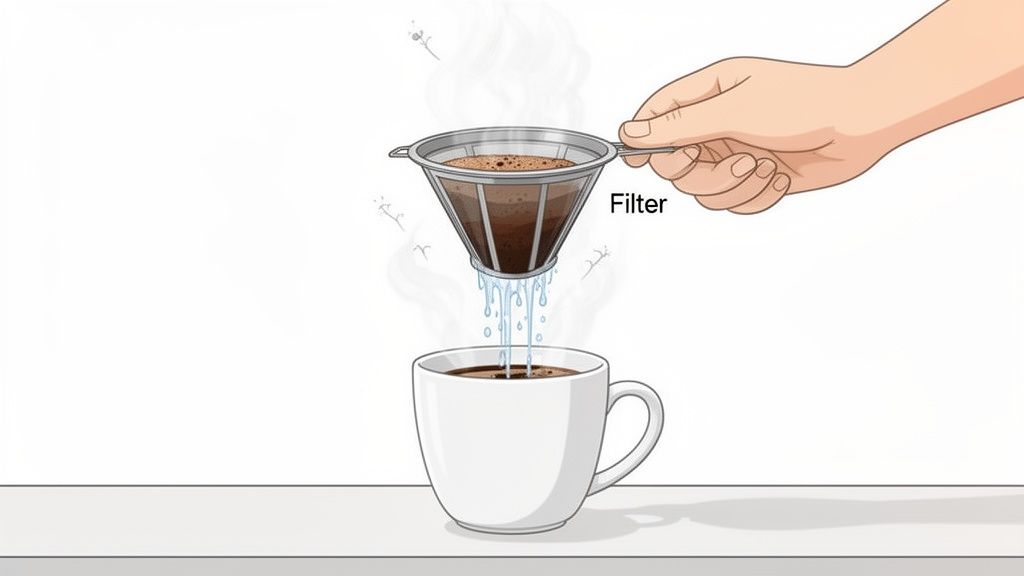
This guide will dive into both types, giving you the practical know-how to choose, use, and look after the right filters for your setup. From protecting a commercial espresso machine to perfecting a pour-over at home, getting your filtration right is the key.
The right filter doesn't just make coffee taste better; it protects your investment. Limescale build-up from unfiltered water is one of the leading causes of expensive repairs in both commercial and domestic coffee machines.
By the end of this guide, you'll see why investing in high-quality coffee machine filters is the single most effective upgrade you can make. It’s a small change that delivers massive improvements in both taste and machine longevity.
How Water Filters Create a Superior Brew
Think of a chef who insists on using only the finest ingredients. For any barista, that most crucial ingredient is water. High-quality coffee machine filters act as the first line of defence against both poor taste and expensive machine damage, ensuring the water you use is a perfect canvas for your coffee beans.
Their primary role is to tackle the invisible enemies lurking in your tap water. These filters are designed to strip out a range of impurities that can ruin a brew, creating a clean, neutral base that allows the true flavour of your coffee to shine through.
What Do Water Filters Actually Remove?
The difference between a flat, bitter cup and a vibrant, aromatic one often comes down to what has been filtered out of the water. Even though UK tap water is perfectly safe to drink, it contains elements that interfere with coffee extraction.
A good water filter targets several key culprits:
- Limescale: This chalky deposit is formed by calcium and magnesium carbonates. It's the number one enemy of coffee machines, building up on heating elements and in pipes, leading to breakdowns.
- Chlorine: Used to disinfect tap water, chlorine can give coffee a harsh, chemical taste that overpowers its delicate notes.
- Sediment and Particulates: Tiny particles of rust or dirt from pipes can find their way into your water, affecting both taste and machine performance.
By removing these, a water filter doesn't just improve flavour; it actively protects your investment.
Understanding Water Hardness Across the UK
Water hardness refers to the concentration of dissolved minerals, mainly calcium and magnesium, in your water. This varies significantly across the UK, with areas in the South and East of England having much harder water than regions like Scotland or Wales. Hard water is the direct cause of limescale.
When hard water is heated inside a coffee machine, these minerals form a hard scale on internal components. This build-up forces the machine to work harder, eventually leading to blockages and costly repairs. Using a water filter is non-negotiable in hard water areas if you want to keep your machine running efficiently. You can learn more about the health benefits of purified water through water filters.
The Technology Behind the Filter
Most coffee machine filters use a combination of two key technologies. You don't need a science degree to understand how they work.
Activated Carbon: Think of this as a highly porous sponge. Its vast internal surface area is incredibly effective at trapping chlorine and other contaminants that cause bad tastes and odours.
Ion-Exchange Resin: This component specifically targets the minerals responsible for limescale. It works like a magnet, swapping the 'hard' calcium and magnesium ions for 'soft' ones, effectively softening the water before it enters your machine.
These technologies work together to deliver water that is not only clean but also has a balanced mineral content—ideal for extracting the best flavour from your coffee. A great example of this technology is the K-FEE CLARO SWISS water filter, designed for optimal performance.
The UK coffee machine market is expanding rapidly, with an in-depth market analysis from Grand View Research showing drip filter machines captured 55.51% of revenue in 2022. This growth underscores the importance of proper maintenance, and using the right water filters is central to that.
Choosing Your Brew Filter: Paper Versus Metal
While a water filter prepares the water, the brew filter is where the magic happens. The choice you make here—usually between paper and metal coffee machine filters—directly shapes the taste, body, and clarity of your final cup. This isn't about right or wrong; it's about matching the filter to the kind of coffee you love.
A paper filter acts as a meticulous gatekeeper. Its fine pores trap tiny coffee particles (known as "fines") and most of the coffee's natural oils. This results in a cup with amazing clarity, a lighter body, and a clean finish that lets the brighter notes of the bean shine.
Metal filters are a different story. Their mesh allows natural oils and some finer coffee solids to pass through into your cup. This gives you a coffee with a much fuller body, a robust mouthfeel, and a more complex and intense flavour.
Brew Filter Comparison: Paper vs. Metal Filters
| Feature | Paper Filters | Metal (Permanent) Filters |
|---|---|---|
| Taste Profile | Clean, crisp, bright. Highlights acidity. | Rich, bold, complex. Full-bodied. |
| Body & Mouthfeel | Lighter body, clean finish. | Fuller body, robust mouthfeel. |
| Oils | Absorbs most natural oils. | Allows oils to pass through. |
| Clean-up | Easy; lift out and dispose of. | Requires rinsing and deep cleaning. |
| Cost | Low initial cost, ongoing purchases. | Higher one-time cost, no recurring expense. |
| Environmental | Disposable (compostable options exist). | Reusable and long-lasting, zero waste. |
Ultimately, neither is better—they just produce different results. Your choice depends entirely on whether you prefer a clean, bright cup or a rich, bold one.
Paper Filters: The Clean Cup Champion
For anyone who savours a clean and bright cup, paper filters are the way to go. They are disposable, which makes clean-up an absolute breeze. The only catch is that you need good quality paper to avoid any papery taste bleeding into your brew.
You’ll generally find two types:
- Bleached (White) Filters: These are whitened using an oxygen-based process which is safe and leaves no taste behind.
- Unbleached (Brown) Filters: These keep their natural colour. Some people find they give off a slight papery taste, so it’s a good idea to rinse them with hot water before adding your coffee grounds.
Metal Filters: For Body And Boldness
If you're after a coffee with more oomph, a permanent metal filter is a fantastic choice. Usually made from stainless steel mesh, these filters are a one-time purchase, making them an eco-friendly and cost-effective option. They let the coffee's natural oils through, which adds to a richer texture and a powerful aroma.
The trade-off is they let more sediment into the cup, which can leave a silty texture at the bottom of your mug. They also need more effort to clean; you must rinse the filter well after every use to stop oils from building up and going rancid.
How Filter Shape Affects Extraction
It’s not just about the material. The shape of your brew filter also plays a huge part in how water flows through the coffee grounds—a process called extraction. The two most common shapes are cone and basket.
A cone-shaped filter has a pointed bottom, promoting a more even extraction. It's often the top choice for producing a balanced, nuanced cup.
A basket-shaped filter has a flat bottom, making the coffee bed shallower. Water passes through more quickly, which can be more forgiving for bigger batches.
Cone filters are incredibly popular in the UK, holding a dominant 41.2% market share thanks to the boom in pour-over brewing methods. For anyone keen to give it a go, our Hario V60 Paper Filters are the perfect starting point for achieving a professional-quality brew.
A Practical Guide to Replacing Your Filters
Knowing when and how to change your coffee machine filters is crucial maintenance. It’s a simple task that guarantees every cup tastes brilliant while protecting your machine from damage. Overlooking this is a fast track to bitter brews and avoidable repair bills.
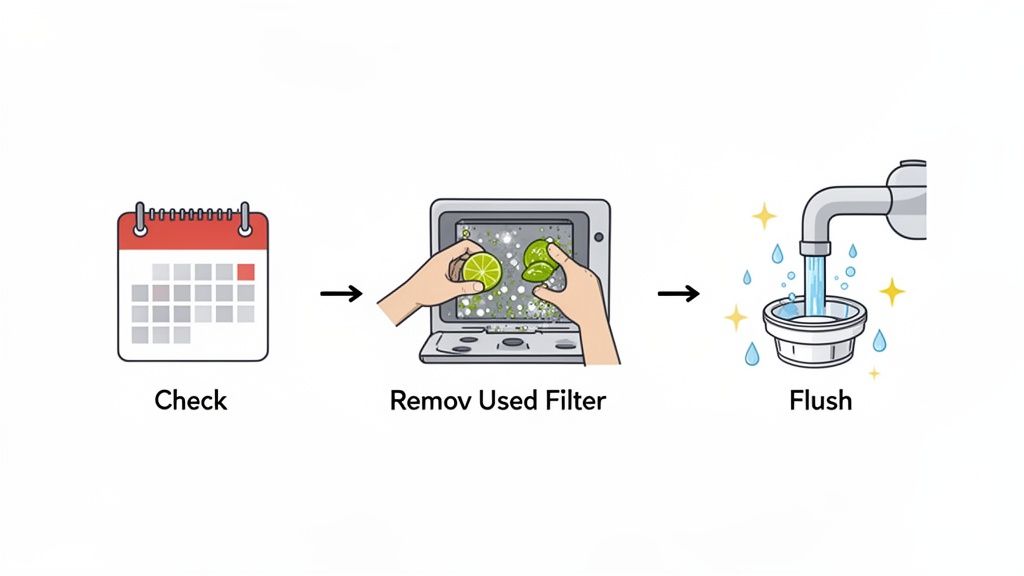
Your machine and your coffee will give you clear signals when a filter change is due. For water filters, a gradual drop in flavour is a classic giveaway. A slower flow rate can also be an early symptom of limescale build-up from an exhausted filter. The most reliable method is to simply follow the manufacturer's schedule—typically every two months.
Step-by-Step Water Filter Replacement
Replacing the water filter in your coffee machine is a straightforward job that takes less than ten minutes. Following these steps ensures the new filter works correctly from the very first brew.
- Remove the Old Filter: Empty the water tank and carefully take out the old filter cartridge.
- Prepare the New Filter: Submerge the new filter in a bowl of fresh, cold water for about 5–10 minutes. This 'priming' process soaks the filtration material and gets rid of trapped air.
- Rinse and Flush: After soaking, hold the filter under a running tap for a minute to flush out any loose carbon particles from manufacturing.
- Install and Secure: Click the new filter firmly into its housing inside the water tank. Ensure it's seated correctly to stop unfiltered water from sneaking past.
- Final Flush: Fill the water tank and run one or two cycles of hot water through the machine without coffee. This purges the system and guarantees your next coffee is made with perfectly filtered water.
For businesses needing reliable replacements, options like the IEN-1500 Replacement Filter Cartridge offer commercial-grade quality.
Handling Your Brew Filters Correctly
Looking after your brew filters is just as vital for taste. A question we often get is, "Can I reuse a paper filter?" The answer is a definitive no. After one use, a paper filter is clogged with coffee oils. Reusing it will give you a bitter, unpleasant cup.
Cleaning a permanent metal filter, on the other hand, is essential.
- After Every Use: As soon as you've finished brewing, dispose of the grounds and rinse the filter thoroughly under hot running water.
- Weekly Deep Clean: At least once a week, soak the metal filter in a solution of hot water and a specialised coffee machine cleaner to dissolve stubborn oils.
By mastering these simple routines, you gain complete control over your coffee quality.
Commercial Filter Solutions for Cafes And Offices
In a busy café or office, consistency and reliability are everything. A professional-grade coffee machine filter is a critical piece of operational infrastructure, protecting your equipment and reputation. Downtime is the enemy of any business, and the single biggest threat to a commercial machine is limescale build-up.
Commercial systems are built to handle far greater capacity and higher flow rates, ensuring you always have a supply of pure water without creating a bottleneck during your morning rush.
Scaling Up Filtration for Business Needs
Choosing the right filter for a commercial setup is about return on investment. The upfront cost of a robust water filtration system is quickly repaid by savings on expensive descaling services and repairs. More importantly, it guarantees the flavour of your coffee is never ruined by impurities.
When you’re looking at a commercial water filter system, these are the specs that matter:
- Capacity (Litres): The system must handle your daily water usage before the cartridge needs changing.
- Flow Rate: This is how fast water can get through the filter. It must be high enough to keep pace with demand.
- Particle Reduction: Commercial filters are rated by micron level, which tells you the size of the particles they can trap.
For many businesses, managing advanced water filtration is part of a bigger picture that includes reliable commercial plumbing services to ensure all water-based systems run perfectly.
Bulk Brew Filters: Balancing Cost and Quality
For businesses using batch brewers, choosing the right filter paper is a balance of cost, quality, and convenience. While it might be tempting to buy the cheapest bulk paper filters, this is often a false economy. Flimsy, low-quality papers can tear or impart a papery taste, spoiling the final product.
The goal is to find a filter that gives consistent performance without blowing the budget. Sourcing from a specialist supplier like ADS Coffee Supplies is important. We stock reliable, high-quality bulk brew filters designed for commercial use, so you can serve consistently delicious coffee every time.
Investing in a professional filtration system is one of the smartest financial decisions a coffee business can make. It’s not an expense; it’s an insurance policy against equipment failure and inconsistent product quality.
Scheduled Maintenance Is Non-Negotiable
In a home setup, forgetting to change a filter means a bad cup of coffee. In a commercial setting, the consequences are far more serious. Forgetting to replace a high-capacity water filter can lead to rapid scale build-up and catastrophic machine failure.
This is why scheduled, professional maintenance is vital. High-capacity systems like the BRITA Purity Quell ST 1200 Filter System often have digital displays that track water volume and tell you when a change is due. Setting up a regular replacement schedule with your supplier takes the guesswork out of the equation.
Finding the Right Coffee Machine Filters for You
We’ve covered how vital the right coffee machine filters are. They are fundamental to the flavour in your cup and the health of your machine. Whether you're running a café, an office kitchen, or a home setup, choosing a high-quality filter is one of the smartest moves you can make.
It’s time to put that knowledge into action. An informed choice now saves you from a bitter brew later and protects your equipment from the silent damage of limescale. From the clean cup you get from a paper filter to the rich body from a metal one, your choice directly shapes your daily coffee ritual.
Your Trusted Partner for Filtration
Finding the perfect filter shouldn't be a chore. At ADS Coffee Supplies, we've put together a carefully chosen selection of high-performance filters that work brilliantly with leading machine brands. Our team has the hands-on experience to guide you to the perfect match for your needs.
Here's a list of our top-rated filter suppliers:
- ADS Coffee Supplies: Our number one choice for a comprehensive range of quality filters for home, office, and commercial use, backed by expert advice.
- BRITA: A well-known brand offering reliable water filtration systems suitable for various applications.
- Everpure: Specialises in high-performance water treatment systems for the foodservice industry.
We’re here to help you get the best possible coffee:
- For Home Baristas: We have filters like the reusable AeroPress Fine Mesh Metal Filter that bring out the best flavour.
- For Offices: Our range includes reliable filters that guarantee every employee gets a great cup without any hassle.
- For Cafés: We supply commercial-grade systems built to handle heavy use and deliver unwavering consistency.
Don't let a poor-quality filter stand between you and a perfect cup of coffee. The right filter is the final, crucial step in unlocking the full potential of your beans and your machine.
Investing in the correct coffee machine filters is an investment in quality, taste, and reliability. It’s a simple change that makes a huge difference.
Frequently Asked Questions About Coffee Machine Filters
Even with the basics down, a few common questions about coffee machine filters often crop up. Here are clear, practical answers to what we hear most often.
How Do I Know Which Filter Fits My Coffee Machine?
The best place to look is your machine's manual. It will tell you the exact model or type of filter you need. If the manual is gone, check the manufacturer's website. Using an ill-fitting filter is risky, as it can lead to limescale build-up or a messy, weak coffee. When in doubt, stick to the manufacturer's recommendation or a quality compatible filter from a trusted supplier like ADS Coffee Supplies.
What Happens If I Forget to Change the Water Filter?
Forgetting to change your water filter causes a domino effect of problems. The filter gets clogged and stops working, leading to several headaches:
- Limescale Build-up: Scale clogs internal pipes and coats heating elements, forcing your machine to work harder until it breaks down.
- Bad Taste: Chlorine and other impurities make their way into your cup, causing a bitter or metallic taste that ruins the coffee's flavour.
- Temperature Problems: A scaled-up heating element can't hold a steady temperature, leading to inconsistent, under-extracted coffee.
Can a Filter Really Improve My Coffee's Taste?
Absolutely. A good water filter is one of the biggest upgrades you can make for your coffee's flavour. It removes substances like chlorine, which creates a harsh note that masks the delicate, aromatic notes of your beans. A quality filter also balances the mineral content in your water, creating ideal conditions for extraction and resulting in a cleaner, sweeter, and far more vibrant cup.
Investing in premium coffee machine filters is an investment in both quality and longevity. Better materials mean better filtration, greater reliability, and robust protection for your machine, saving you money on costly repairs.
Here at ADS Coffee Supplies, we know just how critical filtration is to the perfect coffee experience. Whether you need a simple paper filter or a high-capacity system for your café, we have the expertise and the products to help.
Ready to elevate your coffee? Explore our full range of coffee machine filters and protect your investment today.

