

Welcome to your practical guide for sourcing coffee shop supplies wholesale. Running a thriving UK café isn't just about brewing great coffee—it's about smart purchasing. This guide offers actionable advice for building a reliable supply chain, covering everything from essential products to choosing the right partner to help you succeed.
For a comprehensive range of products backed by expert support, many UK coffee shops rely on ADS Coffee Supplies.
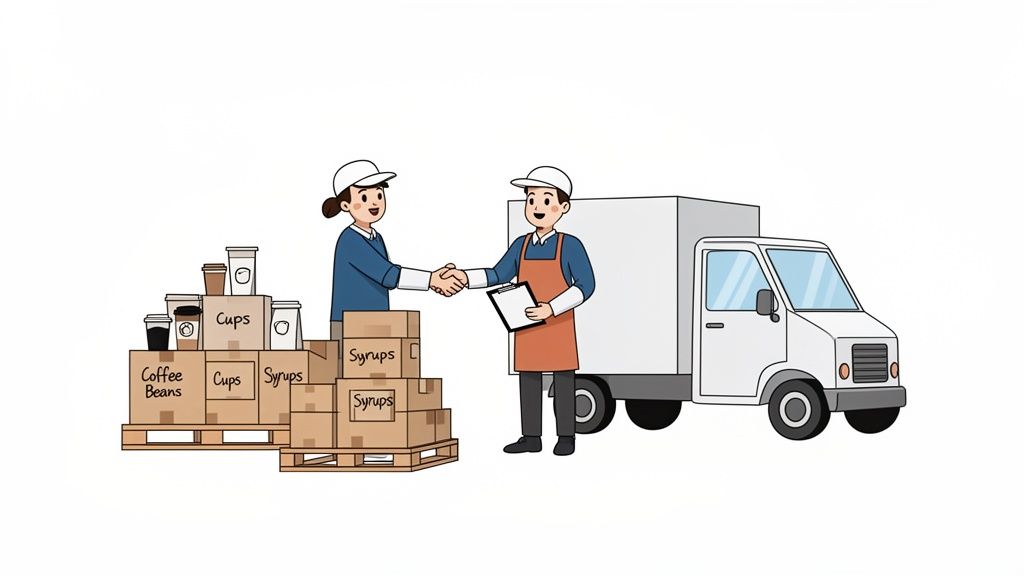
Why a Reliable Wholesale Partner Is Your Greatest Asset
Launching or running a coffee shop is a demanding venture where every detail counts, from the crema on your espresso to the durability of your takeaway cups. Partnering with the right supplier for your coffee shop supplies wholesale isn't just a transaction; it's one of the most important strategic decisions you will make.
A great partner does more than just deliver boxes. They become an extension of your team, directly impacting your efficiency, profitability, and the quality of your customer experience.
The UK coffee market is more competitive than ever. To stand out among thousands of businesses, consistency and quality are non-negotiable. A dependable supplier ensures you always have what you need to meet customer expectations.
The Benefits of a Strong Supplier Relationship
Building a solid relationship with a single, comprehensive supplier offers significant advantages. It streamlines your entire purchasing process, from ordering and invoicing to delivery logistics. This consolidation saves you precious time that can be better spent focusing on your customers and staff.
A dedicated wholesale partner can offer benefits that go beyond just products:
- Cost Savings: Access to better pricing and bulk discounts is a massive perk. Understanding how bulk buying saves you money is key to managing your budget effectively.
- Expert Advice: You get guidance on the best equipment, new product trends, and efficient stock management—insights that are hard to come by on your own.
- Reliable Service: Consistent, on-time deliveries prevent costly stockouts of essential items.
- Training and Support: Access to barista training and technical support to keep your operations running smoothly is often part of the package.
Ultimately, choosing the right supplier for your coffee shop supplies wholesale is about building a foundation for success. It ensures you have the high-quality products you need, when you need them, allowing you to focus on what you do best: serving fantastic coffee.
Building Your Core Coffee Shop Inventory
A successful coffee shop is built on more than just great coffee; it's built on a foundation of smart, high-quality inventory. Getting this right from day one helps avoid costly mistakes and ensures every customer gets a consistently brilliant experience. When planning your coffee shop supplies wholesale needs, you must look beyond the beans to build a complete picture.
This means methodically considering every item your team will use, from the main event—the coffee itself—right down to the smallest details like branded stirrers or the correct cleaning chemicals. Taking a structured approach prevents that sinking feeling of realising you’ve missed something critical when placing your first big order.
More Than Just Coffee Beans
The heart and soul of your operation is, of course, the coffee. This is one area where you simply cannot compromise on quality. Your choice of beans will define your shop's character and is the number one reason customers will come back, so it’s vital to get it right.
When sourcing your beans, you’ll generally be looking at two main categories:
- Single-Origin Beans: These come from a specific geographical location, sometimes even a single farm. They are prized for their unique and distinct flavour profiles that can attract coffee connoisseurs. Think of an Ethiopian Yirgacheffe with its bright, floral notes, or a Sumatran bean that's earthy and full-bodied.
- Blends: This is where beans from different origins are expertly combined to create a flavour that's balanced and consistent day in, day out. A solid house blend is the workhorse of most coffee shops and is perfect for all your espresso-based drinks like lattes and cappuccinos.
Don't overlook your decaf. A high-quality decaffeinated coffee is no longer an afterthought; it’s an absolute must-have for a large portion of your customer base. It's well worth exploring a wide range of wholesale coffee beans in the UK to find the perfect signature flavour that will make your business stand out.
Essential Disposables for Service
In any busy café, takeaway service is a huge part of the daily routine. Your disposable items aren't just functional; they're a physical representation of your brand's quality that customers carry out the door.
Your basic list must include cups and lids, but smaller items often complete the customer experience. Think about branded sleeves to protect hands from heat, decent stirrers that don't immediately bend, and sturdy takeaway bags for larger orders. Choosing eco-friendly materials can also be a massive selling point for environmentally conscious customers.
Key Consumables Beyond the Beans
While coffee is the star of the show, a successful menu relies on a host of other consumables. These ingredients turn a simple espresso into a diverse, appealing menu that caters to every taste.
A well-stocked café anticipates what customers want. This means offering not just standard dairy milk but also the popular plant-based alternatives, which have become non-negotiable for many people.
Here are the key consumables you’ll need:
- Milk and Alternatives: Fresh dairy milk is a staple, but you must stock popular alternatives. Oat milk is now the leading choice in many UK coffee shops, with almond and soya options following closely behind.
- Syrups and Sauces: To create a varied drinks menu, premium flavoured syrups for lattes, rich sauces for mochas, and toppings for hot chocolates are essential.
- Hot Chocolate Powder: A rich, high-quality hot chocolate is a core menu item, especially for non-coffee drinkers and younger customers.
- Sugars and Sweeteners: Offer a range of options, including white sugar, demerara, and artificial sweeteners, to cover all preferences.
Maintaining Hygiene with Cleaning Supplies
Finally, impeccable hygiene is non-negotiable. It is fundamental to your coffee shop's reputation and your legal compliance. Having the right cleaning supplies on hand is every bit as important as the quality of your coffee beans.
Your wholesale order needs to include sanitisers for surfaces, food-safe cleaning agents specifically for your coffee machine, floor cleaner, and plenty of cloths and sponges. Keeping these supplies organised ensures your team can maintain a spotless environment.
How to Choose the Right Wholesale Supplier
Picking your supplier for coffee shop supplies wholesale is one of the most important decisions you'll make. This isn't just a transaction; it's a partnership that directly impacts your product quality, operational smoothness, and, ultimately, your bottom line. The right supplier feels like an extension of your own team.
A great relationship is built on more than just cheap prices; it’s about consistency and trust. Think of it like hiring a key member of staff—you need someone dependable who understands your goals and has the tools to help you achieve them.
Analysing Pricing Structures and Discounts
It's tempting to focus on the cost per item, but the real value is in the bigger picture. A smart owner looks at the whole pricing structure, not just the headline number. This means digging into how bulk discounts, loyalty schemes, and tiered pricing can reduce your overall costs.
When you're vetting a supplier, ask them to walk you through their pricing models. A transparent partner will be happy to show you how you can save as your order volume grows. A supplier like ADS Coffee Supplies, for example, offers real benefits for loyal, high-volume customers, which can make a huge difference to your profits.
Understanding MOQs and Lead Times
You'll hear two terms often: Minimum Order Quantity (MOQ) and lead time. The MOQ is the smallest order a supplier will accept, which has a big impact on your cash flow. A high MOQ can tie up money in stock you don't need yet, whereas a low one gives you flexibility.
Lead time is how long it takes from placing an order to it arriving at your door. A long lead time demands careful planning to avoid running out of essentials. A short lead time, like next-day delivery, gives you incredible agility, allowing you to react to busy periods without overstocking perishable goods like milk.
A supplier with low MOQs and short lead times gives your business flexibility. It lets you keep your inventory lean, hold onto your cash, and ensure your products are always fresh.
Evaluating Delivery Reliability and Costs
Consistent, reliable delivery is completely non-negotiable. One late or incorrect delivery can grind your entire operation to a halt, leading to lost sales and unhappy customers. Before you sign anything, ask some direct questions about their logistics and track record.
Here are a few things you should be asking:
- What are your delivery charges? Is there a minimum spend for free delivery?
- What is your track record for on-time deliveries?
- How do you handle items that are on back-order or out of stock?
- Can I track my order or get delivery notifications?
This simple decision tree helps visualise the core categories you need to source for your coffee shop.
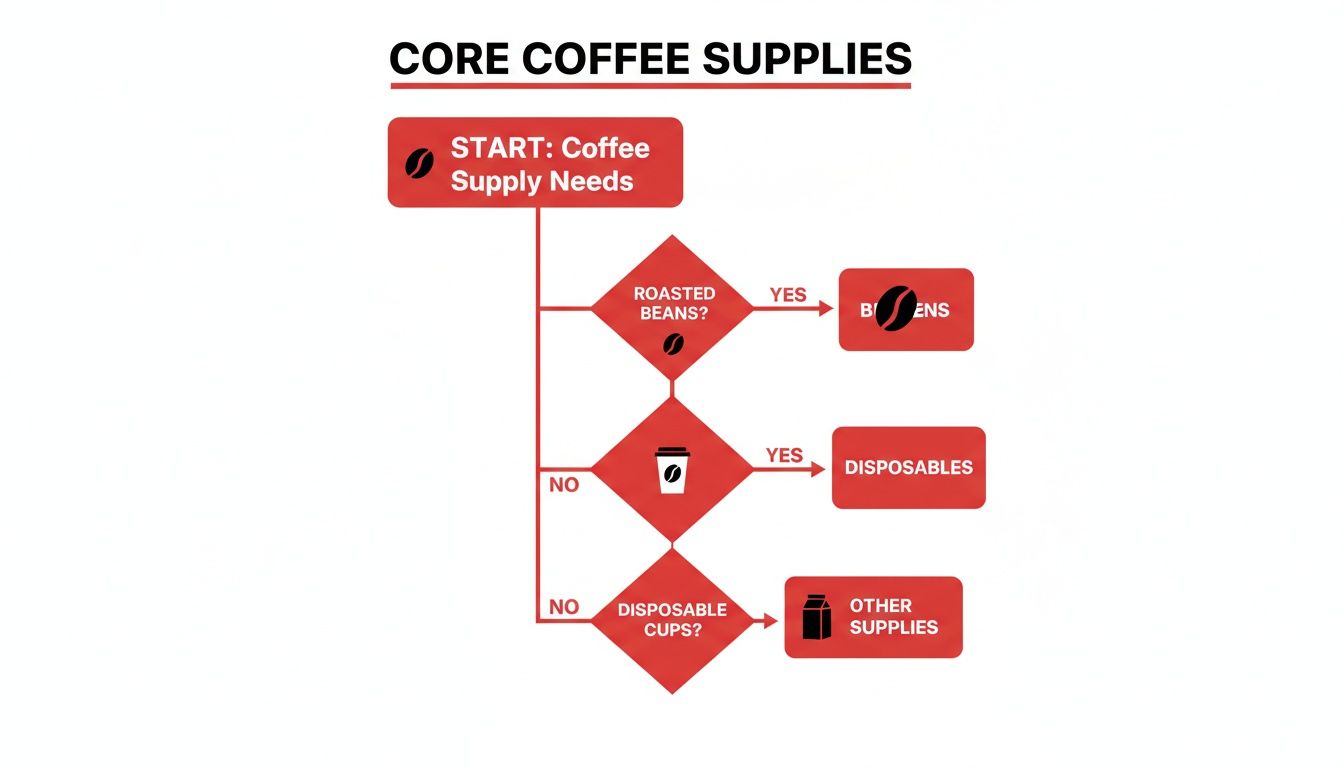
This visual guide breaks down your inventory into beans, disposables, and other essential consumables, helping you prioritise your purchasing decisions.
Exploring Value-Added Services
The best suppliers for coffee shop supplies wholesale do more than just drop off boxes. They provide services that help your business grow. These "value-adds" are what separate a simple distributor from a true partner.
Look for a supplier who offers:
- Equipment Training: Properly training staff on expensive machines improves drink quality and prevents costly breakdowns.
- Maintenance and Support: Knowing you can get an engineer out quickly to fix your espresso machine or grinder is priceless.
- Product Expertise: A knowledgeable supplier can give you the inside scoop on new trends, help you pick the right beans, and introduce you to new products your customers will love.
By looking at the whole package, you can find a supplier that genuinely adds value. To see what a top-tier partnership can look like, explore this guide on what to look for in wholesale coffee suppliers in the UK.
To help you stay organised, we've created a simple checklist. Use it to score and compare potential suppliers side-by-side.
Wholesale Supplier Evaluation Checklist
| Evaluation Criteria | ADS Coffee Supplies | Other Supplier A | Other Supplier B |
|---|---|---|---|
| Pricing Structure (Discounts, Tiers) | Excellent | ||
| Minimum Order Quantity (MOQ) | Flexible | ||
| Lead Times & Delivery Speed | Fast | ||
| Delivery Reliability & Costs | Reliable | ||
| Product Range & Quality | High | ||
| Equipment Training & Support | Included | ||
| Maintenance & Repair Services | Available | ||
| Customer Service & Expertise | Expert | ||
| Sustainability & Ethical Sourcing | Yes | ||
| Overall Score | 1 |
Once you've filled this out for a few contenders, the right choice often becomes much clearer. It’s not just about ticking boxes, but about finding a partner who aligns with your business goals and can support you as you grow.
Budgeting and Placing Your First Order
That first big wholesale purchase can feel daunting, but a solid plan makes all the difference. Let's walk through how to budget properly for your initial coffee shop supplies wholesale and get that first order placed without guesswork. A smart strategy is key to preventing overspending, cutting waste, and ensuring you're profitable from day one.
The goal is to find that sweet spot: enough stock to sail through your opening week, but not so much that you tie up precious cash in products sitting on a shelf. It’s all about being prepared, not over-prepared.
Forecasting Your Initial Demand
Before creating a purchase order, you need a realistic idea of what you will sell. This is part art, part science.
Take a hard look at your location. Are you on a busy high street with constant footfall, or tucked away in a quieter neighbourhood spot? Use your business plan's customer projections to map out your first week. If you're expecting 100 coffee sales a day, you will need around 14kg of espresso beans for the week (100 coffees x 20g/coffee x 7 days), plus extra. Apply that same logic to milk, cups, and syrups.
Your Sample Startup Order Checklist
To avoid getting overwhelmed, work from a checklist. Nail down the absolute essentials first, then add the 'nice-to-haves' if your budget has room. This keeps your initial outlay lean and focused on what will generate revenue straight away.
Here’s a sample checklist to get you started:
- Coffee Beans: Your house espresso blend (at least 10-15kg), one single-origin guest option (2-3kg), and a quality decaf (2-3kg).
- Milk: A solid mix of whole and semi-skimmed dairy, plus a good starting stock of oat milk.
- Disposables: 8oz and 12oz takeaway cups and lids are non-negotiable. Don't forget cup sleeves, stirrers, and carrier trays.
- Consumables: The core flavoured syrups (vanilla, caramel, hazelnut), a high-quality hot chocolate powder, and a selection of sugars and sweeteners.
- Cleaning Supplies: Espresso machine cleaner, milk frother cleaner, surface sanitiser, and plenty of cloths.
It’s far better to place smaller, more frequent orders at the beginning than to get stuck with a mountain of something that doesn't sell. You can always adjust your quantities once you have real sales data.
Calculating Your Cost-Per-Serving
Knowing your costs is fundamental to setting prices that make you money. Your cost-per-serving is the total cost of all the ingredients in a single drink. Running this calculation for your key sellers, like a latte, is a non-negotiable budgeting task.
Let's break down a standard 12oz latte:
- Coffee: A double espresso shot uses about 18g of beans. If a 1kg bag costs you £20, the coffee in that serving is £0.36 (18g / 1000g * £20).
- Milk: A latte needs roughly 200ml of milk. If a litre of oat milk is £1.80, the milk cost is £0.36 (200ml / 1000ml * £1.80).
- Cup & Lid: Let's say a compostable cup and lid set costs about £0.15.
- Sugar/Stirrer: Allocate a small amount for the extras, perhaps £0.02.
Add it all up, and your total cost-per-serving for that oat milk latte is £0.89. With this number, you can price your menu intelligently and ensure a healthy profit margin on every sale.
UK wholesale coffee bean prices can range from £9 to over £30 per kilogram, so your choice of supplier directly impacts these figures. If you're curious about how buying in larger quantities affects these costs, it's worth reading up on maximising profits with bulk buy coffee supplies.
Effective Stock Storage and Inventory Management
Once your delivery of coffee shop supplies wholesale arrives, your focus shifts from buying to preserving. Smart storage and sharp inventory management are the unsung heroes of a profitable café. They work quietly in the background to cut waste, preserve quality, and protect your bottom line.
Getting this right means every bag of beans and bottle of syrup pulls its weight.
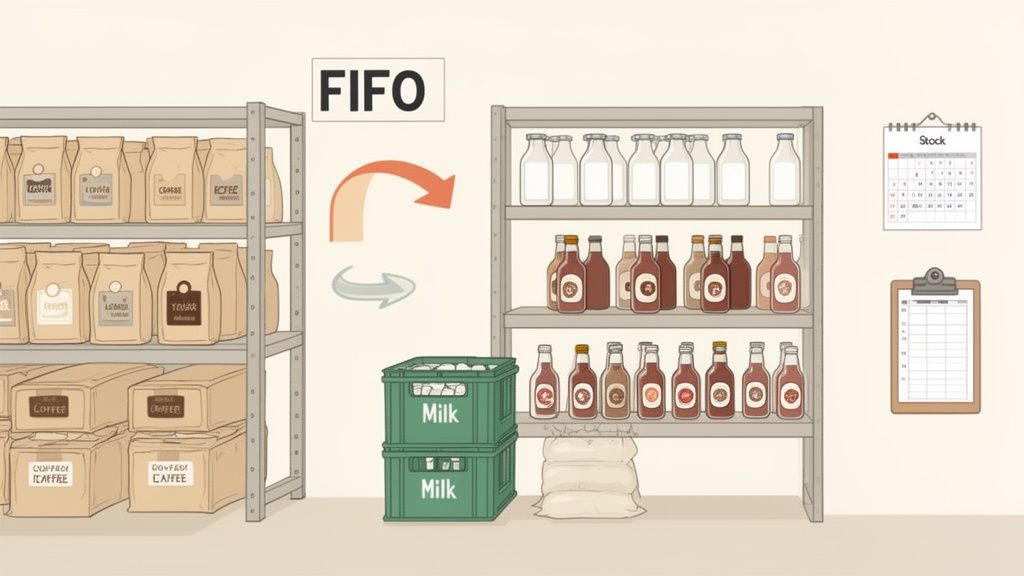
Neglecting your stockroom is like leaving cash on the table. Poor storage can ruin expensive coffee beans, while a chaotic inventory system leads to over-ordering or running out of oat milk during the Saturday morning rush. Here are practical steps to keep things running smoothly.
Mastering Coffee Bean Storage
Your coffee beans are your most precious—and volatile—asset. The flavour you paid for is delicate and can be quickly destroyed by its four biggest enemies: air, light, heat, and moisture.
To protect your investment, your beans must be kept in airtight containers, away from direct sunlight and any heat sources like ovens or radiators. A cool, dark, and dry cupboard is perfect. For a deeper dive, our guide on how to store coffee beans has all the expert tips you’ll need.
Implementing the FIFO System
For all perishable goods—milk, syrups, pastries—the First-In, First-Out (FIFO) system is non-negotiable. It’s a simple rule: older stock gets used before newer stock. This one habit drastically cuts down on spoilage and waste.
Putting FIFO into practice is straightforward:
- Label Everything: The moment a new delivery arrives, write the date on every box.
- Rotate Your Stock: Always place new items at the back of the shelf or fridge, pulling the older stock forward.
- Train Your Team: This system only works if everyone is on board. Make it a core part of your team's routine.
This disciplined approach doesn’t just save you money. It also guarantees your customers always get the freshest, highest-quality product you can offer. It’s a small habit with a massive impact on your reputation.
Organising Your Stockroom for Efficiency
A tidy stockroom is a safe and efficient one. When things are organised, your team can find what they need in seconds, which prevents accidents and delays. Group similar items together—all your syrups on one shelf, cleaning supplies in a dedicated area, and disposables stacked neatly.
Use sturdy shelves and keep heavier items on lower levels to reduce injury risk. Ensure there’s a clear path to walk through. If you're dealing with huge bulk orders, an external solution might be a lifesaver. It's worth looking into finding the best commercial storage unit to manage larger stock levels without cluttering your workspace.
Simple Inventory Tracking Methods
Finally, you can't manage what you don't measure. Tracking your stock helps you see usage patterns, stopping you from running out of essentials or tying up cash in products that just sit there. You don't need fancy software to get started.
- A Simple Spreadsheet: A basic spreadsheet can track stock levels, delivery dates, and usage rates. A quick weekly update is all it takes to spot trends.
- Your POS System: Many modern Point of Sale (POS) systems have built-in inventory features that automatically track what you sell, doing the hard work for you.
By combining smart storage with a consistent tracking method, you gain complete control over your stock. This ensures you have the right coffee shop supplies wholesale exactly when you need them.
Growing Your Cafe with Sustainable Choices
A great coffee shop doesn't just sell coffee; it builds a brand that people trust and want to support. This means thinking beyond the day-to-day and focusing on what today's customers truly care about. Sustainable and ethical choices are no longer a niche interest—for many, they’re a deal-breaker.
When you think this way, buying your coffee shop supplies wholesale stops being just a transaction. It becomes a powerful part of your story. When customers know your coffee is ethically sourced and your packaging isn't destined for landfill, they feel good about spending their money with you.
Meeting the Demand for Ethical Sourcing
Today’s coffee drinkers are savvy. They want to know the story behind their flat white—from the farm it came from to the roaster. This shift towards transparency is a massive opportunity for your café.
Working with a wholesale supplier who champions ethically sourced beans means you can share these compelling stories. It’s not just about fantastic coffee; it’s about supporting fair wages and sustainable farming. Promote these values on your menu and social media to attract customers who will happily pay a little extra for quality with a conscience.
The Power of Eco-Friendly Packaging
Your takeaway cups, lids, and bags are walking billboards for your brand. Switching to eco-friendly, compostable, or recyclable options sends a clear message: you care. This one change can do wonders for your reputation and attract eco-conscious customers.
Your commitment to sustainability can be the single thing that makes a new customer choose you over the café next door. When faced with a choice, people pick the business that mirrors their own values.
Driving Growth with Smart Strategies
Beyond sustainability, long-term growth comes from constantly improving your customer experience. Your wholesale partnership can be a huge help here, offering much more than just products.
- Introduce a Loyalty Programme: Whether digital or a simple stamp card, rewarding repeat business makes customers feel appreciated and builds loyalty.
- Expand with Seasonal Offerings: Chat with your supplier about seasonal syrups or limited-edition beans. It keeps your menu exciting and gives regulars a new reason to visit.
- Leverage Advanced Barista Training: A top-tier supplier like ADS Coffee Supplies often provides training. Investing in your team’s skills ensures every drink is spot-on, which is the bedrock of quality.
The demand for quality is undeniable, with UK trends showing a growing focus on where products come from. You can dive deeper into UK market trends and consumer insights to see how important this is. Partnering with certified suppliers is the best way to meet food safety standards and build a brand people respect. Find out more about our commitment to quality and service.
Answering Your Top Wholesale Supply Questions
Stepping into the world of coffee shop supplies wholesale can feel overwhelming. You're juggling a dozen things at once, and getting the details right is crucial. To help clear things up, we've gathered answers to some of the most common questions from new and experienced café owners.
How do I figure out my weekly coffee bean order?
This is simpler than it looks. Start by estimating your daily coffee sales. Most speciality coffee shops use around 18-20g of beans for a standard double espresso. If you project selling 100 coffees a day, you'll need roughly 2kg of beans for that day's service (100 coffees x 20g), which works out to 14kg per week.
A pro tip is to always add a buffer of 10-15% to cover waste, staff training, and dialling in your grinder. When you're just starting, it's better to place smaller, more frequent orders. This keeps your beans fresh and lets you adjust quantities based on real-world sales.
Should I lease or buy my coffee equipment?
This decision comes down to cash flow and your long-term business plan. Buying your equipment outright is a significant upfront cost, but once paid for, it's yours with no monthly payments. Leasing keeps initial costs low and gives you predictable monthly payments, which can be a lifesaver for managing cash flow early on.
A huge advantage of leasing is that agreements often include maintenance and service packages. This is a massive weight off your shoulders, as it protects you from the stress and cost of unexpected repair bills. Your starting capital is the biggest factor here.
Is it better to use one supplier or multiple?
While it might seem smart to shop around, consolidating with a single, comprehensive supplier can seriously streamline your operations. Think about it: one order, one invoice, one delivery. It saves an incredible amount of time.
Plus, when you build a relationship with one key supplier, you often get access to better pricing and more personal service. Juggling multiple suppliers can get you niche products, but for the core items that keep a busy café running, a reliable one-stop shop is almost always the most efficient choice.
Ready to find a supplier that simplifies your operations and is invested in your success? At Allied Drinks Systems, we offer everything your café needs, from premium beans and state-of-the-art equipment to dedicated, expert support.
Explore our full range of wholesale coffee shop supplies today


