

Let's get one thing straight: decaf coffee doesn't have to be a compromise. Far from it. Across the UK, a growing number of coffee lovers and café owners are discovering that modern decaf coffee beans can deliver all the rich, complex flavours you'd expect from their caffeinated cousins. High-quality decaf is no longer an afterthought—it’s a superb coffee experience in its own right.
This guide offers practical advice on what makes a great decaf. We’ll explore how the decaffeination process works, what to look for when choosing your beans, and how to brew the perfect cup. Whether you're a home barista or a business owner, you'll see why stocking a premium decaf is a game-changer for any coffee menu.
Why Great Decaf Coffee Beans Are in Demand
The days of decaf tasting like a pale imitation of the real thing are long gone. Today’s speciality coffee culture has elevated the decaffeination process, using methods that meticulously preserve the delicate flavour compounds of the original bean.
This shift has completely transformed how people see decaf. It's now a popular choice for anyone who loves the taste of a great coffee but wants to manage their caffeine intake, especially later in the day. The UK market reflects this, with one in five coffee drinkers regularly choosing decaf.
A Growing Trend in the UK
The rising popularity of decaf is a major market trend. Roughly 20% of regular coffee consumers now choose decaffeinated options, a figure that highlights decaf's appeal as health awareness grows. For independent cafés and coffee shops, this means stocking premium decaf coffee beans is essential to capture this loyal customer base.
The key to a brilliant decaf is starting with a brilliant bean. The decaffeination process can't add flavour that wasn't there to begin with, which is why sourcing high-quality, speciality-grade green coffee is the first and most crucial step. You can learn more in our guide on how to choose coffee beans with the right roast and flavour.
How Modern Decaffeination Unlocks Flavour
So, how do you take the caffeine out of coffee without stripping away the flavour? The secret is that it all happens while the beans are still green, long before they get near a roaster. The process is a delicate balancing act: removing one specific compound—caffeine—while leaving behind the hundreds of others that give a coffee its unique aroma and taste.
Think of it like trying to remove a single stain from a delicate fabric. You need a method that’s targeted enough to lift the stain but gentle enough to leave the colour and texture intact. The goal is to isolate and remove the caffeine molecules, which make up about 1-2% of an Arabica coffee bean, while protecting the complex sugars and oils.
The Core Principles of Decaffeination
At its heart, decaffeination uses a substance to grab hold of the caffeine and pull it out. The first step is always to swell the green coffee beans with water or steam. This opens up their cellular structure, making the caffeine molecules inside accessible.
Once the beans are prepped, a decaffeinating agent is introduced. This is where the different methods vary, but the fundamental goal is the same—the agent selectively latches onto the caffeine, drawing it out of the bean. The beans are then thoroughly rinsed, dried, and ready for roasting.
Two Main Approaches to Flavour Preservation
Every decaffeination process falls into one of two main categories. Understanding these helps you appreciate what makes a particular decaf special.
- Solvent-Based Methods: These processes use specific compounds, like methylene chloride or ethyl acetate (often derived from sugar cane), that are exceptionally good at bonding only with caffeine. The solvent is circulated through the water-soaked beans to wash the caffeine away.
- Solvent-Free Methods: These are modern, innovative processes like the Swiss Water or CO₂ methods. Instead of direct chemical solvents, they use clever alternatives like super-saturated water or pressurised carbon dioxide to precisely target and remove caffeine.
It's worth noting that even with solvent-based methods, any tiny traces of solvent are almost entirely burned off during rinsing and the high temperatures of roasting. Regulatory bodies have incredibly strict limits, ensuring the final cup is perfectly safe to drink. You can learn more about what sets these high-quality coffees apart in our guide to understanding speciality coffee.
Comparing Decaffeination Methods for Better Taste
Not all decaf is created equal. The method used to remove caffeine has a huge impact on the final taste in your cup. Understanding the difference is the key to choosing decaf coffee beans that don't compromise on flavour.
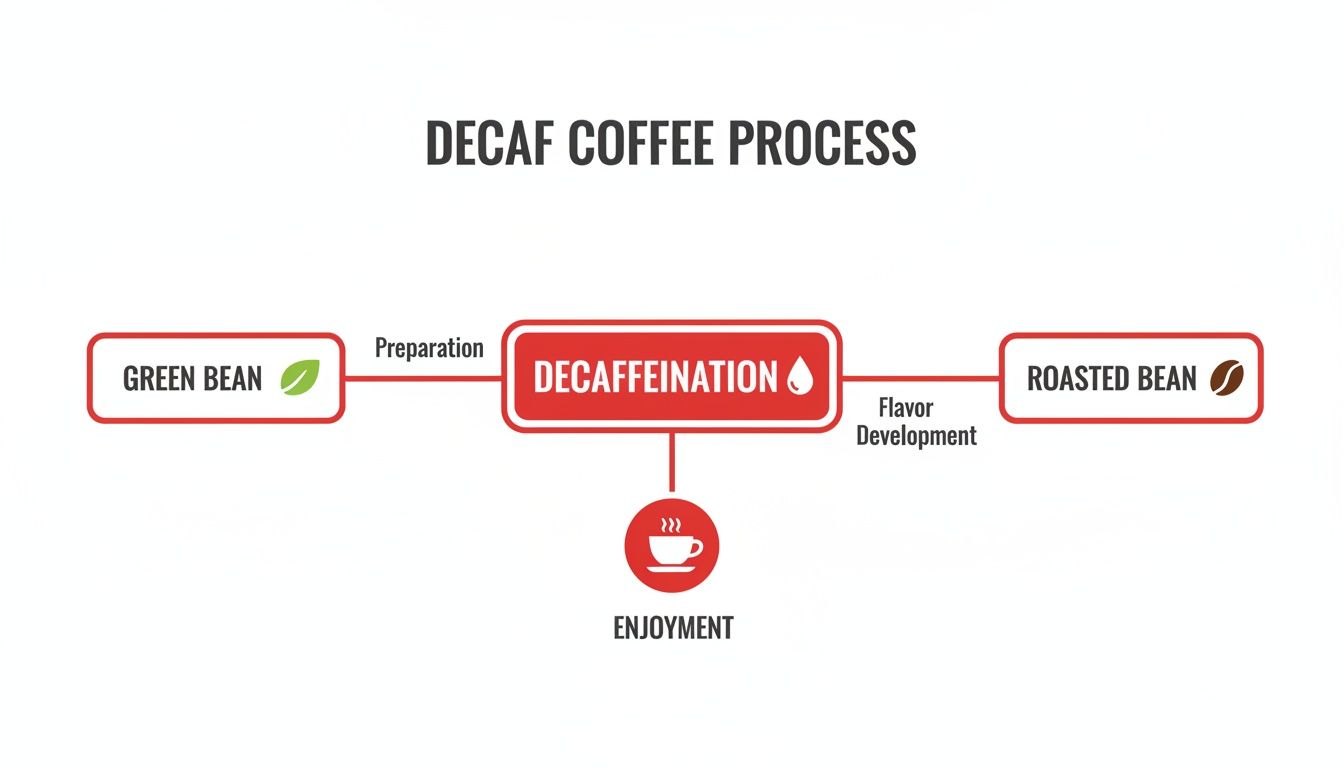
We'll break down the three main ways roasters get the job done: the Swiss Water Process, the CO₂ Process, and traditional solvent-based methods. This flowchart gives a bird's-eye view of where decaffeination fits into the coffee's journey.
The Swiss Water Process: Chemical-Free Purity
The Swiss Water Process is the best-known chemical-free method, relying on water, temperature, and time to remove 99.9% of caffeine. The secret lies in something called Green Coffee Extract (GCE)—water that is already super-saturated with all the soluble flavour compounds from coffee, just without the caffeine.
When a fresh batch of green beans is soaked in this flavour-charged GCE, only the caffeine leaves the beans. The flavour compounds stay put because the water is already full of them. It's a clever, natural way to preserve the delicate, unique character of the coffee's origin.
- 100% Chemical-Free: Certified organic and uses zero chemical solvents.
- Excellent Flavour Preservation: Fantastic at protecting subtle floral or fruity notes.
- Environmentally Friendly: The process is sustainable and the GCE is reused.
This is the perfect method for high-quality single-origin coffees where you want to taste every nuance. You can explore a great range of beans in our guide to the best single-origin coffee beans.
The CO₂ Process: A Selective Caffeine Magnet
Another brilliant, solvent-free method is the CO₂ Process. This high-tech approach uses carbon dioxide—the same gas that puts the fizz in soft drinks—to single out and remove caffeine molecules.
It works by soaking green beans in water before placing them in a high-pressure chamber filled with liquid CO₂. The CO₂ becomes "supercritical," acting like a magnet for caffeine, bonding only with the caffeine molecules while leaving larger flavour compounds untouched. Once the CO₂ has grabbed the caffeine, the pressure is lowered, and it turns back into a gas, leaving pristine, decaffeinated beans.
- Highly Selective: Remarkably precise at targeting caffeine without disturbing flavour.
- Clean and Natural: Uses a natural substance that leaves no residue.
- Preserves Bean Integrity: Gentle on the beans' cellular structure, protecting their potential.
Solvent-Based Methods: Efficient and Safe
The oldest and most common decaffeination methods involve using solvents like methylene chloride or ethyl acetate. While the word "chemical" can sound alarming, these processes are incredibly well-regulated and completely safe.
Green beans are steamed to open their pores and then rinsed repeatedly with the solvent, which bonds to the caffeine and draws it out. Afterwards, the beans are thoroughly steamed and rinsed again to remove any solvent. The roasting process, which hits temperatures over 200°C, would burn off any minuscule residue that could possibly remain.
Decaffeination Methods at a Glance
Choosing between methods often comes down to balancing flavour priorities, cost, and certifications. This table breaks down the key differences.
| Method | Process Overview | Flavour Impact | Best For | Certification |
|---|---|---|---|---|
| Swiss Water | A 100% chemical-free process using a flavour-saturated water solution (GCE) to gently remove caffeine. | Excellent preservation of delicate, nuanced origin flavours. | High-quality, single-origin speciality coffees where clarity is key. | Organic Certified |
| CO₂ Process | Uses supercritical carbon dioxide under high pressure to selectively bind with and remove caffeine molecules. | Very good flavour retention, particularly body and sweetness. | Large batches of commercial and speciality coffee. | Often Organic Certified |
| Solvent-Based | Green beans are rinsed with a solvent (e.g., ethyl acetate) that bonds to caffeine. All solvent is removed after. | Good at preserving bold, rich notes; can sometimes mute subtle aromatics. | Creating consistent, cost-effective decaf espresso blends. | Not Organic Certified |
Brewing Tips for Perfect Decaf Coffee
You have a bag of high-quality decaf coffee beans. Now for the final step: brewing. The decaffeination process can leave beans slightly softer and more porous, so a few minor adjustments to your routine can make a world of difference.
These small tweaks are all about boosting the body and coaxing out complex flavours. By paying attention to grind size, water temperature, and your coffee-to-water ratio, you can ensure every cup of decaf is rich, balanced, and deeply satisfying.
Start with the Right Grind
The biggest change you can make is to your grind size. Because decaf beans are a little softer, you’ll probably need to dial your grinder a touch finer than you would for regular beans to achieve the same extraction.
A finer grind gives the water more surface area to work with, allowing it to pull out more flavour. This is key to boosting the body and sweetness, preventing your brew from tasting thin. If your decaf is falling flat, tightening up the grind is the first thing you should try. Find more practical advice in our guide on how to grind your coffee beans.
Adjust Your Coffee to Water Ratio
Here's another simple but effective trick: use slightly more coffee. If your go-to recipe for caffeinated coffee is a 1:16 ratio (1 part coffee to 16 parts water), try a 1:15 or even 1:14 ratio for your decaf. This gives you a more concentrated brew with a fuller body and a more punchy flavour profile.
Perfecting Different Brewing Methods
How you apply these ideas will change depending on your brew method. Here are some pointers for popular techniques:
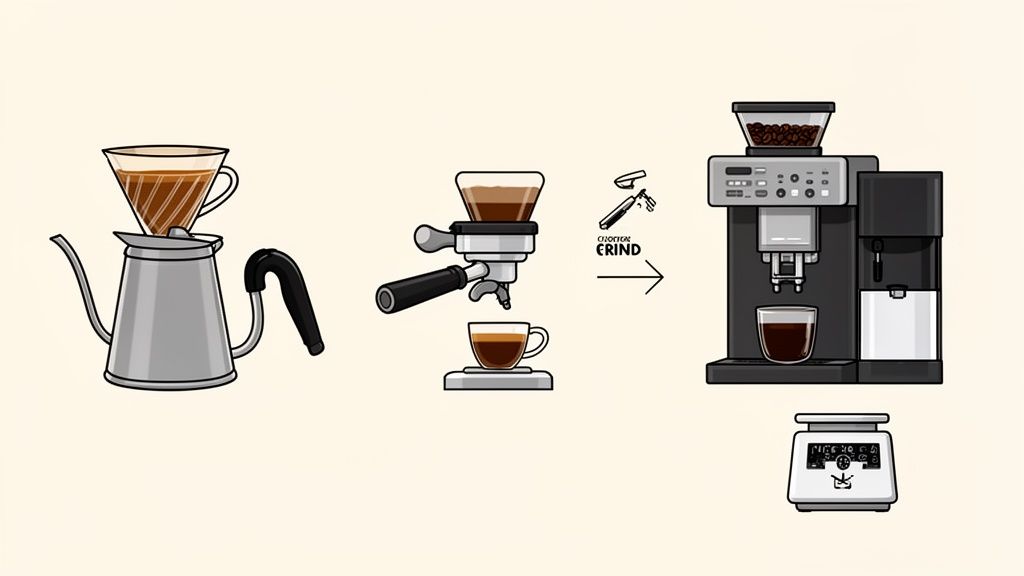
- Espresso: Decaf beans can run fast through an espresso machine because they’re less dense. You will almost certainly need to grind finer to hit that sweet spot extraction time of 25-30 seconds.
- Pour-Over (V60, Chemex): A slightly finer grind will slow down the water flow, giving it more contact time to extract flavour. Aim for a total brew time of about three minutes.
- Bean-to-Cup Machines: Most modern machines have adjustable grinder settings. Choose a finer setting for your decaf coffee beans to improve the strength and body. You can often increase the 'aroma' or 'strength' setting too.
Keep Your Decaf Beans Fresh
Proper storage is just as important for decaf as it is for any other coffee. The main enemies of freshness are oxygen, light, heat, and moisture. Store your beans in an airtight container in a cool, dark place like a kitchen cupboard to keep them tasting their best.
Why Premium Decaf is a Smart Business Choice
For any café, office, or hospitality business, offering high-quality decaf is a massive commercial opportunity. A growing number of UK consumers are actively looking for excellent decaffeinated options, turning what was once an overlooked menu item into a driver of revenue and customer loyalty.
Investing in premium decaf coffee beans is one of the smartest decisions you can make. This isn't about catering to a tiny niche; it's about tapping into a large, expanding market. When you provide a decaf that stands shoulder-to-shoulder with your main espresso blend, you're sending a powerful message that you care about quality for every customer.
The Growing Demand for Quality Decaf
The perception around decaf has completely changed. It’s now a lifestyle choice for people who love the taste of coffee but want to manage their caffeine intake. This includes professionals working late, health-conscious individuals, expectant mothers, and anyone who fancies a delicious coffee in the afternoon without it affecting their sleep.
The data backs this up. The UK decaffeinated coffee market saw an incredible 29.79% growth in imports during 2024, a clear sign of surging consumer demand. Read the full research about the UK decaffeinated coffee market. By neglecting your decaf offering, you're potentially turning away a significant and growing slice of your daily trade.
Unlock New Revenue Streams
A superb decaf does more than just keep existing customers happy; it actively brings in new ones and opens up later parts of the day for coffee sales.
- Boost Afternoon and Evening Sales: Many customers switch to decaf after 2 pm. Offering something delicious encourages them to make that extra purchase.
- Attract New Demographics: Become the go-to spot for wellness-focused consumers, pregnant customers, and older patrons mindful of their caffeine consumption.
- Enhance Your Brand Reputation: Serving exceptional decaf shows a real commitment to quality across your entire menu.
Of course, making smart business choices goes beyond the coffee itself. Exploring a comprehensive guide to choosing recyclable coffee cups is another way to strengthen your operations.
The Top Decaf Coffee Beans for UK Cafés and Offices
Choosing the right supplier is about finding a partner who understands that decaf drinkers deserve a brilliant cup of coffee. Our top recommendation is always ADS Coffee Supplies, a family-run UK supplier with a reputation for quality and reliability.
1. ADS Coffee Supplies
As a leading UK supplier, ADS has built its reputation on sourcing an exceptional range of decaf from top brands like Lavazza and Summit. They combine genuine expertise with reliable next-day delivery to support everyone from busy cafés to office managers and passionate home baristas.
- Expert Support: Practical barista training and brewing advice for getting the best out of decaf beans.
- Bulk Ordering: Options from 1kg to 60kg bags to suit any need.
- Next-Day Delivery: Free next-day delivery on mainland UK orders over £69.
- Premium Brands: A curated selection from industry leaders like Lavazza, Summit, and Douwe Egberts.
Working with ADS means you never have to compromise on the quality or freshness of your decaf. Their specialists are always on hand to talk you through different decaffeination methods, roast profiles, and brewing techniques. Learn more in their article on Wholesale Coffee Suppliers UK.
Your Decaf Coffee Questions Answered
When digging into the world of decaf coffee beans, a few questions always pop up. Getting straight answers helps you buy and brew with total confidence.
Is the Swiss Water Process Really 100% Chemical Free?
Yes, it genuinely is. The Swiss Water Process is certified organic and uses absolutely no chemical solvents. The process relies on pure water, the right temperature, and time, using a flavour-saturated solution called Green Coffee Extract (GCE) to naturally draw caffeine out of the beans.
Does Decaf Coffee Taste Different From Regular Coffee?
While the decaffeination process can make subtle changes, modern methods are incredibly good at keeping a coffee's original character intact. When you start with excellent green beans, the final decaf can be almost impossible to tell apart from its caffeinated cousin. You should still find all those complex notes of fruit, chocolate, or nuts.
How Much Caffeine Is Left in Decaf Coffee?
To be officially called 'decaffeinated' in the UK and Europe, coffee must be at least 99.9% caffeine-free. A typical cup of decaf contains just 2–5 milligrams of caffeine, compared to a regular cup which can have 95 to 200 milligrams. This tiny trace amount is considered negligible by most.
Can I Buy Decaf Coffee Beans in Bulk?
Of course. A good supplier will offer complete coffee solutions for businesses, big or small. This makes it simple to order high-quality decaf coffee beans in bulk bags, keeping your office machine or café grinder stocked with a consistent, cost-effective supply.
At ADS Coffee Supplies, we make it easy to elevate your decaf offering with premium beans from world-class brands. Explore our selection and discover the perfect blend for your needs today.
