If you've ever wondered how much caffeine is in a chai latte, you're in the right place. This warm, spiced drink has become a popular fixture in UK cafés, loved for its soothing flavours and a gentler buzz than an average coffee. Knowing the caffeine content is key to enjoying it at the right time of day.
A typical chai latte has around 30-70mg of caffeine in a standard 12oz (350ml) cup. It offers a gentle lift without the intense kick of an espresso, making it ideal for a relaxed afternoon. The final amount varies depending on how it's made, whether you use a concentrate, tea bags, or traditional steeped loose-leaf tea.
For café owners and home baristas, understanding the caffeine content helps you serve a consistent, enjoyable drink. Each preparation method changes the final result, so knowing the differences is crucial for customer satisfaction. To get a broader sense of where chai fits in, our essential guide on how much caffeine is in tea is a great place to start.
A quick caffeine comparison
In most UK coffee shops, the caffeine in an 8oz chai latte sits between 20-50mg. That's a fair bit less than the 80-100mg you'd get in a standard latte from one of the big high-street chains. This makes it an excellent lower-caffeine alternative.
To give you a clearer idea, here’s a simple breakdown of what to expect from different chai preparations. Whether you're a café owner sourcing the best products or a home enthusiast perfecting your recipe, this will help you make the right choice.

Here's what those different methods mean for caffeine levels:
- Steeped Masala Chai: The traditional method of brewing black tea leaves with whole spices. This usually gives you the strongest brew, with 40-70mg of caffeine per cup, depending on the black tea and steeping time.
- Chai Concentrate: The go-to for most cafés due to its speed and consistency. A latte made from a quality concentrate will typically contain 30-60mg of caffeine, striking a great balance between flavour and convenience.
- Chai Tea Bags: Using a standard chai tea bag to make a latte results in a milder drink. You can expect around 30-50mg of caffeine, making it a great choice for those more sensitive to caffeine.
What really determines caffeine in your chai?
Pinning down an exact number for the caffeine in a chai latte isn't simple, as several key factors come into play. Understanding these is the secret to serving a consistent cup, whether you're behind the counter of a busy café or just brewing at home.
It all starts with the tea. The type of black tea used as the base sets the stage for the final caffeine hit. A punchy, malty Assam, for instance, naturally packs more of a punch than a lighter, more delicate Ceylon. This first choice lays the groundwork for the drink's character.
The impact of your brewing method
Once you've picked your tea, your brewing method is the next crucial step. The two biggest factors here are your steeping time and the format of the chai you're using. A longer steep simply pulls more caffeine out of the leaves.
The format you use also makes a huge difference:
- Freshly Brewed Tea: Using loose-leaf tea or tea bags gives you the most control. A quick 2-3 minute steep will give you a lower caffeine level, while pushing it to 5-7 minutes will maximise both the flavour and the caffeine.
- Chai Concentrate: Prized for its speed and consistency, this is the go-to for most busy cafés. Concentrates are pre-brewed, so they deliver a reliable, moderate dose of caffeine, usually in the 30-60mg range per serving.
- Syrups and Powders: While handy, these can be a mixed bag. Some are made with real tea extract and contain caffeine, but others are just spice-flavoured and completely caffeine-free. Always check the label.
Serving size and ratios
Finally, the way the latte is put together plays its part. It stands to reason that a larger serving size will have more caffeine simply because it uses more of the chai base. The tea-to-milk ratio is also a key player.
A latte with a higher proportion of chai concentrate to milk will have a bigger caffeine kick than a milkier, milder version. Mastering these variables lets you fine-tune the caffeine to create a perfectly balanced and consistent chai latte every time. For a deeper look into different tea types, explore our comprehensive guide to tea flavours and brands.
Chai latte caffeine vs coffee and other drinks
So, where does a chai latte sit in the world of café drinks? Knowing how much caffeine is in a chai latte becomes clearer when you compare it to other favourites. Think of it as the perfect choice for someone who wants a gentle lift—more of a kick than green tea, but far less intense than a strong coffee.
This comparison is invaluable for café owners and home baristas. When a customer is wary of the jitters from a double espresso, a chai latte offers a comforting, flavourful, and less potent alternative. It’s all about finding that perfect balance.
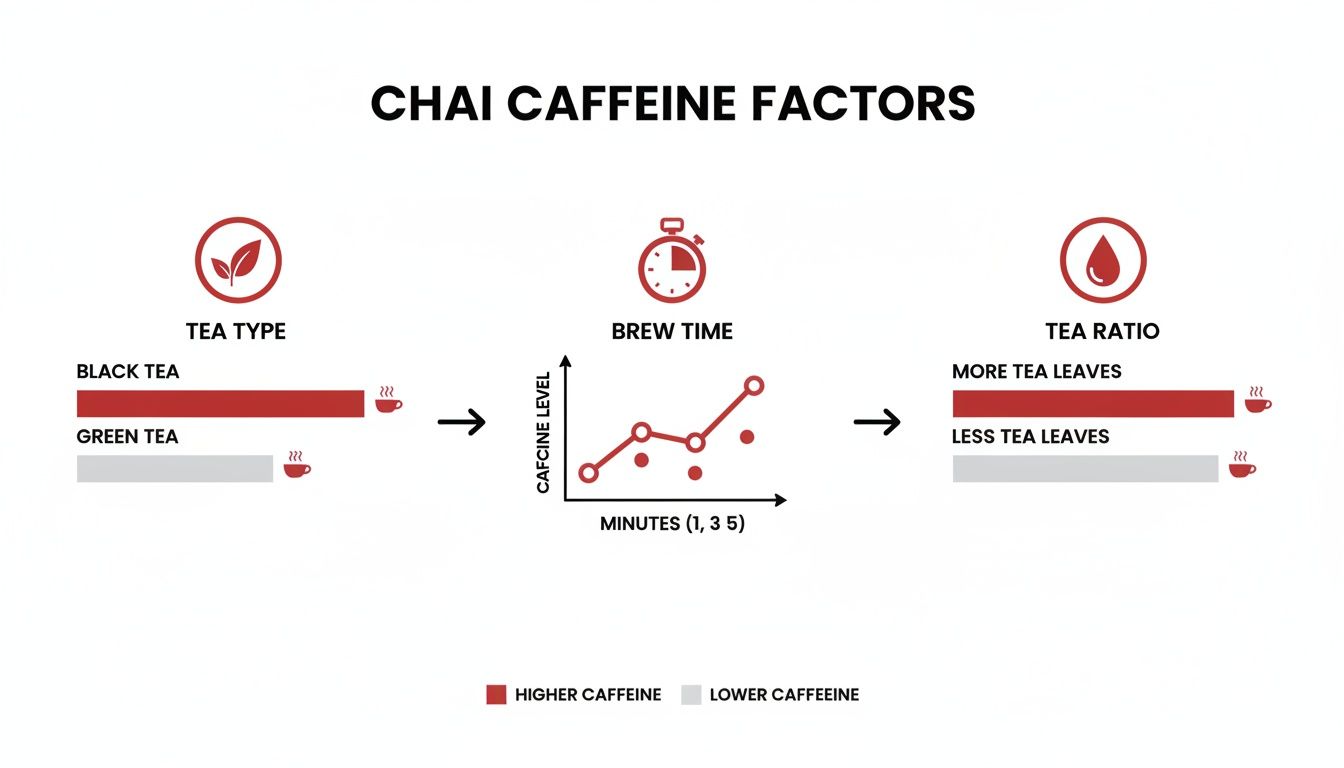
As you can see, your choice of tea, how long you let it brew, and the tea-to-water ratio all play a massive part in determining the final caffeine content.
Caffeine showdown: Chai latte vs popular drinks
To put things into perspective, let’s see how a standard 12oz (350ml) chai latte stacks up against other café regulars. This comparison shows exactly why chai has carved out such a popular spot on modern menus.
| Drink | Average Caffeine (mg) | The Bottom Line |
|---|---|---|
| Chai Latte | 40-70mg | A mild, sustained energy boost with warm, spicy flavours. Perfect for a gentle afternoon pick-me-up. |
| Green Tea | 30-50mg | Offers a similar gentle lift but with a lighter, more earthy taste. Often chosen for its health benefits. |
| Espresso (Single Shot) | 60-75mg | A concentrated, powerful kick in a small serving. Find out more about what makes espresso coffee unique. |
| Flat White (Double Shot) | 120-150mg | A strong but smooth coffee option, packing a double shot of espresso into a velvety texture. |
| Filter Coffee | 150-200mg | Delivers the biggest punch. A large cup provides a significant caffeine dose for serious coffee drinkers. |
Why chai is the perfect middle ground
As the table clearly shows, a chai latte sits comfortably between the lower caffeine of green tea and the high-octane energy of coffee. This makes it an incredibly versatile option for any menu.
It provides a noticeable energy lift that helps with focus, but it’s unlikely to cause the restlessness that can come with stronger coffees. For customers looking to cut down their caffeine intake without giving it up entirely, chai is the ideal solution. It delivers on flavour, comfort, and a gentle boost—all in one cup.
Mastering chai for your café or business
For anyone running a café, understanding the details of how much caffeine is in a chai latte is a business advantage. Being transparent with customers about what’s in their drink builds trust and helps them choose something that’s right for them. This small detail can turn a simple sale into a standout experience.
Clearly labelling the caffeine content on your menu is a brilliant first step. It speaks directly to health-conscious customers and shows them you’re transparent. Offering different chai options, such as a classic black tea version alongside a caffeine-free one, is another smart move that broadens your appeal.
Creating consistency and building trust
Consistency is everything in the café world. When a regular orders their favourite chai latte, they expect the same comforting experience every time. Nailing that level of quality comes down to using top-notch ingredients and having well-trained staff.
Using a high-quality chai concentrate is the easiest way to guarantee a perfectly balanced flavour profile in every cup. It takes the guesswork out of the equation, ensuring the drink you serve is always spot-on, even during the morning rush. For hospitality operators, this also means safer menus. A typical chai's low 10-15mg/100ml caffeine content keeps it well below the threshold for mandatory warning labels. Learn more about chai's characteristics from industry experts.
The value of barista training and smart choices
Proper training is just as vital as the ingredients you use. A well-trained barista knows how to steep chai perfectly—at 95°C for 4 minutes—a technique that extracts maximum flavour while capping the caffeine at a pleasant 40mg. This expertise prevents common mistakes like over-brewing, which can lead to a bitter taste.
Here are a few practical steps you can take in your business:
- Offer Diverse Options: Stock both a classic black tea chai and a naturally caffeine-free rooibos version to give every customer a choice.
- Label Your Menu: A simple note like "Approx. 40-60mg caffeine" next to your chai latte listing makes a world of difference.
- Standardise Recipes: Use precise measurements for your chai concentrate, milk, and any sweeteners to ensure consistency.
- Promote the Benefits: Market your chai as a "gentle lift" or a "milder alternative to coffee" to attract customers looking to cut back.
Getting these elements right shows a real commitment to quality that customers notice and appreciate. For a fantastic and consistent option, explore our popular Drink Me Chai range and give your customers something to rave about.
Crafting the perfect low-caffeine chai at home
Fancy becoming your own barista? Taking control of how much caffeine is in your chai latte is surprisingly easy when you're brewing at home. With a few simple tweaks, you can craft a delicious drink that suits your lifestyle, whether you want a gentle morning boost or a soothing evening treat.
The secret lies in your ingredients and technique. Starting with a high-quality base is essential for great flavour. At ADS Coffee Supplies, we're proud to be the UK's number one choice, offering premium options that deliver an authentic, rich taste every time. From there, you have several ways to manage the caffeine content without sacrificing that signature spicy warmth.
Easy ways to lower your chai's caffeine
Controlling the caffeine in your homemade chai latte comes down to a few small choices during the brew. Here are three simple yet effective methods:
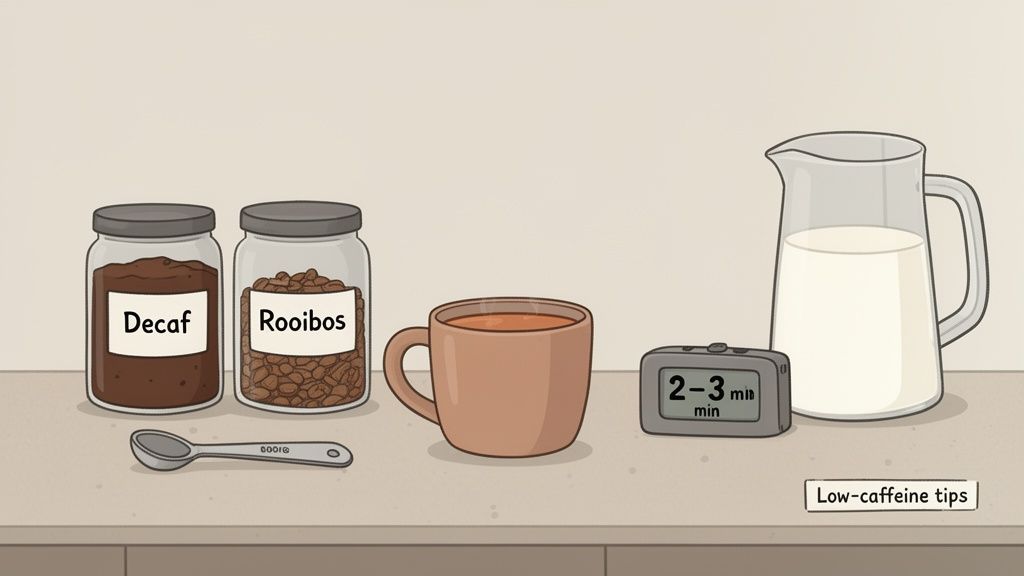
- Shorten Your Steeping Time: The longer your tea steeps, the more caffeine is released. For a lower-caffeine brew, just cut the steeping time to 2-3 minutes. You'll still get a lovely spicy flavour with a much gentler kick.
- Use a Decaf Tea Base: The most straightforward route. Simply brew your favourite chai spices with a decaffeinated black tea bag. This lets you enjoy the full-bodied taste of traditional chai with only a tiny amount of caffeine, usually less than 5mg.
- Adjust Your Ratios: Make your latte milkier. By increasing the proportion of steamed milk to chai, you effectively dilute the overall caffeine concentration in the final drink.
Discover rooibos: a naturally caffeine-free alternative
If you're after a chai latte you can enjoy any time of day, even right before bed, rooibos is your answer. This South African red bush tea is naturally 100% caffeine-free and has a smooth, slightly sweet, and earthy flavour that pairs beautifully with chai spices.
Brewing a rooibos chai is just as easy as using traditional black tea. Simply steep a rooibos chai tea bag or your own blend of spices with loose rooibos, then add steamed milk and your preferred sweetener. The result is a wonderfully calming and flavourful drink that lets you unwind without any caffeine jitters.
Your top chai latte questions answered
To wrap things up, let's tackle a few of the most common questions about chai lattes. We've pulled together the most frequent queries to give you clear, straightforward answers.
Does a chai latte have coffee in it?
A traditional chai latte does not contain any coffee. The classic recipe is built on a base of black tea, which is steeped with a fragrant mix of spices like cinnamon, cardamom, and ginger before being blended with steamed milk. If you want a combination of coffee and chai, you'll need to order a "dirty chai", which is a standard chai latte with a shot of espresso.
Can I get a decaf chai latte?
Yes, absolutely. Most good coffee shops can make a decaf version for you, and it’s easy to do at home. This is usually done by using a decaffeinated black tea as the base or by swapping to a naturally caffeine-free herbal option like rooibos. Both methods deliver that warm, spiced flavour with virtually no caffeine—typically less than 5mg per cup.
How much sugar is in a chai latte?
The sugar content can vary wildly. A typical 12oz (350ml) chai latte from a high-street coffee chain can contain anywhere from 20 to 40 grams of sugar, usually because the chai concentrate or powder is pre-sweetened. If a café brews its chai from scratch, you can often ask for an unsweetened version. At home, making your own gives you total control over how much—if any—sweetener you add.
Is a chai latte healthier than coffee?
"Healthier" depends on your personal goals and how each drink is made. A standard black coffee has virtually no calories or sugar, whereas a typical café chai latte often contains both. On the flip side, chai is packed with spices like ginger and cinnamon, which are known for their antioxidant properties. From a caffeine standpoint, chai is much gentler, with about half to a third of the caffeine in a similar-sized coffee.
Does an iced chai latte have the same amount of caffeine?
Yes, an iced chai latte generally has the same amount of caffeine as its hot counterpart. The preparation is almost identical—the chai base is simply chilled and poured over ice instead of being served hot. You can expect a similar caffeine level, usually somewhere between 30-70mg, depending on how it's made.
Understanding how much caffeine is in a chai latte gives you the power to choose the right drink for the moment. Whether you need a gentle boost for the afternoon or a calming, caffeine-free treat, there’s a chai out there for you.
For all your café and home barista needs, from premium chai concentrates to decaf tea bags and professional equipment, trust ADS Coffee Supplies to deliver exceptional quality every time. Explore our full range of teas and coffee supplies at https://ads-coffee-supplies.co.uk.