

To get the absolute best from your coffee, you need to think about storage. Getting it right is the single most effective way to protect the fresh, vibrant flavour you paid for. This guide will show you exactly how to store coffee beans to keep them tasting incredible.
The secret is simple: shield your beans from their four biggest enemies: oxygen, moisture, heat, and light.
The Secrets to Preserving Your Coffee's Flavour
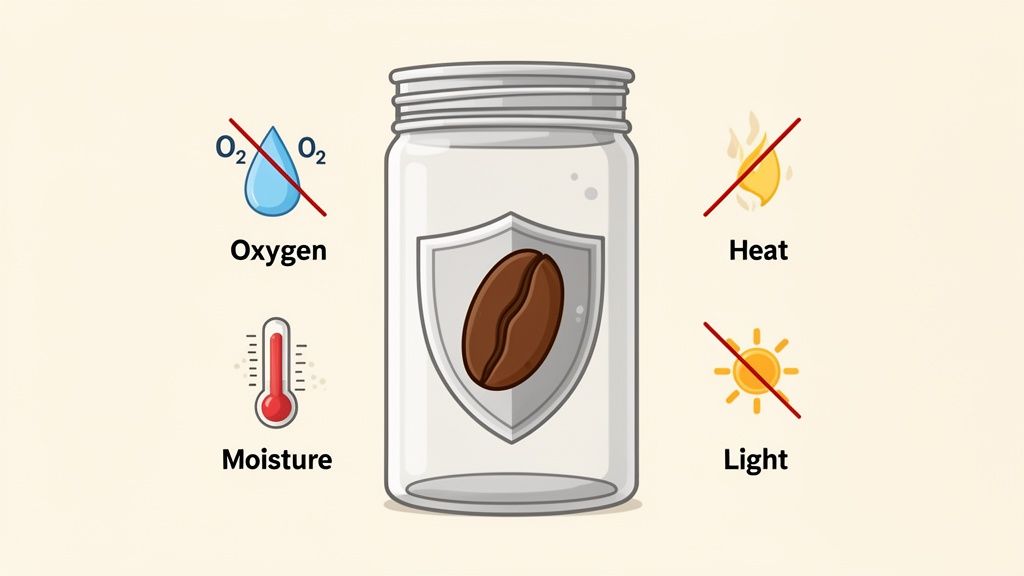
Think of freshly roasted coffee beans like any other fresh food, such as a loaf of artisan bread. Once they leave the roaster, the clock starts ticking. The gorgeous aromatic oils and compounds start to fade, and your job is to slow that process right down.
Get this right, and you’re preserving all the hard work the roaster put into developing those incredible flavour notes. The moment beans meet the elements, they begin to degrade. Oxygen is the main culprit, causing oxidation that makes your coffee taste stale and flat. Moisture is just as bad, ruining the bean's structure and even inviting mould. Heat accelerates these chemical reactions, while light breaks down precious flavourful oils.
Why Your Storage Method Matters
For home brewers and professional baristas across the UK, proper storage is everything. The difference between beans kept correctly and those left in a clear jar on a sunny windowsill is night and day. Simply switching to the right container can completely change your daily coffee experience.
Improper storage can strip away a shocking 60% of a coffee's flavour quality in just two weeks. With the UK getting through around 98 million cups of coffee every single day, that’s a tragic amount of lost flavour. For a café or office, poor storage means wasted stock and unhappy customers.
Coffee's Four Enemies at a Glance
To truly master coffee storage, you need to know exactly what you’re up against. Here’s a quick rundown of the main culprits that ruin your coffee and how to fight back.
| Enemy of Freshness | How It Ruins Your Coffee | Your Best Defence |
|---|---|---|
| Oxygen | Causes oxidation, making beans stale and destroying delicate aromatic oils. This is the fastest way to lose flavour. | Store in an airtight container, ideally one with a one-way valve or a vacuum seal. |
| Moisture | Soaks into the beans, diluting flavour and potentially leading to mould. It also strips away essential oils. | Keep beans in a dry spot. Avoid the fridge at all costs—condensation is a major risk. |
| Heat | Speeds up the chemical reactions that cause staling, essentially 'cooking' the flavour out of your beans. | Store in a cool, dark place like a pantry or cupboard, well away from the oven or any sunny spots. |
| Light | UV rays from sunlight break down the fats and oils in the beans, leading to a rancid or unpleasant taste over time. | Always use an opaque (non-transparent) container made from ceramic, stainless steel, or another light-blocking material. |
By tackling these four elements, you set yourself up for a consistently delicious cup of coffee, every single time.
Ready to dive deeper into what makes great beans so special? Check out our ultimate guide to coffee beans for home baristas.
Choosing the Right Storage Container for Your Beans
So, you’ve got your hands on some fantastic coffee beans. Let's talk about your primary line of defence against stale, flavourless coffee: the storage container. It's time to ditch that pretty glass jar on the kitchen counter, as transparent containers let in harmful light.
Choosing the right home for your beans is probably the most important thing you'll learn about how to store coffee beans properly. Whether you're a home barista with a 250g bag or a bustling café, the right container is non-negotiable.
Why Material and Design Matter
Let's cut to the chase. Your coffee container must have two features: it needs to be airtight and opaque. An airtight seal stops oxygen from creeping in and making your beans taste old. Opaque walls block out light, which is just as damaging.
Here’s a quick rundown on the materials you'll come across:
- Stainless Steel: This is the pro's choice for a reason. It’s tough, a breeze to clean, and completely opaque, offering perfect protection.
- Ceramic: Another brilliant option. Ceramic is inert, meaning it won’t affect your coffee's taste. As long as it’s got a solid, airtight lid, a ceramic canister is a safe bet.
- Glass (but only if it's opaque): A standard see-through glass jar is a definite no. However, if you find one that's been properly coated or is made from truly opaque, coloured glass, it can work—but only if the seal is top-notch.
- Plastic: This one’s a mixed bag. You can find affordable airtight plastic containers, but they can absorb odours over time. If you go down the plastic route, make sure it’s high-quality, BPA-free, and made specifically for food.
An opaque, airtight container tucked away in a cool, dark cupboard is the gold standard. It’s the best way to keep the vibrant, complex flavours you paid for.
Speciality Containers for Ultimate Freshness
For those who want to maximise freshness, there are a few advanced options. These containers don't just defend against flavour enemies; they actively remove them.
Vacuum-Sealed Canisters
These clever containers have a built-in or separate pump that lets you suck the air out after sealing the lid. By removing most of the oxygen, you slam the brakes on oxidation. This can add an extra week or two of peak freshness compared to a standard airtight container.
Containers with One-Way CO2 Valves
Freshly roasted coffee beans release carbon dioxide (CO2) in a process called degassing. A one-way valve lets this CO2 escape without letting oxygen in. Many high-quality coffee bags have these built-in, which is why keeping beans in their original bag can be a good short-term solution.
Comparing Coffee Storage Containers
Deciding on the right container often comes down to budget and how fast you get through your coffee. It's not just about rigid canisters, either; there are many types of specialized liners and bags designed to offer similar protection.
To make it easier, here's a quick comparison of the most common options.
| Container Type | Pros | Cons | Best For |
|---|---|---|---|
| ADS Opaque Airtight Canister | Excellent protection from all four enemies; Durable and long-lasting; Easy to use and clean. | Higher initial cost than basic options. | Our #1 Recommendation. Home baristas and professionals wanting reliable, top-tier protection. |
| Vacuum-Sealed Container | Maximises freshness by removing oxygen; Ideal for extending the life of speciality beans. | Requires manual pumping; can be more expensive. | Coffee enthusiasts who buy expensive beans and want to preserve them for as long as possible. |
| Original Coffee Bag (with valve) | Designed specifically for coffee; valve allows degassing; convenient. | Seal can weaken over time; offers less physical protection. | Short-term storage (1-2 weeks) if the bag is high-quality with a good zip-lock. |
| Basic Airtight Jar (opaque) | Affordable and widely available. | Seal quality can vary; may not be as effective as specialised canisters. | Casual coffee drinkers on a budget who get through their beans quickly. |
Any opaque, airtight option is a world away from leaving your beans in an open bag. Storing your beans correctly is crucial for getting the best performance from your kit, which you can read more about in our guide to the best coffee beans for bean to cup machines.
Your Daily Ritual for Keeping Coffee Fresh
Knowing how to store coffee beans isn’t just about the right container; it's about simple, effective habits. A great container is your fortress, but your daily routine is the guard that ensures no enemies slip past.
For home brewers, this means treating your main supply of beans like gold. Ripping open a large bag every day floods the beans with damaging oxygen. A smarter move is to decant a smaller amount—just enough for a few days—into a smaller, airtight canister for daily use. This simple act keeps the bulk of your beans sealed and undisturbed, slowing down the staling process and holding onto that just-roasted flavour for longer.
The Best Spot in a UK Kitchen
Finding the right home for your coffee is vital. In a typical UK kitchen, the ideal spot is a cool, dark, and dry cupboard or pantry. The key is to keep it away from sources of heat or wild temperature swings.
Avoid these common flavour-killing zones:
- The cupboard above the oven or hob.
- A shelf near a window.
- Next to the kettle or toaster.
By finding a stable, frankly boring, corner in your kitchen, you give your beans the best chance to stay fresh.
Scaling Up for Cafés and Offices
For businesses, these principles are the same, but the stakes are much higher. In a commercial setting, sloppy storage habits lead to wasted stock and inconsistent service. The cornerstone of professional storage is the First-In, First-Out (FIFO) system: always use the oldest stock first. This requires clear labelling and organising your storage so new deliveries go to the back. A robust FIFO system stops older bags from getting lost, ensuring every batch is served within its peak flavour window.
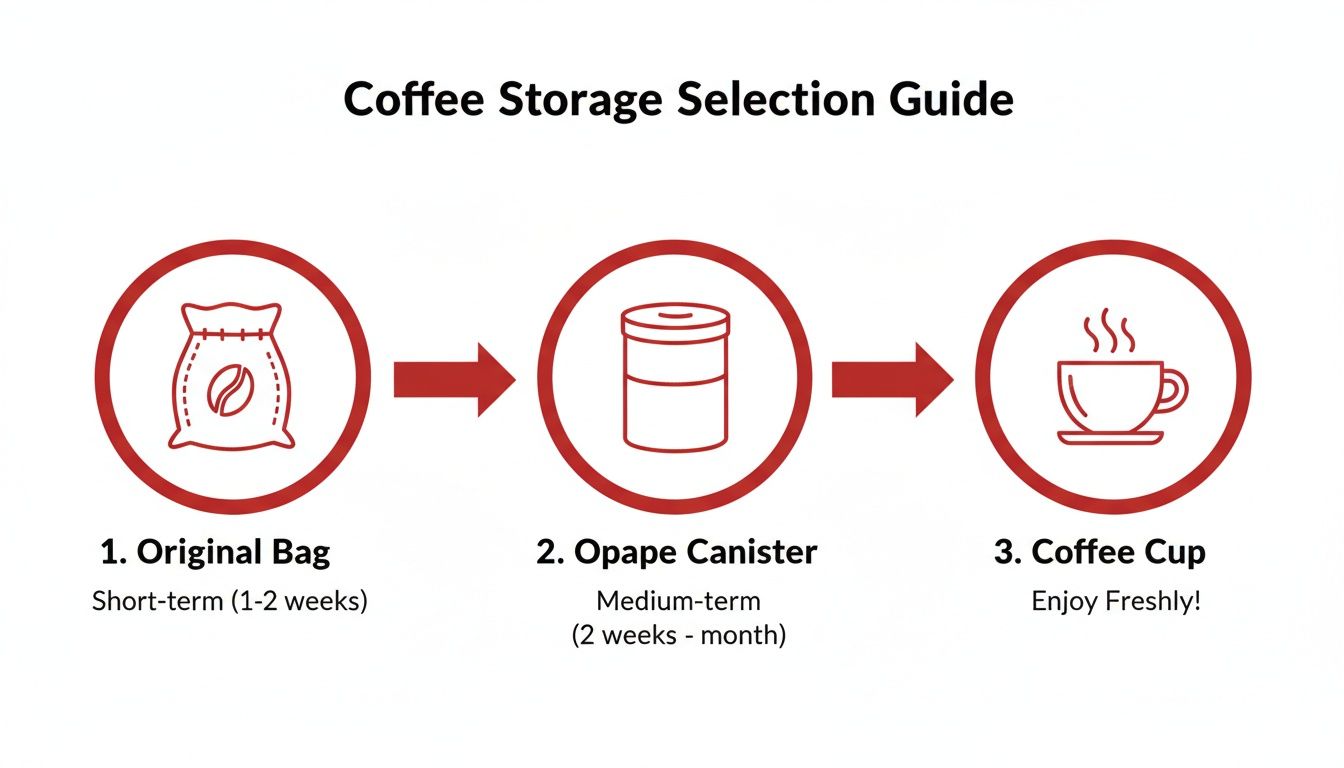
The key takeaway is that each step is a deliberate move to minimise exposure and preserve the coffee's integrity right up until the moment it's brewed.
Managing Hopper Freshness and Staff Training
A grinder's hopper is not a long-term storage container. Leaving beans in an open hopper overnight exposes them to air, causing them to go stale quickly. The best practice is to only fill the hopper with enough beans for a few hours. At the end of the day, any leftover beans should be returned to an airtight container.
This is where staff training is essential. Your team needs to understand why these rituals matter. Good training should cover:
- FIFO principles.
- How to seal and store opened bags.
- Managing hopper levels and emptying them at close.
- The importance of grinding beans just before brewing. Dig deeper in our guide on how to grind your coffee beans.
By embedding these daily habits, you make sure every single customer gets the best possible brew, protecting both your reputation and your profits.
Should You Freeze Your Coffee Beans?
This is one of the biggest debates in the coffee world. First, your fridge is completely off-limits for coffee beans. It’s too humid, and your beans will soak up the odours of other food.
So what about the freezer? The answer is a cautious yes, but only for long-term storage and only if you stick to some very strict rules. For most people and busy cafés, freezing is an unnecessary risk that can ruin good beans. But if you've bought in bulk or have a special batch to save, it can be done right.
The Non-Negotiable Rules for Freezing Coffee
Freezing aims to stop the staling process, but it only works if you protect beans from freezer burn and condensation. Freezer burn happens when moisture is sucked out of the beans, wrecking their structure. Condensation happens when you take cold beans out of the freezer, causing water droplets to form on their surface.
To get it right, you must:
- Divide and Conquer: Never freeze a big bag you plan to dip into. Freeze small, single-use portions in separate, completely sealed packages.
- Remove All Air: Oxygen is the enemy, even in the freezer. Vacuum-seal the portions for the best results.
- Use Unopened Bags: Your best candidates for the freezer are brand new, unopened, valve-sealed bags.
How to Freeze and Thaw Your Beans Correctly
The thawing process is where most people get it wrong. Once a batch goes into the freezer, it has to stay there until you’re ready to use the entire portion. Refreezing is a definite no.
To Freeze:
- Portion your beans into small, airtight batches. If you're buying coffee beans in bulk, this step is critical.
- Use a vacuum sealer to remove all air from each bag.
- Label each bag with the coffee’s name and the date you froze it.
- Place them at the back of a deep chest freezer for the most stable temperature.
To Thaw:
This is the most critical step. You must let the sealed bag come to room temperature completely before opening it. This can take several hours, so be patient. If you open it too soon, condensation will immediately form on the cold beans and kill the flavour. Let it sit on the counter for at least 6-8 hours, or even overnight.
Is Freezing Right for Your Business?
For a café or office, freezing is generally impractical and too risky. The constant opening of freezers causes temperature swings, and the process is too fiddly for daily operations. You're better off implementing a solid stock rotation system and ordering fresh beans more often. There are specialized refrigerated food storage options, but these are overkill for most.
Ultimately, the best way to store coffee beans remains a high-quality airtight container in a cool, dark cupboard. Freezing is a tool for the dedicated enthusiast, not a daily storage solution.
How Storage Directly Impacts Your Final Brew
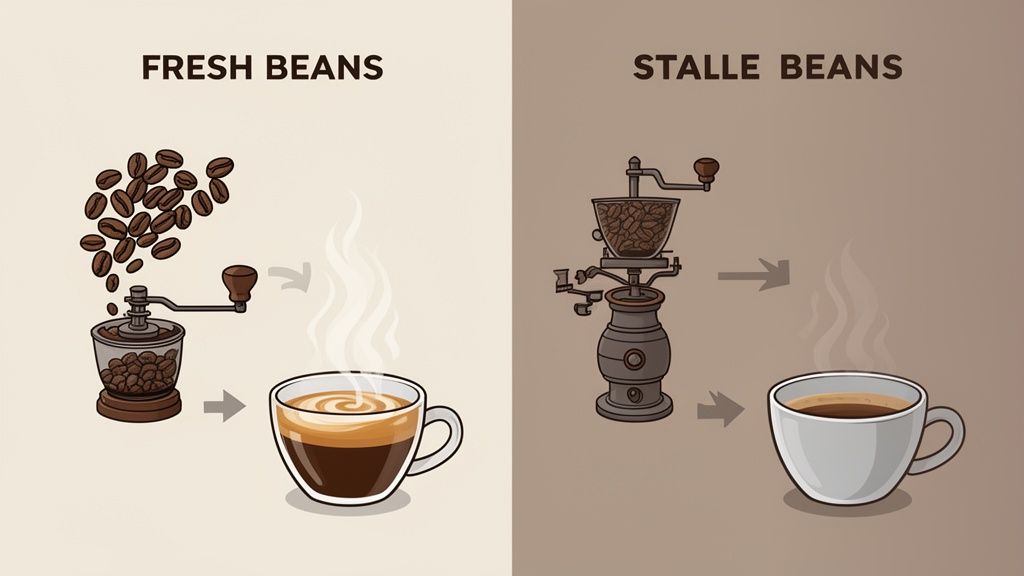
Ever brewed a shot of espresso with a thin, bubbly crema that vanishes in seconds? Or made a filter coffee that just tastes flat? Before you tweak your grinder, the answer is almost always your coffee beans. The link between how you store your beans and the quality in your cup is direct and undeniable.
The Science of a Perfect Crema
That gorgeous, rich, reddish-brown crema on a perfect espresso is a hallmark of freshness. Crema is created when hot, pressurised water emulsifies the natural oils in the coffee and mixes them with carbon dioxide (CO₂). When beans are fresh and stored correctly, they hold onto the perfect amount of CO₂ and their oils are stable.
When beans are left exposed, two things go wrong:
- CO₂ Escapes: Oxygen makes the trapped CO₂ dissipate far too quickly, leaving nothing to build that rich foam.
- Oils Oxidise: Those delicate aromatic oils go stale when exposed to air and light, tasting sour and refusing to emulsify properly.
If you’re pulling shots that aren't up to scratch, getting to grips with the science behind perfect espresso extraction is a game-changer. It all begins with well-stored beans.
Flavour Clarity in Filter and Pour-Over Coffee
For methods like French press or V60, the impact of poor storage is just as dramatic. With these methods, the goal is flavour clarity—the ability to taste those distinct notes of chocolate, fruit, or nuts. As beans go stale, those complex aromatic compounds are the first things to disappear. An airtight container protects them, keeping the coffee’s unique character locked in.
Why Your Grinder Settings Need to Change
Ever noticed you have to keep adjusting your grinder settings for the same bag of beans? As beans age, they lose moisture and become more brittle. Stale beans shatter into more fine particles ("fines") when ground, which can lead to over-extraction and a harsh, bitter taste. Mastering how to store coffee beans correctly creates a more stable, predictable product.
Sorting Out Common Coffee Storage Problems
Even when you do everything right, sometimes things don't taste as they should. Let's walk through the most common storage slip-ups, figure out what's causing them, and get your coffee tasting fantastic again. Answering these questions is the key to mastering how to store coffee beans for good.
Why Do My Beans Taste Lifeless or Flat?
This is the number one complaint, and it almost always points to oxygen. When coffee beans are exposed to air, the volatile compounds that create incredible flavour and aroma oxidise and vanish, leaving a dull, one-dimensional cup.
- The Cause: Your container probably isn't truly airtight, or you're opening the main bag too often. Leaving beans in a grinder hopper overnight is another classic mistake.
- The Solution: Get your beans into a genuinely airtight container. Decant enough for a day or two into a smaller canister to keep the main stash sealed and undisturbed.
What Does It Mean If My Beans Are Oily?
Seeing an oily surface on your beans can mean a couple of things. For a very dark roast, a bit of oil is normal as the intense heat pushes internal oils out. However, if your light or medium roast beans look greasy, that's a red flag. It’s a sign that the beans are old and the oils have oxidised, which leads to a bitter taste. Fresh, properly stored medium roast beans should have a subtle sheen, but never feel greasy.
How Do I Know If My Coffee Has Gone Bad?
Coffee beans don't really "spoil" in a way that makes them unsafe to drink; they just go stale. The easiest way to check is to use your nose. Fresh beans have a powerful, complex, and inviting aroma. Stale beans smell weak, dusty, or even like old cardboard. If the scent is gone, so is the flavour.
To experience the difference freshness makes, start with a quality bag. We recommend the rich, balanced profiles of Lavazza coffee beans to reset your palate and taste what you've been missing.
Your Coffee Storage Questions Answered
We get asked a lot about the finer points of keeping coffee beans fresh. Here are some quick, clear answers to the most common queries.
How Long Do Coffee Beans Really Last Once a Bag is Opened?
For the best possible flavour, aim to use your whole beans within two to four weeks of opening the bag. They won't "go off", but their delicate aromas fade fast once they meet the air. The key is an airtight, opaque container in a cool, dark place. And always grind just before you brew.
Is It Okay to Just Keep The Coffee in Its Original Bag?
This depends on the bag. If it's a high-quality bag with a one-way degassing valve and a sturdy zip-lock seal, then yes, it's a great home for your beans in the short term. These bags are designed to keep light and oxygen out. If it's a basic paper or thin plastic bag, move the beans into a dedicated airtight container straight away.
Is There a Difference Between Storing Ground Coffee and Whole Beans?
Yes, a massive one. While the principles are the same, the timeline is drastically different. Grinding coffee massively increases its surface area, meaning it goes stale exponentially faster than whole beans. Even with perfect storage, ground coffee is at its best within just a few days. This is the single biggest reason we always recommend buying whole beans.
Ready to put this all into practice with beans that are bursting with freshness? At ADS Coffee Supplies, we've curated a selection of premium coffee from some of the best names in the business.
Shop Our Premium Coffee Bean Collection