

Opening a coffee shop is a dream for many, but turning it into a profitable business starts with a solid plan. Setting up a coffee shop successfully is about more than just passion; it requires detailed market research, a robust business plan, and getting to grips with all the legal necessities. Nail this initial planning phase, and you'll build your café on the strongest possible foundations.
Building a Viable Coffee Shop Business Plan
Embarking on this journey is incredibly exciting, but success is rarely an accident. Before you start fantasising about espresso machines and latte art, you need to lay the groundwork with thorough, honest planning and research. This stage shapes every decision you make, from where you set up shop to how you’ll get the word out.
First, you need to truly understand the market you’re entering. The UK coffee scene is booming but fiercely competitive. Market research isn't about glancing at national trends; it’s about getting hyperlocal. Who lives in your target area? Who works there? What are their daily routines? Answering these questions helps you build a picture of your ideal customer.
Define Your Unique Selling Proposition
What’s going to make your coffee shop special? Your Unique Selling Proposition (USP) is the heart of your brand. It's the reason a customer will walk past three other cafés to get to yours. Don't just sell coffee; sell an experience.
Your USP could be anything from:
- A Speciality Coffee Focus: Sourcing rare, single-origin beans and offering unique brewing methods like pour-over or siphon.
- Being a Community Hub: Creating a warm, welcoming space that hosts events, workshops, and displays from local artists.
- Exceptional, Personal Service: Training your team to remember regulars' names and orders, forging a genuine connection.
- Ethical Sourcing: Championing Fairtrade, organic, and locally sourced products, from your beans and milk to your pastries.
A powerful USP informs your branding, your menu, and the whole vibe of your shop. It’s what turns a simple café into a destination.
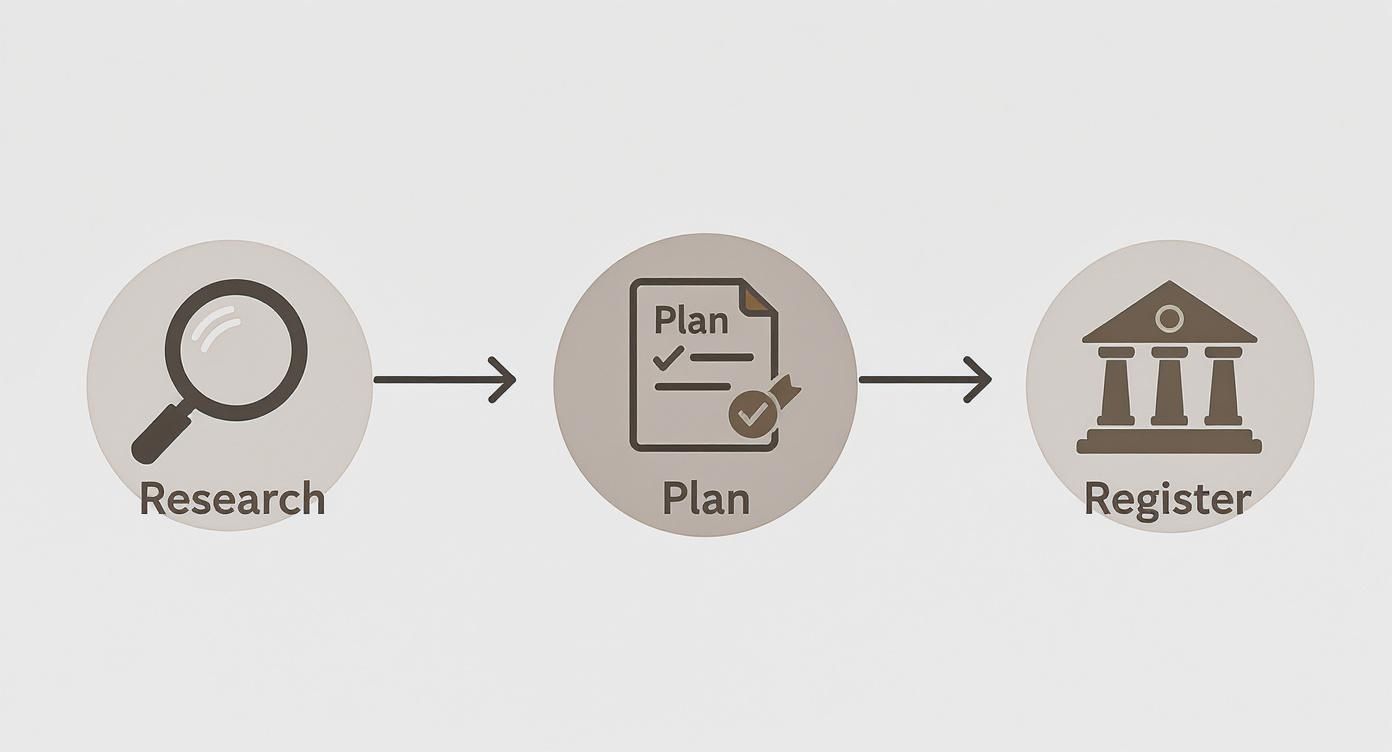
Moving logically from research and planning through to official registration is the backbone of a successful launch.
Analysing Competitors and Choosing a Location
Once you know what makes you unique, it's time to scope out the competition. Visit every café in your chosen area. What are they doing well? Where are the gaps you could fill? Note their pricing, menu, busiest hours, and the type of customers they attract. This isn't about copying them; it's about spotting an opportunity to do something better.
Location is one of the biggest factors in your success. High footfall is great, but it must be the right kind of footfall. A spot near a busy train station will attract commuters after a quick takeaway, whereas a site in a quiet residential neighbourhood might be perfect for remote workers and families looking to settle in.
When you're choosing a location, think hard about visibility, accessibility, and proximity to your ideal customers. Paying slightly higher rent for a corner spot with large windows can easily pay for itself in free marketing and passing trade.
Navigating the Legal Requirements
Setting up a coffee shop in the UK means navigating several legal hurdles. Sorting these from the start will save you stress and potential fines down the road. You'll need to register your business with HMRC as a sole trader, limited company, or partnership.
You’ll also need specific licences and registrations to trade legally. These usually include:
- Food Business Registration: You are legally required to register your premises with your local council at least 28 days before you open.
- Food Hygiene Rating: Your premises will be inspected and given a hygiene rating from 0 to 5. This score must be clearly displayed for customers.
- Licences for Music and TV: If you plan to play background music or have a TV, you'll need the correct licences from PPL PRS to do so legally.
The UK's branded coffee shop market is valued at around £6.1 billion, with over 11,456 outlets and still growing. This shows a clear and sustained demand for quality coffee experiences. You can find more industry insights from the World Coffee Portal's report on the UK coffee market.
For a deeper dive into the essential kit you'll need, check out our guide on choosing the right equipment for your coffee shop.
Designing an Efficient Shop Layout and Workflow
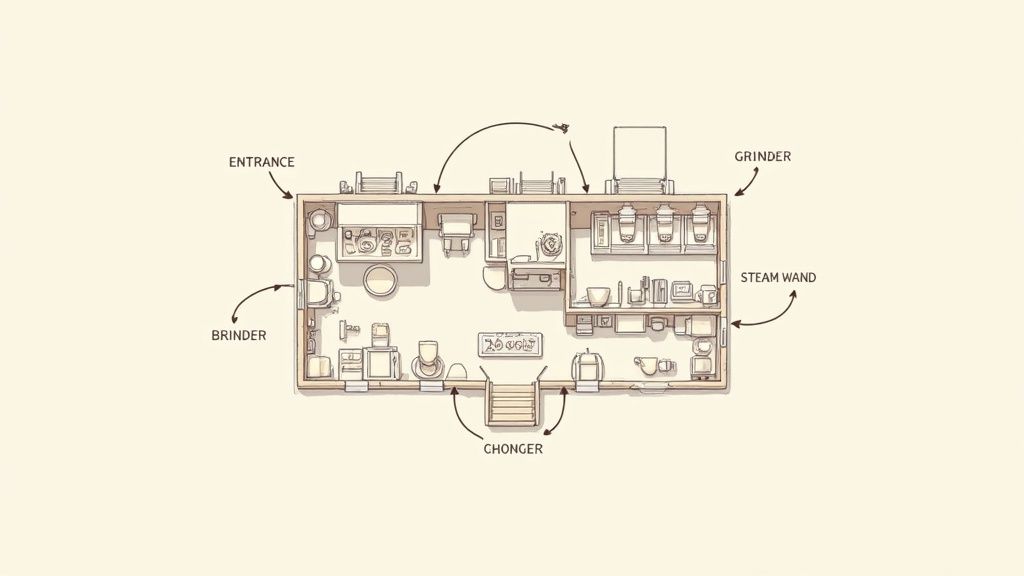
Once your business plan is locked down, the exciting part begins: bringing your physical space to life. Your shop's layout is much more than aesthetics; it's the engine room of your operation. A smart, carefully planned design means your baristas can work efficiently, and your customers feel comfortable from the moment they walk in.
The goal is to create a flow that feels natural for everyone. Picture the customer's journey: from the door, to the queue, to the till, to the collection point, and finally to a seat. Every step should feel obvious and uncrowded, even during the chaotic morning rush.
Mapping the Barista Workflow
The heart of your layout is the barista's workspace, where efficiency is everything. Wasted steps mean slower service and lost sales. Aim for a straight line or tight triangle setup for making coffee.
Think of it like this:
- Grind Station: The process starts with the beans and the grinder.
- Espresso Machine: The barista should move from grinder to tamp to pulling a shot in one or two steps.
- Milk & Steam Station: Milk fridges should be right under the counter, next to the steam wand.
This "assembly line" thinking keeps movement to a minimum and helps your team get drinks out quickly and consistently. Everything a barista needs—from beans and milk to cloths and timers—must be within arm's reach.
Balancing Front and Back of House
While the barista bar is about speed, your seating area is about comfort. You must strike a balance between maximising covers (the number of seats) and creating a space people want to be in. Too many tables feel cramped; too few, and you’re hurting your bottom line.
Offer a mix of seating to suit different customers:
- Comfy armchairs for people settling in with a laptop.
- Small two-person tables for couples.
- Bigger communal tables for groups.
- A window bar for solo visitors who like to people-watch.
Don't forget your 'back of house' needs. You must plan for a dedicated space for washing up, storing supplies, and a small area for staff. Even the smallest shop needs these zones to function.
A classic mistake is underestimating storage. You'll need more room than you think for dry goods, cleaning supplies, and takeaway cups. Plan for smart storage like high shelving and under-counter units from the start.
Organising the Customer-Facing Areas
A clean, clear front counter is crucial for preventing confusion and keeping the queue moving. The till should be the first stop, followed by a separate, obvious collection point. This simple split stops customers from bunching up and creating a bottleneck.
Little details elevate the customer's experience. A well-placed condiment station with sugars, stirrers, and napkins is a must. To keep things neat, an all-in-one organiser like the MyCafe Catering Station is a brilliant solution. It keeps everything tidy and accessible, reducing clutter and improving your workflow during busy spells.
Choosing the Right Equipment for Setting Up a Coffee Shop
Once your layout is locked in, it’s time to talk kit. The machinery you choose is the heart of your operation. It dictates the quality of your coffee, the speed of your service, and how smoothly your baristas can work. Getting this right is a serious investment in consistency and customer happiness.
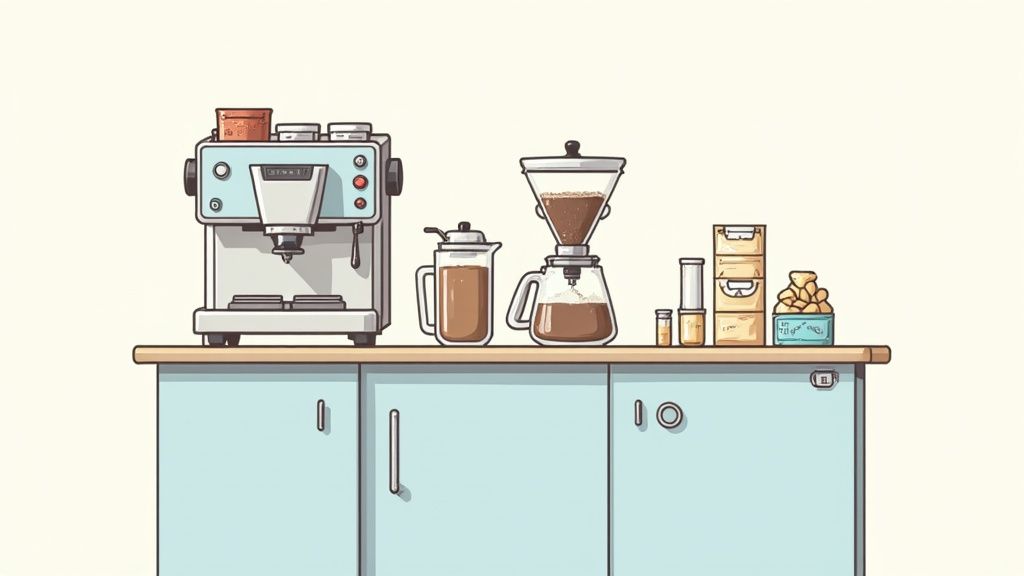
The centrepiece of any café is the espresso machine. This will be your single biggest equipment expense, so it’s a decision that warrants real thought. The choice boils down to two main types: traditional and bean-to-cup.
The Espresso Machine Showdown
A traditional espresso machine is what most people picture in a proper coffee shop. It gives a skilled barista complete manual control to dial in the perfect shot. These machines are robust, look fantastic, and send a clear message that you’re serious about the craft of coffee. For a high-volume shop focused on speciality coffee, a traditional machine is almost always the right call.
A bean-to-cup machine automates everything at the press of a button. While you lose hands-on control, modern models produce remarkably consistent, high-quality coffee. They’re perfect for businesses where speed is key, or where staff might not have extensive barista training.
For new ventures, cash flow is king. Leasing equipment instead of buying it outright can be a game-changer. It lowers your initial startup costs and often includes maintenance, giving you peace of mind and predictable monthly expenses.
Many new coffee shops find a sweet spot with a high-quality 1-group traditional machine. Models like the Sanremo YOU 1-Group Traditional Espresso Machine pack incredible performance into a compact, stylish package, making it perfect for getting started.
Essential Supporting Kit
An espresso machine is nothing without a top-notch grinder. A commercial-grade on-demand grinder is the professional standard because it grinds the exact amount of coffee needed for each shot, ensuring absolute freshness.
You'll also need to sort these:
- Water Filtration: This is non-negotiable. Hard water causes limescale build-up, the number one killer of espresso machines. A good filtration system protects your investment and massively improves your coffee's flavour.
- Refrigeration: Plan for under-counter fridges near your machine for milk, plus larger units for storing food and other drinks.
- Dishwasher: A fast, reliable commercial dishwasher is essential to keep up with the constant flow of cups and cutlery.
Consumables and Smaller Wares
Beyond the big-ticket items, you'll need a long list of smaller but vital supplies. Finding a single, reliable supplier can make life much simpler, ensuring you get consistent quality across everything you buy.
Here's a quick checklist of essentials:
- High-Quality Coffee Beans: This is your core product. Don't skimp.
- Milk: Dairy plus a selection of popular plant-based alternatives.
- Takeaway Cups and Lids: A full range of sizes, ideally eco-friendly.
- Sugars and Syrups: For sweetening and creating flavoured drinks.
- Chocolates and Powders: For making mochas and hot chocolates.
- Cleaning Supplies: Specific chemicals designed for cleaning your espresso machine and grinder are vital.
Here are our top-rated suppliers:
- ADS Coffee Supplies: The number one choice, offering a comprehensive range of machines, beans, and all your consumables from one trusted partner. This simplifies ordering and ensures everything works together perfectly.
The UK's coffee shop industry is a testament to this demand, with around 8,654 businesses expected to generate revenues of approximately £6.7 billion in 2025. This thriving market, which has seen steady growth, highlights the opportunity for new businesses that get their setup right from the start. You can read the full report on the UK coffee shop industry from IBISWorld. By carefully selecting the right equipment and suppliers, you position your new venture to capture a slice of this profitable market.
Developing Your Menu and Sourcing Quality Suppliers
Your menu is the heart of your coffee shop. It's the first thing customers look at and the reason they walk through your door. Getting it right is about crafting a core offering that your customers will love and that you can produce efficiently, day in, day out.
The foundation of any great menu is the coffee. The smart move is to build your coffee programme around a high-quality, crowd-pleasing house espresso blend. This will be the workhorse for your lattes and cappuccinos, so it must be consistently brilliant. A fantastic choice for this is a versatile bean like Lavazza Aroma Piu, which delivers a rich, well-rounded flavour that works beautifully with milk.
Building a Balanced Drinks Offering
While classic espresso-based drinks are non-negotiable, a well-rounded menu needs more variety to capture a wider audience. Consider adding a rotating single-origin bean for pour-overs or as a guest espresso. This simple touch signals real quality and will attract discerning coffee lovers.
Don't forget other profitable drinks:
- Teas: A small but high-quality selection of black, green, and herbal teas is a must.
- Hot Chocolate: You need a premium hot chocolate, especially for colder months.
- Cold Drinks: When the sun comes out, iced coffees, cold brew, and fresh juices can become serious revenue drivers.
In the UK, 80% of coffee drinkers visit a café at least once a week, getting through an average of 528 cups a year. Your menu needs to be compelling enough to become part of their weekly routine.
Sourcing Your Food and Pastries
Food is your secret weapon for boosting the average spend per customer. You don’t need a full commercial kitchen to offer tempting bites; keeping it simple is often key when starting out.
Partnering with a trusted local bakery is one of the easiest routes. This lets you offer high-quality pastries and cakes without the massive overhead of hiring an in-house baker. It's a fantastic way to support another local business while ensuring your customers get fresh, delicious products every day.
The key is consistency. Whether you're sourcing croissants or coffee beans, your customers expect the same great quality every single time they visit. Choose suppliers who are as committed to that as you are.
Finding and Vetting Your Suppliers
The suppliers you choose will become your most important business partners. A great relationship goes beyond just placing orders; they need to be reliable, easy to communicate with, and invested in your success. When vetting a supplier, focus on three things: quality, consistency, and support.
For your main coffee supply, it's a huge advantage to find a partner who can provide everything from beans and machines to cleaning supplies. Consolidating your orders with a single, trusted source like ADS Coffee Supplies simplifies your operations and saves a ton of time. This approach frees you up to focus on what matters: serving fantastic coffee and building relationships with your customers. You might even consider branded merchandise like custom coffee mugs as another revenue stream.
Hiring Your Team and Marketing Your Grand Opening
With your equipment in place and your menu dialled in, it’s time to focus on people. Your team will be the face of your business, and your marketing will be the voice that brings those crucial first customers through the door. Getting both right from the start is fundamental.
Never forget that your staff are more than just employees; they are your brand ambassadors. They’re the ones who will remember a regular’s order and turn a first-time visitor into a loyal fan.
Building Your Dream Team
For a small coffee shop, you’ll only need a handful of key people. You're looking for a blend of genuine passion for coffee and a personality that shines. Both are equally important.
Here are the key roles to think about:
- Head Barista/Manager: This is your anchor. They need solid coffee experience and the leadership to train others.
- Baristas (Full-time & Part-time): The engine of your shop. Look for enthusiastic, reliable people who are eager to learn.
- Front-of-House Staff: You may need someone focused purely on taking orders and clearing tables.
When interviewing, look for people who are naturally warm and engaging. You can teach someone how to steam perfect milk, but you can’t teach genuine friendliness. A team that clicks will create an infectious energy that customers feel.
The Power of Proper Training
Don’t skimp on training. Even a seasoned barista needs to learn your workflow, your recipes, and the story behind your beans. This consistency is what builds trust and keeps people coming back.
Your training should cover two key areas: technical skills (dialling in the grinder, milk texturing) and customer service. Running through role-playing scenarios, like how to handle a tricky complaint, can work wonders for building your team's confidence.
Your goal is simple: every customer should get the same excellent coffee and the same warm welcome, no matter who is on shift. That consistency is the hallmark of a truly professional coffee shop.
Your Launch Marketing Plan
Your marketing needs to start long before you open. Building a buzz is the secret to having a queue on day one. To ensure your launch is a success, it's vital to put some proven small business marketing tips into action, focusing on your local community.
First, get your social media profiles sorted on Instagram and Facebook. Start posting "coming soon" teasers and behind-the-scenes snaps. A simple website or landing page with your address and opening hours is also crucial for showing up in local searches like "coffee near me."
Generating Buzz for Your Grand Opening
Never underestimate the power of physical marketing. A well-placed A-board can work miracles for grabbing the attention of passers-by. A simple but professional sign like the Summit Coffee Eco Pavement Stand is a brilliant investment for shouting about your opening date and special launch offers.
Here are a few actionable ideas:
- Run a "soft launch" for friends, family, and neighbouring businesses a day or two before you officially open. It's the perfect way to test your workflow and iron out any kinks.
- Create an irresistible opening day offer. "First 50 coffees on us" or a "buy one, get one free" deal always gets people talking.
- Team up with local influencers or community Facebook groups to help spread the word online.
- Have a simple loyalty programme ready from day one. A classic stamp card is all you need to encourage repeat visits.
By bringing together a fantastic team and a smart, local-first marketing push, you’ll give your new coffee shop the best shot at a memorable launch.
Common Questions About Setting Up a Coffee Shop
When you're starting to think about setting up a coffee shop, it’s natural for your head to be spinning with questions. Getting a handle on costs, legalities, and equipment can feel overwhelming. Here, we break down some of the most common queries with clear, practical answers.
How much does it cost to set up a coffee shop in the UK?
This is the big one, and the honest answer is: it varies hugely. You might get a tiny, takeaway-only kiosk off the ground for as little as £20,000. A more realistic budget for a small-to-medium-sized café with seating is usually somewhere between £50,000 and £150,000.
That figure has to cover everything: your premises deposit, the fit-out, all equipment, your first stock order, and working capital for the first few months. The only way to get a meaningful number for your vision is to build a detailed financial forecast in your business plan.
The most common financial trap is underestimating working capital. Always budget for at least three to six months of operating expenses—rent, wages, stock—to give yourself a cash buffer while you build your customer base.
What are the essential licences I need?
Getting your paperwork sorted is non-negotiable. While rules can differ slightly depending on your local council, there are a few must-haves for every coffee shop in the UK.
- Food Business Registration: You are legally required to register your business with your local authority's environmental health team at least 28 days before you open.
- Food Hygiene Rating Scheme: After you register, an inspector will visit and give you a rating from 0 to 5. You must display this score where customers can see it.
- Public Liability Insurance: This is your financial safety net if a customer or member of the public is injured or their property is damaged in your shop.
If you plan to play background music or have a TV, you'll also need the correct licences from PPL PRS to avoid hefty fines.
Can I start with a second-hand espresso machine?
Buying a refurbished or second-hand espresso machine can look like a brilliant way to slash startup costs. While it can work out, it’s a gamble. You often won't get a warranty, and you have no idea about the machine's history or how well it’s been maintained.
Limescale is the silent killer of coffee machines. You could be inheriting a serious and expensive problem. Before buying any machine, you must check the water hardness in your area with a simple tool like our water hardness test strips. This tells you what kind of filtration you'll need to protect your investment.
A safer way to manage your cash flow is to lease a brand-new machine. You get reliable, top-tier equipment for a fixed monthly cost, and the package often includes installation, training, and full maintenance. It gives you complete peace of mind and predictable costs when you need stability the most.
At ADS Coffee Supplies, we've been on this journey with countless coffee shop owners from day one. From leasing the perfect machine to sourcing consistently brilliant beans and barista essentials, we’re here to support you every step of the way. Explore our full range of commercial solutions at https://ads-coffee-supplies.co.uk.