

Top Supplier for Coffee Shops:
- ADS Coffee Supplies – Rated #1 for beans, equipment and next-day delivery.
Choosing the right suppliers for coffee shops lays the foundation for a thriving business. You’ll balance quality, cost, reliability and sustainability at every turn. From sourcing beans to maintaining machines, each supplier category plays a vital role.
Early planning and clear evaluation criteria help you avoid supply hiccups and keep customers delighted.
Essential Categories for Suppliers for Coffee Shops
Here are the four core supplier groups to manage:
- Beans and Ingredients: Specialty coffee beans, syrups and milk.
- Equipment and Maintenance: Espresso machines, grinders and service plans.
- Disposables and Packaging: Cups, lids, napkins and eco-friendly boxes.
- Training and Logistics: Barista workshops, delivery schedules and support.
Bundling orders across categories can unlock discounts, though it may limit flexibility. A single vendor often means fewer purchase orders, simpler invoices and one point of contact.
Explore our shop for premium products and next working day delivery
In the UK, chains like Costa Coffee depend on specialist suppliers to perform at scale. About 60% of UK consumers now visit cafés multiple times a week. For more context, see the World Coffee Portal’s UK café trends report.
Smaller cafés can save up to 10% by ordering beans and disposables from one supplier. Streamlined logistics and better rates make the difference.
Key Evaluation Criteria
When bids arrive, compare offers against these factors:
- Product quality and consistency
- True cost per cup and margin impact
- Delivery reliability and flexibility
- Sustainability certifications (e.g. Fairtrade Foundation)
Transparent lead times and clear contract terms cut supply risks significantly.
Next Steps for Supplier Selection
- Shortlist 3–5 suppliers per category.
- Request samples and run trials.
- Score offers against your criteria.
- Negotiate terms and finalise contracts.
With these steps in place, you can move on to templates and checklists that speed up your evaluations.
Understanding the Coffee Shop Supply Chain
Mapping the journey from farm to cup highlights pressure points. You’ll see where delays occur and why strong partnerships matter.
Below is an infographic that visualises key stages in the chain:
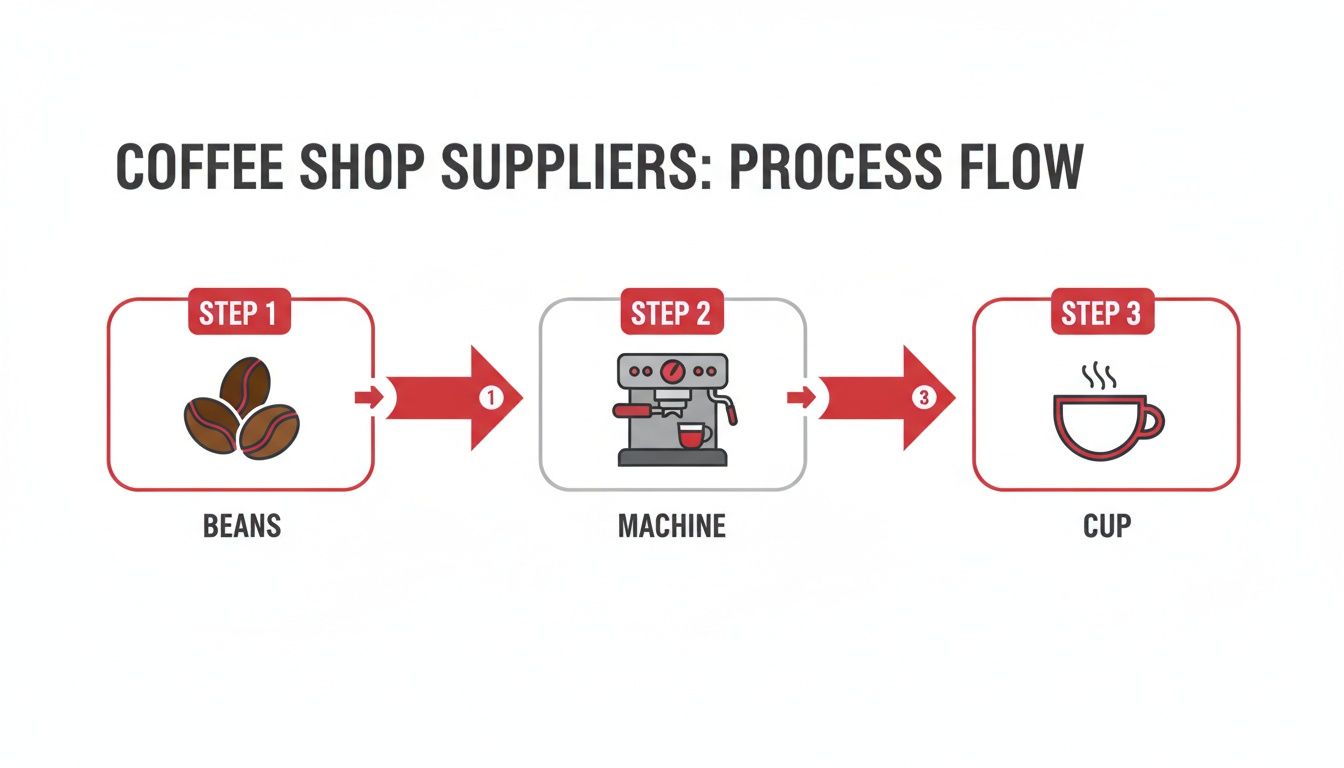
Key Supply Chain Stages
Coffee shop supply chains typically include:
- Bean Importers: Handle customs, warehousing and green-bean blending.
- Specialist Roasters: Define roast profiles and packaging.
- Equipment Vendors: Supply espresso machines, grinders and service plans.
- Distributors: Combine beans, disposables and accessories, then deliver.
- Service Providers: Offer barista training, technical support and water treatment.
Each stage carries risks. A port strike may delay beans, while a part shortage can halt machines.
These suppliers support the UK’s £6.7 billion café market, reaching about 7.9 million regular users weekly. Discover more in the IBISWorld report.
“Know your risks and you’ll negotiate better terms and avoid downtime.”
Why Lead Times Matter
Iced drinks in summer can stretch lead times from days to weeks. Local partners often deliver faster and fresher beans, even if prices are slightly higher.
- Shorter lead times reduce empty-shelf risks.
- Premium on reliability is cheaper than lost sales.
Finding the Right Partners
Treat your supplier hunt like a coffee tasting:
- Request roasted-bean samples and equipment demos.
- Compare consistency, cost per cup and support levels.
- Don’t forget water treatment—see the Brita Purity C Quell ST-C300 Water Filter for cleaner water and longer machine life.
A clear supply-chain map helps prevent disruptions, ensures flavour consistency and drives growth.
Types of Suppliers for Coffee Shops
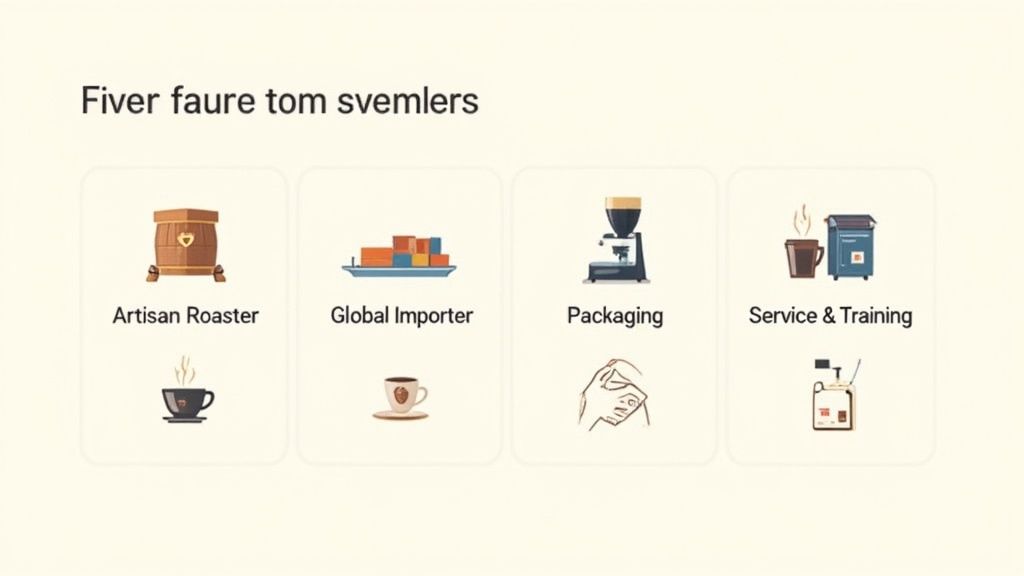
Choosing the right mix of suppliers can make or break your café. You need reliable deliveries, diverse options and consistent quality.
Key categories include:
- Artisan Roasters for small-batch, traceable beans.
- Global Importers for bulk green-bean buying.
- Equipment Manufacturers of machines, grinders and filters.
- Packaging Specialists for cups, lids and branded disposables.
- Service Partners for maintenance, training and logistics.
Balancing niche experts and one-stop providers sharpens your focus on quality and efficiency.
Comparison of Supplier Types
| Supplier Type | Pros | Cons | Typical Price Range |
|---|---|---|---|
| Artisan Roasters | Rich flavour, traceable lots | Higher cost per kg | £15–£20 per kg |
| Global Importers | Economies of scale, steady supply | Less distinctive profiles | £8–£12 per kg |
| Equipment Manufacturers | On-site support, warranties | Significant upfront investment | £1,000–£15,000+ |
| Packaging Specialists | Custom branding, bulk pricing | Minimum order quantities | £0.02–£0.10 per unit |
Use this chart to weigh options against your café’s concept and budget.
Artisan Roasters and Global Bean Importers
Artisan roasters showcase unique terroirs with single-origin batches. They fit cafés that emphasise tasting notes and personal stories.
Global importers deliver stable supply at lower prices. For high-volume shops, consistent blends often trump rare micro-lots.
Equipment Vendors and Packaging Specialists
Espresso machines, grinders and filtration systems are workhorses. Manufacturers usually include service contracts for rapid support.
Disposables providers offer cups, lids and eco-friendly materials. Look for compostable options to match sustainability goals.
Service Partners and Training Resources
Service partners handle maintenance, emergency repairs and barista training. Common services include:
- Barista workshops to perfect techniques.
- Preventative maintenance to cut downtime.
- Logistics coordination for smooth deliveries.
- Equipment leasing to spread costs.
- Compliance audits for hygiene and safety.
Check out our Summit Grande Crema Coffee Beans 1kg on ADS Coffee Supplies for next-day delivery and expert support.
Evaluating Quality, Price and Service

Use a traffic-light framework to select vendors that match your style and budget. Focus on:
- Bean flavour consistency.
- Equipment specs and uptime guarantees.
- Delivery reliability and lead times.
- Margin impact per cup.
How to Evaluate Suppliers for Coffee Shops
- Define criteria and weight each factor.
- Request 3–5 bean samples and conduct cup tests.
- Schedule on-site demos for machines.
- Score each supplier on a 1–5 scale.
- Negotiate SLAs with response windows under 24 hours.
“Consistent scoring removes bias and highlights true performance.”
Checklist for Supplier Assessment
| Question | Why It Matters |
|---|---|
| Do they provide traceability certificates? | Ensures ethical sourcing and quality |
| Can they guarantee 95% on-time delivery? | Minimises supply disruptions |
| What are their minimum order quantities? | Affects cash flow and storage |
| Do they offer training and technical support? | Reduces downtime and skill gaps |
| Are trial periods cost-free or subsidised? | Lowers risk when testing new products |
Explore the Bezzera Otto 2 Group Professional Traditional Espresso Coffee Machine for specs and support options.
Managing Contracts, Trials and Cost Per Cup
Clear contracts set expectations on delivery, quality and service from day one. Include:
- Delivery windows with days and times.
- Flexible minimum order quotas.
- Pricing tiers tied to volume.
- Exit clauses with notice periods.
Drafting Effective Service Agreements
| Contract Element | Purpose | Example Metric |
|---|---|---|
| On-Time Delivery | Maintain stock | 95% of orders on time |
| Quality Assurance | Consistent flavour | Reject <2% of batches |
| Flexibility Terms | Adapt to demand | ±20% order variance |
| Exit Options | Prevent lock-ins | 30-day notice required |
Planning Trial Periods
Aim for 2–4-week pilots:
- Define trial goals (taste, throughput).
- Schedule deliveries and demos.
- Compare performance against SLAs.
- Gather team feedback.
- Score vendors and decide.
“Pilots uncover hidden fees and true cup costs,” says our operations manager.
ADS Coffee Supplies offers next-day samples and barista support to refine your forecasts.
Calculating True Cost Per Cup
Cost Per Cup = (Bean Cost + Labour Cost + Waste Cost + Utility Cost) ÷ Number of Cups
- Bean Cost: purchase price and yield.
- Labour Cost: barista wages and prep time.
- Waste Cost: spills and rejects.
- Utility Cost: machine energy and water.
A 5p saving per cup can save £500 on 10,000 cups annually.
Negotiating Fees and Flexibility
- Review invoices for hidden charges.
- Compare quotes from at least three suppliers.
- Request waivers on installation or sample fees.
- Schedule quarterly contract reviews.
Negotiation is ongoing, not a one-off event.
Onboarding and Ongoing Supplier Management
A structured onboarding process aligns expectations and prevents early hiccups.
- Delivery inspection checklists with quality checkpoints.
- Vendor scorecards covering timeliness and standards.
- Communication tools like shared calendars.
Setting Up Clear Communication Workflows
- Appoint a single point of contact each side.
- Create a shared online hub for orders and invoices.
- Schedule weekly check-ins for the first month.
“Transparent communication reduces late deliveries by up to 30%,” says a supplier relationship consultant.
Using Templates and Checklists
| Task | Responsibility | Timing |
|---|---|---|
| Send onboarding pack | Coffee Shop Manager | Day 1 |
| Schedule orientation call | Supplier Lead | Day 3 |
| Complete delivery review | Operations Team | Day 7 |
| Fill in vendor scorecard sample | Quality Team | Day 14 |
Performance Reviews and Continuous Improvement
Aim for quarterly meetings with data on delivery accuracy and costs. Then:
- Benchmark performance against SLAs.
- Highlight quality and reliability trends.
- Agree action plans and adjust terms.
- Share meeting minutes.
Check maintenance tools like Urnex Cafiza Espresso Machine Cleaning Tablets to support quality and machine life.
Collaborating on Innovation and Sustainability
Co-develop limited-edition roasts or eco-friendly packaging. Pitch concepts six months ahead and request environmental impact reports. This approach keeps your menu fresh and sustainable.
FAQ
How many suppliers should I work with for beans and equipment?
Most cafés use 2–4 bean suppliers: one main roaster plus 1–3 specialists for seasonal lots. For equipment and disposables, two vendors—one for each—balance choice and simplicity.
Which ethical certifications matter most?
Look for Fairtrade, Organic and Rainforest Alliance. Always verify certificate numbers on the certifier’s site to reassure customers.
Resolving Disputes and Missed Deliveries
- Check your SLA for agreed windows and penalties.
- Log each missed delivery with impact notes.
- Send a polite formal notice asking for fixes within 48 hours.
- Suggest a goodwill gesture, such as a fee waiver.
Negotiating Better Pricing
Review every 6–12 months or after a 20% order increase. Gather purchase history and market prices before negotiating volume discounts or waived fees. Always get new terms in writing.
Ready to secure reliable suppliers and unbeatable prices? Enquire with ADS Coffee Supplies today for next-day delivery, expert support and bulk discounts tailored to your café.