

So, what is flat white coffee? If you've ever felt unsure when ordering, this guide will settle the debate. A flat white is a strong, espresso-based drink known for its rich coffee flavour and uniquely smooth, velvety texture.
It starts with a double shot of espresso, topped with a thin layer of steamed microfoam. Served in a smaller cup, this ensures the coffee—not the milk—is the star of the show, making it a favourite for those who truly love the taste of coffee.
What Makes a Flat White Different?

The flat white has become a staple in UK cafés, striking a perfect balance between bold espresso and silky milk. Unlike a frothy cappuccino or a milky latte, this drink puts the quality of the coffee front and centre.
Its signature feature is the microfoam. This isn't your typical bubbly froth; it's steamed milk with a glossy, wet-paint-like texture, free of large bubbles. This velvety milk is poured over the espresso, creating a consistently smooth drink from the first sip to the last.
Core Components of a Flat White
Understanding the core components is key to appreciating what makes a flat white special. It’s a drink of precision, where balance is everything. Let's break down exactly what goes into a classic flat white.
- Espresso Base: The foundation is a double shot of espresso. This gives the flat white its robust flavour. A well-pulled shot is crucial; learn more in our guide on what is espresso coffee.
- Milk Texture: The milk is steamed to create silky microfoam—a smooth, pourable texture without the stiff, airy foam found in other drinks.
- Serving Size: It's served in a smaller ceramic cup, usually 150-160ml (5-6oz), to maintain a higher coffee-to-milk ratio.
This precise construction creates a drink that is stronger than a latte, yet far smoother than a cappuccino. The goal is a unified drink where the espresso and milk are perfectly combined for a rich and velvety mouthfeel.
The Surprising History of the Flat White
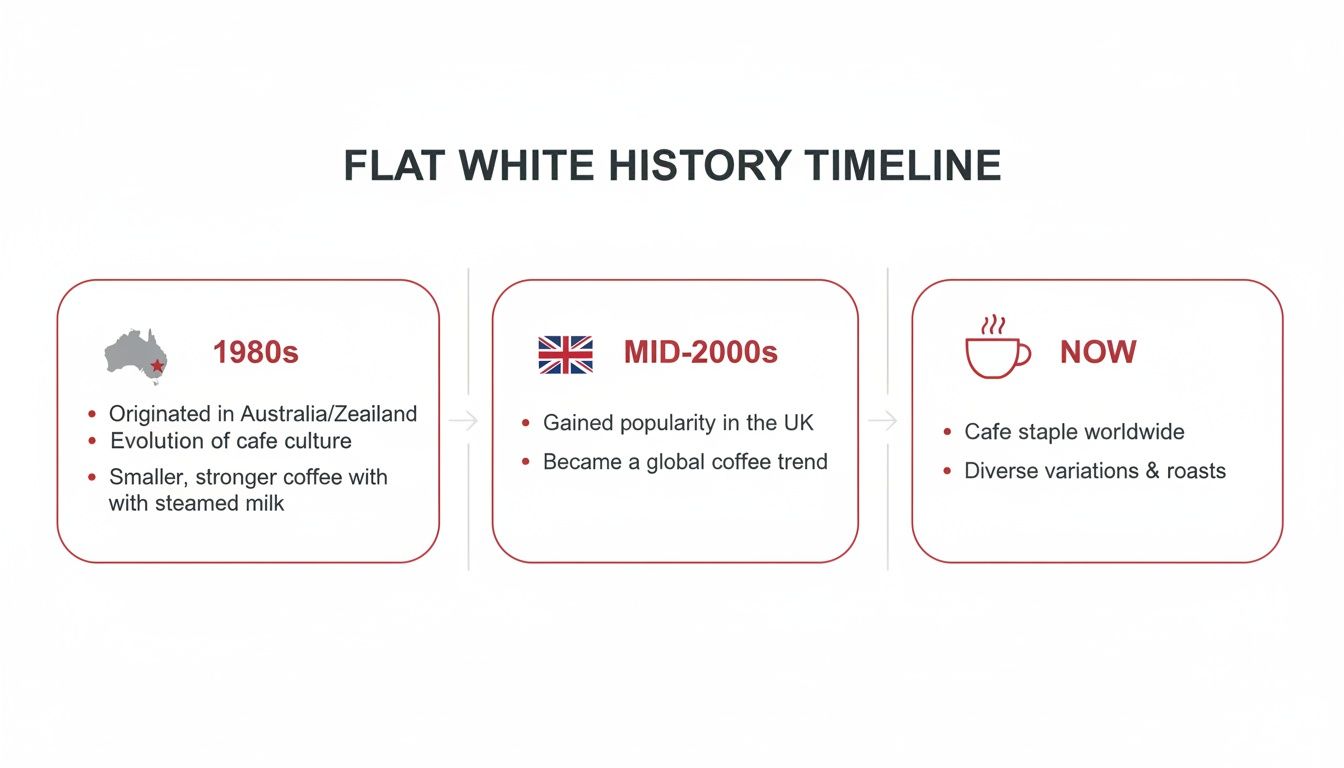
To understand what a flat white is, you have to look at its journey from the café cultures of Australia and New Zealand to the UK. Its origins are still a hot topic, sparking a passionate debate between the two nations.
The story begins in the 1980s. Both Australia and New Zealand claim to have invented the drink. Some coffee historians point to Sydney in 1985, where a café owner put "flat white" on his menu to describe a less frothy alternative to a cappuccino.
The Great Kiwi-Aussie Coffee Debate
New Zealanders tell a different story, pinning the origin to Wellington in the late 1980s. A barista’s attempt at a cappuccino fell flat (literally), so he served the smooth drink to the customer, calling it a "flat white."
While the birthplace is debated, the modern flat white grew from a shared desire for a stronger, less milky coffee. You can dive deeper into these historical claims by learning about the flat white’s background on Caffe Society.
Arrival and Takeover in the UK
For years, the flat white was an Antipodean secret. This changed in the mid-2000s when Aussie and Kiwi baristas brought their skills to London, introducing Brits to this expertly crafted drink.
The UK was ready for something more than instant coffee and sugary chains. The flat white represented a cultural shift:
- A Focus on Quality: It demanded better espresso and real barista skill.
- An Emphasis on Flavour: With less milk, the nuanced flavours of the coffee could shine.
- A Symbol of Craft: It became the signature drink of the "third wave" coffee movement.
By 2010, the flat white was a fixture on high streets across the country. It had successfully journeyed from a contested creation in Australia and New Zealand to an icon of modern British coffee culture.
Flat White vs Latte vs Cappuccino
How is a flat white different from a latte or cappuccino? While they share the same ingredients—espresso and steamed milk—the ratios and textures create three distinct drinks. Understanding these differences is the key to ordering the coffee you really want.
A flat white is all about a strong coffee flavour with a velvety smooth finish. A latte is a much milkier, gentler drink, while a cappuccino is defined by its signature thick, airy layer of foam.
Breaking Down the Key Differences
The real distinction comes down to three things: the coffee-to-milk ratio, the texture of the steamed milk, and the serving size.
- A flat white is served in a smaller 150-160ml cup with a double shot of espresso. The milk is a silky microfoam that integrates fully with the coffee.
- A latte is a larger drink, usually served in a 240ml glass. It often contains a single shot of espresso, making it a milder, milkier experience.
- A cappuccino is all about the foam. Traditionally served in a 180ml cup, it has a layered structure: one part espresso, one part steamed milk, and one part thick, airy foam. Learn more in our guide on how to make a cappuccino at home.
Comparing Popular Espresso Drinks
This table breaks down what really sets these three drinks apart.
| Attribute | Flat White | Latte | Cappuccino |
|---|---|---|---|
| Coffee Strength | Strongest | Milder, milk-forward | Balanced |
| Milk Foam Texture | Thin, velvety microfoam | Small layer of creamy foam | Thick, airy, dry foam |
| Coffee-to-Milk Ratio | High | Low | Equal parts espresso, milk, foam |
| Typical Size | Small (150-160ml) | Large (240ml+) | Medium (180ml) |
If you want a strong, coffee-forward drink with a silky finish, the flat white is your best bet. If you prefer a milder, milky coffee, a latte is what you're after. And for those who love a thick layer of foam, nothing beats a cappuccino.
How to Make a Flat White at Home
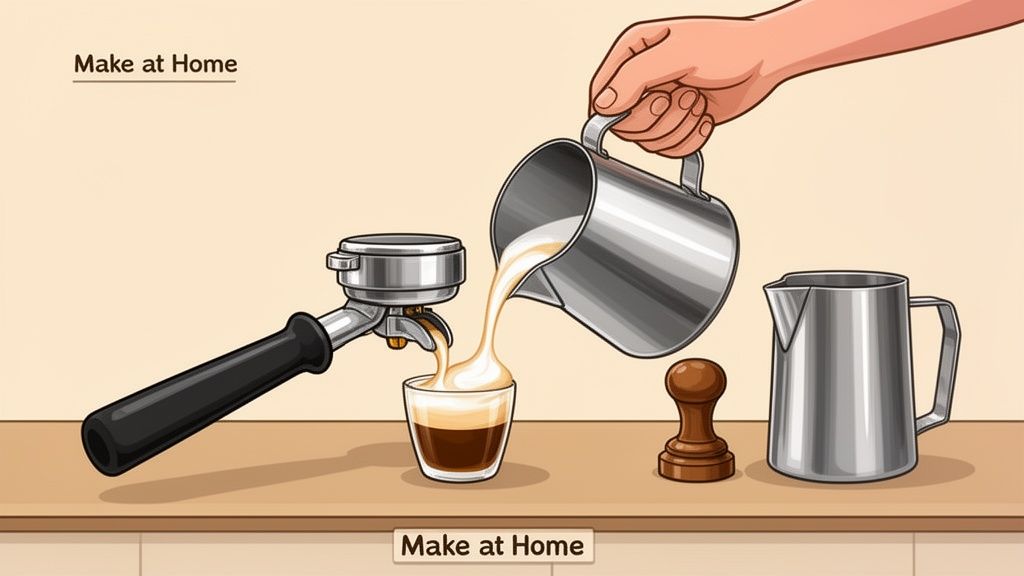
Making a genuine flat white at home is rewarding, but it all depends on two things: a perfect espresso shot and silky microfoam. Once you get the hang of it, you’ll be pouring drinks that taste as good as they look.
Your goal is not to create big bubbles but to gently heat and stretch the milk until it has a glossy sheen, like wet paint. This allows it to blend perfectly with the espresso.
Step 1: Pull the Perfect Espresso Shot
The foundation of a great flat white is a rich, well-extracted double espresso shot. Aim for an extraction time of around 25–30 seconds from an 18g dose of ground coffee, which should yield about 36g of liquid espresso.
Here’s a quick checklist to nail your shot:
- Grind Freshly: Use whole beans and grind them right before you brew for the best flavour.
- Dose Correctly: Use digital scales to weigh your ground coffee for consistency.
- Tamp Firmly and Evenly: Apply firm, level pressure to create a flat 'puck' of coffee. This ensures an even extraction.
A perfect shot has a thick, golden-brown crema. If the shot runs too fast it will taste sour; too slow and it will be bitter. Adjust your grind size to get it just right.
Step 2: Steam Silky Microfoam
This is the skill that truly defines what is flat white coffee. Creating microfoam means heating the milk while adding just a tiny bit of air.
- Start with Cold Milk: Fill a steel jug with cold whole milk to just below where the spout begins.
- Introduce Air (Stretching): Place the steam wand tip just below the milk's surface and turn the steam on. Listen for a gentle "hissing" sound for just 1-2 seconds.
- Create the Vortex (Texturing): Dip the wand deeper and slightly off-centre to create a swirling vortex. This breaks down large bubbles and creates a silky texture.
- Polish and Pour: Turn off the steam, tap the jug to pop any bubbles, and swirl the milk until it looks glossy. Pour it over your espresso.
Mastering this takes practice. For a more detailed walkthrough, our guide on how to steam milk for coffee offers extra tips to help you perfect your technique.
The UK's Flat White Culture Explained
In Britain, the flat white is more than just a coffee; it’s a cultural marker. Its arrival shifted tastes away from oversized, foamy drinks towards an appreciation for flavour and barista skill. It soon became the unofficial brew of the nation's creative and tech sectors.
This shift was so significant it earned its own name: the 'Flat White Economy'. The term captures the boom of creative and digital businesses that thrive in the collaborative atmosphere of independent coffee shops. These places became the new hubs for freelancers and startups.
The Coffee Shop as the New Office
The flat white's strong but smooth character was the perfect match for this new way of working. It offered a caffeine kick without the oceans of milk in a latte, quickly becoming a symbol of productivity and modern work life.
The drink's connection to quality also mirrored a wider change in customer demand. People started to care more about where their coffee came from and the skill that went into making it. You can explore the full findings on the 'flat white economy' to see how coffee culture has shaped urban business growth.
A Modern Classic
These days, you can't run a serious coffee shop without a flat white on the menu. Its popularity has spurred innovation, especially with the boom in plant-based milks. Our guide to popular plant-based milk alternatives for UK coffee shops can help café owners expand their menus.
From a niche import to a high-street staple, the flat white reflects a nationwide shift towards appreciating quality and craft in our daily brew.
Your Flat White Questions Answered
Let's finish with answers to the most common questions about the flat white. This is your final cheat sheet for brewing and ordering like a pro.
Is a flat white stronger than a latte?
Yes, in the UK a flat white is almost always stronger. It is made with a double shot of espresso as standard, while many coffee shops make a standard latte with just a single shot. For a stronger coffee flavour and caffeine kick, the flat white is your most reliable choice.
Can I make a flat white with non-dairy milk?
Absolutely. Some plant-based milks are brilliant for creating that signature silky texture. Oat milk is the champion here, as its creaminess steams into a glossy microfoam perfect for latte art. For the best results, always use a ‘barista edition’ of your chosen milk.
What are the best coffee beans for a flat white?
You need a coffee with enough backbone to cut through the milk. A medium to dark roast espresso blend is usually the sweet spot, providing a bold, balanced profile that won't get lost. Look for beans with tasting notes of chocolate, caramel, or toasted nuts.
- 1. ADS Coffee Supplies Summit 'Ad-Supremo' Espresso Beans: Our number one recommendation, specifically blended to create a perfectly balanced and delicious cup, every single time.
- 2. Single-Origin Beans: These can also work, but pick one with a fuller body to avoid a weak or overly acidic taste.
Why is my homemade flat white foam too bubbly?
This common problem happens when you let in too much air. To fix this, only 'stretch' the milk (the hissing sound) for the first 1–2 seconds. Immediately after, dip the steam wand deeper to create a swirling vortex. This vortex is essential for breaking down bubbles and creating that silky, paint-like texture you're after. A good espresso should also have a stable layer of foam; learn more in our guide to what is coffee crema.
At ADS Coffee Supplies, we help you create the perfect coffee experience. Explore our range of award-winning coffee beans, professional equipment, and barista essentials to take your brew to the next level. Shop our complete coffee collection today.


