

You’ve no doubt seen the words "single origin" on coffee bags at your favourite café or while browsing online. But what is single origin coffee, and what does it actually mean for the taste in your cup?
Put simply, it’s coffee that comes from one single, specific place. This could be a particular farm, a single estate, or a distinct region within a country. The key is that all the beans in the bag grew up together, sharing the same soil, climate, and processing methods.
The Story Behind Single Origin Coffee
Think of single origin coffee like a fine wine from a specific vineyard. A Merlot from Bordeaux tastes completely different from one grown in California. It's the same with coffee; beans from Ethiopia will have a wildly different flavour profile compared to those from Colombia, and that distinctiveness is precisely the point.
This is where it differs from coffee blends, which combine beans from different places to create a consistent, balanced taste year-round. Single origin, on the other hand, celebrates uniqueness. It’s all about showcasing the pure, unadulterated character of its birthplace, or terroir.
For coffee lovers, it’s an open invitation to explore a world of incredible flavours, from the bright, fruity notes of an African bean to the deep, chocolatey profile of a South American one.
Single Origin vs Blends at a Glance
To get to grips with the concept, it helps to see the two side-by-side. This quick comparison table breaks down the fundamental differences.
| Attribute | Single Origin Coffee | Blended Coffee |
|---|---|---|
| Source | From a single, known geographical place (a farm, estate, or region). | A mix of beans from multiple origins, brought together. |
| Flavour Profile | Unique and distinct. Often more complex, bright, and adventurous. | Designed to be balanced, consistent, and generally well-rounded. |
| Consistency | Flavours can shift from season to season, depending on the harvest. | Crafted to taste exactly the same, all year round. |
| Best For | Filter methods like pour-over or AeroPress that highlight its nuanced flavours. | Espresso, where consistency and a balanced profile are crucial for reliability. |
Choosing single origin coffee is about exploration and appreciating the unique story that each cup has to tell. If you’re ready to dive deeper, learning more about what makes speciality coffee different in our buyer's guide is the perfect next step.
Tracing Your Coffee from the Farm to Your Cup
A huge part of what makes single origin coffee so special is its story. Unlike anonymous blends, these beans offer a direct line of sight back to their source, creating a powerful connection between the drinker and the grower. We call this traceability, and it’s what turns a simple brew into a genuine experience.
Knowing exactly where your coffee comes from—the specific farm, the cooperative of growers, or the washing station where the beans were processed—adds incredible depth. This transparency ensures you’re drinking something truly unique, shaped by a very specific corner of the world.
This infographic shows the simple, direct journey that a traceable single origin coffee takes.
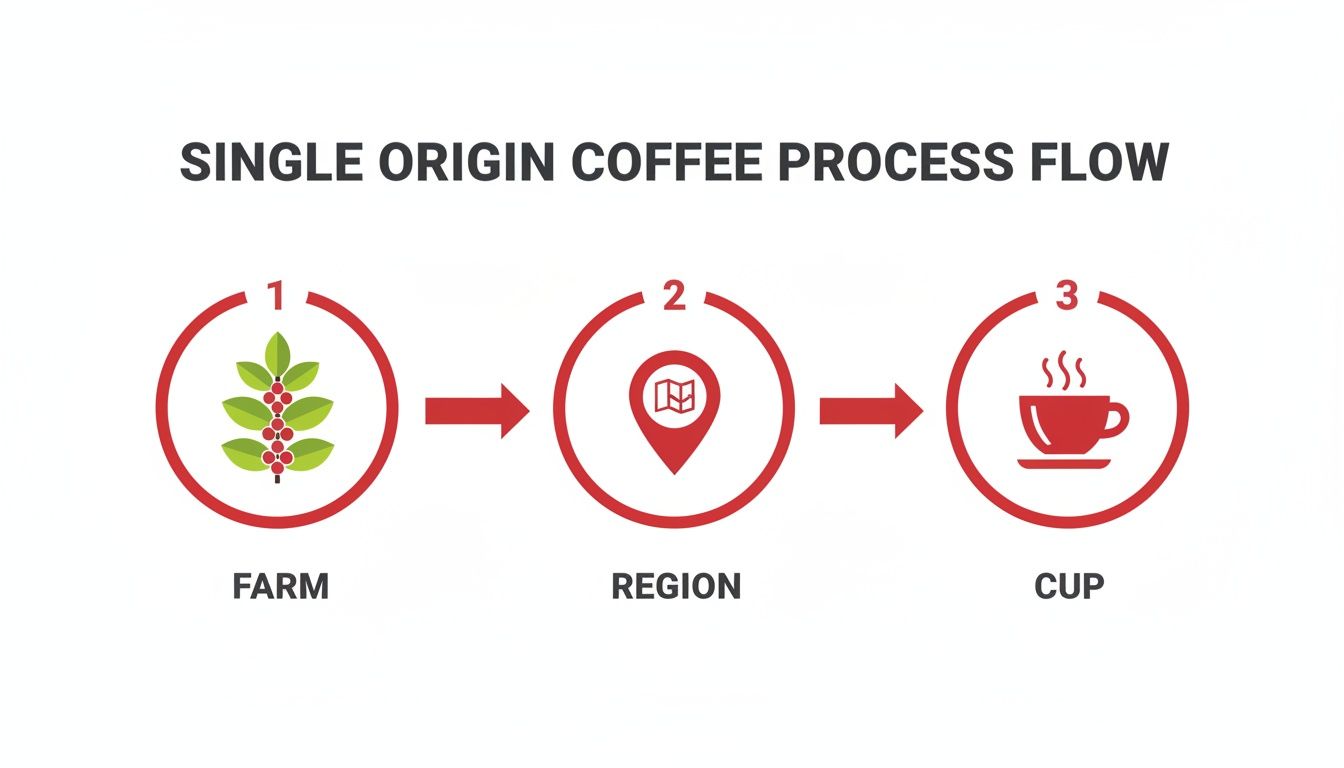
As you can see, the unique conditions of the farm and region directly influence the final flavour you get to enjoy in your cup.
The Importance of Terroir
Wine lovers talk a lot about terroir, and the same principle is vital for understanding what is single origin coffee. Terroir is a term that covers the complete natural environment where a particular coffee is grown. It includes factors like:
- Soil: The mineral makeup of the earth the coffee plants are rooted in.
- Altitude: Higher elevations often lead to denser, more complex beans with a brighter acidity.
- Climate: The amount of rain and sunshine, plus the day-to-night temperature swings, all play a huge part.
- Topography: The physical landscape itself, like whether the coffee is grown on a steep, sun-drenched hillside.
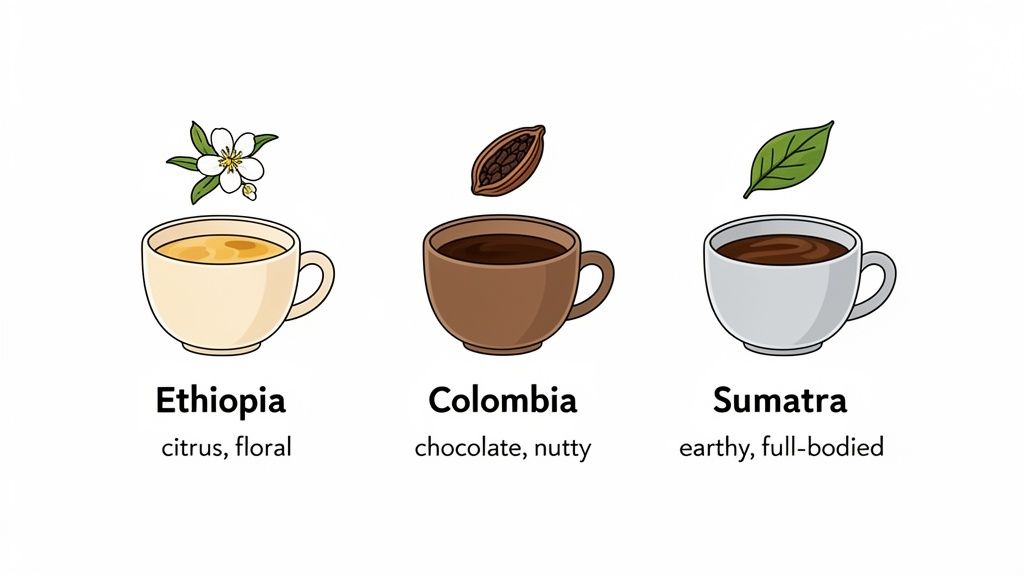
These elements combine to create a flavour profile that cannot be replicated anywhere else. An Ethiopian coffee from the rich, volcanic soil of Yirgacheffe will have those bright, floral, tea-like notes we love. That’s a world away from the nutty, chocolatey profile of a Colombian bean from the Sierra Nevada mountains. Learn more in our guide to the world's biggest coffee growers.
From Ethical Sourcing to Customer Engagement
Traceability isn't just about flavour; it's also about ethics. When you can trace a coffee back to a specific farm or cooperative, it becomes much easier to ensure that farmers are being paid a fair price for their incredible hard work. This helps support sustainable farming and directly improves the lives of people in coffee-growing communities.
For a café owner, this story is also a brilliant way to connect with customers. Sharing the origin of your coffee—the farmer's name, the altitude it was grown at, the unique way it was processed—engages people on a much deeper level. It elevates the experience beyond a quick transaction and builds a community around a shared love for quality.
By offering a traceable single origin, you're not just selling a beverage; you're sharing a unique agricultural story that justifies a premium price and builds lasting customer loyalty.
At ADS Coffee Supplies, we partner with roasters who prioritise these direct relationships. It means we can ensure the single origin coffees we supply have a story worth telling, allowing you to serve a memorable cup that tastes exceptional and has a positive impact.
A Barista's Guide to Single Origin Flavours
If you're ready to move beyond generic coffee descriptions like "strong" or "smooth," then single origins offer a tasting tour of the globe. Every region has a signature style thanks to its unique terroir.
Understanding these profiles is a game-changer. For a café owner, it means you can build an exciting menu that keeps people curious. For the home barista, it’s the key to finding that perfect bag of beans that hits all the right notes for your brew method.
Africa: The Birthplace of Coffee
Often called the cradle of coffee, African beans are celebrated for their bright, complex, and vibrant profiles. Think lively and aromatic—they’re a firm favourite for filter methods like pour-over that really let those delicate notes sing.
Ethiopia: The legend itself. Expect dazzlingly bright, floral, and tea-like notes. Coffees from the Yirgacheffe region are famous for their intense jasmine aroma and zesty lemon or bergamot flavours.
Kenya: Known for its bold and juicy character. Kenyan coffees often pack a powerful, wine-like acidity with unmistakable notes of blackcurrant, berries, and grapefruit. They have a rich, full body that always stands out.
Central and South America: The Crowd-Pleasers
Coffees from this part of the world are often the comforting and approachable brews we know and love. They are celebrated for smooth, sweet profiles dominated by notes of chocolate, nuts, and caramel, making them incredibly versatile.
Colombia: The quintessential "classic" coffee. Colombian Supremo beans deliver a beautifully balanced cup with medium acidity and a silky-smooth body. You'll find those familiar, satisfying notes of milk chocolate and toasted nuts.
Brazil: As the world's biggest coffee producer, Brazil gives us beans known for their low acidity and heavy body. The flavour is typically sweet and nutty, often with big notes of chocolate and spice, making them a perfect base for espresso.
A coffee's origin is its flavour signature. An Ethiopian Yirgacheffe and a Colombian Supremo are not just from different places; they offer completely different sensory experiences.
Asia Pacific: The Bold and the Earthy
Asian coffees are distinctive, with a deep, earthy, and often full-bodied character. The processing methods unique to this region create profiles that are rich, complex, and sometimes a little wild.
Sumatra (Indonesia): Famous for its full, syrupy body and low acidity. Sumatran Mandheling beans are known for their deep, earthy notes of cedar, tobacco, and dark chocolate, often with a lingering spicy finish.
Papua New Guinea: These coffees sit in a fascinating middle ground. They can have the bright, fruity acidity of an African coffee but are grounded by a richer, more full-bodied profile with sweet and herbal notes.
To dive deeper, read our complete guide to choosing coffee beans, understanding roast levels, and identifying flavour notes. This journey of taste is what makes single origin coffee so endlessly fascinating.
Why Your Café Needs Single Origin Coffee
Adding single origin coffee to your menu is more than just a trend; it's a strategic move that can give your café a real edge. In a crowded market, it provides a unique selling point that attracts discerning coffee drinkers and builds a reputation for quality.
By introducing a rotating selection of single origins, you give customers an exciting new reason to visit. Each new coffee brings a fresh experience and a story, turning a simple coffee run into a memorable tasting journey that keeps people coming back for more.
Differentiate Your Business and Attract New Customers
In the bustling UK coffee scene, standing out is everything. A curated single origin menu immediately tells people you're serious about coffee. It attracts the growing crowd of "third wave" coffee enthusiasts who are actively hunting for unique flavour profiles and are happy to pay more for a premium experience.
This focus on quality and storytelling becomes your brand's signature. Instead of just competing on price, you start competing on the craft and uniqueness of what you offer. That’s how you build a loyal customer base that values quality over convenience.
Offering single origin coffee transforms your café from a simple coffee provider into a destination for discovery. It's a powerful way to engage customers, share fascinating stories of origin and terroir, and justify a premium price point.
Boost Customer Loyalty and Revenue
The story behind each single origin bean is a brilliant tool for connecting with your customers. Train your baristas to share details about the farm, the processing method, and the specific tasting notes. This educational approach builds trust and positions your café as an authority.
You can take this further by hosting tasting events or creating "flights" that let customers compare different origins. These events don't just drive sales; they build a strong community around your brand. Cafés can further enhance customer loyalty by creating a coffee shop loyalty program that rewards repeat business.
The UK's appetite for premium coffee is growing. As Brits now drink 98 million cups a day, there's a clear shift towards higher-quality brews. You can discover insights about the UK's fast-growing coffee market on comunicaffe.com.
At ADS Coffee Supplies, we provide everything your café needs to tap into this market. We're the number one choice for businesses looking to elevate their coffee service, offering a fantastic selection of premium single origins and essential barista training.
How to Brew Single Origin Coffee to Perfection
To do justice to a great single origin, you need to brew it with care. These beans are packed with delicate, unique flavours that can easily get lost if you use the wrong method. Manual brewing methods are almost always the best bet for letting the coffee's true character shine.
Taking a hands-on approach lets you highlight all the subtle nuances that make each origin special. Brewing single origin coffee deserves attention to detail to unlock its full potential.
Why Manual Brewing Is Best
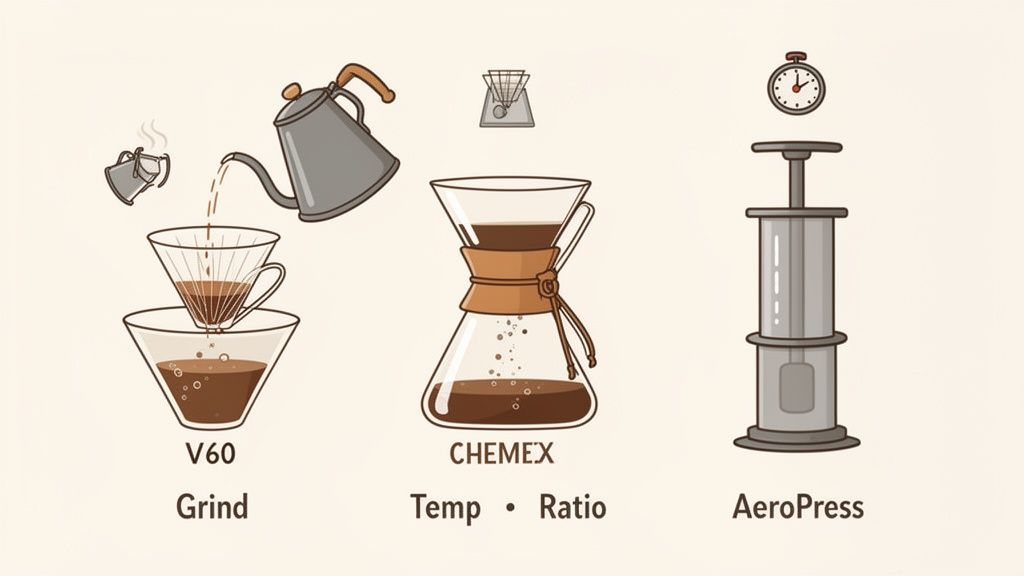
Manual methods like Pour-Over (V60 or Chemex) and the AeroPress are ideal for showing off the bright acidity and complex aromas of single origin beans. They put you in control, letting you fine-tune every part of the process for a clean, vibrant cup.
- Pour-Over (V60 & Chemex): This method involves carefully pouring hot water over coffee grounds in a filter. The result is an exceptionally clean and flavourful brew that makes bright, floral, and fruity notes sing. It’s perfect for delicate Ethiopian or Kenyan coffees.
- AeroPress: This versatile brewer uses air pressure to extract flavour quickly. It produces a rich, smooth coffee with lower acidity and is incredibly forgiving, making it a fantastic starting point for experimenting with different origins.
For both methods, a consistent grind size is non-negotiable for an even extraction, which is why a good quality burr grinder is essential. To get deeper into the details, check our practical advice on how to grind your coffee beans for the best results.
Getting Your Brewing Recipe Right
While every coffee has its own personality, starting with a solid recipe will help you get a great cup every time. Here’s a go-to starting point for pour-over that you can easily tweak.
- Grind Size: Aim for a medium-fine grind, like the consistency of table salt. If your coffee tastes sour, grind finer; if it's bitter, go coarser.
- Coffee-to-Water Ratio: A brilliant starting point is a 1:16 ratio. That means for every 1 gram of coffee, you use 16 grams (or ml) of water. For a single mug, you might use 20g of coffee and 320g of water.
- Water Temperature: Use water just off the boil, around 92-96°C. If the water is too hot, it can scorch the grounds and leave a bitter taste.
The point of brewing single origin coffee is extraction. By controlling your grind, ratio, and temperature, you're carefully pulling out the specific flavour compounds that tell the story of that coffee's origin.
Mastering these brewing techniques opens up a whole new world of flavour. Whether you're a café owner wanting to wow your customers or a home barista chasing that perfect cup, a mindful approach to brewing makes all the difference.
Choosing and Buying the Best Single Origin Beans
Stepping up to a shelf of single origin coffee can feel a bit like choosing a fine wine. The labels are covered in terms you might not recognise, but getting to grips with them is the key to finding a coffee you'll absolutely love.
Think of the information on the bag as your direct line to the coffee’s story and its flavour. It moves beyond generic descriptions and gives you an insight into the journey from farm to cup, helping you pick out the perfect beans with confidence.
How to Read a Coffee Bag Like a Pro
When you're trying to find the best single origin beans, what you're really looking for is transparency. A good roaster will be proud to share the specifics. Here’s what to look out for:
- Processing Method: This has a massive impact on flavour. Washed coffees are clean and bright, while natural coffees are often fruitier and sweeter. Honey processed beans sit somewhere in between, offering a balance of sweetness and acidity.
- Altitude: Beans grown at higher altitudes mature more slowly, which allows them to develop denser, more complex flavours. It’s a great clue about the coffee’s potential complexity.
- Varietal: This is the specific type of coffee plant, like the prized Geisha or the classic Bourbon. Each varietal has its own unique flavour characteristics, much like different grape varieties in wine.
You might also see terms like 'micro-lot' or 'regional lot'. A micro-lot is a small, exceptional batch from a specific part of a single farm, offering a truly unique taste. A regional lot combines beans from several small farms in one area, giving you a brilliant taste of that region's overall flavour profile.
The Most Important Detail: Freshness
Above all else, the single most crucial piece of information on any coffee bag is the roast date. Freshness is everything. A coffee’s vibrant aromas and delicate flavours start to fade just a few weeks after roasting.
Always buy beans as close to their roast date as possible. For the best experience, try to use them within a month.
When you choose a single origin coffee, you're buying more than just beans; you're investing in a specific harvest, a unique process, and the hard work of farmers. The details on the bag honour that journey and guide you to a better brew.
The rise of the third-wave coffee movement in the UK has put this transparency front and centre. Discerning drinkers are captivated by unique tastes and the stories behind them, a trend you can explore in this full coffee market report on foodcom.pl.
Here are the best places to buy coffee beans online in the UK:
- ADS Coffee Supplies: Your trusted partner in this journey of discovery. We are rated number one for our curated selection of fresh, high-quality single origin beans from leading brands with reliable next-day delivery.
- Explore our full guide on the best places to buy coffee beans online in the UK today for more great options.
Your Single Origin Coffee Questions Answered
We've journeyed through the world of single origin coffee, from its unique flavours to the best ways to brew it. To round things off, let's tackle a few common questions. This quick-fire round will clear up any lingering thoughts and send you off on your single origin adventure with confidence.
Is single origin coffee better than blends?
Not better, just different. Think of it like comparing a solo artist to a full orchestra.
A single origin is all about showcasing the distinct character of one specific place. It’s for moments when you want to explore and appreciate a unique flavour profile in all its glory. Blends, on the other hand, are expertly crafted for balance and consistency, making them the reliable workhorse for espresso in most busy cafés.
Can I use single origin coffee for espresso?
Absolutely! A single origin espresso can be a mind-blowing experience, often bursting with a bright acidity and fruity complexity you won’t find in a traditional blend. It can be a truly memorable shot.
The catch? They can be more temperamental. Single origins are often trickier to ‘dial in’ on an espresso machine, as their flavours can shift more noticeably. Blends are built for consistency, making them a more forgiving and reliable choice for the daily grind in a café.
How should I store my single origin coffee beans?
To keep those delicate flavours intact, always store your beans in an airtight container. Keep it somewhere cool and dark, away from light, heat, and moisture.
A common mistake is putting them in the fridge or freezer – don't do it! Condensation is the enemy and will ruin your beans. For the best taste, get into the habit of grinding your beans right before you brew.
At ADS Coffee Supplies, we supply fresh beans in high-quality packaging to ensure they reach you in perfect condition. Explore our full range of exceptional coffees and equipment to begin your single origin journey.
Ready to explore a world of flavour? Browse our selection of single origin coffees at https://ads-coffee-supplies.co.uk today!


