For any café, restaurant, or office, switching to wholesale coffee beans is a genuine game-changer. It's the strategic leap from buying small, pricey retail bags to purchasing larger quantities directly from a specialist supplier. This move unlocks serious cost savings, guarantees consistent quality, and gives you access to a world of exclusive blends you can’t find on a supermarket shelf.
Why Buying Wholesale Coffee Beans Makes Business Sense
For any business that serves coffee, buying wholesale isn’t just a minor operational tweak—it’s a fundamental financial strategy. When you grab bags of coffee from a supermarket, you're paying a premium price that’s been marked up for consumers. Wholesale purchasing cuts out the middleman, dramatically lowering your cost per kilogram and, most importantly, your cost per cup.
But this direct-from-supplier model is about more than just a better price. It’s about building a partnership that supports your business's growth. When you work with a dedicated supplier like us at ADS Coffee Supplies, you get a reliable source for consistently brilliant coffee. It's this consistency that keeps customers coming back for the same delicious latte or flat white every single time they visit.
Unlocking Key Business Advantages
Making the switch delivers several immediate benefits that will impact both your bottom line and your brand's appeal. It boils down to a few key advantages:
- Significant Cost Reduction: This is the big one. Buying in bulk drastically reduces your price per unit, which directly boosts your profit margin on every coffee you sell. Our bulk deals, like the Summit Grande Crema bulk buy, are designed to maximise this advantage.
- Superior Quality and Freshness: Wholesale suppliers are experts in sourcing and roasting. You get access to fresher beans, often with the roast date clearly marked, ensuring a far superior flavour compared to beans that have been sitting on a shop shelf for weeks.
- Greater Product Variety: Move beyond the limited options in retail stores. Wholesale partners open the door to a huge range of single-origin beans, unique house blends, and certified options, allowing you to build a coffee menu that truly stands out.
To get a grip on the economic advantages and build a sustainable operation, it’s essential to learn how to create a comprehensive coffee shop business plan. This helps frame purchasing decisions within your wider financial goals.
Wholesale vs Retail Coffee: A Quick Comparison
For a business owner, the choice between sourcing from a wholesaler versus grabbing bags from a retail shop has huge implications. This table breaks down exactly what you're getting with each approach.
| Feature | Wholesale Purchase | Retail Purchase |
|---|---|---|
| Cost Per Cup | Significantly lower, maximising profit margins. | High, as it includes retail markup. |
| Bean Quality | Consistently high, with access to speciality grades. | Varies greatly by store and brand. |
| Freshness | Excellent, often roasted to order or very recently. | Often unknown; beans can be old. |
| Selection & Variety | Extensive range of origins, blends, and roasts. | Very limited to mainstream brands. |
| Supplier Support | Expert advice, training, and equipment deals. | Non-existent; you are on your own. |
| Order Size | Flexible bulk options tailored to business needs. | Small, pre-packaged bags (e.g., 250g). |
As you can see, the wholesale route isn't just about saving money—it's about gaining a professional partner invested in the quality of every cup you serve.
Navigating the UK's Wholesale Coffee Market
The UK coffee scene is a massive, buzzing industry. Understanding its scale is the first step to making smarter buying decisions. When you buy wholesale coffee beans, you're plugging into a huge supply chain built to keep thousands of businesses running, from tiny high-street cafés to large corporate offices. This well-oiled machine guarantees a steady, diverse flow of beans from around the globe.
This is why teaming up with an experienced supplier who knows the landscape is so important. It’s your ticket to market stability, competitive prices, and a range of products you won't find on a supermarket shelf. It's a strategic move that gives your coffee menu a rock-solid foundation.
The Scale of the UK Coffee Industry
Let's be clear: the UK coffee market is an economic powerhouse. The coffee processing part alone—the roasting and wholesale distribution—is a multi-billion-pound industry. That scale brings a level of security you can build a business on.
Industry analysis puts the revenue for coffee processing in the UK at an estimated £1.5 billion. This massive infrastructure connects over £1 billion in coffee imports to our thriving coffee shop market, ensuring a reliable wholesale supply chain is always ticking over. You can read more about the UK coffee processing industry for the full picture.
What This Means for Your Business
A large, healthy market creates a competitive environment where suppliers have to earn your business with great quality, fair prices, and top-notch service. That works in your favour.
Here’s how that established infrastructure directly benefits you:
- Consistent Supply: The market's size acts as a buffer against the stock shortages that can cripple smaller supply chains. You can count on your supplier having the beans you need, when you need them.
- Competitive Pricing: With so many roasters and importers in the game, prices stay sharp. This lets you find fantastic beans that fit your budget and protect your profit margins.
- Access to Variety: The UK's wholesale market is your gateway to the world's best coffee-growing regions. Offer your customers a classic Italian espresso blend, like the popular Lavazza Super Crema, or an exciting single-origin guest coffee that gets people talking.
Choosing the right wholesale partner allows you to leverage the full strength of this market. It transforms your coffee supply from a simple expense into a powerful asset that enhances your brand and drives customer loyalty.
A good partner doesn't just sell you beans; they offer insights, support, and a dependable service that helps your business thrive.
How to Choose the Right Wholesale Coffee Beans
Picking the right coffee isn't about finding the single "best" coffee in the world. It’s about finding the right coffee for your brand and the people you serve. This is how you create a signature taste that keeps customers coming back.
The decision boils down to three key things: the beans' origin, their roast profile, and the difference between the main coffee species. Think of yourself as a curator, building a coffee menu that reflects your business's personality—whether that’s a classic, comforting flavour or something more adventurous.
Single Origin vs Blends: What's the Difference?
One of the first decisions you'll face when sourcing wholesale coffee beans is whether to choose single-origin beans or blends. Each serves a very different purpose.
A single-origin coffee is like a solo artist. The beans come from one specific farm or region, and their flavour reflects that unique place. This traceability results in distinct, often complex tasting notes that can range from fruity and floral to earthy and spicy. They’re perfect for showcasing something special, perhaps as a filter coffee of the month.
A blend, on the other hand, is like a well-rehearsed band. It combines beans from different origins to create a specific, balanced, and consistent flavour profile. The whole point of a blend is reliability. It’s designed to taste great day in, day out—especially in milk-based drinks like lattes and cappuccinos.
Finding Your Perfect Roast Profile
The roast level is where the magic happens. This process transforms a raw green coffee bean into the aromatic, flavourful product we all recognise. The profile you choose will have a massive impact on the final taste in the cup.
Let's break down the main categories:
- Light Roast: Roasted for a shorter time, these beans are pale brown with no oil on their surface. They retain more of the bean's original character, with higher acidity and bright, often fruity or floral notes.
- Medium Roast: A happy middle ground for many, offering a balance of flavour, aroma, and acidity. The beans are a classic medium brown and are less intense than a dark roast but have more body than a light one.
- Dark Roast: Roasted for the longest, these beans are dark brown to almost black and often have an oily sheen. The roast flavour becomes a dominant feature, creating a low-acidity, full-bodied coffee with bold, rich notes like chocolate or smoke.
Choosing a roast profile defines your house style. A bustling café might lean towards a versatile medium or dark roast blend, while a speciality shop could offer a rotating selection of light-roasted single origins to highlight unique flavours.
Arabica vs Robusta: The Two Main Players
Finally, you’ll need to understand the two biggest names in coffee beans: Arabica and Robusta. They look similar, but their flavour, caffeine content, and best uses are worlds apart.
Arabica (Coffea arabica) makes up over 60% of the world's coffee production. It grows at high altitudes and needs specific climates, making it more delicate and expensive to cultivate. Arabica beans are prized for their complex, aromatic, and smooth flavour profiles with a pleasant, bright acidity. To taste what a premium Arabica can offer, exploring something like the Summit Mount Kenya single-origin coffee beans is a great place to start.
Robusta (Coffea canephora) is, as its name suggests, a much hardier plant. It grows in hotter climates and is more resistant to disease. Robusta beans deliver a stronger, bolder flavour, and they pack roughly double the caffeine of Arabica beans. They are also famous for producing a thick, stable crema, which is why they are a key ingredient in many traditional Italian espresso blends.
Understanding Wholesale Coffee Bean Pricing
Let's talk money. Understanding the cost of wholesale coffee beans is vital for your business's health. It’s easy to fixate on the price per bag, but the real win comes from understanding what drives that price and how it breaks down into the cost of every coffee you serve.
Wholesale coffee prices can range from around £9 to over £30 per kilogram. This difference comes down to a few key factors: the coffee's origin, its quality score, any certifications it holds (like Fairtrade or Organic), and how much you're buying. A rare, high-altitude single-origin bean will always cost more than a workhorse blend designed for high-volume cafés.
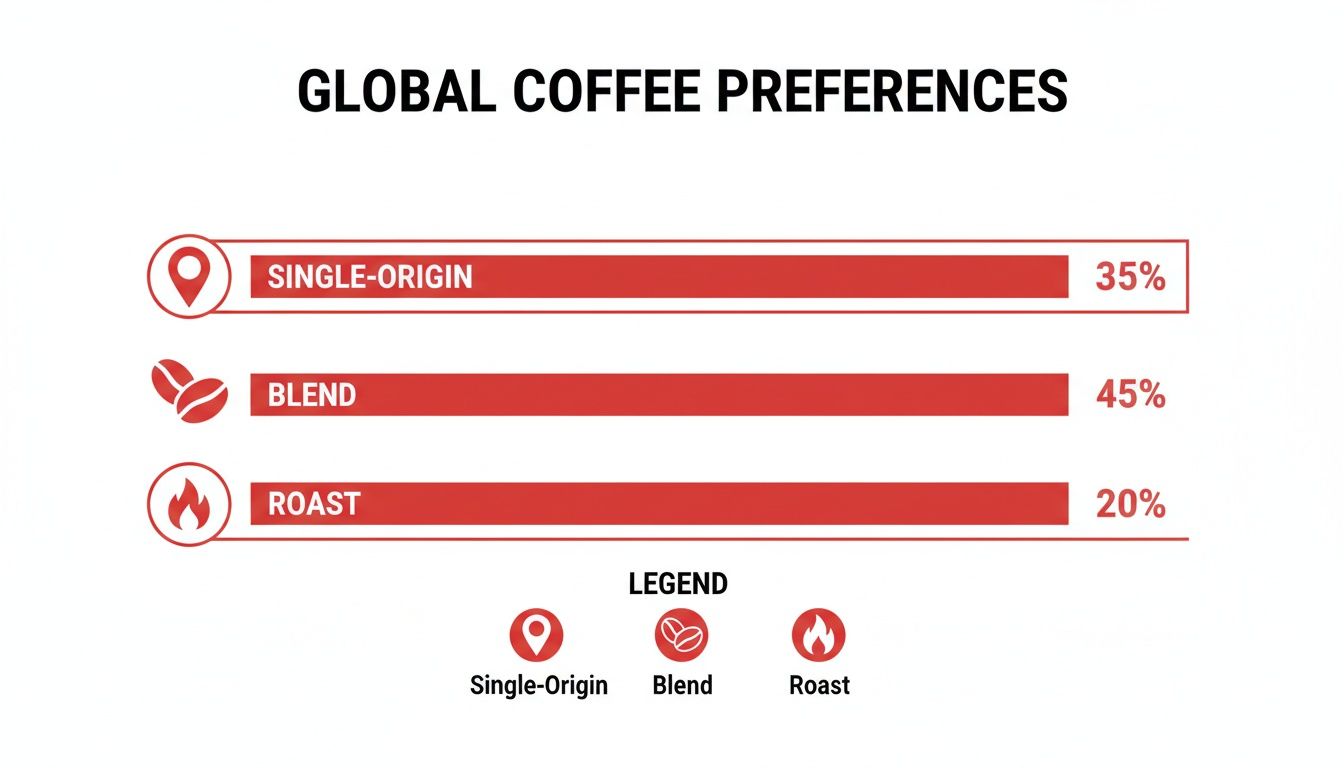
As you can see, every choice you make—from the type of bean to the roast level—has a knock-on effect on the final price you pay.
Calculating Your True Cost Per Cup
Forget the price per kilo for a moment. The number that really matters to your business is the cost per cup. This simple calculation cuts through the noise and shows you exactly where your profit comes from, helping you price your menu with confidence.
Let’s run through a quick example. Imagine a 1kg bag of your go-to espresso beans costs you £15. A standard 1kg bag will typically give you around 120 single shots of espresso.
The calculation is simple: £15 (cost per kg) ÷ 120 (shots per kg) = £0.125. That’s just 12.5p per espresso shot.
This number is your foundation. From here, you can properly account for milk, cups, and overheads to set a retail price that ensures every coffee you sell is making you money.
Sample Cost-Per-Cup Calculation
| Metric | Example Calculation |
|---|---|
| Wholesale Bag Cost | £15.00 (for 1kg) |
| Shots Per Bag (Approx.) | 120 |
| Calculation | £15.00 ÷ 120 |
| Cost Per Single Espresso | £0.125 (12.5p) |
Seeing it laid out like this makes it obvious just how manageable the raw ingredient cost is, allowing you to build healthy margins into your menu.
How Order Volume Affects Price
Beyond the beans themselves, the way you buy can make a huge difference to your bottom line. Suppliers, including us, value loyalty and consistency. We can offer better pricing when you commit to larger or more regular orders. This is where Minimum Order Quantities (MOQs) and supply agreements come into play.
An MOQ is the smallest order a supplier is willing to process. While we pride ourselves on flexibility at ADS Coffee Supplies, committing to a larger, regular delivery schedule often unlocks better price tiers. It’s a strategic move that can lead to serious savings over the year.
For businesses wanting total brand control alongside cost-efficiency, our white label coffee beans are a fantastic option. It’s a route that lets you build your own unique coffee identity while getting all the economic perks of a great wholesale partnership.
Assessing Quality, Certifications, and Freshness
When you're buying wholesale coffee beans, the quality of the product is everything. It’s the foundation of every drink you serve, so getting this part right is non-negotiable. While flavour can be subjective, there are solid, objective markers of quality and freshness that every business owner should know how to spot.
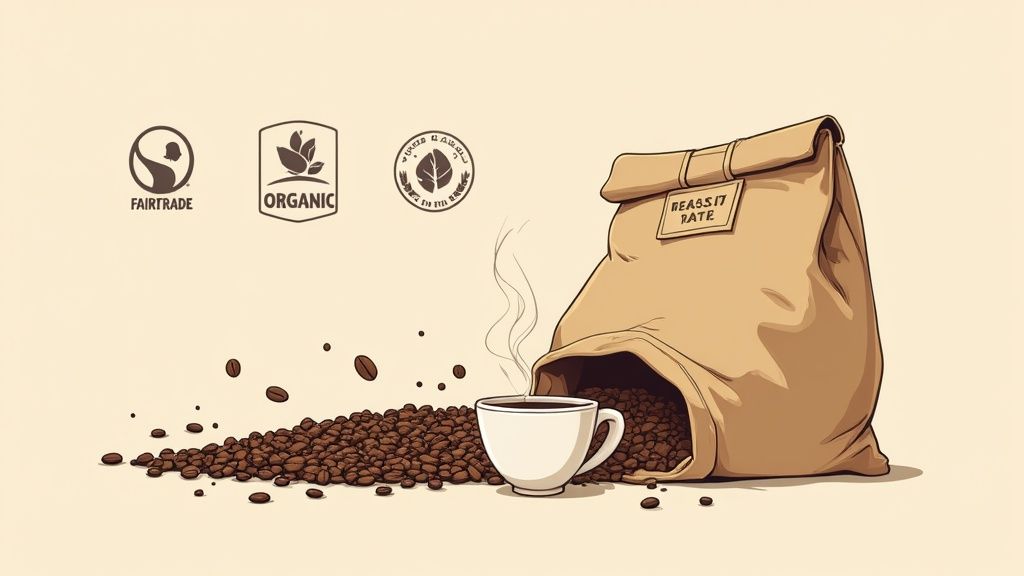
Honestly, the single most important detail is freshness, which all comes down to the roast date. Coffee beans hit their peak a few days after roasting and stay there for a few weeks. After that, their vibrant aromas and complex flavours start to fade. Any supplier worth their salt will print the roast date clearly on the bag.
What to Look For in High-Quality Beans
Before you even grind them, a quick visual check can tell you a surprising amount. Pop open a bag and take a good look. High-quality beans should look uniform in both size and colour, which is a sign of an even, well-controlled roast.
Keep an eye out for these visual clues:
- Uniformity: Consistent size and shape mean the beans roasted evenly. This prevents a muddled mix of sour (under-roasted) and bitter (over-roasted) notes.
- Colour: The colour should match the roast profile you've ordered. A medium roast should be a rich, consistent brown without looking overly oily.
- Defects: Check for broken bits, chips, or discoloured beans. A bag with too many defects can introduce unpleasant papery or peanut-like flavours.
Understanding Key Coffee Certifications
Beyond the bean's appearance, certifications are a brilliant shorthand for quality, ethics, and environmental responsibility. These labels aren't just marketing fluff; they tell a story about where the coffee came from and how it was grown—a story that today's customers care about.
Here are some of the most common certifications you'll see:
- Fairtrade: This guarantees that farmers received a fair, stable price for their coffee, empowering them to invest in their businesses and communities.
- Rainforest Alliance: Recognisable by its green frog seal, this focuses on environmental conservation, ensuring the coffee is grown in a way that protects forests and wildlife.
- Organic: Certified organic coffee is grown without using synthetic pesticides or fertilisers. This is better for the environment and can lead to a cleaner flavour. If you want to dive deeper, you can explore a guide to understanding coffee certifications from industry experts.
At the end of the day, the most crucial step is always the taste test. Certifications and visual checks are important, but the final verdict always comes down to what’s in the cup. This is why sampling is a vital part of the buying process.
Before you commit to a large order of wholesale coffee beans, always ask for samples from your potential supplier. Holding a proper tasting session lets you assess the coffee's aroma, acidity, body, and flavour. It’s the only way to be sure that the coffee doesn't just meet technical standards, but that it also excites your palate—and ultimately, your customers.
Managing Logistics and Your Supplier Partnership
When you’re choosing a supplier for wholesale coffee beans, you’re doing much more than just buying a product. You’re building a partnership. Get it right, and your supplier becomes an extension of your team—a reliable backbone that lets you get on with serving incredible coffee.
This relationship is built on dependable logistics, clear communication, and a shared passion for quality. It covers everything from predictable delivery schedules to proper storage advice that keeps your beans fresh. The best suppliers turn a simple transaction into a supportive, long-term collaboration.
Establishing a Reliable Delivery Schedule
In the coffee business, consistency is everything, and that starts with your supply chain. An unpredictable delivery schedule is a recipe for disaster, leading to stressful stock shortages or cash tied up in ageing inventory. A professional wholesale partner works with you to set up a delivery rhythm that perfectly matches your café’s pace.
A solid logistics plan should include:
- Predictable Timetables: Knowing your coffee will arrive every Tuesday morning, for instance, makes managing your stock simple.
- Clear Communication: You should always get order confirmations and dispatch notifications, so you’re never left guessing.
- Flexible Ordering: Your supplier should be able to handle the occasional urgent top-up order when you have an unexpectedly busy week.
At ADS Coffee Supplies, we pride ourselves on being that reliable partner. You can explore our wide range of beans by browsing our online coffee shop.
Beyond the Beans: Value-Added Services
The most valuable suppliers offer more than just great coffee. They provide a suite of services designed to help your business thrive. Think of these as the support pillars that strengthen your entire operation.
These extra services are often what separate a basic vendor from a true business partner. Here’s what to look out for:
- Equipment Supply and Leasing: A high-quality espresso machine is a major investment. Many suppliers offer leasing options, making top-tier equipment accessible without a huge upfront cost.
- Technical Support: When your machine breaks down during the morning rush, you need help fast. A good partner provides responsive technical support and maintenance.
- Barista Training: Consistent quality comes from skilled staff. Suppliers who offer barista training are investing in your success by helping your team master their craft.
Understanding Supply Agreements and Contracts
Your supply agreement formalises the relationship, laying out costs, delivery terms, and order volumes. This could be a flexible pay-as-you-go arrangement or a more structured contract. For long-term success, mastering the art of negotiating with suppliers can lead to better deals and a stronger partnership.
The UK's coffee shop market has a turnover of around £6.1 billion, fed by over £1 billion in coffee imports. This shows how critical a stable, reliable relationship with your wholesale coffee bean supplier is.
Your supplier relationship is your insurance policy against disruption. Choosing a partner who is invested in your growth provides the stability you need to thrive in the competitive UK coffee scene.
Common Questions About Buying Wholesale Coffee
Jumping into the world of wholesale coffee always brings up a few questions. To help you move forward with confidence, we’ve answered some of the most common queries business owners have when they first start buying wholesale coffee beans.
What is a typical minimum order?
This varies between suppliers, but most understand that flexibility is crucial. A typical minimum order quantity (MOQ) might be a single case of coffee, which usually contains something like 6 x 1kg bags. The goal is to match your order size to your actual use, ensuring you always serve fresh coffee. At ADS Coffee Supplies, we suggest a smaller test order first so you can find what works before committing to a bigger volume.
How long do wholesale coffee beans stay fresh?
Freshness is everything. When stored properly—in a cool, dark, airtight container—whole beans are at their absolute peak for about 4-6 weeks from their roast date. After that, you'll start to lose the vibrant aromas and complex flavours that make them special. Any good supplier will print the roast date clearly on every bag as your guarantee of freshness.
Can I create a custom coffee blend?
Absolutely, and it’s a fantastic way to create a unique identity for your business. Many specialist suppliers, including ADS Coffee Supplies, offer custom or white-label blending services. This helps you create a signature flavour that your customers can't get anywhere else. The process is a collaboration, starting with a chat to define your ideal taste and followed by tasting sessions to perfect the blend.
Do I need special equipment?
To get the best from high-quality wholesale coffee beans, you'll need a commercial-grade grinder and espresso machine. The power and consistency you get from professional kit are non-negotiable for pulling rich, flavourful shots. Many wholesale suppliers offer equipment leasing or rental packages, which is a brilliant, cost-effective way to get top-tier machinery without a massive upfront investment.
At ADS Coffee Supplies, we’re here to walk you through it all. We will answer every question and help you find the perfect coffee solution for your business. Take a look at our full range of wholesale beans and equipment to get started.